
What differentiates steam cleaning from other brickwork and masonry cleaning methods?
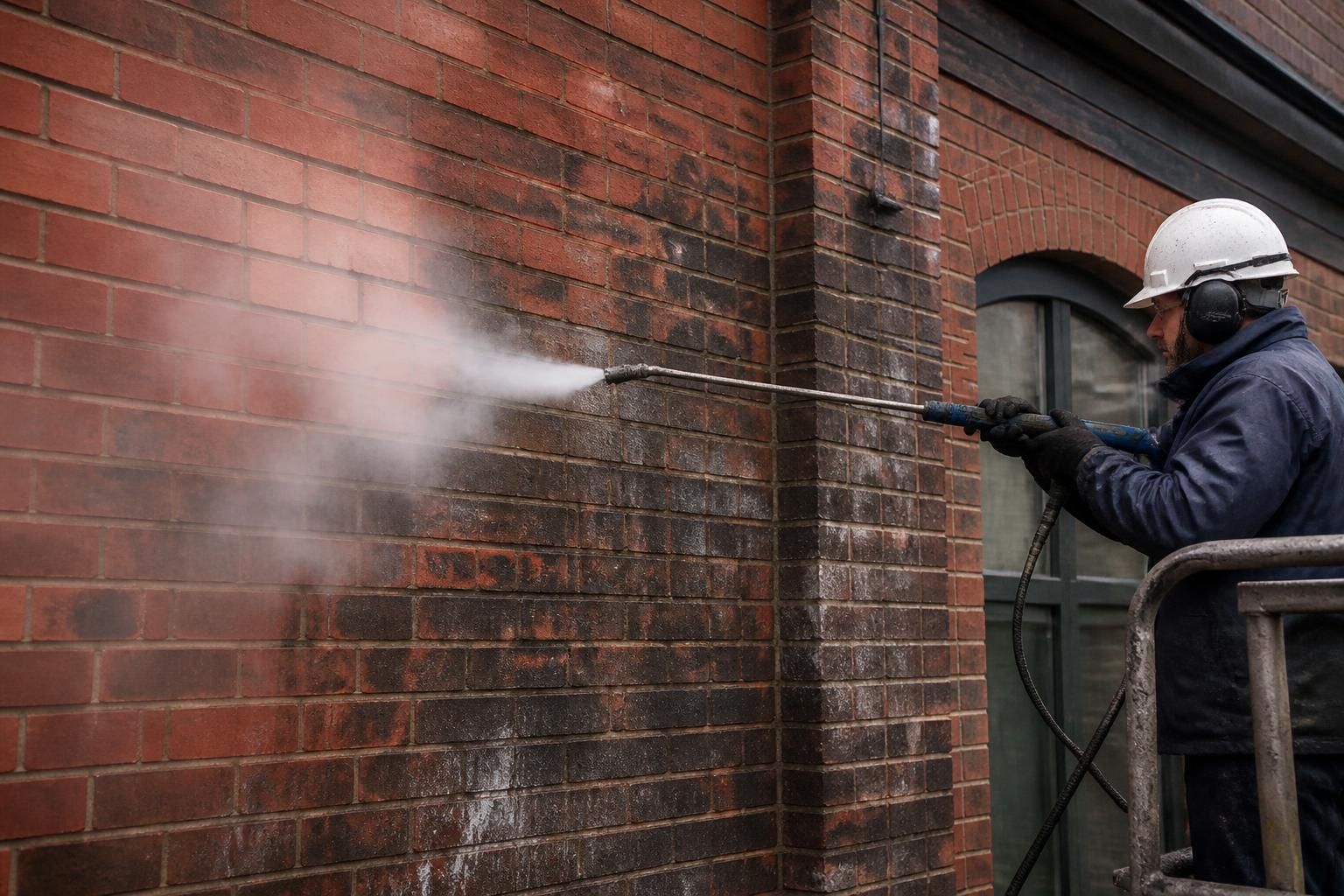
Steam cleaning uses high-temperature water vapour, usually at controlled pressure, to loosen and remove dirt, organic growth, staining and some coatings from brickwork and masonry with less water and abrasion than methods such as pressure washing, abrasive cleaning or chemical treatment. Its main distinction is the combination of heat and controlled application, although the equipment and settings must still be matched to the masonry’s condition and type.
Steam cleaning differs from other brickwork and masonry cleaning methods because it uses high-temperature water vapour, generally with controlled pressure and low water volume, to soften and release soiling. Rather than relying mainly on force, abrasive particles or chemical action, it combines heat, moisture and careful application. This can provide effective cleaning while reducing surface abrasion and limiting water penetration, although the equipment settings must always be matched to the masonry and the type of contamination.
Steam cleaning compared with pressure washing: Pressure washing uses a larger volume of water delivered at a higher pressure to dislodge dirt. It can be suitable for robust, sound masonry and heavy deposits, but excessive pressure or an unsuitable nozzle can erode soft brick faces, damage pointing and drive water into cracks or porous materials. Steam cleaning normally works at lower mechanical impact because heat does much of the loosening. It is therefore often preferable where the surface is weathered, detailed, lightly friable or vulnerable to saturation. It is not automatically risk-free: high-temperature vapour can still damage weak surfaces, existing coatings or defective mortar if applied incorrectly.
Steam cleaning compared with soft washing and chemical cleaning: Soft washing relies on a cleaning solution, usually applied at low pressure, to break down organic growth, biological staining and other deposits. Chemical treatments can be effective where algae, moss, lichen or specific stains are difficult to remove by water alone. However, the product must be compatible with the brick, stone, mortar, surrounding finishes and drainage arrangements. Residues may also need controlled rinsing and collection. Steam cleaning can reduce or avoid the use of chemical agents for many general dirt and organic deposits, but it will not remove every contaminant without a pre-treatment. Oil, bitumen, heavy paint, salts and some deeply absorbed staining may require a different or combined approach.
Steam cleaning compared with abrasive cleaning: Abrasive methods use materials such as grit or other media to strip deposits and coatings through impact. They can remove stubborn layers quickly, but they also remove a small amount of the underlying surface. On historic brickwork, carved stone, terracotta or delicate masonry, this may result in loss of the fired face, softened edges, tool marks or surface texture. Steam cleaning is generally less aggressive because it does not depend on blasting an abrasive against the masonry. It is commonly considered first where retaining the original surface is important, although testing is still essential before work begins.
Steam cleaning compared with dry cleaning: Dry methods, including brushing, vacuuming and some abrasive techniques, avoid introducing water. They can be useful where moisture must be tightly controlled or where loose dust and dry deposits are the main problem. They may be less effective against bonded grime, greasy residues and biological growth. Steam provides moisture and heat in a controlled form, helping to soften deposits that cannot be removed by brushing alone. The surrounding area must nevertheless be protected from run-off, loosened debris and condensation.
Its main practical advantages include:
- less reliance on high mechanical pressure, reducing the risk of erosion when the method is correctly controlled;
- lower water use than conventional high-pressure washing in many applications;
- heat that helps soften greasy grime, atmospheric deposits and some biological staining;
- reduced need for chemical products in suitable situations;
- the ability to clean textured, profiled or detailed masonry with carefully selected equipment and techniques; and
- a lower likelihood of leaving large quantities of rinse water on or around the building.
These advantages do not make steam cleaning the correct choice for every surface. Very soft or damaged brick, open joints, friable stone, salt-contaminated masonry and areas with failed coatings require particular care. Sudden heating or cooling may also be unsuitable for some materials, and steam can expose defects that were hidden beneath dirt. The condition of the pointing, presence of cracks, previous repairs and nearby electrical or sensitive finishes should be assessed before cleaning.
The most appropriate method is therefore determined by the material and the deposit, not by the cleaning system alone. A competent assessment should identify the masonry type, age, surface condition, soiling, access constraints and likely run-off route. A discreet test area should then be cleaned using the lowest effective temperature, pressure and dwell time. The result should be checked for colour change, surface loss, mortar damage, staining and unwanted water movement before the wider elevation is treated.
In practical terms, steam cleaning is often selected where a low-abrasion, low-water approach is needed and where heat can loosen the deposit without harming the substrate. Pressure washing may be more efficient on durable, heavily soiled surfaces; chemical treatment may be necessary for specific biological or oil-based contamination; and abrasive cleaning may be reserved for deposits or coatings that other methods cannot safely remove. For commercial and historic properties, combining methods in defined areas can be more appropriate than applying one technique everywhere.
Steam cleaning should therefore be viewed as a controlled masonry-cleaning process rather than a universally gentler version of pressure washing. Its distinguishing benefit is the balance between thermal action and limited mechanical force. Correct diagnosis, a test clean, suitable access equipment and experienced control of temperature and pressure are what determine whether that benefit is achieved.
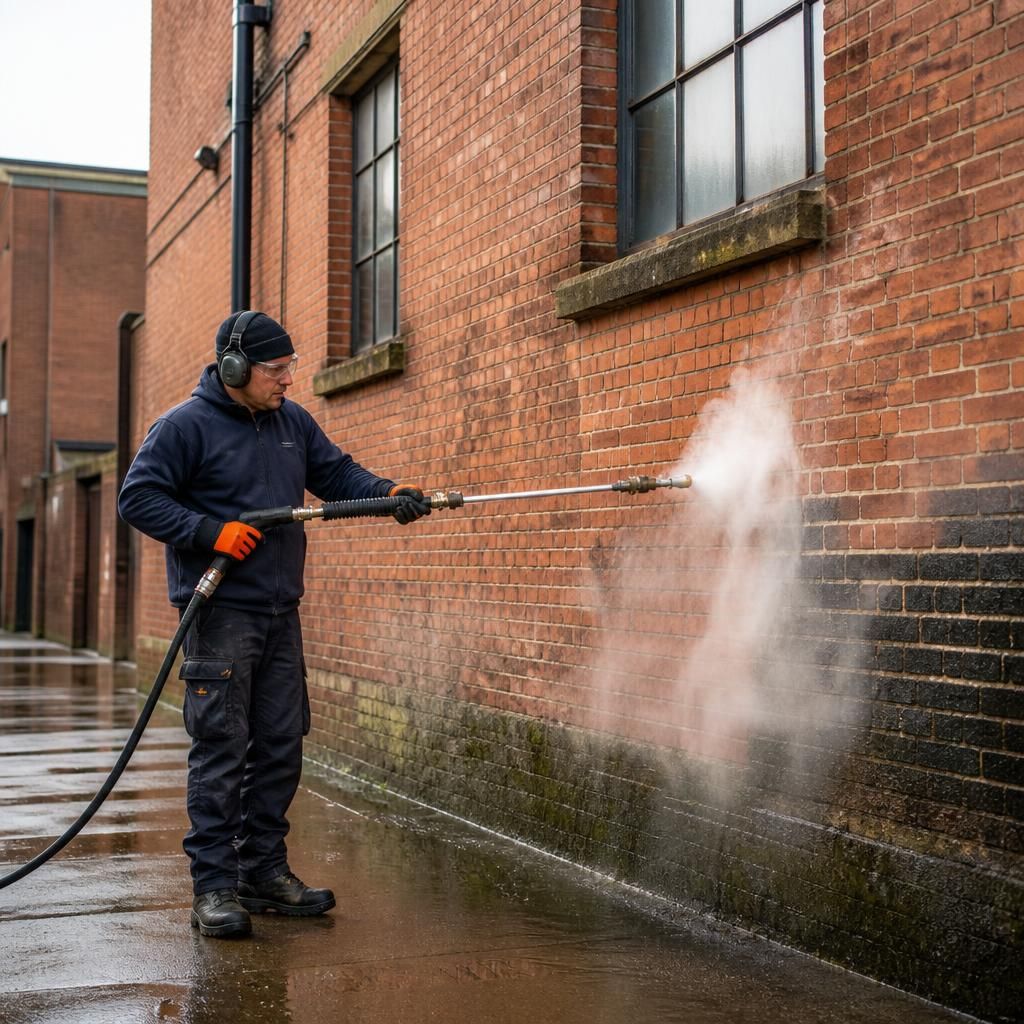
Steam cleaning is distinguished by its combination of heat and controlled, low-volume application rather than abrasive force. The heat softens bonded grime, atmospheric deposits and some organic staining, allowing them to be removed with less mechanical impact than conventional pressure washing or abrasive cleaning.
This does not make steam suitable for every surface. Brick type, mortar condition, existing coatings and the nature of the contamination must be assessed first. A discreet test area should confirm that the selected temperature, pressure and dwell time remove the deposit without causing surface loss, colour change, mortar damage or excessive moisture movement.
Arrange a Brickwork Steam Cleaning Assessment
Arrange a brickwork steam cleaning assessment with Encanto Exterior Cleaning to identify the safest and most effective method for your masonry. We will assess the surface, contamination and access requirements before recommending a suitable cleaning approach.