
What are the environmental benefits of steam cleaning brickwork and masonry?
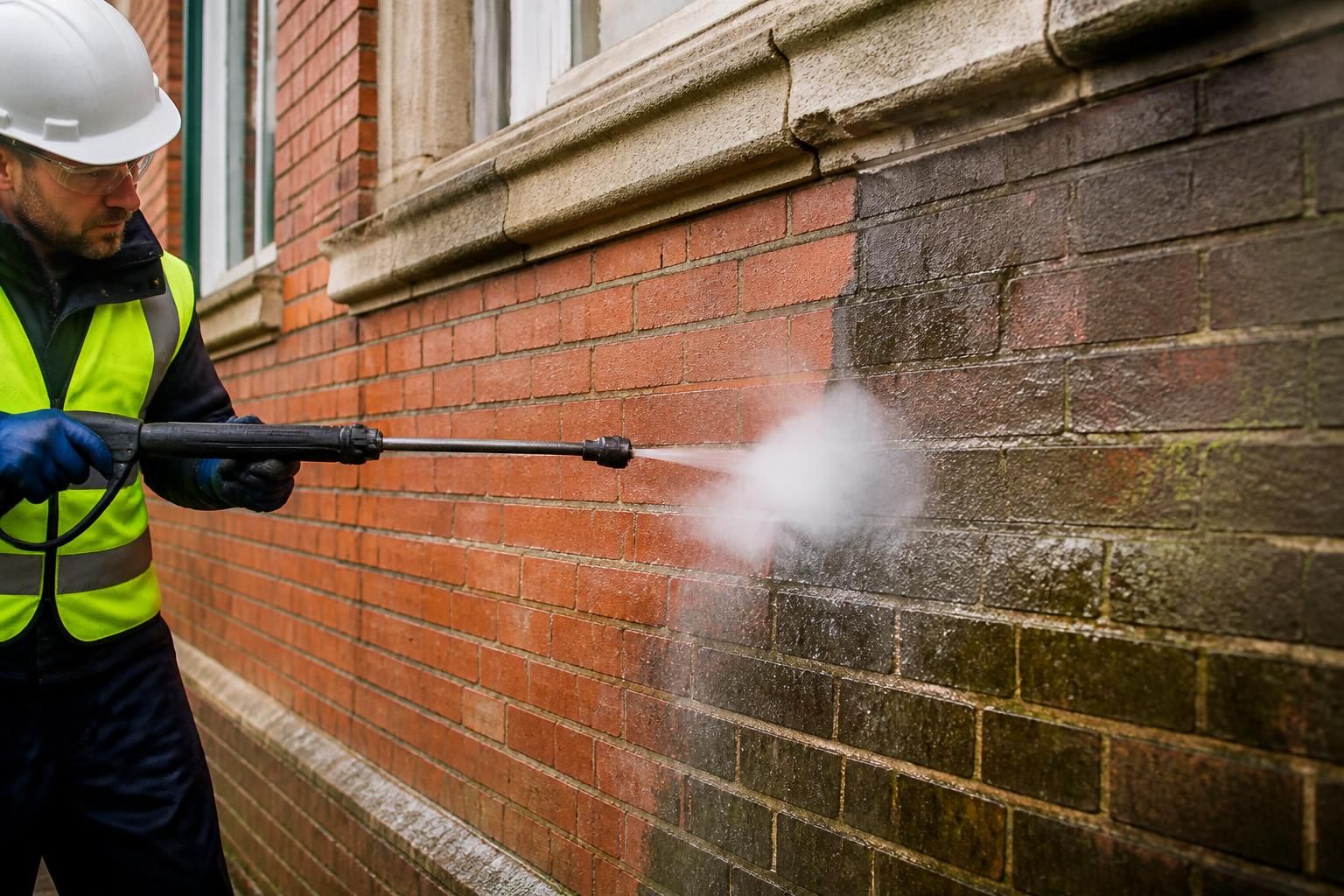
Steam cleaning brickwork and masonry can reduce environmental impact by using little or no chemical detergent and generally less water than conventional pressure washing. Lower chemical use can reduce the risk of harmful residues entering drainage systems, while controlled steam application can minimise wastewater and protect surrounding surfaces and vegetation.
Steam cleaning brickwork and masonry can reduce environmental impact by using little or no chemical detergent, controlling water use and limiting contaminated run-off. When the method is correctly specified, hot steam softens dirt, biological growth, atmospheric staining and some surface coatings so they can be removed with less aggressive treatment than conventional cleaning methods.
Reduced reliance on chemical cleaners
Many masonry cleaning projects can be completed with steam and mechanical agitation alone, particularly where the soiling consists of algae, moss, surface dirt, soot or general atmospheric deposits. Avoiding or reducing detergents means fewer substances are introduced to the building, surrounding ground and drainage system.
This is particularly relevant on sites close to planted areas, watercourses, public footways or sensitive building materials. Some chemical treatments can require careful dilution, controlled application, recovery and disposal. Steam cleaning does not eliminate the need for site controls, but it can reduce the volume and type of cleaning products that need to be managed.
Lower water consumption than some pressure-washing methods
Steam systems use water to generate heat, but the application is highly controlled and typically produces a relatively low-volume flow compared with high-pressure washing. This can reduce the amount of water needed to loosen and remove certain deposits, particularly where pressure would otherwise be used continuously across a large façade or masonry surface.
Actual water use depends on the size and condition of the area, the equipment selected, the cleaning rate and the type of soiling. A responsible contractor should assess the surface rather than assume that steam is automatically the lowest-water option for every project.
Less contaminated wastewater and run-off
Using fewer detergents and less water can make wastewater easier to control. Steam can often lift deposits in a more localised way, reducing the spread of dirty water across adjoining surfaces. This helps limit the risk of sediment, cleaning residues and loosened contaminants entering surface-water drains or nearby soil.
Run-off still needs to be assessed and managed. Existing deposits may contain soot, oils, biological matter, paint particles or other contaminants, and older masonry can release mortar dust or debris during cleaning. Drain protection, collection, filtration or suitable disposal may therefore be required, especially on commercial, industrial and public-sector sites.
Lower risk to surrounding vegetation and habitats
Controlled steam application can reduce overspray and chemical drift around planted borders, trees and landscaped areas. Where the cleaning specification permits, avoiding biocides and strong detergents also reduces the risk of exposing vegetation and soil to unnecessary treatment products.
This benefit depends on competent operation. Steam is delivered at high temperature, so it must not be directed at plants, wildlife, people or vulnerable adjacent materials. Site teams should identify drainage routes, planting, watercourses and other sensitive receptors before work begins.
Protection of the existing building fabric
Environmental sustainability also involves retaining and maintaining existing materials rather than replacing them unnecessarily. A carefully controlled steam clean can remove staining while avoiding some of the abrasion associated with harsh blasting or aggressive mechanical cleaning. Preserving sound brickwork, stone and mortar helps extend the useful life of the structure and reduces demand for replacement materials, transport and construction waste.
Steam is not suitable for every masonry surface. Heat, moisture and pressure can damage friable brick, weak mortar, poorly bonded coatings or moisture-sensitive materials if the equipment is misused. A test patch and assessment of the masonry are essential before full cleaning, both to protect the building and to ensure that the proposed method provides a genuine environmental benefit.
Reduced waste from disposable treatments
Where steam removes soiling without chemical stripping agents or temporary coatings, the project may generate less packaging, fewer empty containers and less spent treatment material. Removing deposits from the surface can also be preferable to covering them with a coating that will later require maintenance or replacement.
Any removed paint, sealant, biological growth or contaminated residue must still be handled appropriately. The environmental outcome depends on how these materials are collected, classified and disposed of, not only on the cleaning method used to detach them.
Energy use should also be considered
Steam equipment requires energy to heat water, so it is not impact-free. The overall benefit is strongest when the equipment is operated efficiently, the cleaning method is matched to the soiling and unnecessary passes are avoided. Travel, access equipment, wastewater handling and any follow-on treatments also contribute to the project’s environmental impact.
For that reason, steam cleaning should be evaluated as part of the complete method statement rather than judged solely by whether it uses chemicals or water. A suitable specification may include targeted steam cleaning, localised low-pressure rinsing, recovery of run-off and the use of detergents only where they are necessary and approved for the surface.
How the environmental benefits are maximised
- Inspect the brickwork or masonry and identify the type of deposit before selecting equipment or detergents.
- Carry out a test area to confirm the required temperature, pressure, dwell time and working distance.
- Use steam only where it is appropriate for the material and condition of the surface.
- Protect drains, planting, watercourses, pedestrians and adjacent finishes.
- Use the minimum effective quantity of detergent, with suitable collection and disposal arrangements where required.
- Prevent unnecessary repeat cleaning by addressing sources of staining, defective drainage, vegetation growth or failed pointing.
- Record the cleaning method and any aftercare recommendations so future maintenance can be planned efficiently.
Overall, steam cleaning can be a lower-impact option for brickwork and masonry because it can reduce chemical use, limit water consumption, control run-off and help preserve existing building fabric. Its environmental performance depends on a proper survey, suitable equipment, trained operators and responsible wastewater and waste management. For commercial and industrial premises, these details should form part of the site-specific cleaning plan rather than being treated as optional extras.
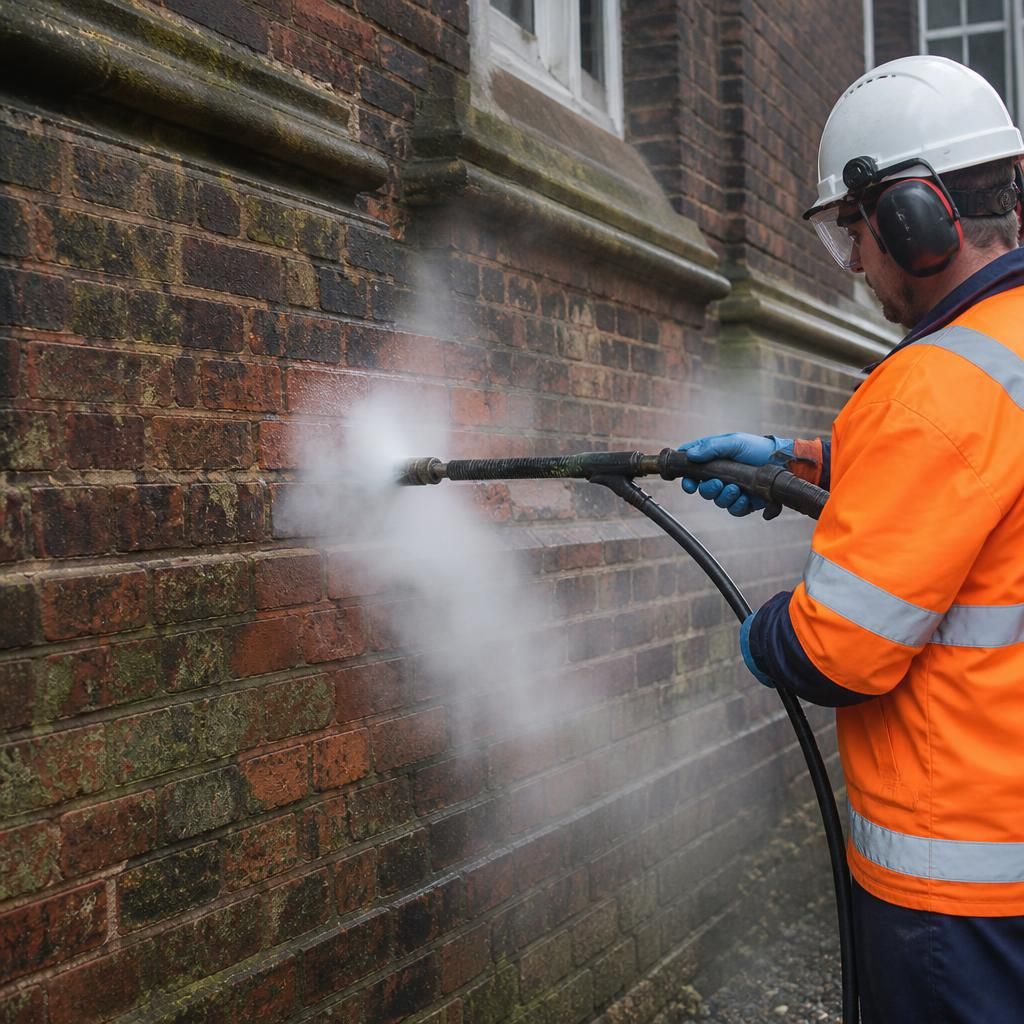
Steam cleaning can reduce the environmental impact of brickwork and masonry maintenance by removing many common deposits with little or no chemical detergent. Hot, controlled steam softens dirt, algae, moss and atmospheric staining, reducing the amount of cleaning product and contaminated water introduced to surrounding ground and drainage systems.
This does not remove the need for responsible site management. Drain protection, controlled run-off and appropriate waste handling may still be required, particularly where deposits contain soot, oils, paint particles or biological matter. A surface assessment and test patch help confirm whether steam is suitable and ensure that the equipment is used efficiently without damaging the masonry or nearby vegetation.
Arrange an Environmentally Responsible Steam Cleaning Assessment
Arrange an environmentally responsible steam cleaning assessment for your brickwork or masonry, including advice on water use, run-off control and surface protection. We will recommend a suitable, site-specific cleaning method based on the material, soiling and surrounding environment.