
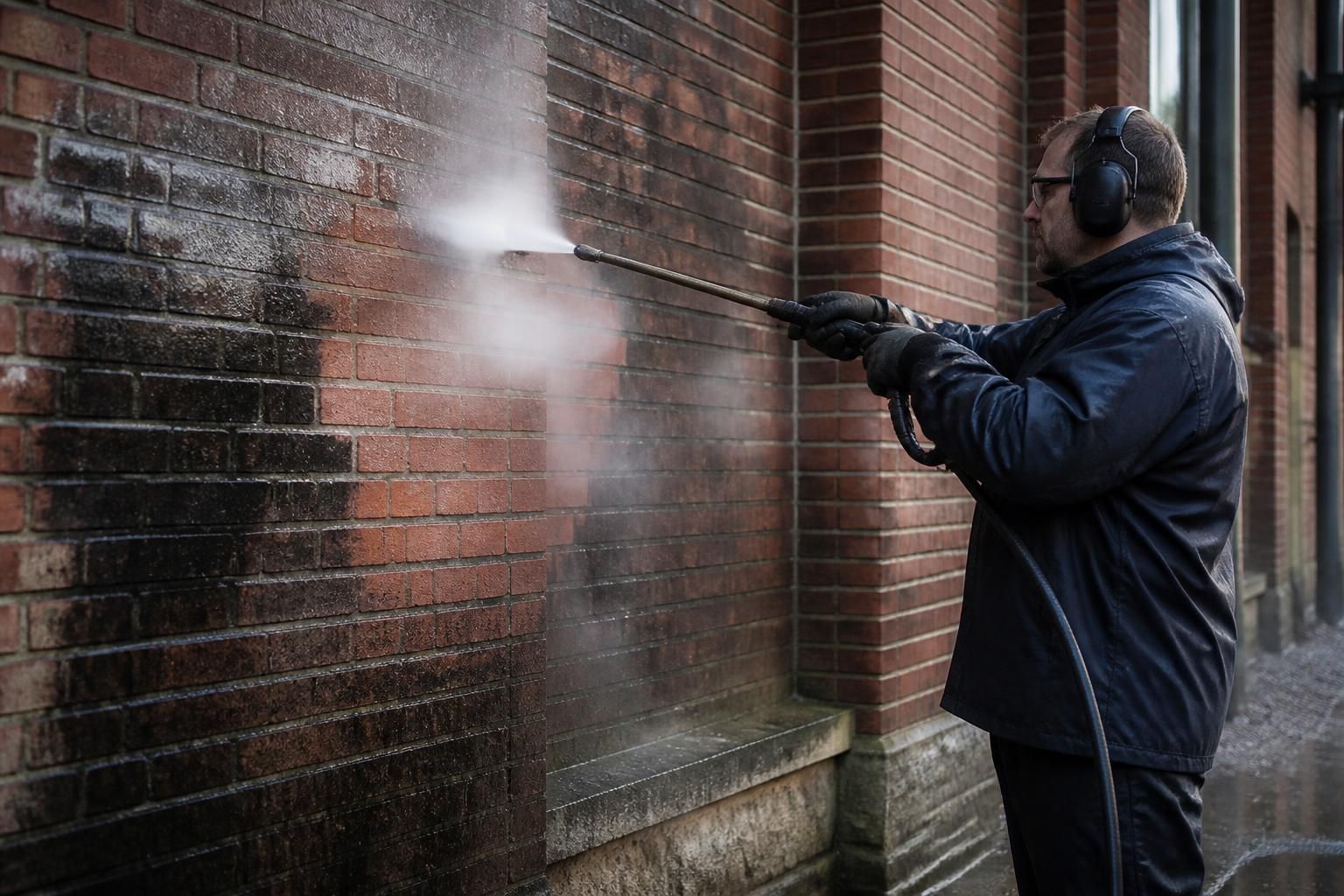
What are the environmental benefits of choosing steam cleaning for brickwork and masonry?
Steam cleaning brickwork and masonry can reduce reliance on chemical detergents and use less water than many conventional pressure-washing methods, lowering the risk of harmful residues entering soil and drainage systems. Its high-temperature cleaning action can also remove dirt, algae, staining and some biological growth with minimal surface abrasion, helping preserve existing materials and reduce the environmental impact of frequent repairs or replacement.
Steam cleaning can reduce the environmental impact of brickwork and masonry maintenance by using heat and controlled water flow to loosen dirt, carbon deposits, algae and some biological growth, often without relying on strong chemical detergents. Compared with more abrasive or high-volume methods, it can help reduce chemical discharge, water consumption, surface damage and the need for replacement materials. The environmental outcome still depends on the equipment, the condition of the masonry, the type of staining and how wastewater is contained and disposed of.
Reduced use of chemical cleaning products
The high temperature of steam can soften and break down surface contamination, including grease, atmospheric soiling and organic deposits. This may reduce or remove the need for solvent-based cleaners, aggressive detergents, acids or biocides. Using fewer chemical products lowers the risk of residues being washed into soil, surface water or drainage systems, and reduces the packaging, storage and transport associated with those products.
Chemical treatment may still be appropriate for specific contaminants, such as heavy oil deposits, paint or established biological growth. A responsible cleaning plan uses the least harmful product that is effective for the material and the contamination, applies it only where needed, and follows the manufacturer’s instructions for dwell time, rinsing and disposal. Steam cleaning should not be described as chemical-free in every situation.
Lower water use than many conventional methods
Steam systems generally apply water at a controlled flow rather than using the high volumes associated with some conventional pressure-washing applications. Lower water use can reduce demand on mains supplies and produce less wastewater to collect, filter and dispose of. The saving depends on the equipment, operating pressure, cleaning speed, surface area and amount of rinsing required.
Water efficiency is particularly relevant on large façades, retaining walls, public buildings and extensive masonry elevations. Before work begins, the cleaning method should be selected according to the condition and absorbency of the substrate. Excessive rinsing, repeated passes or poorly controlled equipment can reduce the environmental advantage, even when steam is used.
Less abrasion and better material preservation
Steam cleaning can remove contamination with less mechanical abrasion than harsh abrasive blasting or overly aggressive pressure washing. This matters because the environmental cost of a building includes the materials, energy and transport involved in repairs, repointing and replacement. Preserving sound bricks, stone, mortar joints and other masonry elements can avoid unnecessary removal and reduce the demand for new materials.
Gentler cleaning is not the same as risk-free cleaning. Excessive heat, pressure or prolonged application can affect softer stone, friable brick, deteriorated mortar, painted finishes, sealants and previously repaired areas. Testing an inconspicuous section helps establish a suitable temperature, pressure, nozzle distance and cleaning pattern before the main work starts. Protecting the substrate is an environmental measure as well as a structural one, because it avoids damage-related remedial work.
Reduced risk from contaminated run-off
Using fewer chemicals and less water can reduce the volume and concentration of contaminated run-off. However, removed soot, traffic film, paint particles, bird deposits, algae and existing treatment residues can still pollute drainage systems. Wastewater should therefore be controlled rather than allowed to flow into surface-water drains, planted areas or nearby watercourses.
Suitable controls may include drain protection, bunding, collection equipment, temporary filtration and segregation of solid debris. The correct disposal route depends on the contaminants and the site’s drainage arrangements. On commercial and industrial projects, the cleaning plan should identify drainage points, nearby watercourses, sensitive landscaping and any requirement for permission before discharge. Wastewater must be handled in accordance with applicable environmental requirements and site procedures.
Lower waste and resource demand over the life of the building
Steam cleaning can support a maintenance approach based on keeping existing masonry in service rather than replacing it prematurely. Regular, appropriately specified cleaning may prevent heavy deposits from becoming more difficult to remove and can help identify failed pointing, cracks, water ingress or defective details at an early stage. Early identification does not eliminate the need for repairs, but it can allow targeted work instead of larger interventions later.
The same principle applies to graffiti and isolated staining. Treating affected areas selectively with controlled steam can avoid cleaning or coating an entire elevation unnecessarily. It can also reduce the quantity of disposable materials and chemical containers generated during the work, particularly where a detergent-based system would otherwise be used across a large surface.
Energy use should be considered
Steam equipment needs energy to heat water, so it is not automatically the lowest-impact option in every circumstance. The environmental balance depends on the equipment’s efficiency, the power source, the duration of the work, transport to site and the amount of water and chemicals avoided. A small, localised area may not require the same approach as a large façade or industrial structure.
Environmental performance can be improved by using equipment correctly maintained and sized for the task, avoiding unnecessary heating or idle time, planning access and work sequences efficiently, and using an appropriate power source where site conditions allow. Combining steam cleaning with targeted spot treatment, rather than applying the same process everywhere, can also reduce energy use.
How to maximise the environmental benefit
- Inspect and test the masonry before selecting the cleaning method.
- Use steam at the lowest effective temperature, pressure and water flow for the substrate and contaminant.
- Avoid chemical products unless they are necessary for the specific deposit.
- Protect drains, collect run-off and remove solid residues from the work area.
- Keep cleaning localised where staining or graffiti affects only part of the elevation.
- Plan access, water supply, power and waste handling to avoid unnecessary site movements and repeat visits.
- Record any areas requiring repointing, repair or further investigation rather than attempting to remove contamination through increasingly aggressive cleaning.
For brickwork and masonry, the most credible environmental benefit comes from a controlled combination of low-volume application, reduced chemical reliance, careful waste management and preservation of the existing surface. Steam cleaning is a useful part of that approach, but the method should always be matched to the masonry, the contamination and the site’s drainage and energy requirements.
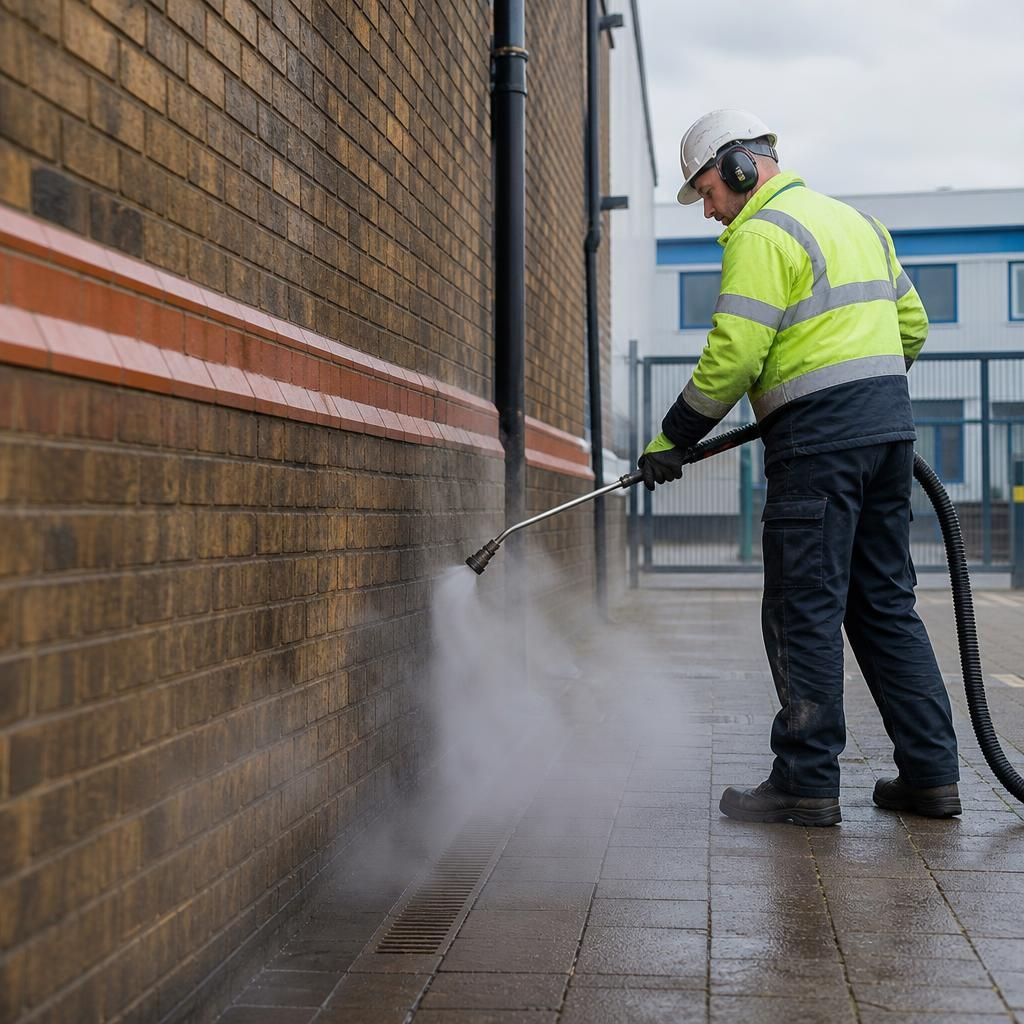
Steam cleaning can reduce the environmental impact of masonry maintenance by using heat and controlled water flow to loosen dirt, algae and atmospheric deposits, often without strong chemical detergents. This can reduce chemical residues, water consumption and the volume of contaminated run-off requiring collection and disposal.
It is not automatically chemical-free or impact-free. Removed soot, paint particles, biological growth and existing treatment residues can still enter drainage systems, so run-off should be contained and disposed of correctly. Selecting the lowest effective temperature, pressure and water flow also helps protect the masonry and avoid resource-intensive repairs or replacement.
Plan an environmentally responsible masonry clean
Contact Encanto Exterior Cleaning to plan a site assessment and environmentally responsible steam clean for your brickwork or masonry. We can review the substrate, contamination, drainage and run-off controls before recommending the most suitable approach.