
Is steam cleaning safe for all types of masonry surfaces?
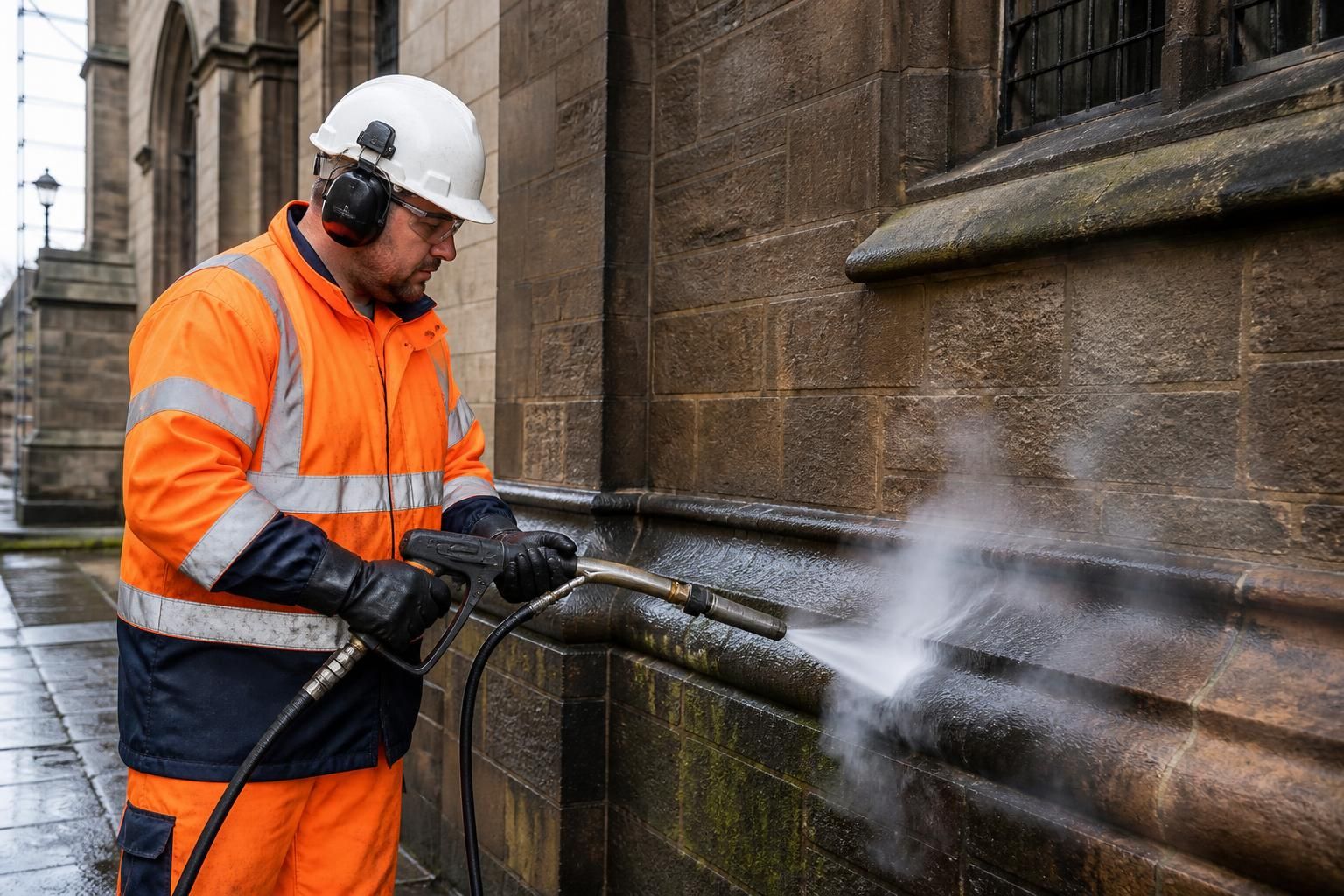
Steam cleaning is safe for many sound brick, stone and concrete surfaces, but it is not suitable for every type of masonry or condition. Porous, friable, cracked, painted, glazed or historically sensitive materials require a careful assessment and controlled steam pressure and temperature before cleaning begins.
Steam cleaning is safe for many sound brick, stone and concrete surfaces, but it is not suitable for every type of masonry or condition. Porous, friable, cracked, painted, glazed or historically sensitive materials require a careful assessment and controlled steam pressure and temperature before cleaning begins.
Unlike high-pressure washing, steam cleaning uses heated water vapour to soften organic growth, carbon deposits, dirt, grease and some surface coatings. The comparatively low water volume can reduce saturation and limit the risk of forcing water into joints, cavities and porous masonry. However, the fact that a system uses steam does not make every application risk-free. Excessive heat, prolonged application or poor control can still damage vulnerable surfaces.
Sound brickwork: Good-quality, stable brick is generally suitable for steam cleaning when the brick faces and mortar joints are intact. Steam can be particularly effective on soot, traffic film, algae, moss and surface staining. The operator must avoid concentrating heat on one area for too long, especially where bricks have already weathered or where the mortar is weaker than the brick.
Natural stone: Many sound stone façades can be cleaned safely with steam, including some granite, sandstone, limestone and slate. Suitability depends on the specific stone, its porosity, condition, finish and previous treatments. Softer or highly absorbent stone may be vulnerable to surface erosion, spalling or staining if exposed to inappropriate heat or cleaning pressure. Stone should therefore be tested in an inconspicuous area before wider work starts.
Concrete and cast stone: Steam is often appropriate for removing general soiling, biological growth and atmospheric deposits from stable concrete, precast units and cast stone. Care is needed around exposed aggregate, decorative finishes, repairs and areas affected by carbonation, cracking or corrosion. Cleaning will not correct structural defects, delamination or failing concrete, and aggressive treatment may make those defects more apparent.
Terracotta, glazed units and decorative masonry: These surfaces need a more cautious approach. Glazed or highly finished materials may react differently to heat, while decorative details can be thin, fragile or poorly bonded. Steam may be suitable in some cases, but testing and close control are essential. Painted, limewashed or otherwise coated masonry should not be treated as ordinary bare brick or stone; heat and moisture can soften, lift or discolour the coating.
Steam cleaning is not normally recommended without further investigation where masonry is:
- Loose, friable, badly eroded or actively spalling;
- Cracked, unstable or showing signs of movement;
- Supported by open, failing or deeply recessed mortar joints;
- Heavily saturated, affected by rising damp or exposed to persistent water ingress;
- Covered with fragile paint, render, sealant, pointing or other finishes;
- Part of a listed, historically significant or otherwise sensitive building; or
- Previously repaired with materials that may respond differently from the surrounding masonry.
Some staining also requires additional care. Rust, oil, efflorescence, graffiti and biological growth do not all respond in the same way to steam. Steam may remove or loosen a deposit without eliminating the underlying cause. For example, recurring algae may indicate persistent dampness, while salts may return if moisture continues to move through the wall. Cleaning should be planned alongside any necessary repairs or damp-management work.
A competent assessment should identify the masonry type, surface finish, age, condition, pointing, previous coatings and likely source of the contamination. The cleaning team should then carry out a small test area using the least aggressive effective setting. This allows them to check for colour change, surface loss, staining, coating failure, mortar damage and the way the material absorbs and releases moisture. The test area should be reviewed before the full façade or structure is cleaned.
Safe steam cleaning depends on control rather than heat alone. The operator should maintain an appropriate working distance, keep the nozzle moving, avoid directing steam into open joints and vulnerable details, and use only as much energy as needed. Particular attention is required around windows, seals, vents, electrical fittings, soft pointing, architectural mouldings and junctions where water could enter the building. Run-off should also be managed so that loosened contaminants are not spread across adjoining surfaces.
For older or sensitive masonry, a written method statement and risk assessment should set out the proposed equipment, test procedure, protection measures, access arrangements and limits of the work. Listed buildings and conservation areas may also require input from a conservation professional or approval from the relevant authority. Cleaning should never be used to conceal structural movement, defective pointing or a failing surface.
After treatment, the masonry should be checked for remaining deposits, open joints, displaced material and signs of moisture retention. Any defects identified during cleaning should be recorded and referred for suitable repair rather than repeatedly treated. Where a surface is sound and the method has been properly selected, steam cleaning can provide an effective, low-water approach for maintaining brick, stone and concrete without unnecessarily abrading the masonry.
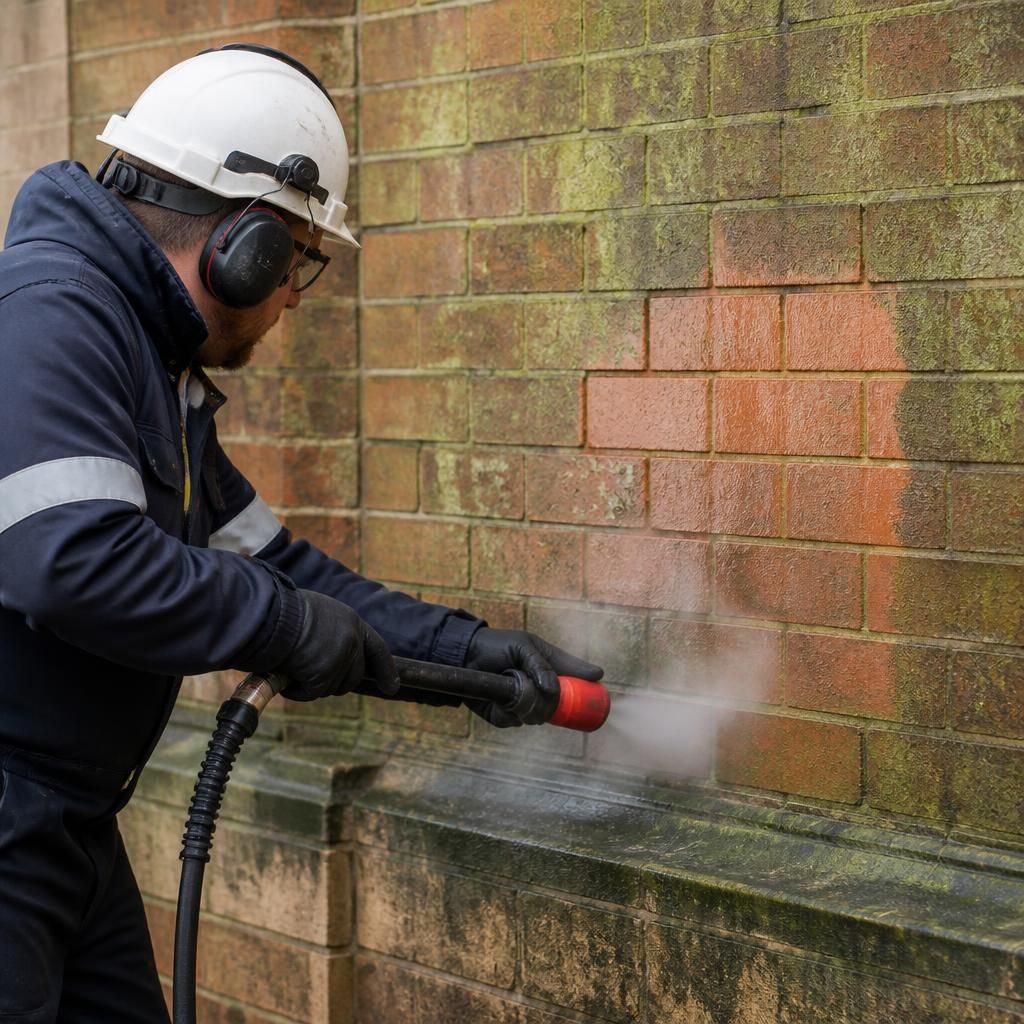
Steam cleaning is safest when the masonry is assessed and a small, inconspicuous test area is completed before full-scale work begins. This confirms whether the brick, stone, concrete or finish can tolerate the selected temperature, pressure and working distance without discolouration, surface loss, staining or mortar damage.
The test should include the areas most likely to present a problem, such as weathered brick faces, soft pointing, decorative details, painted coatings and previous repairs. The operator can then adjust the equipment or recommend a gentler method before cleaning the wider surface. This controlled approach is particularly important for older, porous or listed masonry, where excessive heat or prolonged application may cause damage that is not immediately obvious.