
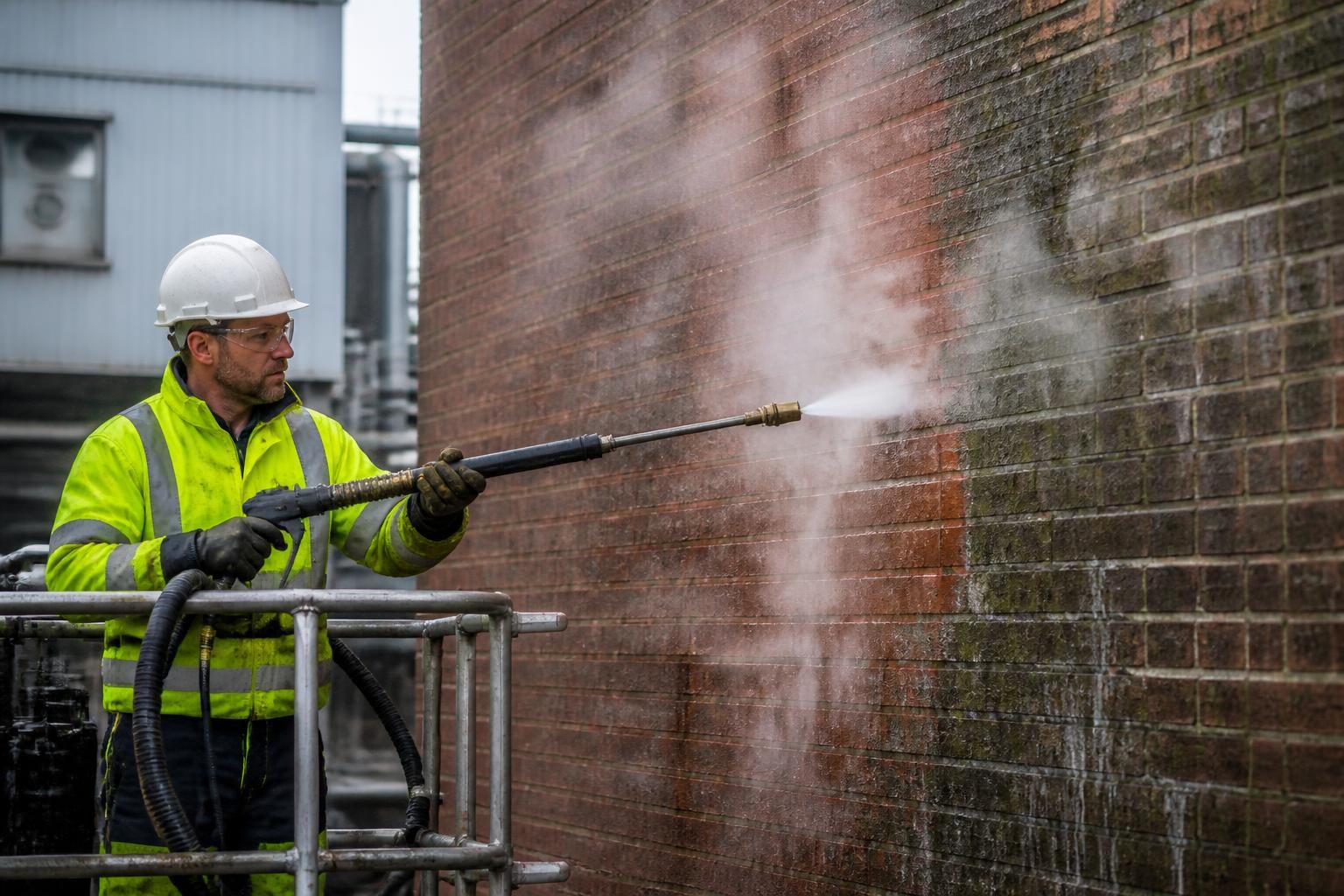
How does steam cleaning impact the longevity and maintenance costs of brickwork and masonry?
When correctly specified and applied, steam cleaning removes dirt, biological growth and pollutants from brickwork and masonry with less abrasion and water pressure than many conventional methods, helping preserve the surface and extend maintenance intervals. By reducing damage, repeat staining and the need for premature repairs or replacement, it can lower whole-life maintenance costs, although neglected defects and unsuitable cleaning techniques may increase them.
When correctly specified and applied, steam cleaning can extend the service life of brickwork and masonry while reducing ongoing maintenance costs. The process uses controlled heat and moisture to soften and remove dirt, traffic film, atmospheric deposits, algae and other surface contamination, usually with less abrasion and lower pressure than more aggressive cleaning methods. This helps protect the face of the masonry, mortar joints and surrounding finishes from avoidable damage.
The main benefit to longevity is the reduced risk of surface wear. Brick faces can be damaged by excessive pressure, abrasive particles or unsuitable chemicals, particularly where the surface has already weathered or become friable. Steam cleaning relies primarily on heat and carefully controlled water flow, so it can remove contamination without unnecessarily eroding the substrate. Preserving the outer face of the brick helps maintain its resistance to rain penetration, frost and repeated weathering.
Steam cleaning can also help prevent contaminants from contributing to gradual deterioration. Organic growth retains moisture against masonry, while soot, traffic film and airborne pollutants can hold salts and other deposits on the surface. If these deposits remain in place, they may obscure defects, encourage damp conditions or contribute to staining and surface breakdown. Removing them makes the masonry easier to inspect and reduces the conditions that allow contamination to return quickly.
However, cleaning does not repair defective brickwork or mortar. Open joints, cracked bricks, failed pointing, loose coatings, damaged flashings and penetrating damp must be identified separately. If these issues are left untreated, the masonry may continue to deteriorate after cleaning, regardless of how carefully the work was carried out. A suitable inspection before cleaning is therefore essential for distinguishing removable soiling from permanent staining, decay or structural defects.
How steam cleaning can reduce maintenance costs
Cost savings generally arise over the whole life of the building rather than from the cleaning operation alone. A carefully selected cleaning method can reduce the likelihood of:
- Premature replacement of damaged bricks or masonry units;
- Repointing caused by avoidable erosion or disturbance to mortar joints;
- Repeated cleaning caused by residues, incomplete removal or rapid regrowth;
- Water ingress and associated internal repairs where surface defects are allowed to worsen;
- Disruption to tenants, visitors, staff or site operations caused by unplanned remedial work; and
- More extensive access, repair and redecoration work at a later stage.
Clean masonry is also easier to assess during planned inspections. Defective joints, cracks, spalling, staining around drainage points and areas of damp penetration are more visible once surface deposits have been removed. Early identification allows a property manager or facilities team to schedule localised repairs rather than allowing minor defects to develop into larger and more expensive works.
Why the cleaning specification matters
Steam cleaning is not automatically suitable simply because it uses less pressure than some alternatives. The temperature, pressure, water volume, distance from the surface and cleaning time must be adjusted to the type and condition of the masonry. Soft or handmade bricks, historic façades, weathered stone, lime mortar and previously repaired areas may respond differently from dense modern brickwork.
Before full-scale work begins, the cleaning contractor should assess the substrate, identify coatings and previous treatments, check for loose material and complete a controlled test area. This confirms whether the method removes the deposit without causing colour changes, surface loss, mortar erosion or water penetration. It also helps establish an appropriate working method for areas with different levels of soiling.
Good preparation protects maintenance budgets in two ways. First, it reduces the risk of damage and associated remedial costs. Secondly, it avoids specifying an unnecessarily intensive process where a gentler treatment would achieve the required result. Protecting windows, seals, vents, landscaping and adjoining finishes is equally important, because damage outside the masonry can add avoidable costs to a project.
Factors that can limit the financial benefit
Steam cleaning may not produce long-term savings where the underlying cause of soiling is still present. Persistent leaks, defective rainwater goods, poor drainage, nearby construction dust, heavy traffic deposits or continuing biological growth can lead to renewed staining. In these circumstances, cleaning should be combined with appropriate repairs, improved drainage, vegetation control or a planned maintenance programme.
Some deposits also require specialist treatment. Salts, paint, cement residue, oil and deeply embedded staining may not be removed by steam alone, and repeated treatment of an unsuitable surface can increase wear. A professional assessment should establish whether steam cleaning is the correct primary method or whether a carefully controlled supplementary process is needed.
After cleaning, the masonry should be allowed to dry and inspected for defects that were previously concealed. Any necessary repointing or brick repairs should use materials compatible with the existing construction. Impermeable coatings or inappropriate hard mortar can trap moisture and reduce the benefit of the cleaning work. Where a protective treatment is considered, it should only be applied after assessing the masonry’s porosity, moisture movement and exposure conditions.
For commercial and public buildings, the most economical approach is usually planned maintenance rather than reactive cleaning. Records of the cleaning method, test areas, identified defects and any repairs provide a useful reference for future inspections. Periodic checks of joints, drainage, roof edges and areas prone to biological growth can help determine when local attention is needed, avoiding unnecessary full-façade cleaning.
In summary, steam cleaning supports longer-lasting brickwork and masonry by removing harmful deposits with comparatively low abrasion and controlled pressure. Its effect on maintenance costs depends on correct assessment, suitable equipment, competent application and prompt repair of defects revealed during the work. It should be treated as part of a wider masonry maintenance strategy, not as a substitute for repointing, damp investigation or structural repair.
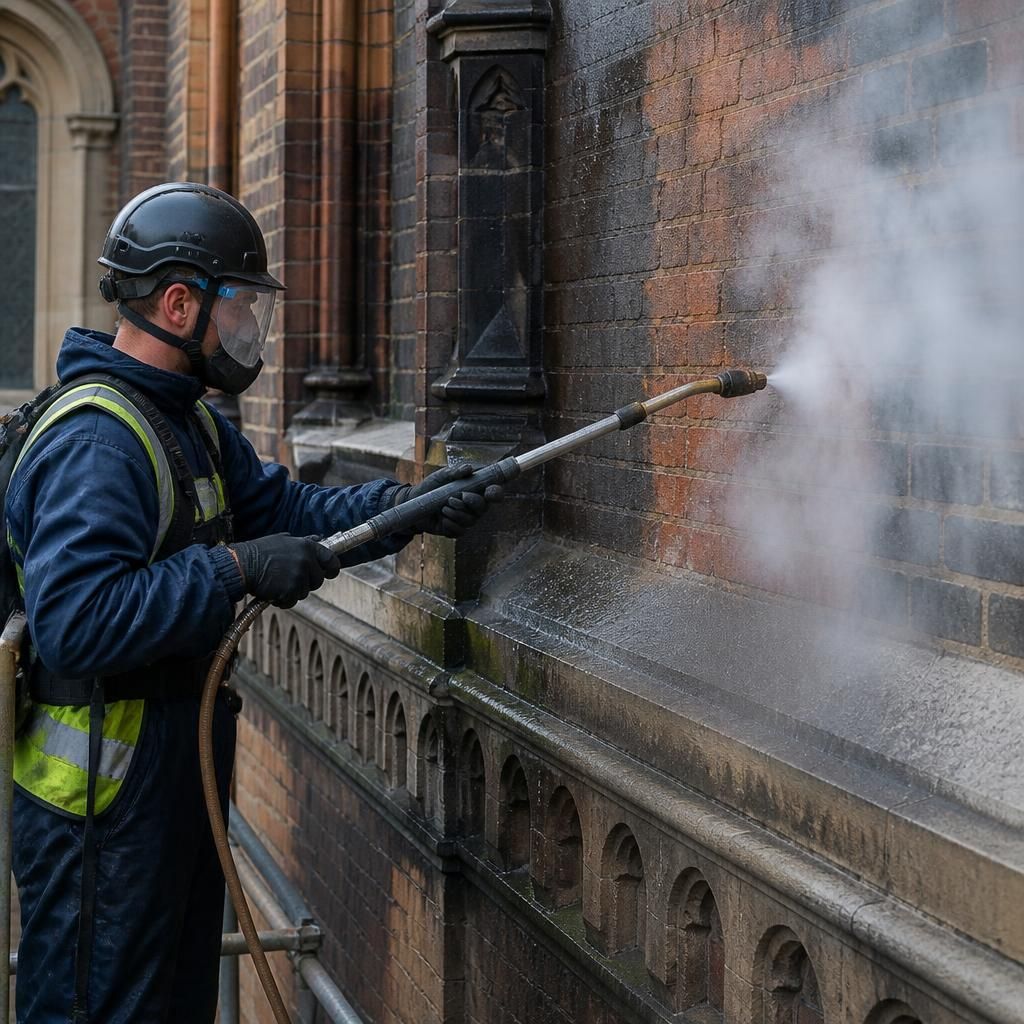
Steam cleaning can extend the service life of brickwork by removing surface contamination with controlled heat, moisture and relatively low abrasion. This helps reduce unnecessary wear to brick faces and mortar joints, supporting the masonry’s resistance to weathering and making defects easier to identify before they require extensive repairs.
The financial benefit depends on correct specification. A pre-cleaning inspection and test area should confirm the suitable temperature, pressure, water flow and working distance for the particular brick or masonry. This is especially important for soft, handmade or weathered bricks and lime mortar, where unsuitable cleaning can cause surface loss or joint erosion. Cleaning alone will not correct defective pointing, cracked bricks, damp or leaking rainwater goods, so these issues should be repaired as part of the wider maintenance plan.