
How does steam cleaning compare to other brick and masonry cleaning methods?
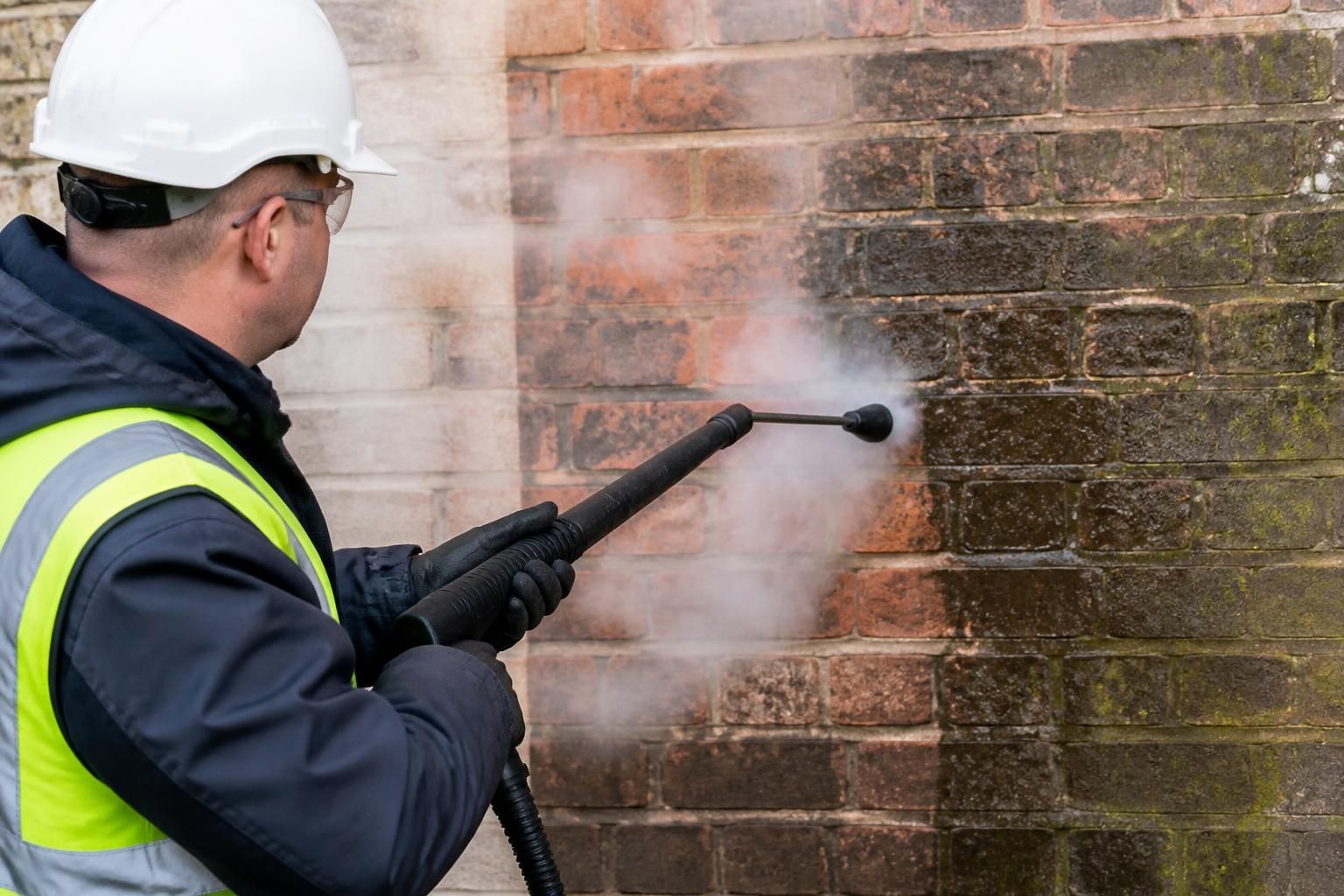
Steam cleaning uses controlled heat and low-pressure moisture to loosen dirt, algae, staining and some biological growth from brickwork and masonry, making it gentler than high-pressure washing and abrasive cleaning. Compared with chemical methods, it can reduce reliance on detergents, but the most suitable approach depends on the masonry type, condition, staining and required finish.
Steam cleaning is generally a gentler brick and masonry cleaning method than high-pressure washing or abrasive techniques, while offering a lower-chemical approach than detergent-based cleaning. It uses controlled heat and low-pressure moisture to soften and lift surface dirt, algae, atmospheric soiling and some biological growth. However, no single method is suitable for every surface or stain: the correct choice depends on the masonry type, mortar condition, age, porosity, contamination and the finish required.
Steam cleaning compared with pressure washing
Pressure washing uses a pressurised water jet to dislodge contamination. It can be effective on robust, sound surfaces and may remove loose dirt quickly, but excessive pressure or an unsuitable nozzle can erode softer brick faces, damage weathered mortar joints and drive water into cracks and porous masonry. Repeated aggressive washing can also leave the surface uneven or expose the more absorbent inner material of a brick.
Steam cleaning relies more on heat and dwell time than on impact. The heated moisture helps loosen ingrained dirt and biological deposits, allowing them to be removed with less mechanical force. This makes it useful where the brickwork is aged, decorative, porous or vulnerable to surface scarring. It is not risk-free, however. Poorly controlled heat, prolonged application or incorrect technique can still affect delicate finishes, old mortar, coatings and some stone types. A competent operative should adjust the temperature, pressure, distance and cleaning time to the surface.
Pressure washing can remain appropriate for durable, well-maintained masonry with substantial open-area soiling, provided the pressure is controlled and the water is directed safely. Steam is usually considered where preserving the face of the brick, reducing water penetration or limiting mechanical impact is more important than achieving the fastest removal of loose surface dirt.
Steam cleaning compared with chemical cleaning
Chemical cleaning uses an applied product to dissolve, react with or loosen a particular contaminant. Specialist cleaners may be effective against carbon deposits, paint residues, oil, rust staining, mortar smears or other deposits that heat and water alone cannot remove. The product must be matched to the masonry and the contamination; an unsuitable acid, alkali or solvent can discolour the surface, damage mortar, leave residues or affect nearby materials such as glazing, metalwork, render and painted finishes.
Steam cleaning can reduce the need for detergents in situations where heat and moisture are sufficient to release the soiling. This may simplify rinsing and reduce the risk of chemical residue, but steam is not a universal substitute for chemical treatment. Some stains are chemically bonded to the surface or require a targeted product. Where chemicals are necessary, the safest approach is controlled application, protection of adjacent surfaces and thorough removal of residues in accordance with the product requirements.
Biological growth illustrates the distinction. Steam can loosen algae, moss and surface contamination, but removing visible growth does not always prevent it from returning. A suitable biocidal treatment may be considered where the substrate and surrounding environment make regrowth likely. Any treatment should be selected and used by trained personnel, with appropriate controls for run-off, nearby planting, drainage and occupants.
Steam cleaning compared with abrasive cleaning
Abrasive methods remove contamination by striking or rubbing the surface with a granular media. They can strip hard deposits, coatings and paint, but they also remove a small amount of the substrate or surface finish. On historic, soft or decorative brickwork, this can cause irreversible loss of detail, pitting, colour variation and accelerated weathering. Abrasive particles can also enter joints and surrounding areas, creating additional clean-up and containment requirements.
Because steam cleaning does not depend on abrasive impact, it is normally better suited to preserving original textures and profiles. It may be a more appropriate first option for listed, conservation-sensitive or architecturally detailed masonry, subject to a proper assessment and any required heritage controls. Abrasive cleaning may still have a role on hard, stable substrates where other methods cannot remove a firmly bonded coating, but it should not be selected simply because it appears faster.
How the methods compare in practice
- Surface preservation: Steam generally applies less mechanical force than pressure washing and abrasive cleaning. Chemical cleaning can also be gentle when correctly specified, but its compatibility with the substrate must be established first.
- Water use and saturation: Steam systems typically use less water than conventional pressure washing, although the actual amount depends on the equipment and application. Good planning is still needed to control run-off and prevent water entering open joints, cracks or internal areas.
- Speed: Pressure washing can be fast on loose, widespread dirt. Steam may take longer where deposits are deeply ingrained because the operator works progressively and avoids excessive force. Chemical and abrasive methods can be efficient for specific deposits but require preparation, protection and post-treatment controls.
- Stain suitability: Steam is well suited to general atmospheric dirt, light biological deposits and some grease or surface residues. Heavy oil, paint, rust, tar, cement and deeply embedded staining may require a specialist chemical, mechanical or combined approach.
- Risk to mortar and brick faces: High pressure and abrasives present a greater risk of physical loss if misused. Chemicals present a risk of etching, staining or residue if incompatible or inadequately rinsed. Steam reduces some of these risks but still requires controlled settings and test cleaning.
- Environmental controls: Steam can reduce reliance on cleaning chemicals and may generate less wash water than pressure washing. Chemical and abrasive methods require appropriate containment, collection and disposal arrangements, particularly where run-off, dust or residues could affect drains, soil, vegetation or neighbouring property.
When a combined method may be appropriate
Commercial and industrial masonry rarely has one uniform type of contamination. A façade may have general atmospheric soiling, isolated paint marks, biological growth near ground level and mortar deposits around construction work. In such cases, the most controlled solution may be a staged process rather than one method applied across the whole elevation.
A typical approach is to inspect the masonry, carry out a small test area, use steam for general cleaning and then treat isolated residues with a compatible specialist product or carefully controlled mechanical technique. Different settings may be required for brick faces, mortar joints, stone trim, render, metal fittings and glazed surfaces. Combining methods should be based on the material and stain, not on using the most aggressive treatment available.
What should be assessed before choosing a method
- The type, age, hardness and porosity of the brick, stone or other masonry.
- The condition of mortar joints, pointing, cracks, copings, flashings and previous repairs.
- Whether the surface is painted, coated, glazed, sealed or historically significant.
- The source and composition of the contamination, including algae, carbon deposits, oil, paint, rust, efflorescence or mortar residues.
- The risk of water entering the building, affecting insulation or reaching electrical and mechanical services.
- Access constraints, adjacent materials, pedestrian areas, traffic, drainage and the need to protect occupants or the public.
- The required finish and whether retaining weathering, patina or historic surface texture is important.
A test patch is an essential part of this assessment. It shows whether the selected process removes the contamination without lightening the brick unevenly, opening the surface, damaging the joints or affecting adjoining materials. The test area should be reviewed after drying, because changes in colour and staining may not be fully visible while the masonry is wet.
For most sensitive or mixed-condition brickwork, steam cleaning is a sensible low-impact starting point, but it should not be treated as automatically safe or universally effective. Pressure washing, chemical cleaning and abrasive techniques each have legitimate uses when specified and controlled by an experienced contractor. The best result comes from matching the method to the masonry and contamination, using the least aggressive process that achieves the required standard, and documenting any areas that need repair or follow-up treatment.
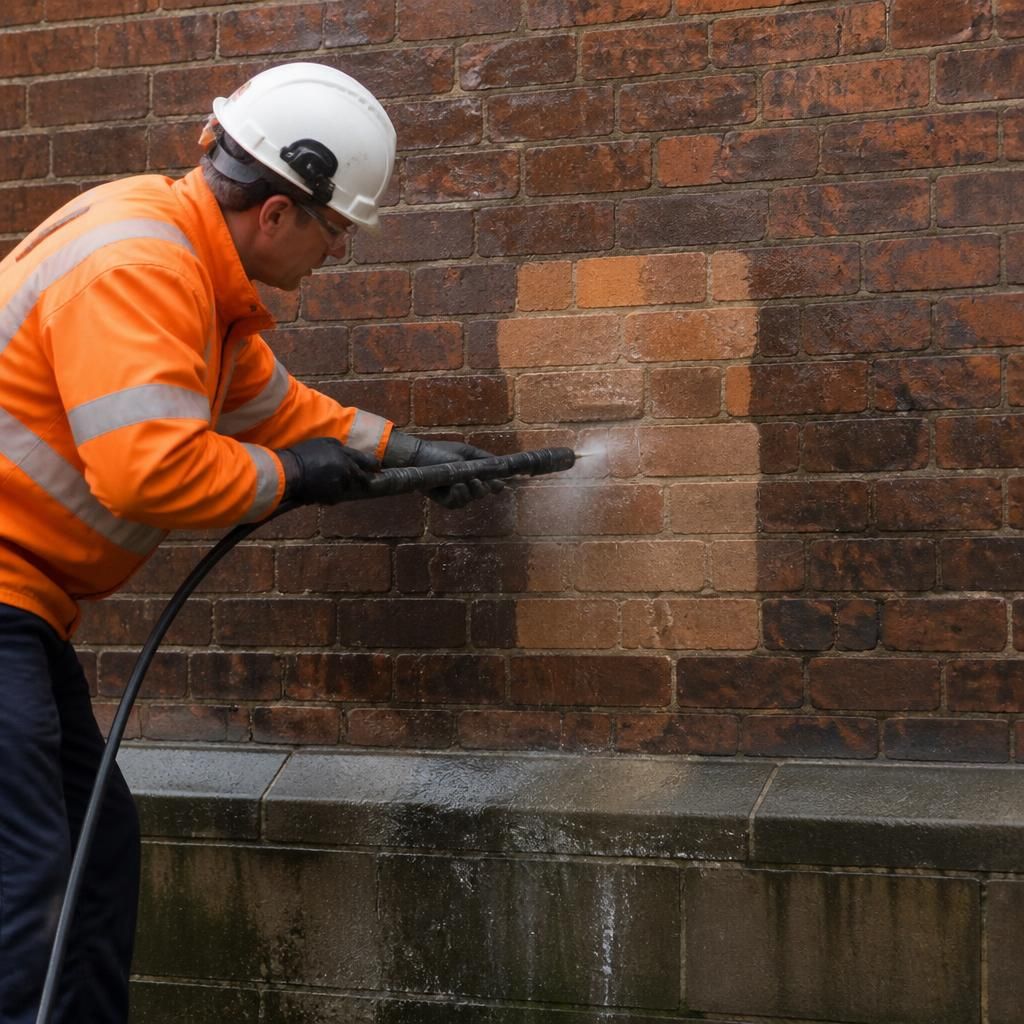
A small test patch is the safest way to compare steam cleaning with other brick and masonry methods before treating the full surface. It allows the operative to assess whether steam removes the contamination without eroding the brick face, disturbing mortar joints, spreading staining or affecting nearby materials.
The test area should be checked after the masonry has dried, as wet surfaces can temporarily appear darker or cleaner than the finished result. If steam alone is ineffective, a compatible chemical or carefully controlled mechanical treatment may be used only where necessary, rather than applying a more aggressive method across the entire elevation.
Arrange a brick and masonry cleaning assessment
Arrange a brick and masonry cleaning assessment to identify the safest and most effective method for your surfaces, contamination and site conditions. We can recommend a suitable approach and confirm whether steam cleaning or a combined treatment is appropriate.