
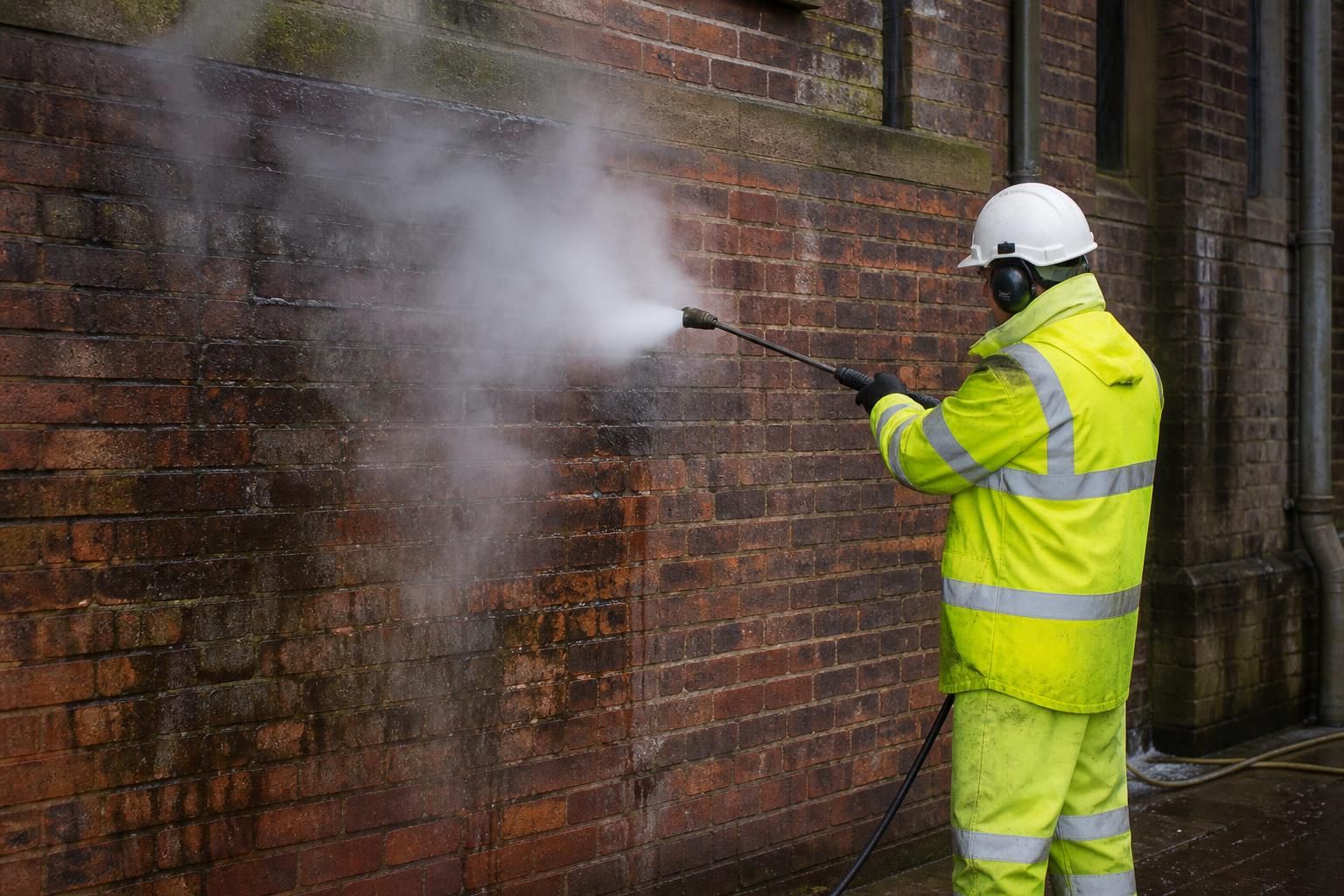
How does steam cleaning affect the structural integrity of brickwork and masonry?
Steam cleaning should not compromise sound brickwork or masonry when the temperature, pressure and working distance are controlled for the surface. However, excessive heat, prolonged application or cleaning already weakened materials can cause thermal shock, mortar erosion, spalling or moisture penetration, so a condition assessment and appropriate method are essential.
Steam cleaning should not damage sound brickwork or masonry when the equipment settings, application time and working distance are matched to the material. The main structural risks arise when excessive heat, pressure or moisture is applied to already weakened bricks, porous stone or deteriorated mortar. A condition assessment before cleaning is therefore essential, particularly on older, listed or heavily weathered buildings.
Steam cleaning uses heated water vapour, sometimes with a controlled low-pressure water flow, to soften and remove deposits such as atmospheric soiling, algae, biological growth, grease and some surface coatings. Because the cleaning action relies more on heat and dwell time than abrasive force, it can be gentler than aggressive pressure washing or abrasive cleaning. It is not automatically risk-free, however. The condition of the masonry, the type of deposit and the chosen operating method all determine the outcome.
How damage can occur
- Thermal shock: Rapid heating of cold, wet or frost-affected masonry can create stress within bricks or stone. Existing cracks, voids and delaminated faces may then open or detach.
- Spalling: Brick faces can flake or break away where moisture has entered the material, salts are present or the outer surface has already been weakened. Heat and moisture may expose this weakness, even if they are not the original cause.
- Mortar erosion: Prolonged application or an unsuitable pressure setting can wash out soft lime mortar, weathered joints or poorly bonded repairs. Recessed or missing joints can allow further water penetration.
- Moisture movement: Steam introduces moisture into porous materials and joints. If the wall cannot dry properly, trapped moisture can contribute to staining, salt deposits, frost damage or deterioration of internal finishes.
- Surface changes: Heat can affect fragile coatings, painted details, pointing, sealants and some repairs. Removing a surface layer may also reveal colour variation or defects that were previously concealed.
These risks are greater where bricks are soft, underfired, cracked, delaminating or saturated. They also increase on masonry with eroded pointing, open joints, previous chemical treatments, embedded salts or signs of movement. Older buildings may contain lime mortar that requires a lower-impact approach than modern cement-based construction.
Assessment before work
A competent cleaning assessment should identify the masonry type, the condition of the brick faces and the composition and condition of the joints. It should also consider façade orientation, exposure to driving rain, previous repairs, nearby windows and services, and whether moisture is entering from defective gutters, copings, roofs or paving. Cleaning will not resolve structural movement, rising damp or failed drainage, and these issues should be addressed separately.
Loose material, open cracks and unstable pointing should be recorded before cleaning. Where the building is historic or architecturally significant, the cleaning approach should be compatible with its construction and any relevant conservation requirements. A small test area is important because it shows how the surface responds to heat, moisture and pressure before wider work begins.
Controls that help protect masonry
- Use the lowest effective pressure and avoid treating steam as a substitute for mechanical force.
- Adjust the heat, flow and working distance to the brick, stone or mortar rather than using one setting across the whole façade.
- Keep the nozzle moving and avoid concentrating heat on a single joint, crack, edge or decorative feature.
- Use controlled passes to soften the deposit, allowing the surface to be rinsed or wiped without unnecessary force.
- Protect vulnerable openings, electrical equipment, sealants, timber and internal areas from water and heat.
- Prevent dirty water from drying back onto the masonry, where it can leave residues or redistribute soluble salts.
- Plan the work for conditions that allow the building to dry naturally and avoid cleaning surfaces at risk of freezing.
- Reinspect the surface during and after cleaning so that settings can be reduced or the method stopped if deterioration becomes visible.
Steam cleaning should not be used to force away unstable brick faces, loose pointing or friable stone. Where the test area shows powdering, colour loss, cracking, joint erosion or surface detachment, the method should be reassessed. A gentler approach, local hand cleaning or repair before cleaning may be more appropriate.
What happens after cleaning
Some defects become more visible once dirt and biological growth have been removed. This does not necessarily mean the cleaning caused the defect; it may have exposed pre-existing deterioration. The completed masonry should be checked for loose faces, widened cracks, damaged joints, unusual staining and areas that remain persistently damp. Any necessary repointing or brick replacement should use materials compatible with the original construction.
Drying time depends on porosity, weather, exposure and the amount of moisture already present. Efflorescence or temporary colour variation can occur as moisture moves through the wall. These signs should be monitored rather than covered immediately with sealants or coatings, which may restrict evaporation and trap moisture.
In summary, properly controlled steam cleaning is generally suitable for maintaining sound brickwork and masonry, but it cannot compensate for poor surface condition or unsuitable technique. The safest approach combines pre-cleaning inspection, a representative test patch, conservative equipment settings, continuous monitoring and a post-cleaning check. This protects the masonry while achieving the required level of cleaning for commercial and industrial premises.
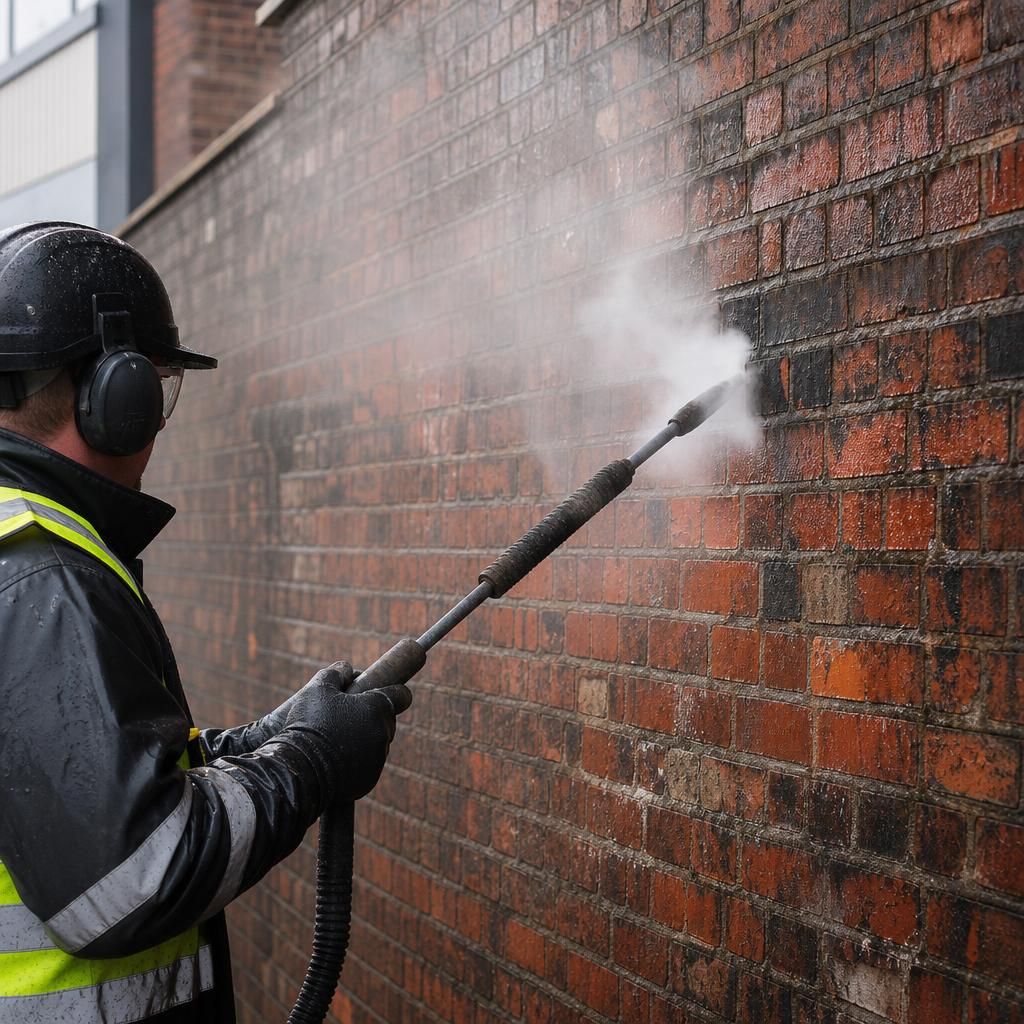
Steam cleaning affects the structural integrity of brickwork mainly when heat, moisture or pressure is applied to already weakened materials. Sound, well-maintained masonry will usually tolerate a controlled steam-cleaning process, but cracked bricks, friable surfaces, open joints and saturated walls require a more cautious method.
A condition assessment and representative test patch should be completed before full-scale cleaning. This allows the operator to check for spalling, mortar erosion, colour changes and moisture-related deterioration, then adjust the temperature, flow, pressure and working distance. The nozzle should remain moving, with particular care around damaged joints, decorative details and areas affected by previous repairs.
If the test area shows powdering, surface detachment or widening cracks, cleaning should be stopped and the underlying defect assessed. Steam cleaning cannot correct structural movement, failed pointing or water ingress, and repairs may need to be completed before the masonry is cleaned.