
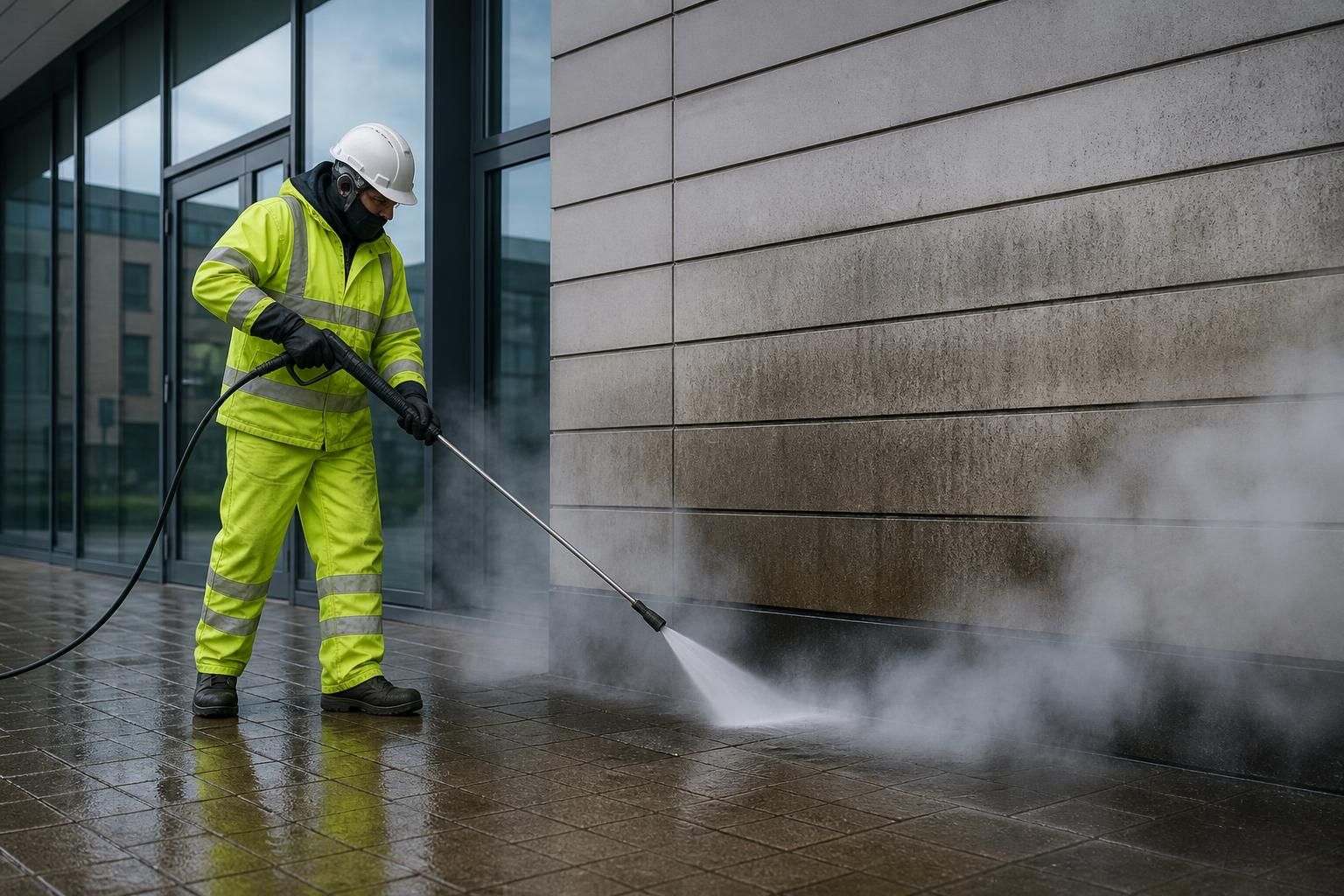
How often should steam cleaning be scheduled for optimal maintenance of exterior surfaces?
For most commercial exterior surfaces, steam cleaning should be scheduled annually, with more frequent treatment for high-traffic areas, heavily polluted locations, food-related premises or surfaces prone to algae and staining. The most suitable interval should be confirmed through regular inspections, taking account of the material, exposure, soiling level, access requirements and any planned maintenance or compliance work.
For most commercial exterior surfaces, steam cleaning is best scheduled annually as part of a planned maintenance programme. High-traffic areas, heavily polluted locations, food-related premises and surfaces affected by algae, moss or recurring staining may need cleaning more frequently. The correct interval should be confirmed through inspections that consider the surface material, exposure, level of soiling, access requirements and any planned repair or compliance work.
A practical scheduling approach
An annual clean is a suitable starting point for façades, cladding, render, brickwork, masonry and other exterior areas that receive ordinary levels of weathering and footfall. This timing helps remove accumulated traffic film, atmospheric deposits, organic growth and general staining before they become more difficult to treat. It also allows cleaning to be coordinated with wider building maintenance, access arrangements and condition surveys.
A shorter interval may be appropriate where surfaces deteriorate or become soiled quickly. This can apply to:
- Car parks, service yards, loading areas and pedestrian routes exposed to oil, tyre marks, mud and heavy footfall.
- Premises near busy roads, construction activity, industrial operations or coastal environments where airborne deposits accumulate more rapidly.
- Food production, hospitality, retail and waste-handling sites where hygiene, presentation and contamination controls require closer attention.
- Shaded or damp elevations where algae, moss, lichen and other organic growth can return between routine cleans.
- Buildings in areas with graffiti or repeated fly-posting, where prompt removal reduces the risk of permanent staining and repeat incidents.
Use inspections rather than a fixed timetable alone
The most reliable maintenance plan combines scheduled steam cleaning with regular visual inspections. Inspect elevations, paved areas, roofs and other vulnerable surfaces for darkening, streaking, biological growth, traffic film, graffiti, oil contamination, loose deposits and changes in the condition of coatings or joints. Cleaning can then be brought forward when deposits are affecting appearance, slip risk, drainage, material condition or the professional presentation of the premises.
Inspections should also identify whether the cause of recurring soiling has been addressed. Blocked gutters, leaking pipes, poor drainage, overhanging vegetation, defective sealants and standing water can cause cleaned areas to become dirty again quickly. Correcting these issues may extend the useful interval between steam cleaning visits.
Seasonal considerations
Steam cleaning is often planned for spring or early autumn, when access and weather conditions are generally suitable and winter deposits or summer organic growth can be dealt with before they become established. The best timing depends on the site rather than the calendar. Work may need to be arranged around operating hours, public access, weather forecasts, frost risk, nesting considerations, construction activity and other contractors.
Where algae, moss or lichen are a recurring problem, an inspection after the wetter months can help determine whether treatment is needed. For high-profile premises, cleaning before an important event, inspection, handover or marketing period may be more appropriate than waiting for the next routine visit.
Match the frequency to the surface
Different materials tolerate deposits and cleaning processes differently. Brickwork and masonry may require attention to prevent staining from becoming ingrained, while render and coated cladding need a method and frequency that will not damage the finish. Concrete and block paving may need more regular cleaning because dirt, chewing gum, oil and organic growth collect in textured or jointed surfaces. Roofing materials require particular care, as excessive cleaning or unsuitable access can dislodge coverings or affect protective finishes.
The cleaning interval should therefore be agreed alongside a condition assessment and method statement. Before each planned visit, the surface should be checked for cracks, failed pointing, loose coatings, damaged sealants and other defects that could affect safe cleaning. Steam pressure, temperature, dwell time and recovery arrangements should be selected for the specific material and contamination.
Planned and reactive cleaning
A planned annual or periodic visit should not replace reactive cleaning where a problem presents a safety, hygiene or reputational risk. Oil spills, graffiti, bird fouling, food-related deposits and contamination around entrances may need prompt treatment. Removing these deposits early can prevent them being tracked through a building, becoming embedded or requiring more aggressive intervention later.
For larger sites, a maintenance plan can divide the property into zones. Entrances, public routes, service yards and visible elevations can be inspected and cleaned more often than low-use areas. This approach focuses resources where soiling has the greatest operational or visual impact while retaining a longer planned cycle for less exposed surfaces.
How to set the next cleaning date
- Record the surface types, previous cleaning dates and known problem areas.
- Inspect for soiling, organic growth, staining, slip hazards and material defects.
- Review exposure to traffic, pollution, weather, footfall, deliveries and site activities.
- Consider access equipment, water management, working hours and other planned maintenance.
- Carry out a small test area where the material or coating is sensitive.
- Set a routine interval and define the conditions that would trigger an earlier visit.
- Review the plan after each clean and adjust it according to how quickly deposits return.
For many commercial properties, an annual steam cleaning visit supported by periodic inspections provides a sound maintenance baseline. Areas with faster soiling may require a shorter cycle, while sheltered or lightly used surfaces may be suitable for less frequent treatment. Encanto Exterior Cleaning can assess the building, identify priority areas and recommend a proportionate schedule that supports appearance, safety, material care and the practical requirements of the site.
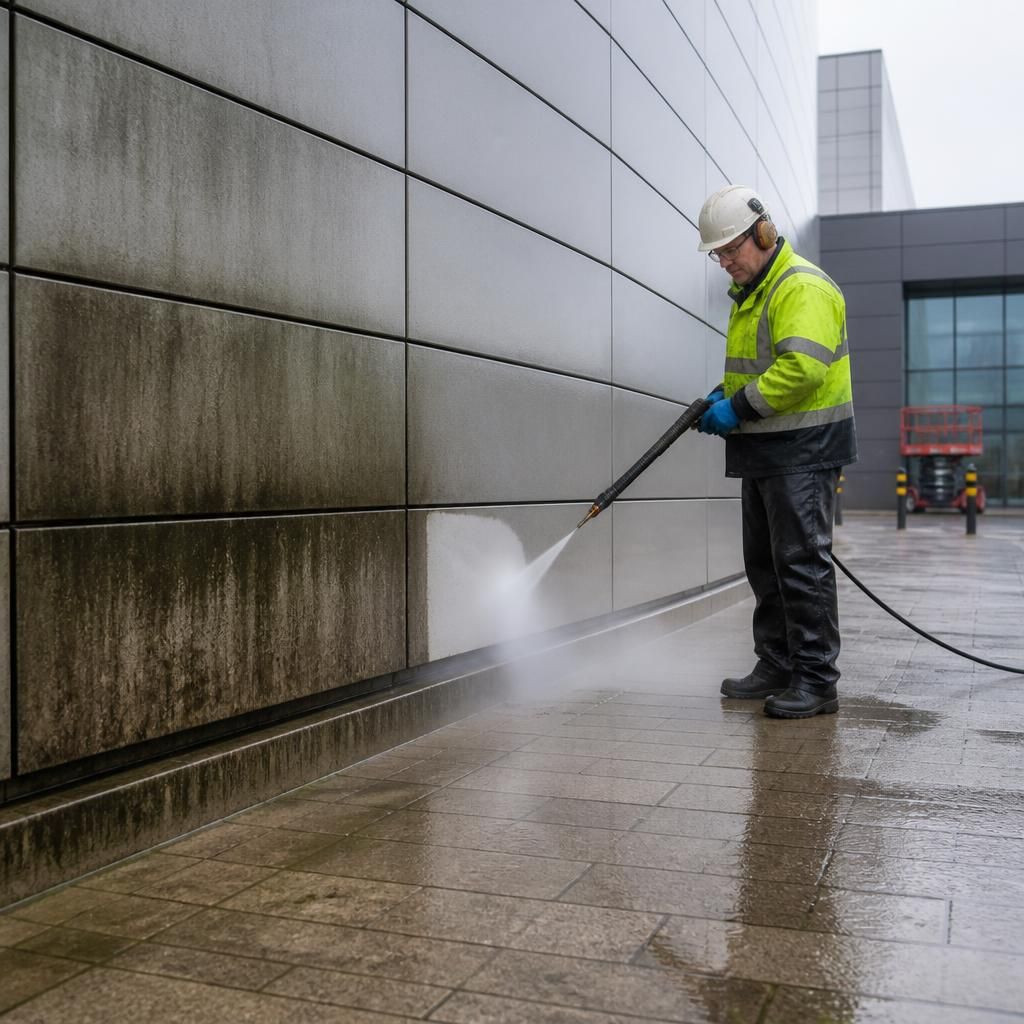
Optimal steam cleaning frequency is determined by how quickly an exterior surface becomes soiled, rather than by a fixed calendar date alone. An annual clean is a practical starting point for many commercial façades and paved areas, but exposed or heavily used surfaces may need attention sooner.
Regular inspections help identify when cleaning should be brought forward. Look for traffic film, oil, algae, moss, graffiti, bird fouling, dark staining and deposits that could create slip risks or affect the appearance of entrances and public areas. Recurring soiling may also indicate blocked drainage, leaking pipes, standing water or overhanging vegetation, which should be addressed to prevent rapid recontamination.
A suitable maintenance plan should record the surface material, previous cleaning date, exposure, problem areas and any access requirements. High-traffic routes, service yards and prominent elevations can be inspected and cleaned more frequently than sheltered, lightly used areas. This targeted approach maintains presentation and surface condition without cleaning areas unnecessarily.
Arrange Your Steam Cleaning Maintenance Assessment
Arrange a steam cleaning maintenance assessment with Encanto Exterior Cleaning to review your surfaces, exposure, soiling patterns and access requirements. We can help establish a practical cleaning schedule and identify conditions that may require earlier treatment.