
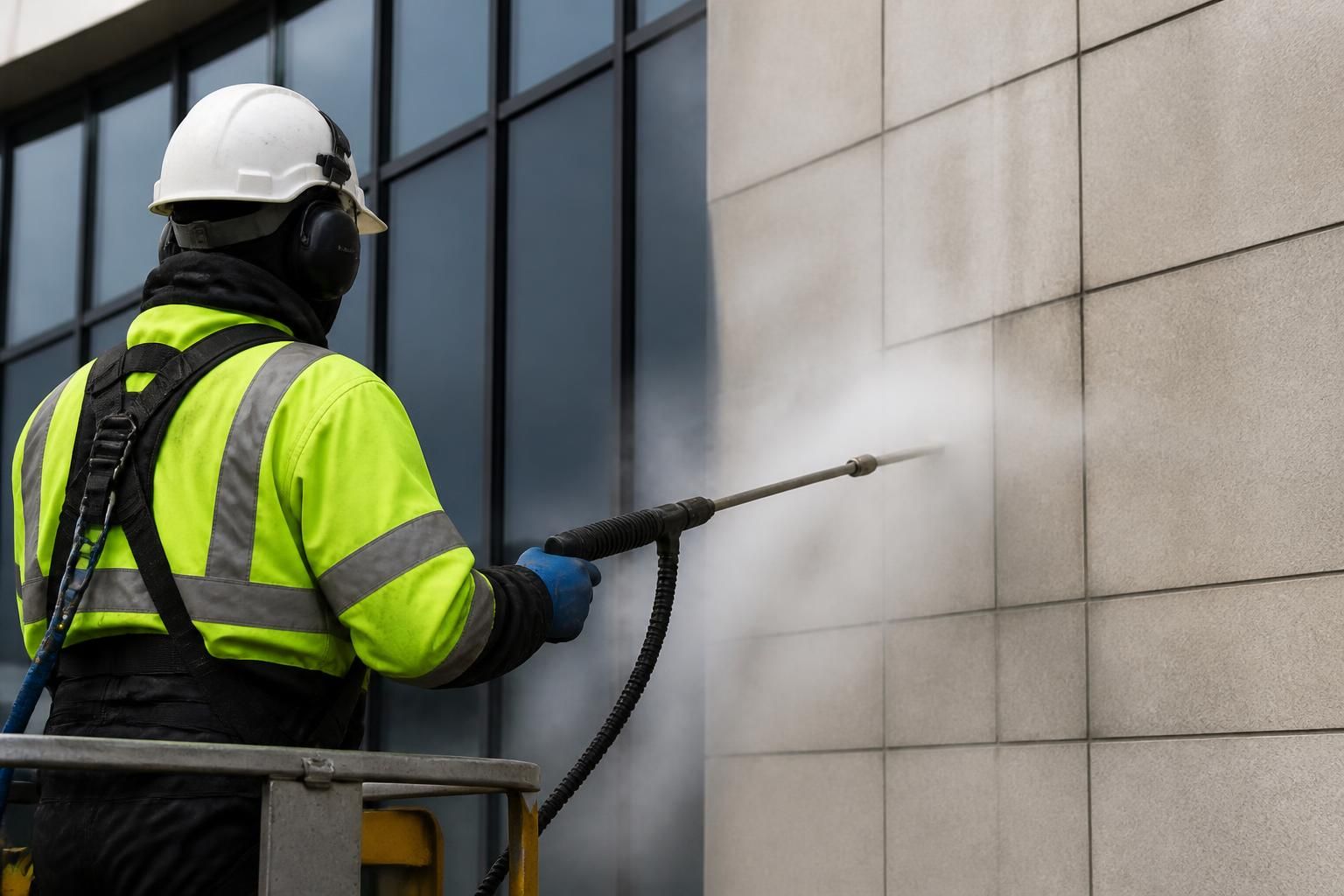
How often should exterior steam cleaning be performed on commercial buildings?
Most commercial buildings should have exterior steam cleaning scheduled annually, with more frequent cleaning where façades and paved areas are exposed to heavy traffic, pollution, algae, oil or graffiti. The appropriate interval should be reviewed according to the building’s materials, location, use and visible soiling, with routine inspections helping to adjust the maintenance schedule.
For most commercial buildings, exterior steam cleaning is best scheduled annually, with more frequent treatment for surfaces exposed to heavy traffic, vehicle emissions, pollution, algae, oil, food waste or graffiti. The correct interval depends on the building’s materials, location, use, surrounding environment and the type of soiling present. Regular inspections should be used to adjust the programme rather than relying on a fixed date alone.
An annual clean is often suitable for commercial façades, rendered elevations, brickwork, masonry, cladding and other exterior surfaces that accumulate general atmospheric dirt. It helps prevent deposits from becoming ingrained and makes it easier to identify defects such as cracked render, open joints, damaged sealant, failed coatings or loose masonry. Cleaning before soiling becomes heavily established is generally more controlled than leaving the surface until restoration-level work is required.
Some buildings need a shorter maintenance interval. High-traffic retail areas, transport sites, industrial premises, service yards and properties close to busy roads can accumulate exhaust residue, dust and oily deposits quickly. Food premises may also require more frequent attention where grease or organic waste reaches external walls, loading areas or paved surfaces. Buildings beside trees, shaded elevations and damp locations may develop algae, moss or other biological growth sooner than exposed, well-drained elevations.
Graffiti-prone locations should normally be managed through a responsive cleaning arrangement rather than an annual-only schedule. Removing unwanted markings promptly can reduce the risk of ghosting, staining and repeated damage, particularly on porous masonry and textured coatings. Where a protective anti-graffiti treatment is suitable, its condition should be checked as part of ongoing maintenance because the cleaning method and future interval may depend on whether that protection remains effective.
Different parts of the same property may require different frequencies:
- Façades and external walls: review at least annually, with cleaning brought forward where traffic film, pollution or biological growth is clearly visible.
- Brickwork and masonry: clean according to the material’s porosity, staining and condition. Historic or delicate masonry may need a carefully controlled, less frequent programme rather than routine aggressive cleaning.
- Cladding and render: inspect for streaking, embedded dirt, coating deterioration and vulnerable joints before setting the interval. The cleaning approach must suit the finish and manufacturer’s requirements.
- Roofs and high-level areas: schedule inspections around drainage, access and biological growth. Cleaning should not be used to conceal damaged coverings, blocked outlets or defective flashings.
- Car parks, concrete and block paving: frequency is influenced by oil, tyre marks, litter, chewing gum, algae and pedestrian traffic. High-use areas may need localised treatment between wider cleaning visits.
- Graffiti-affected surfaces: use rapid-response removal alongside periodic inspections and, where appropriate, protective treatment.
Seasonal conditions also affect the most suitable timing. Cleaning during a period of stable weather can support controlled application, rinsing and drying, although the work should be planned around the surface, access arrangements and the specific equipment being used. Shaded elevations and damp areas may need additional inspection after wetter periods, when biological growth is more likely to become apparent. A pre-winter review can also help identify blocked drainage, slippery deposits and other issues that may affect site safety.
Steam cleaning is not necessarily required every time an exterior surface is inspected. A maintenance plan may combine periodic steam cleaning with routine visual checks, spot cleaning and rapid removal of isolated contamination. This avoids treating areas that remain acceptably clean while ensuring that high-risk or heavily soiled sections are not overlooked. Cleaning frequencies can therefore be set by elevation, surface type or operational zone rather than applying one interval to the entire property.
Before confirming a programme, the building should be assessed for:
- the type, age and condition of each exterior material;
- the nature and depth of the contamination;
- exposure to traffic, industry, coastal air, trees, shade and prevailing weather;
- the presence of delicate coatings, sealants, joints, signage, glazing or electrical equipment;
- pedestrian and vehicle movements around the work area;
- available water management, drainage and access arrangements;
- lease, landlord, tenant, conservation or manufacturer requirements; and
- any previous cleaning treatments or protective coatings.
A survey and small test area are particularly important where the surface is porous, aged, painted, coated or historically significant. Steam cleaning uses heat and controlled moisture to soften and remove deposits, but unsuitable settings, excessive dwell time or poor technique can still affect vulnerable materials. The operating temperature, pressure, nozzle selection, distance and water management should be selected for the surface rather than for speed alone.
Building managers should also distinguish appearance-led cleaning from compliance and safety requirements. Slippery algae, oil contamination, chewing gum and heavily soiled access routes may require action before the next planned façade clean. Similarly, a visible stain may indicate a defect or drainage problem that should be repaired rather than repeatedly cleaned. Cleaning records, photographs, inspection findings and notes on recurring contamination can help establish a defensible maintenance history and refine future intervals.
In practice, a sensible starting point is an annual condition review with planned steam cleaning where inspection shows it is required. Increase the frequency for high-use, high-pollution or graffiti-prone premises, and reduce or extend it only where inspections confirm that the surfaces remain stable and presentable. This condition-based approach maintains the appearance and safety of the property while avoiding unnecessary treatment of exterior materials.
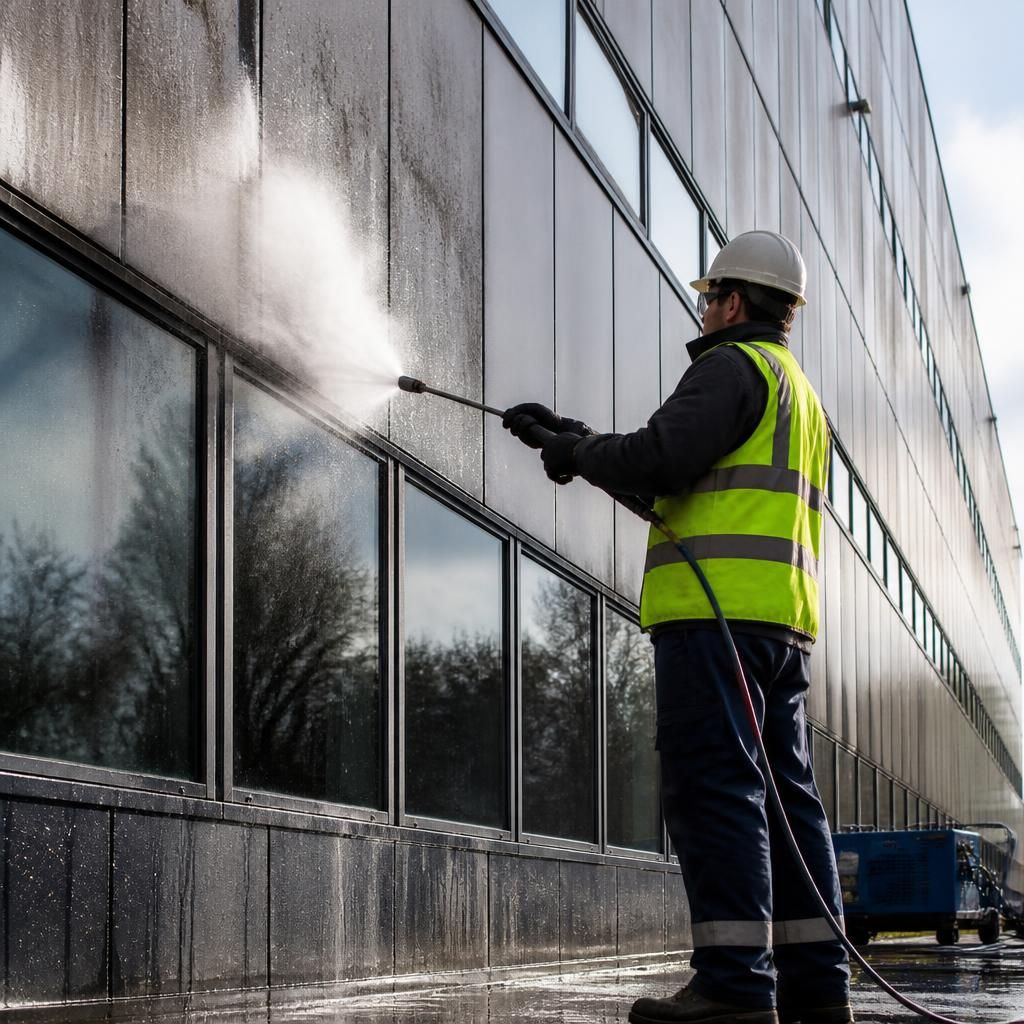
Exterior steam cleaning is usually scheduled annually for a commercial building, but the most effective interval is based on the condition and use of each exterior area rather than a fixed date. High-traffic façades, service yards, car parks and shaded elevations may need more frequent attention where pollution, oil, algae, food residue or graffiti builds up quickly.
Routine inspections allow the cleaning plan to be adjusted before deposits become ingrained or create a slip hazard. A maintenance programme may therefore combine annual façade cleaning with more frequent spot treatment, rapid graffiti removal and seasonal checks of damp or heavily used areas. This condition-based approach avoids unnecessary cleaning while keeping important surfaces presentable and safe.