
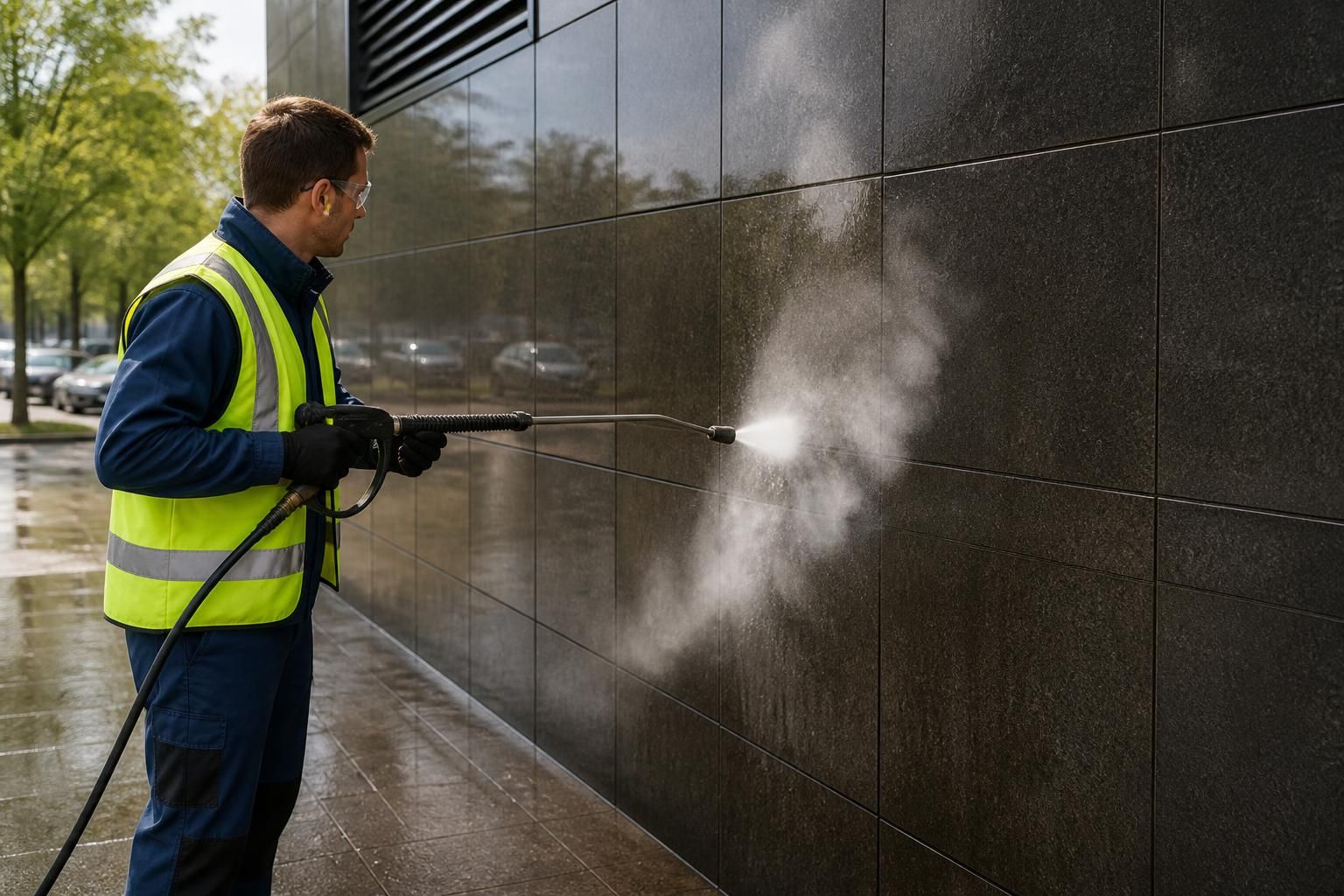
How is exterior steam cleaning different from traditional pressure washing?
Exterior steam cleaning uses heated water vapour, usually at lower pressure and with less water, to loosen oils, grime, biological growth and other contaminants. Traditional pressure washing relies mainly on the mechanical force of pressurised water, making it effective for robust surfaces and heavier deposits but potentially less suitable for delicate materials or areas where water use must be controlled.
Exterior steam cleaning uses heated water, often delivered as hot vapour or low-moisture hot water, to soften and lift contamination at relatively low pressure. Traditional pressure washing depends primarily on the force of a pressurised water jet. The main differences are the balance between heat and mechanical force, the volume of water used, the type of deposits removed and the risk of damaging the surface.
How the cleaning action differs
Pressure washing removes dirt by impact and shear. A powerful water jet breaks the bond between the surface and contaminants such as loose soil, dust, moss, algae and traffic film. This makes it a practical option for robust surfaces, particularly where heavy deposits cover large areas and the substrate can tolerate the pressure.
Steam cleaning adds heat to the process. Heat softens oils, grease, chewing gum, ingrained organic matter and some coatings, allowing them to be removed with less mechanical force. The heat can also help loosen biological growth and reduce surface contamination, although steam cleaning should not be described as a guaranteed sterilisation treatment. Results depend on the temperature reached at the surface, dwell time, contamination and the material being cleaned.
Pressure, temperature and water volume
- Traditional pressure washing: generally uses a higher-pressure water jet and a greater flow of water. It is often faster for loose, widespread dirt on durable surfaces.
- Exterior steam cleaning: uses heat as a greater part of the cleaning action and may operate at lower pressure with less water. This can provide better control around sensitive finishes, joints, façades and areas where water ingress or runoff must be limited.
The terms used by cleaning contractors can vary. Some equipment produces dry or wet steam, while other systems deliver very hot water at low pressure. A professional assessment should therefore consider the actual temperature, pressure, flow rate, nozzle and cleaning method rather than relying on the word “steam” alone.
Which deposits each method handles best
Pressure washing is effective against loose dirt, mud, general dust, surface algae and other deposits that can be removed through mechanical action. It is commonly suitable for concrete, block paving, some hard-wearing masonry and other durable external surfaces, provided the pressure and technique are correctly controlled.
Steam cleaning is particularly useful where contamination is greasy, sticky, deeply bonded or sensitive to aggressive impact. Typical applications include oil and fuel residues in car parks, chewing gum, graffiti residues, traffic film, grime on façades and organic growth on walls or hard surfaces. It can also be useful where a lower water volume is preferred, such as near building entrances, busy commercial premises or areas with restricted drainage.
Neither method removes every substance in the same way. Cement residues, paint, bitumen, rust staining, efflorescence and old coatings may require additional treatment, specialist products or controlled mechanical removal. The cleaning approach should be selected after identifying both the deposit and the substrate beneath it.
Effect on exterior materials
The greater force of pressure washing can cause problems if the equipment is used incorrectly. Excessive pressure may erode soft brick or stone, remove pointing, drive water into joints, damage render, strip coatings or leave visible cleaning marks. It may also dislodge fragile areas that require repair before cleaning.
Lower-pressure steam cleaning can reduce some of these risks, but it is not automatically safe for every material. Heat may affect certain paints, sealants, plastics, membranes, synthetic renders or weathered coatings. Prolonged application can also stress vulnerable surfaces. Temperature, pressure, nozzle distance, dwell time and the condition of the material all need to be controlled.
For listed, historic or deteriorated buildings, testing in an inconspicuous area is especially important. The test should check for colour change, surface loss, damage to pointing, coating softening, water penetration and any change in the appearance of the cleaned area.
Water use and environmental considerations
Steam cleaning can use less water than conventional high-flow pressure washing, although the actual saving depends on the equipment, operator and size of the contamination. Lower water use may reduce the volume of wastewater requiring collection and help where drainage capacity is limited.
Environmental performance also depends on what is being removed and how the runoff is managed. Oil, fuel, detergents, paint particles, heavy metals and contaminated silt should not be allowed to enter surface-water drains. Appropriate containment, collection, filtration or disposal may be required. Using steam does not remove the need for responsible wastewater management.
Cleaning speed and practical suitability
Pressure washing can cover large, open areas quickly, making it efficient for broad expanses of sound concrete, paving or other hard-wearing surfaces. Steam cleaning may take longer where contamination is strongly bonded because the operator needs to work progressively and allow heat to soften the deposit.
That slower, more controlled approach can be an advantage around entrances, façade details, signage, loading areas, sensitive finishes and occupied premises. It may reduce overspray and limit the amount of water reaching adjacent walls, doors, electrical equipment or pedestrian routes. Site access, weather, drainage, working height and the need to keep parts of the premises operational should all be considered when planning the work.
How the correct method is selected
- Identify the material, its age, condition, finish and previous repairs.
- Determine whether the contamination is loose, greasy, biological, adhesive, stained or bonded to a coating.
- Assess the risks from pressure, heat, water penetration, runoff and adjacent equipment.
- Carry out a controlled test clean where the surface or finish is sensitive.
- Set the equipment and technique to the substrate, rather than using one pressure or temperature for the entire site.
In practice, the choice is not always exclusively steam or pressure washing. A project may use low-pressure steam for greasy or delicate areas and conventional pressure washing for robust surfaces with loose deposits. Detergents, biocides or specialist stain treatments may also be appropriate, subject to material compatibility and environmental controls.
Steam cleaning is therefore different from traditional pressure washing because it relies more on heat and controlled, low-moisture cleaning, while pressure washing relies more on water impact. Steam is often the better option for bonded, oily or sensitive contamination, whereas pressure washing can be more productive on large areas of durable material with loose surface dirt. The safest and most effective choice comes from matching the equipment and method to the building material, contamination, access conditions and wastewater requirements.
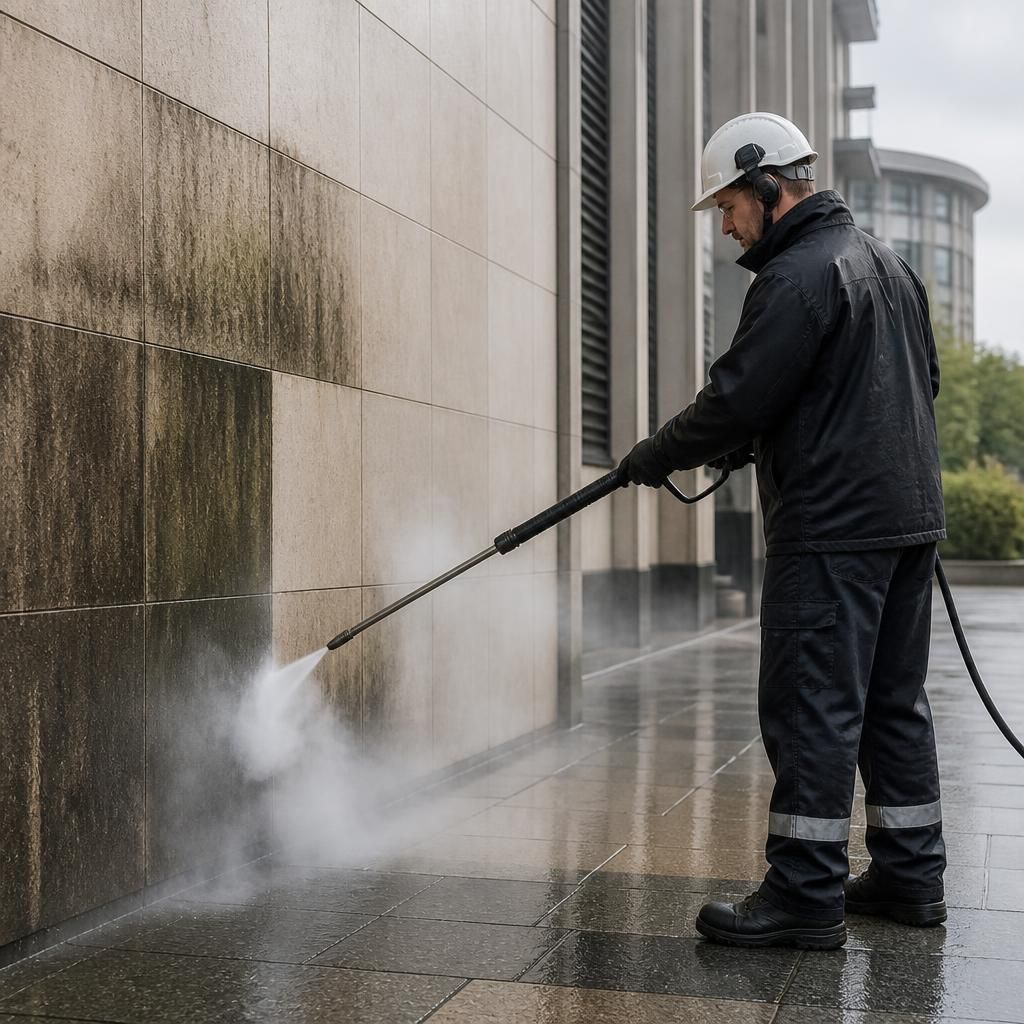
Exterior steam cleaning relies more on heat and controlled moisture to soften and lift contamination, whereas traditional pressure washing relies mainly on the impact of a higher-volume water jet. This makes steam useful for oily residues, chewing gum, traffic film and bonded grime where excessive pressure could damage pointing, coatings or softer masonry.
Neither method is automatically suitable for every surface. The cleaning temperature, pressure, water flow, nozzle distance and dwell time should be adjusted to the material and its condition. A small test area can identify risks such as colour change, coating softening, surface erosion or water penetration before the main work begins.
Discuss the Right Cleaning Method for Your Site
Contact Encanto Exterior Cleaning to assess your site and recommend the safest, most effective method for its surfaces, contamination and access conditions. We can arrange a controlled test clean where required and plan the work around your operational and wastewater management needs.