
How does exterior steam cleaning compare with other cleaning methods in terms of environmental impact and effectiveness?
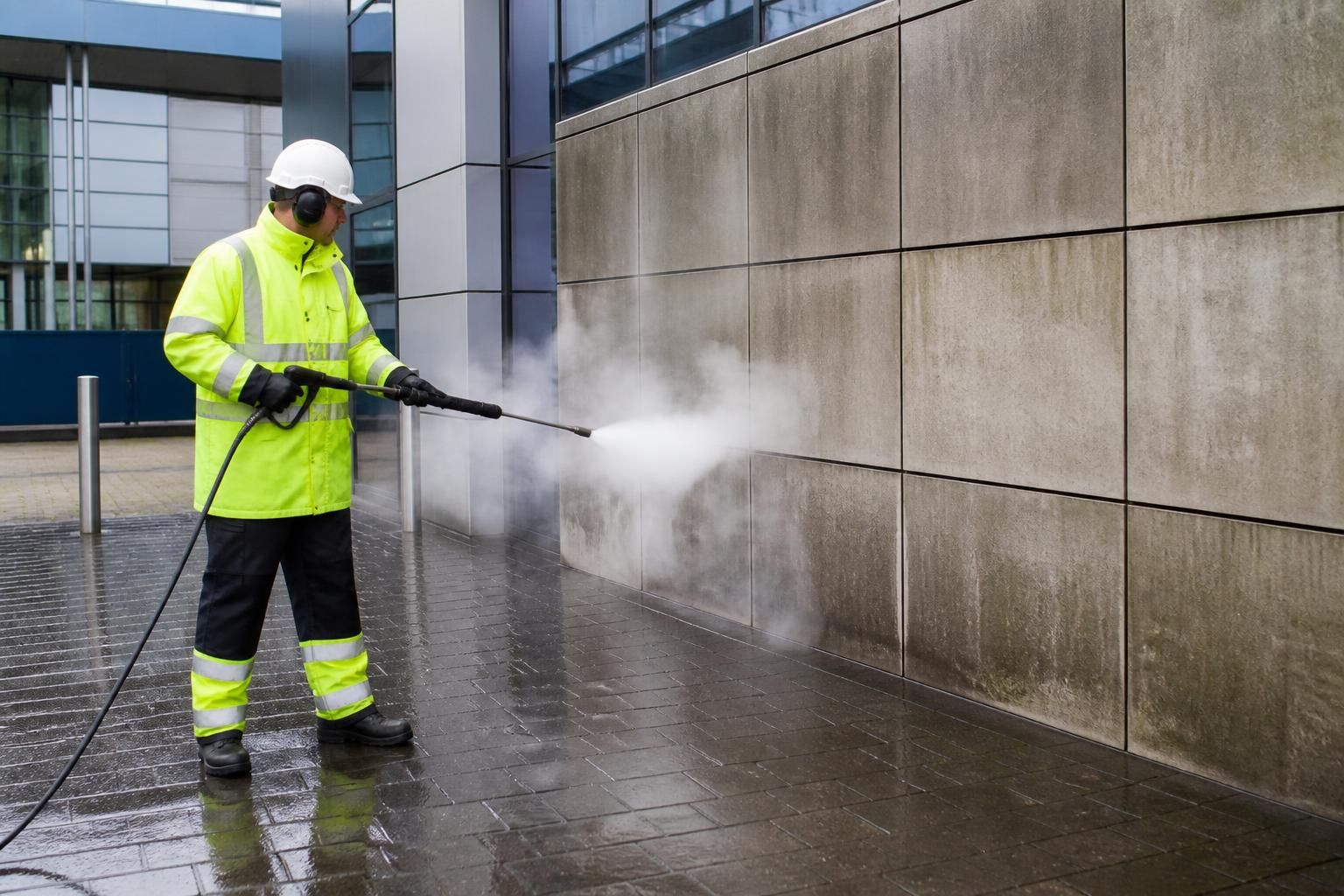
Exterior steam cleaning generally uses less water and fewer chemicals than conventional pressure washing, reducing runoff while effectively removing dirt, organic growth, oil residues and some surface coatings. Its lower-pressure, high-temperature approach is often better suited to sensitive materials, although pressure washing may be more effective for heavy deposits across robust surfaces.
Exterior steam cleaning generally has a lower environmental impact than conventional pressure washing and many chemical-led methods because it can remove contamination with much less water and limited detergent. Its effectiveness comes from the combination of heat, controlled moisture and suitable pressure, which can break down organic growth, grease, oil residues, dirt and some coatings without relying on aggressive mechanical force. It is not automatically the most sustainable or effective option for every application, however: the result depends on the surface, the type and thickness of contamination, the energy source and how wastewater is controlled.
Environmental impact compared with other methods
Traditional pressure washing uses a high volume of water to create mechanical cleaning force. This can be appropriate for robust surfaces such as heavily soiled concrete, block paving and some hard-standing areas, but it may produce substantial runoff. Runoff can carry silt, oils, algae, cleaning products and loosened coatings into drains or surrounding ground if it is not contained and recovered correctly. High-pressure water can also spread contamination across adjacent surfaces and increase the amount of wastewater requiring management.
Steam cleaning uses heated water delivered at a controlled flow and pressure. The lower water demand can reduce the volume of runoff and make it easier to manage wastewater on commercial sites. Heat helps soften grease, biological deposits and ingrained dirt, so fewer chemicals may be required. This is particularly useful where clients need to limit detergent use around planting, drainage systems, public areas or sensitive building finishes.
Chemical cleaning can be effective against specific contaminants, including algae, moss, lichen, staining and some graffiti products. However, the environmental effect depends on the formulation, concentration, contact time, storage, application method and disposal of the resulting wastewater. Biocides and strong cleaning agents may affect vegetation, aquatic environments or building materials if they are misapplied. Chemical treatment can still have a place in a controlled cleaning specification, but steam may reduce or remove the need for it in many situations.
Abrasive cleaning methods, including certain forms of blasting, can remove hard deposits and coatings quickly from suitable substrates. They also create spent abrasive material, airborne dust and a risk of surface loss. On masonry, coatings, rendered façades and architectural details, excessive abrasion may permanently alter the surface profile. Steam is usually less destructive because it relies more on heat and controlled moisture than on impact from a solid abrasive.
Manual cleaning has a comparatively low equipment and energy requirement, but it can involve more labour, water, detergents and repeated application. It is often appropriate for small, delicate or detailed areas. For large commercial façades, car parks and extensive hard surfaces, steam or pressure washing may provide more consistent coverage when combined with proper access and runoff controls.
How effectiveness differs by contamination
Steam is particularly effective where heat can penetrate or soften the material being removed. Typical examples include:
- oil and grease residues on concrete, loading areas and hard-standing;
- organic growth such as algae, moss and lichen, subject to the condition of the underlying material;
- traffic film and atmospheric dirt on façades, cladding and masonry;
- chewing gum and other localised sticky residues;
- some types of graffiti and paint residue, where the surface and coating are suitable; and
- soiling around joints, edges and textured surfaces where high-pressure water alone may spread the deposit.
Pressure washing can be more effective for thick mud, loose aggregate, heavy silt and large quantities of surface debris on durable substrates. Its mechanical force can provide rapid initial removal, particularly on concrete and block paving. It may be less suitable where water penetration, splashback, joint erosion, coating damage or disturbance of fragile surfaces is a concern.
Chemical treatments may outperform steam against particular stains or established biological growth when sufficient dwell time is available. They do not, however, replace the need for physical removal in every case. A treated surface may still require rinsing, brushing or low-pressure cleaning, and residual contamination can remain if the process is not matched to the deposit.
Surface sensitivity is an important distinction
Steam cleaning is often chosen for materials where high pressure or abrasive action could cause damage. Controlled steam can be suitable for many types of brickwork, masonry, façades, render, cladding and some roofing materials, but suitability must be assessed rather than assumed. Heat and moisture can still affect weak mortar, friable stone, failing coatings, timber, sealants, joints and moisture-sensitive construction. A test area helps establish the correct temperature, pressure, flow and cleaning distance before wider work begins.
On painted or coated surfaces, the objective is to remove contamination without lifting sound coating or exposing the substrate. On masonry, it is important to avoid removing the surface’s weathered outer layer or washing out mortar joints. On roofs, the method must account for the covering, laps, fixings, insulation and the possibility of water entering the building. The gentlest process that achieves the required standard is normally the most appropriate.
Energy use and the complete environmental picture
Steam equipment requires energy to heat water, so water savings alone do not provide a complete environmental comparison. The overall impact is influenced by the equipment’s efficiency, the fuel or electricity used, transport to site, operating time, water source, chemical use and wastewater handling. A method that uses little water but requires prolonged heating may not be preferable for every small or lightly soiled job.
For larger commercial projects, steam can offer a favourable balance where the reduced water use, lower chemical requirement and improved control of runoff outweigh the energy used for heating. Efficient planning also matters. Cleaning in logical work zones, using suitable access equipment, avoiding unnecessary rework and matching the process to the contamination can reduce energy and resource consumption regardless of the chosen method.
Wastewater and site controls remain essential
Steam cleaning does not make contaminated runoff harmless. Oils, loosened paint, biological material and other residues still need to be contained, collected or directed through an approved drainage arrangement where appropriate. Before work starts, the cleaning specification should consider nearby watercourses, surface-water drains, planting, pedestrians, vehicles and the possibility of hazardous residues.
Good practice may include drain protection, bunding, temporary collection, filtration, vacuum recovery and safe disposal. The correct controls depend on the site and the contaminant. Lower water volume can make these measures more manageable, but it does not remove the need for them.
Which method is most appropriate?
The best choice is determined by the required finish, the substrate, the contamination, access conditions, environmental controls and the consequences of failure. A practical assessment should establish:
- what has caused the staining or deposit;
- whether the surface is sound, coated, porous, friable or previously repaired;
- how much water and wastewater the site can safely accommodate;
- whether detergents, biocides or other treatments are necessary;
- how close the work is to drainage, planting, public areas and occupied premises; and
- whether steam, pressure washing, soft washing, manual work or a combination will achieve the result with the least risk.
In many commercial settings, a combined approach is most effective. Steam may be used for detailed or sensitive areas, grease and residues, while controlled pressure washing may remove loose debris from robust hard surfaces. Manual treatment can then be used around fixtures, joints and architectural details. This avoids applying one method indiscriminately across materials with different tolerances.
Overall, exterior steam cleaning is often a strong option where reducing water use, limiting chemical application and protecting sensitive surfaces are priorities. Pressure washing may remain the faster or more suitable choice for heavy loose deposits on durable surfaces, while chemical, abrasive or manual methods may be needed for specific contaminants. A properly surveyed and controlled process—not the equipment alone—determines both the environmental performance and the quality of the finished clean.
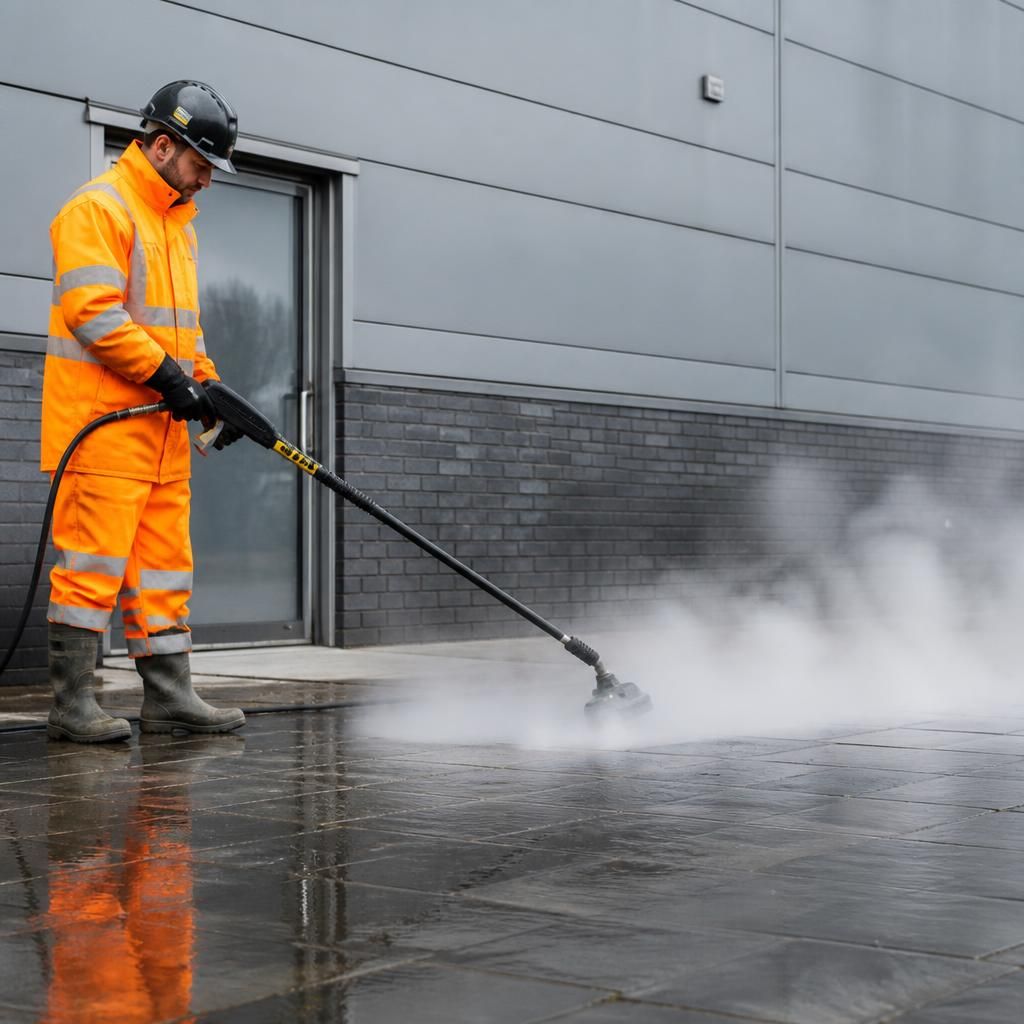
Exterior steam cleaning can reduce water use and chemical dependence, but its environmental performance still depends on how contaminated runoff is controlled. Heat loosens dirt, grease, organic growth and some coatings using a lower flow of water than conventional pressure washing, which can make wastewater easier to contain and recover.
Steam does not make residues harmless. Oils, paint particles and biological material must still be prevented from entering surface-water drains, planting areas or nearby watercourses. Drain protection, temporary collection, filtration or vacuum recovery may be needed, depending on the site and contamination. This combination of an appropriate cleaning method and effective wastewater controls is what delivers a genuinely lower-impact result.
Arrange an exterior cleaning assessment
Arrange an exterior cleaning assessment to compare steam cleaning with the most suitable method for your surfaces, contamination and site controls. We can recommend a practical specification for effective cleaning, responsible wastewater management and minimal disruption.