
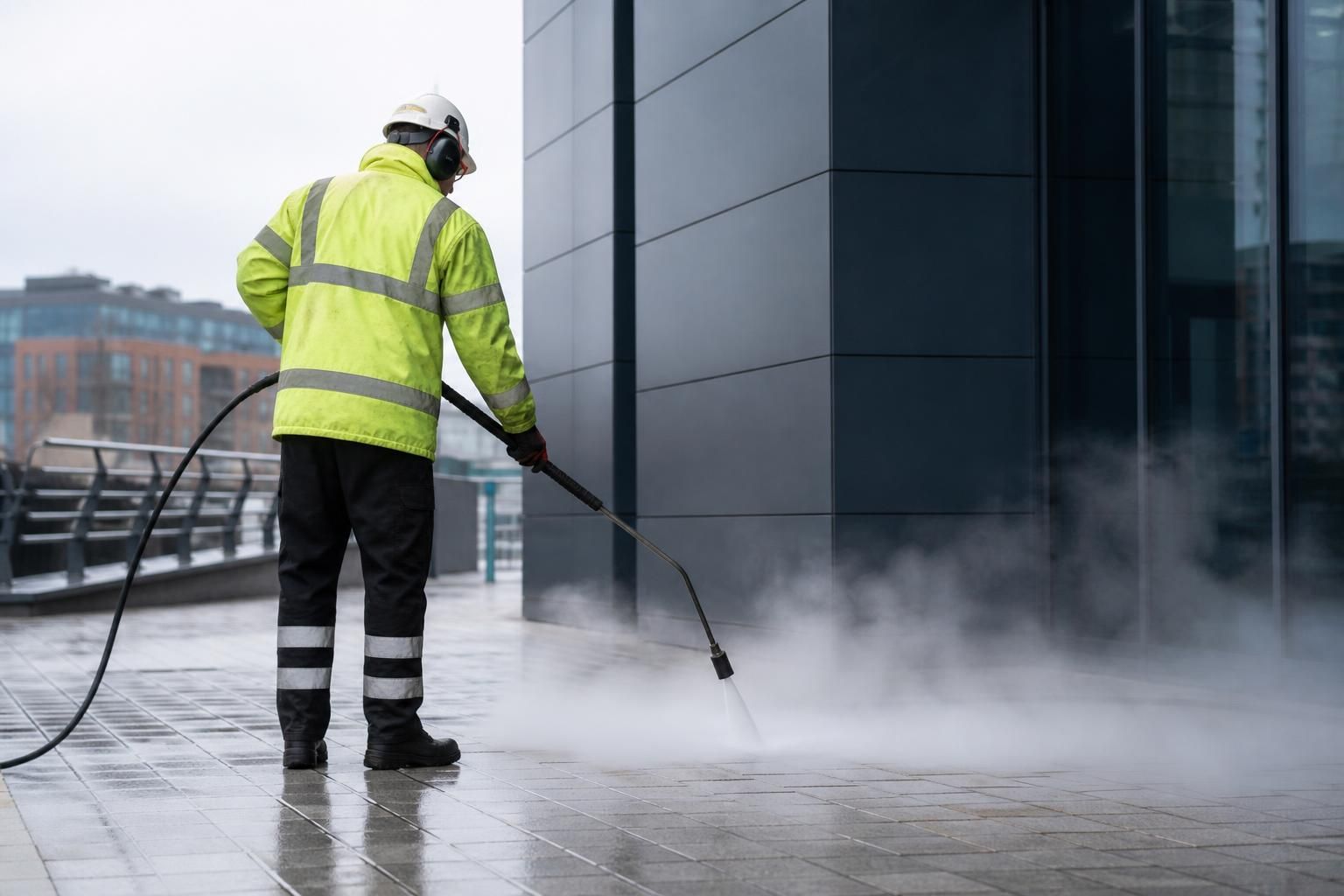
How does exterior steam cleaning compare to pressure washing?
Exterior steam cleaning uses heated water at lower pressure to loosen and remove dirt, oils, organic growth and some coatings, while pressure washing relies on a stronger water jet to provide mechanical cleaning. Steam is often better for sensitive surfaces, grease and detailed areas; pressure washing can be more efficient for robust materials and heavy surface debris, so the safest choice depends on the substrate, contamination and required finish.
Exterior steam cleaning uses heated water, usually delivered at lower pressure than conventional pressure washing, to soften and lift contamination from a surface. Pressure washing relies primarily on the force of a stronger water jet to remove dirt. Neither method is universally better: steam is generally preferable for sensitive materials, grease, biological growth and detailed areas, while pressure washing can be faster on durable surfaces carrying heavy, loose debris.
The correct choice depends on the substrate, the type of contamination, the condition of the surface and the finish required. On commercial and industrial sites, the cleaning method should be selected after assessing the building materials and testing a discreet area rather than applying the same treatment everywhere.
How the two methods clean
Pressure washing removes contamination through mechanical impact. A high-volume or high-pressure water jet breaks the bond between the surface and materials such as soil, moss, algae, loose coatings and traffic film. It is particularly effective where contamination is firmly attached but the underlying material is robust enough to withstand the force and water volume.
Exterior steam cleaning uses heat to loosen contamination before it is removed with a controlled flow of water. The heat can soften oils, grease, chewing gum, biological deposits and some paint or adhesive residues, reducing the need for aggressive pressure or chemical treatment. In practice, professional steam cleaning is often better described as low-pressure hot-water cleaning, as the equipment may produce heated water rather than dry steam.
Surface suitability
- Brickwork and masonry: Low-pressure steam cleaning can be suitable for historic, weathered or softer masonry because it places less mechanical stress on the surface. Pressure washing may be appropriate for sound, modern masonry, but excessive pressure can erode joints, drive water into defects or remove the face of softer bricks.
- Façades, cladding and render: The method must be matched to the coating and panel finish. Steam can be useful for removing traffic film and organic deposits from detailed façades, while pressure washing may damage render, sealants, painted finishes or vulnerable joints if the pressure and spray pattern are not controlled.
- Concrete and block paving: Pressure washing is often effective for loose dirt, moss and general surface deposits on sound concrete and paving. Heated cleaning can provide an advantage where oil, chewing gum or ingrained organic contamination remains after ordinary washing.
- Roofs: Roof cleaning requires particular care because tiles, slates, membranes, flashings and coatings have different tolerances. Lower-pressure heated cleaning can reduce the risk of dislodging tiles or forcing water beneath laps, but it is not automatically safe for every roof material.
- Metal and coated surfaces: Steam may remove grease and deposits while limiting abrasion, but heat can affect certain paints, plastics, sealants and protective coatings. Pressure washing also needs careful control around joints, fixings and damaged finishes.
Which method is better for different contamination?
For loose dust, soil, surface mud and heavy accumulations on durable concrete, pressure washing can provide efficient coverage. It may also be the practical option where a large area needs rinsing and the substrate has been confirmed to tolerate the water pressure.
Steam cleaning has advantages when contamination is bonded to the surface or contains oils and grease. Heat helps break down these deposits, making it possible to clean with less pressure and, in some situations, less detergent. It can also be useful for removing algae, moss staining, bird fouling, chewing gum and some graffiti residues. The result depends on the material, the age of the contamination and whether the surface has been permanently stained or etched.
Neither process should be treated as a guaranteed coating or paint-removal system. Steam may soften some coatings, but complete removal can require a separately controlled treatment. Pressure washing can strip loose paint or coatings, although it may also cause unwanted damage if the surface is not sound.
Differences in water use, runoff and chemicals
Pressure washing commonly uses a greater water flow and can create substantial runoff, particularly on large paved areas. Steam cleaning can use less water because heat does more of the work, although actual consumption depends on the equipment, cleaning rate, surface condition and rinsing requirements. Heated cleaning is not automatically low-impact, as the energy used to heat the water must also be considered.
Steam can reduce reliance on detergents for some types of grease, organic growth and general soiling. However, chemicals may still be appropriate for particular contaminants and should be selected, contained and disposed of responsibly. Runoff from oil, biocides, paint residues or other pollutants must not be allowed to enter surface-water drains without suitable controls. Drain protection, collection, filtration or approved disposal may be needed for commercial work.
Risk of damage
High pressure can cause surface erosion, marking, joint loss, water penetration and damage to seals or coatings. It can also force contamination deeper into porous materials or spread dirty water across adjoining areas. These risks increase when the operator works too close to the surface, uses an unsuitable nozzle or directs water into cracks, vents and openings.
Steam and hot-water cleaning reduce the need for force, but they still require technical judgement. Heat can soften bitumen, alter certain plastics, affect sealants and damage temperature-sensitive coatings. Hot water can also increase the risk of scalding and must be managed around people, vehicles, electrical equipment and planted areas.
Before work begins, the cleaning team should identify fragile details, damaged finishes, drainage routes, access restrictions and sensitive neighbouring materials. A test clean in an inconspicuous location helps establish a safe pressure, temperature, distance and dwell time. The test should assess both the immediate appearance and whether the surface or coating has been weakened.
Cleaning quality and maintenance results
Steam often gives a more controlled result on intricate façades, architectural details, signage surrounds and areas where excessive water pressure would be undesirable. Removing grease and organic matter thoroughly can also help reduce rapid re-soiling, although no cleaning method prevents future contamination indefinitely.
Pressure washing can deliver a consistent finish across broad, hard surfaces when the contamination is mainly loose and the substrate is sound. It may be less effective on oily residues or staining that has penetrated the surface, where repeated high-pressure cleaning could increase damage without resolving the cause.
For some projects, the most effective approach is a combination: pressure washing for initial removal of loose debris, followed by targeted hot-water or steam cleaning for bonded contamination and detailed areas. This should be planned as one controlled system, with runoff management and surface protection considered throughout.
How to choose the appropriate method
- Identify the surface material, age, finish, joints, coatings and existing defects.
- Determine whether the contamination is loose, greasy, biological, painted, embedded or likely to contain hazardous residues.
- Consider the risk of water penetration, runoff, heat, noise and overspray in the working environment.
- Carry out a documented test clean and agree the acceptable finish before treating the full area.
- Use suitable access equipment, exclusion zones and personal protective equipment where work is undertaken at height or near the public.
- Plan drainage and waste-water controls before cleaning starts, particularly on industrial sites, car parks and areas affected by oil or graffiti.
In summary, pressure washing is often the efficient choice for robust surfaces with heavy loose soiling, whereas exterior steam cleaning offers greater control where heat can loosen difficult contamination and lower pressure is needed to protect the substrate. A professional assessment should determine the equipment settings and whether either method, or a carefully managed combination of both, is suitable for the site.
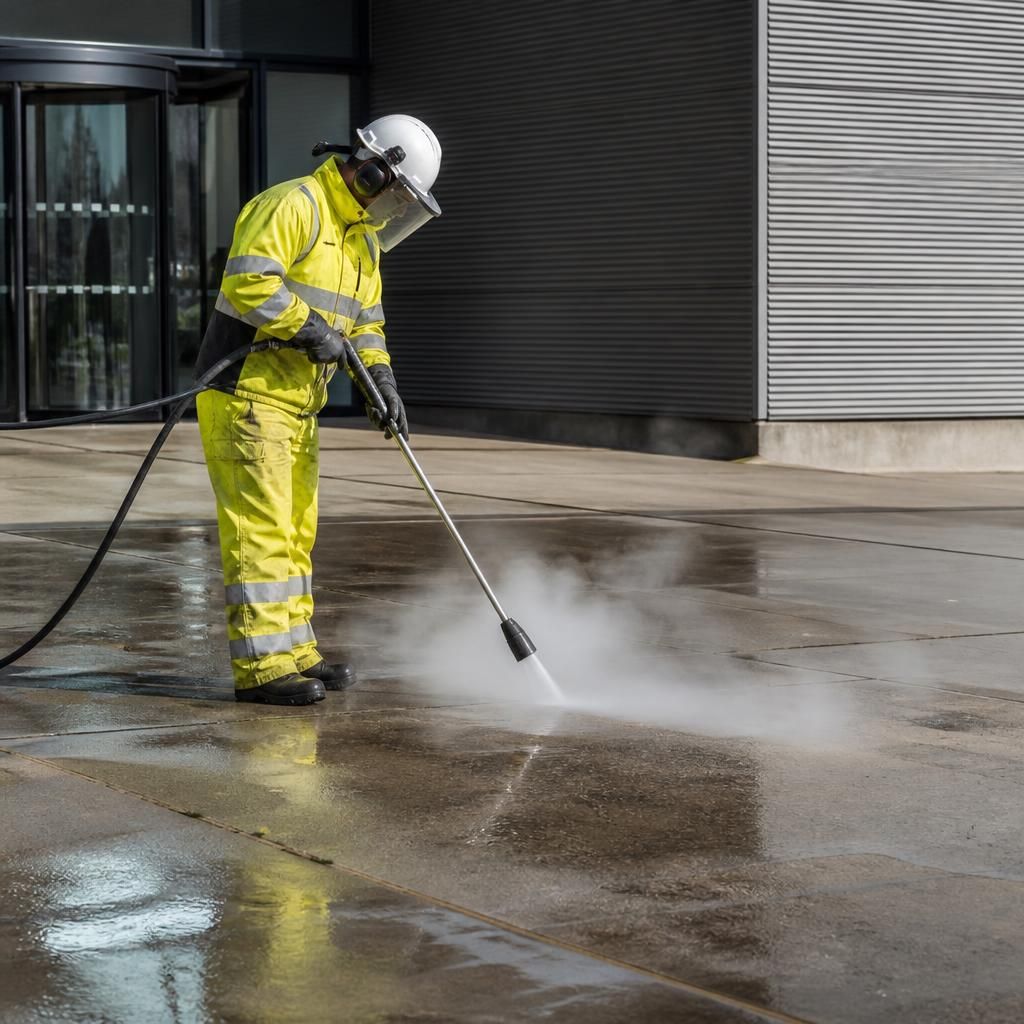
Exterior steam cleaning uses heat to loosen contamination, while pressure washing relies mainly on water impact. This means steam or hot-water cleaning can remove grease, organic deposits, chewing gum and ingrained dirt with less pressure, helping to protect vulnerable brickwork, coatings, joints and detailed façades. Pressure washing is often more efficient for loose soil, mud and heavy surface debris on sound concrete, paving and other robust materials.
The safest option depends on the substrate, contamination and required finish. A professional test clean should be carried out in an inconspicuous area to establish suitable pressure, temperature, spray distance and dwell time before the full surface is treated. This helps identify risks such as erosion, water penetration, softened coatings or heat-sensitive sealants, while confirming whether steam cleaning, pressure washing or a controlled combination will provide the best result.
Request an Exterior Steam Cleaning Assessment
Request an exterior steam cleaning assessment to determine whether steam cleaning, pressure washing or a controlled combination is suitable for your surfaces and contamination.
We will review the site, identify potential risks and recommend an appropriate cleaning method before work begins.