
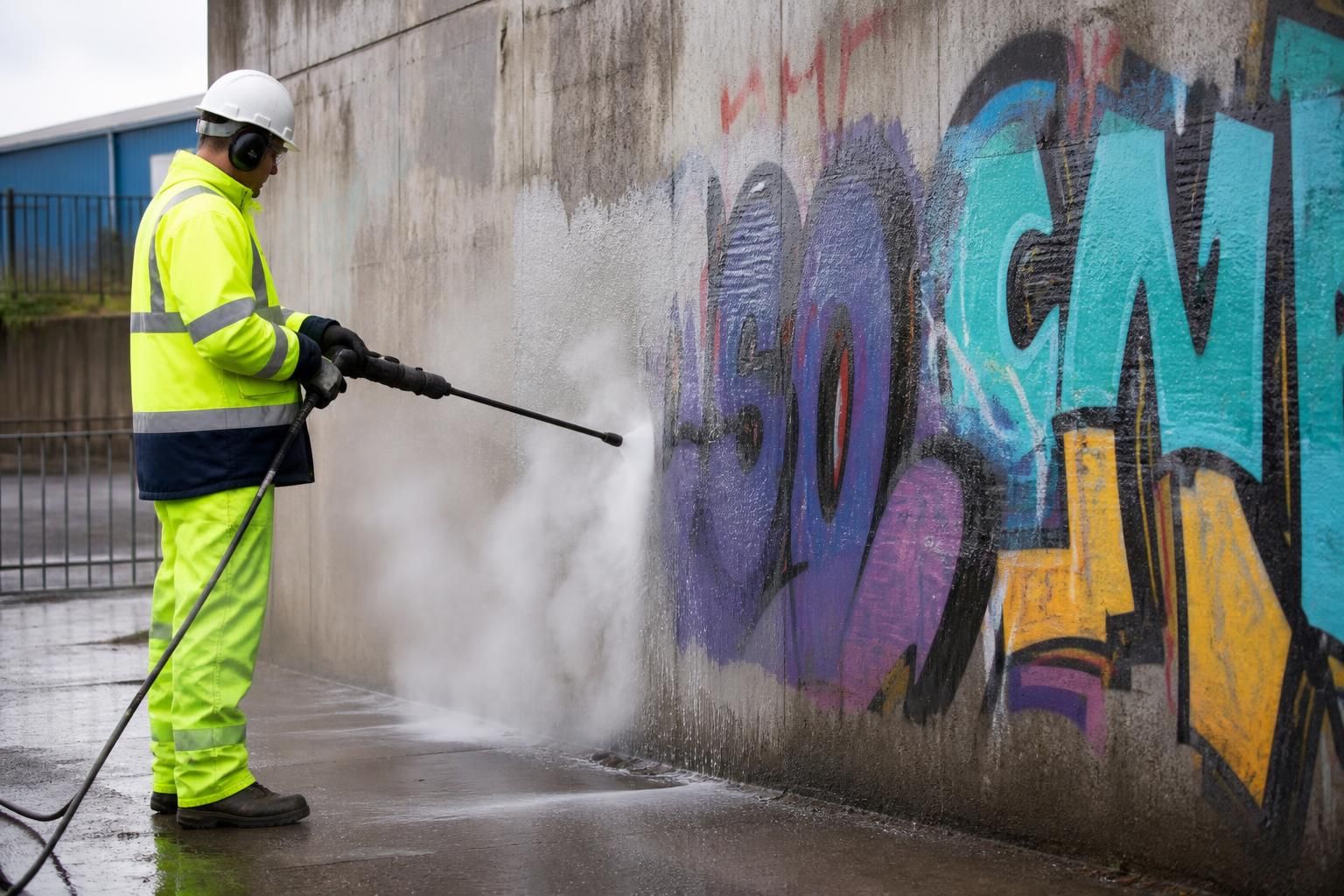
What types of surfaces are most suitable for graffiti removal with steam cleaning?
Steam cleaning is generally most suitable for heat-tolerant, durable surfaces such as brick, stone, concrete, uncoated metal, masonry and some glass. Painted, coated, delicate or weathered surfaces require a test patch and carefully controlled pressure and temperature to prevent damage.
Steam cleaning is most suitable for durable, heat-tolerant surfaces that can withstand controlled moisture and low-impact cleaning, including brick, natural stone, concrete, masonry, uncoated metal and some types of glass. These materials generally allow graffiti paint, marker ink and adhesive residues to be softened and lifted without relying on aggressive abrasion or strong chemicals. Painted, coated, porous, weathered or delicate surfaces need a test patch and carefully controlled temperature, pressure and dwell time before wider cleaning begins.
Brick and masonry are among the most compatible surfaces for graffiti removal with steam cleaning. Facing brick, engineering brick, concrete blocks and many rendered masonry surfaces can usually tolerate the process when the operator avoids excessive pressure and works in a controlled manner. Steam can soften paint within the surface profile, helping to remove graffiti from textured areas without flattening the face of the brick or forcing contamination further into the pores.
Older, soft or damaged brick requires additional care. Weathering, cracking, friable mortar and previous repairs can make the surface vulnerable to moisture and heat. Mortar joints may be weaker than the surrounding brick, so cleaning should be directed and controlled rather than applied indiscriminately across the whole façade. Efflorescence, staining and existing surface treatments should also be assessed, as steam cleaning graffiti does not automatically resolve every underlying defect.
Natural stone can respond well to steam cleaning, particularly sound granite, basalt, slate and other robust stone types. The suitability depends on the stone’s porosity, condition, finish and any protective coating. Polished stone, soft limestone, sandstone and historic masonry may mark, absorb moisture or lose surface material if excessive heat or pressure is used. A small, inconspicuous test area is essential, especially on listed, historic or architecturally significant buildings.
Concrete is generally well suited to steam-based graffiti removal, including concrete walls, columns, barriers, paving and some precast elements. Its textured surface can hold paint below the surface level, making gentle softening and gradual lifting preferable to harsh mechanical methods. However, aged concrete, exposed aggregate, painted concrete and surfaces with an existing sealant may react differently. Cleaning may reveal differences in weathering or colour between the graffiti-covered area and the surrounding concrete.
Uncoated metal, such as galvanised steel, stainless steel and sound aluminium, is often compatible with controlled steam cleaning. Steam can remove spray paint, marker residues, grime and some adhesive contamination without leaving a chemical film. The operator must still consider corrosion, oxidation, joints, fixings and electrical components. Galvanised finishes and softer metals can be marked by excessive pressure, while trapped moisture around seams or damaged coatings can contribute to corrosion if the area is not allowed to dry properly.
Glass may be suitable where the graffiti is on the external face and the glass is sound, untreated and free from vulnerable films. Steam can help soften paint and sticker residues, but blades, abrasive pads and excessive heat should not be used without confirming that they are safe for the particular glazing. Tinted films, solar-control coatings, laminated panels, sealants and plastic glazing can be damaged or marked, so the condition and construction of the panel should be checked first.
Some painted and coated surfaces can be cleaned with steam, but they are not automatically suitable. The key issue is whether the graffiti can be softened without also softening, blistering, lifting or discolouring the underlying paint or protective coating. Powder-coated cladding, painted render, factory-finished panels, anti-graffiti coatings and previously repaired areas all require an assessment. A successful method may involve lower pressure, shorter contact time, a wider cleaning distance or a different approach around edges and defects.
Surfaces that need particular caution include:
- Soft limestone, sandstone and other friable natural stone that may erode or absorb moisture.
- Weathered brick, crumbling mortar, cracked render and delaminating concrete.
- Painted façades where the original coating is poorly bonded or already deteriorating.
- Plastic, composite panels, vinyl, rubber and other heat-sensitive materials that may distort, dull or soften.
- Wood, particularly aged, stained or painted timber, where steam can raise the grain or affect the finish.
- Surfaces containing electrical equipment, unsealed joints, vents or openings through which moisture could enter.
- Historic or listed fabric where the cleaning method must protect the substrate and preserve its appearance.
Suitability is determined by more than the material name. The assessment should consider the surface’s age, porosity, texture, condition, previous coatings, graffiti medium and the length of time the marking has been present. Spray paint, marker ink, bitumen, stickers and etching products each respond differently. Sun exposure and weathering may also have changed the surrounding finish, meaning that removing the graffiti can leave a visible “ghost” even when the residue has been fully removed.
A professional process normally starts with a visual inspection and a discreet test patch. The test checks whether the substrate changes colour, absorbs moisture, sheds particles, develops a sheen or loses its coating. The cleaning operator can then adjust the steam level, pressure, working distance and movement speed to find the least aggressive method that achieves a clean result. Nearby signs, sealants, vents, landscaping and pedestrian areas should be protected, and loosened paint or wash water should be collected where site conditions require it.
In practical terms, sound brick, concrete, robust stone, masonry and uncoated metal are usually the best candidates for graffiti removal with steam cleaning. Coated, painted, delicate or deteriorated materials can still sometimes be treated, but only after testing and with tighter control. Where steam could damage the substrate or its finish, the safest recommendation may be a different low-impact method, localised treatment or retention of a stable background layer rather than aggressive removal.
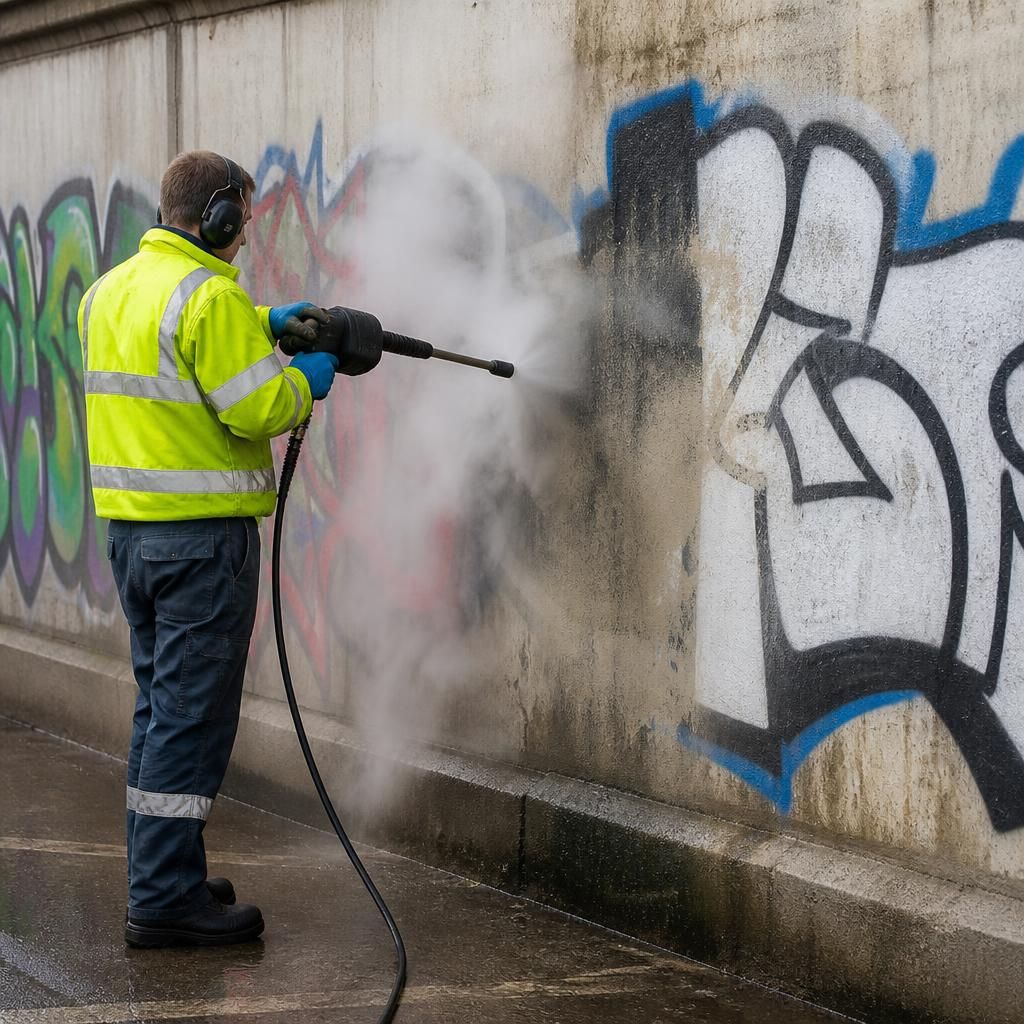
The most suitable surfaces for graffiti removal with steam cleaning are sound, heat-tolerant materials such as brick, concrete, robust natural stone, masonry and uncoated metal. Steam softens paint and marker residues so they can be lifted with limited abrasion, helping to preserve textured surfaces and avoid unnecessary chemical use.
Every surface should still be checked and tested first. Weathered brick, soft stone, painted coatings, damaged concrete, glazing films and heat-sensitive plastics may require lower pressure, reduced heat or an alternative cleaning method. A discreet test patch confirms whether the substrate changes colour, absorbs moisture, sheds material or loses its finish before full treatment begins.
Arrange a professional graffiti removal assessment
Arrange a professional graffiti removal assessment so we can check the substrate, coating and graffiti type before recommending the safest steam-cleaning method. We can identify any areas requiring an alternative approach and provide a clear treatment plan.