
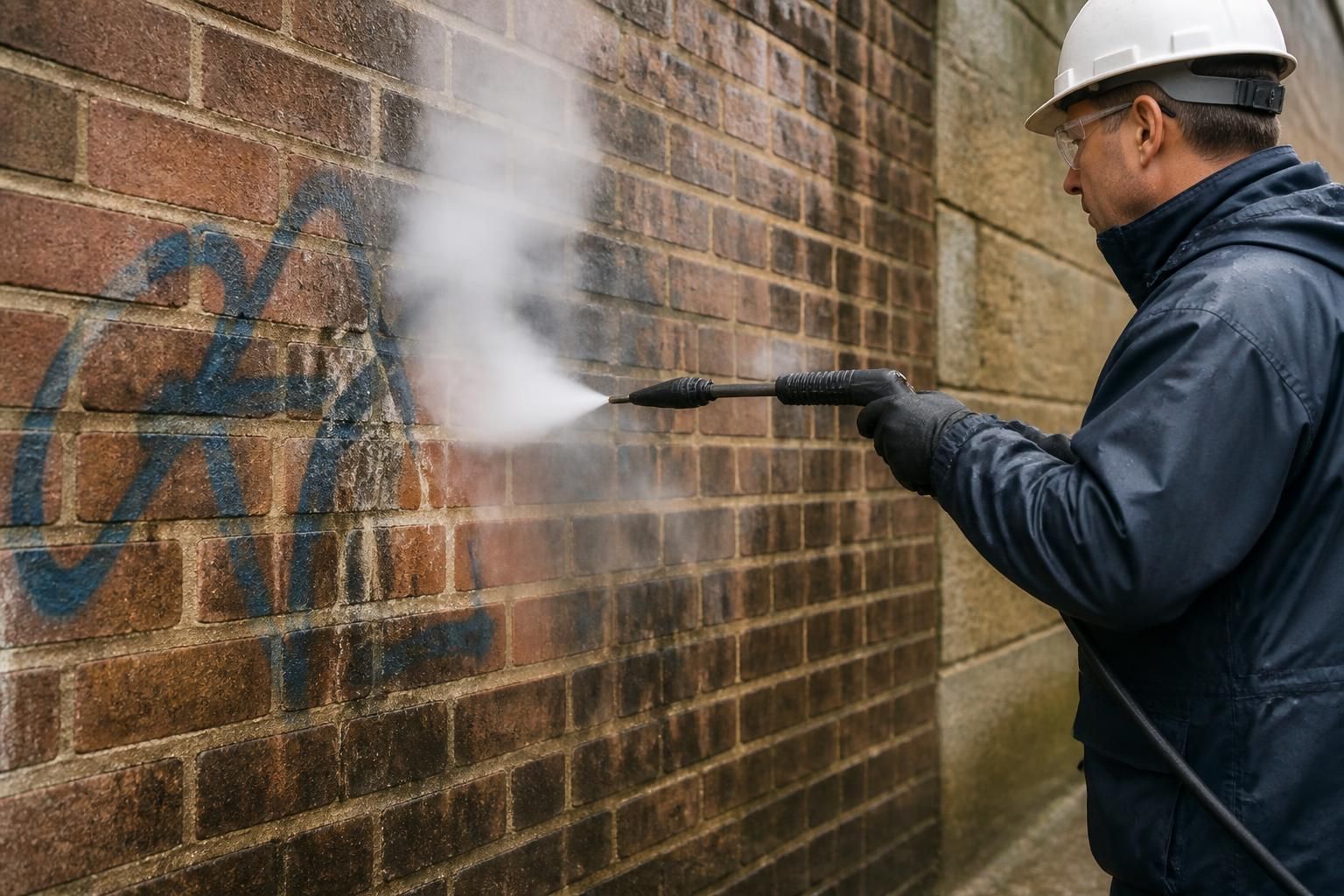
What substrates or surface materials are most compatible with steam cleaning for graffiti removal?
Steam cleaning is generally most compatible with robust masonry substrates such as brick, concrete, terracotta and many types of natural stone, as well as suitable uncoated metal surfaces. Painted, glazed, delicate, weathered or water-sensitive materials require a test patch and carefully controlled temperature and pressure to prevent marking, spalling or coating damage.
Steam cleaning is most compatible with hard, porous masonry substrates, including sound brickwork, concrete, terracotta and many types of natural stone. It can also be suitable for some uncoated metals and robust mineral surfaces. The process uses controlled heat and low pressure to soften graffiti, allowing it to be removed with less mechanical abrasion and fewer chemicals than many conventional methods. However, compatibility depends on the condition, finish and construction of the surface, so a test patch and method assessment are essential before full treatment.
Brickwork is usually well suited to steam cleaning, particularly where the bricks are sound and the mortar joints are stable. Heat can loosen spray paint, marker residue, adhesive remains and some coatings without the aggressive blasting associated with high-pressure cleaning. Care is needed on soft, handmade, historic or heavily weathered bricks. Open joints, friable faces and previous water damage may require reduced pressure, wider spray patterns or an alternative technique.
Concrete generally tolerates steam cleaning well, making it a practical option for walls, retaining structures, paving, street furniture and other hard landscaping. Smooth, dense concrete is normally easier to clean than porous or cracked concrete, where pigment may have penetrated below the surface. A controlled approach is important around exposed aggregate, damaged edges, expansion joints and surfaces with failing sealants.
Natural stone can often be cleaned successfully, but the type and condition of the stone must be considered. Dense granite, some slate and suitably sound sandstone may respond well when the operator controls the heat, pressure and dwell time. Softer, laminated or highly absorbent stones can be more vulnerable to surface erosion, delamination, discolouration or moisture-related damage. Limestone and other calcareous stones also need particular care because their surface can be altered by inappropriate cleaning methods or chemicals.
Terracotta, clay tiles and similar fired mineral products are often compatible with steam, provided they are not cracked, loose, glazed in poor condition or already delaminating. Steam can be useful where graffiti has been applied to architectural details that would be difficult to treat with abrasive methods. The surrounding mortar, pointing and joints should be checked because water and heat may expose existing weaknesses.
Uncoated metal, such as robust steel, galvanised components and some aluminium surfaces, may also be treated with steam. The main risks are existing corrosion, damaged protective finishes, trapped moisture and heat-sensitive adjacent materials. Once graffiti has been removed, the metal may need drying, corrosion treatment or recoating to prevent further deterioration. Painted or powder-coated metal is assessed differently: steam may soften, blister or lift the coating, particularly where it is already loose.
Some substrates are suitable only with additional controls. Painted render, coated masonry, cladding, powder-coated surfaces and previously sealed materials may lose their finish even when the underlying substrate is sound. Timber, composite boards, plastics, rubber, bitumen-based products and other water-sensitive materials are generally less compatible with steam cleaning because heat and moisture can cause swelling, distortion, staining or coating failure. Glass may tolerate carefully controlled steam, but seals, films and surrounding frames can be damaged if heat is concentrated in one area.
The surface condition is as important as the material itself. Steam cleaning should be approached cautiously where there are cracks, open joints, spalling, salt deposits, failed paint, biological growth, previous repairs or evidence of moisture ingress. Graffiti on a stable surface may be straightforward to remove, whereas pigment embedded in a porous or deteriorated substrate may require repeated passes or a supplementary treatment. Complete removal is not always possible without affecting the original surface, and this should be established during the assessment.
Before work begins, the cleaning method should be selected according to:
- the substrate type, density, porosity and surface finish;
- the age and condition of the graffiti, including whether it is spray paint, marker, adhesive or another coating;
- the condition of mortar, pointing, joints, seals and nearby finishes;
- the required operating temperature, pressure and distance from the surface; and
- drainage, run-off control and the protection of adjacent materials, fixtures and pedestrians.
A discreet test patch is the most reliable way to confirm compatibility. It shows whether the graffiti can be softened and removed without lightening the substrate, altering its texture, disturbing the pointing or damaging an existing coating. The test area should be allowed to dry before it is judged, as moisture can temporarily change the appearance of masonry and stone.
In practical terms, sound brick, concrete, terracotta and carefully assessed natural stone are usually the strongest candidates for graffiti removal with steam cleaning. Painted, coated, delicate, historic, weathered or water-sensitive substrates should not be treated on the assumption that they will respond in the same way. A substrate-led assessment allows the temperature, pressure and cleaning sequence to be matched to the property, reducing the risk of cosmetic or structural damage while achieving the cleanest feasible result.
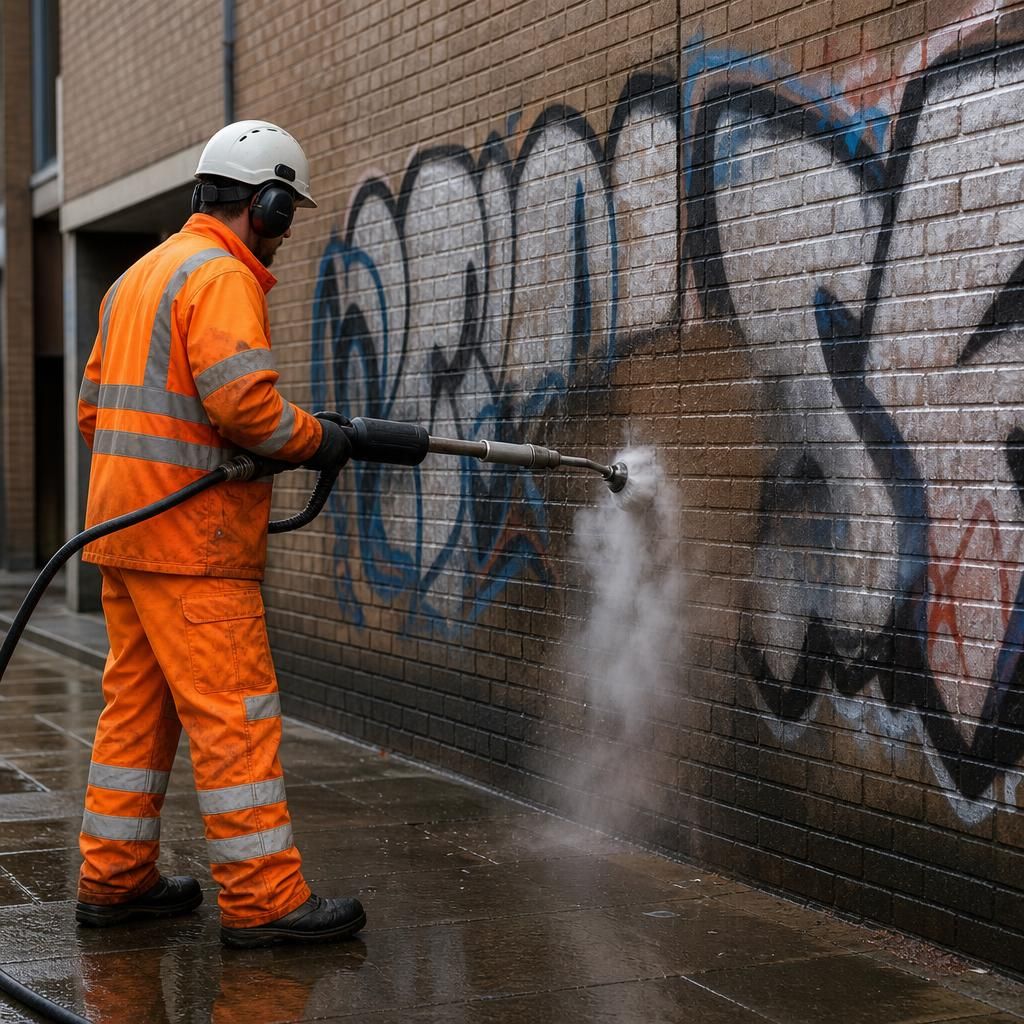
Sound brick, concrete, terracotta and carefully assessed natural stone are generally the most compatible substrates for steam cleaning graffiti. Controlled heat softens the paint while low pressure reduces abrasion, helping preserve the underlying surface and mortar joints.
Compatibility still depends on condition and finish. A discreet test patch should be completed before full treatment, particularly on soft stone, weathered brick, painted surfaces, coatings or damaged pointing. This confirms that the graffiti can be removed without changing the texture, colour or protective finish of the substrate.