
What safety measures should be taken when using steam cleaning for graffiti removal on various surfaces?
Safe steam cleaning for graffiti removal requires a trained operator to assess the substrate first, control steam temperature and pressure, and test an inconspicuous area before full treatment. Operators should also use suitable PPE, establish an exclusion zone, protect nearby people and property, manage wastewater and residue, and follow safe access procedures for walls, façades and other surfaces.
Safe steam cleaning for graffiti removal depends on controlling heat, pressure, access, surface condition and contaminated residue. A competent operator should assess the substrate and surrounding area before work begins, carry out a small test patch, select the lowest effective steam setting, wear appropriate personal protective equipment (PPE), establish an exclusion zone and manage wastewater safely.
Carry out a site and substrate assessment first. Identify the surface material, its age, condition, coating and likely sensitivity to heat or moisture. Brick, concrete, natural stone, painted render, powder-coated metal, plastic, glass, timber and composite cladding can all respond differently. Check for cracks, loose joints, delamination, failing paint, friable masonry, open pores, sealants, electrical equipment and vulnerable fixtures. The assessment should also consider pedestrian and vehicle movements, nearby businesses, entrances, roads, overhead hazards and the location of drains.
Where the surface is listed, historic or architecturally significant, cleaning should be planned with particular care. Steam may be suitable in some cases, but the method should be agreed with the responsible property manager, conservation professional or relevant authority where required. Cleaning should not remove an original finish, patina or protective coating simply because it is discoloured.
Test an inconspicuous area before full removal. A test patch confirms whether the graffiti softens, whether the underlying finish changes colour, and whether the surface can tolerate the selected heat, pressure, dwell time and working distance. Inspect the area while it is wet and again after it has dried. If paint lifts, the substrate powders, joints erode, water enters the construction or a coating becomes cloudy, stop and revise the method rather than increasing the power.
Control temperature, pressure and dwell time. Steam cleaning is not made safer by using the highest available setting. Operators should use the lowest combination of heat and pressure that removes the marking effectively, keep the lance moving and avoid concentrating steam on one spot. Extra care is needed around mortar joints, painted surfaces, sealants, timber, plastics, composite panels and thin metal sheets, which can soften, distort or lose their finish. On glass and glazed surfaces, sudden temperature changes should be avoided, particularly where there are existing chips, cracks or damaged edges.
The operator should maintain a controlled working distance and use suitable nozzles or accessories for the substrate. Steam should not be directed into vents, service openings, door hardware, joints, roof edges or behind cladding. Any nearby components that cannot tolerate heat or moisture should be isolated, shielded or temporarily removed where practical.
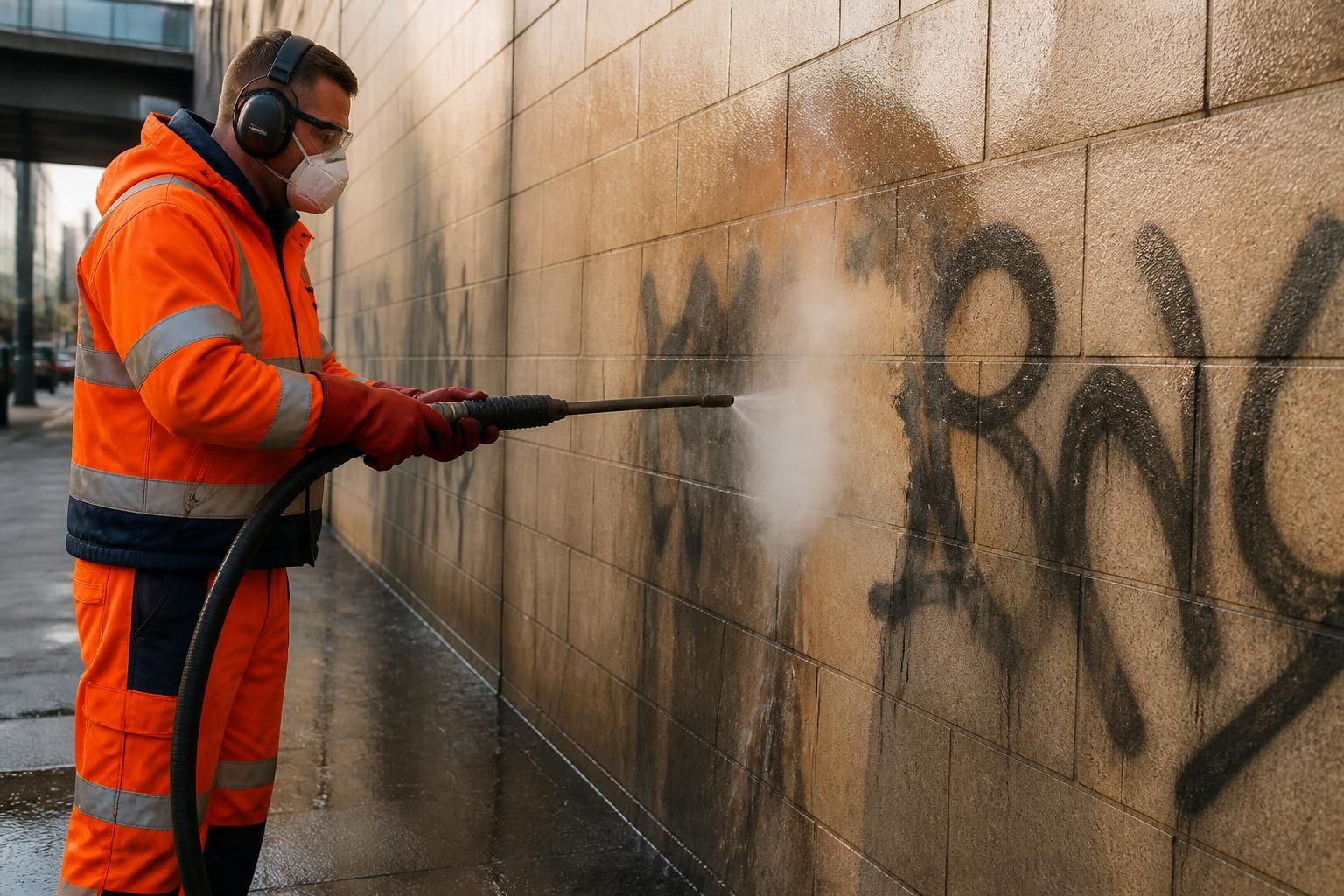
Use appropriate PPE and equipment controls. Steam can cause serious burns even when the visible plume appears limited. The operator should use suitable heat-resistant gloves, protective footwear with slip-resistant soles, eye protection and clothing that protects the skin from hot water and loosened paint. Additional respiratory protection may be required following a risk assessment, particularly where old coatings, unknown residues, biological contamination or poor ventilation are present. PPE should be compatible with the task and kept in good condition.
Before starting, inspect hoses, couplings, lances, nozzles, trigger controls and pressure-relief systems. Damaged equipment should be taken out of service. Hoses should be routed to prevent trip hazards, crushing, sharp bends and contact with hot surfaces. Operators must follow the equipment manufacturer’s instructions and use only accessories rated for the machine and application. Steam should never be directed at people, animals or unprotected electrical equipment.
Protect people and control the work area. Establish a clearly marked exclusion zone around the cleaning operation. Use barriers and warning signs where members of the public, tenants, staff or vehicles could approach the work area. Do not rely solely on cones if people can walk behind, above or beneath the cleaning position. Keep access routes, fire exits and emergency routes clear, and coordinate work around building entrances and busy pedestrian periods where necessary.
Where work is carried out beside a road, car park or loading area, include traffic management in the method statement. A trained banksman or site controller may be needed when hoses, equipment or access platforms could affect vehicle movements. The work area should also be monitored for unexpected access, changing weather, wind-blown spray and reduced visibility.
Plan safe access for elevated or difficult areas. Graffiti on façades, bridges, gantries and upper elevations should be reached using suitable access equipment rather than overreaching from ladders or unstable ground. Scaffold, mobile elevated work platforms, towers or other systems must be selected for the site and used by trained personnel. Consider the additional weight and reaction forces from hoses and lances, as well as hot condensate falling onto people or surfaces below.
Access equipment should be inspected and positioned on stable ground, with required edge protection, exclusion zones and fall-prevention measures in place. Operators working from a platform should keep the lance under control and avoid directing steam towards nearby workers. Where a platform cannot be used safely, the work should be redesigned rather than improvised.
Prevent electrical and fire-related hazards. Keep steam, water and wet residues away from live electrical installations, lighting, CCTV, alarm systems, sockets, control panels and temporary power supplies. Isolate or protect equipment under the direction of a qualified person where appropriate. Use electrical supplies, leads and residual-current protection suitable for wet working conditions, and do not use damaged cables or connections.
Although steam itself is not a flame, heat and loosened residues can create risks around combustible materials, fuel storage and sensitive building components. Confirm that the cleaning method is appropriate near combustible cladding, insulation, stored materials and concealed services. Never assume that a surface is safe to heat because its outer finish appears robust.
Control loosened paint, chemicals and wastewater. Graffiti removal can release pigment, binder, flakes and residues from previous cleaning products. Prevent this material from spreading to adjacent surfaces, soil, planting, watercourses and drainage systems. Use suitable sheeting, temporary bunding, drain covers or collection methods where needed, while ensuring that covers do not create additional trip or flooding hazards.
Wastewater should be collected, contained and disposed of in line with the site’s drainage arrangements and applicable environmental requirements. It should not be allowed to enter a surface-water drain unless this is confirmed to be permitted. If the graffiti or existing coating may contain hazardous substances, obtain appropriate information before cleaning and follow the relevant control measures. Do not mix cleaning residues with other chemicals, and never add chemicals to a steam-cleaning process unless the equipment and risk assessment specifically allow it.
Use extra care on particular surfaces.
- Brick and concrete: Check for friable faces, open joints, previous repairs and water penetration. Avoid eroding mortar or forcing residue deeper into porous areas.
- Natural stone: Identify the stone type and finish first. Softer or weathered stone can lose its surface detail, while salts and moisture may become more visible after cleaning.
- Painted render and masonry: Confirm that the paint is sound and that the graffiti is not bonded more strongly than the underlying coating. Steam can soften or strip both layers.
- Metal and powder-coated panels: Protect edges, joints and damaged coating. Heat and moisture can expose corrosion or affect the appearance of the finish.
- Glass and glazed surfaces: Check for cracks, chips, films, sealants and temperature sensitivity. Avoid thermal shock and protect surrounding frames and joints.
- Plastic, composite cladding and signage: Use conservative settings because some materials can soften, warp, blister or lose their surface sheen.
- Timber: Check the coating, grain, joints and moisture condition. Steam can raise fibres, drive water into joints or disturb paint and stain.
- Roofing and coated systems: Prevent water entering laps, penetrations and insulation, and ensure that the method will not remove a protective roof coating.
Monitor conditions throughout the task. Stop work if wind carries hot spray or residue towards people, if rain creates unsafe footing, if visibility becomes poor, or if the substrate reacts unexpectedly. Keep the surface and surrounding area under observation for staining, colour change, blistering, cracking, spalling, coating failure or water ingress. A supervisor should reassess the method if the test result does not match the wider surface.
After cleaning, allow the area to cool and dry before making a final assessment. Remove barriers only when the surface is safe to approach, the floor is no longer slippery and equipment and wastewater have been cleared. Inspect adjacent fixtures, drains, signage and coatings, and record the method, test results, any defects and the disposal arrangements. For commercial and industrial sites, a written risk assessment and method statement provides a clear record of how people, property and the environment were protected.
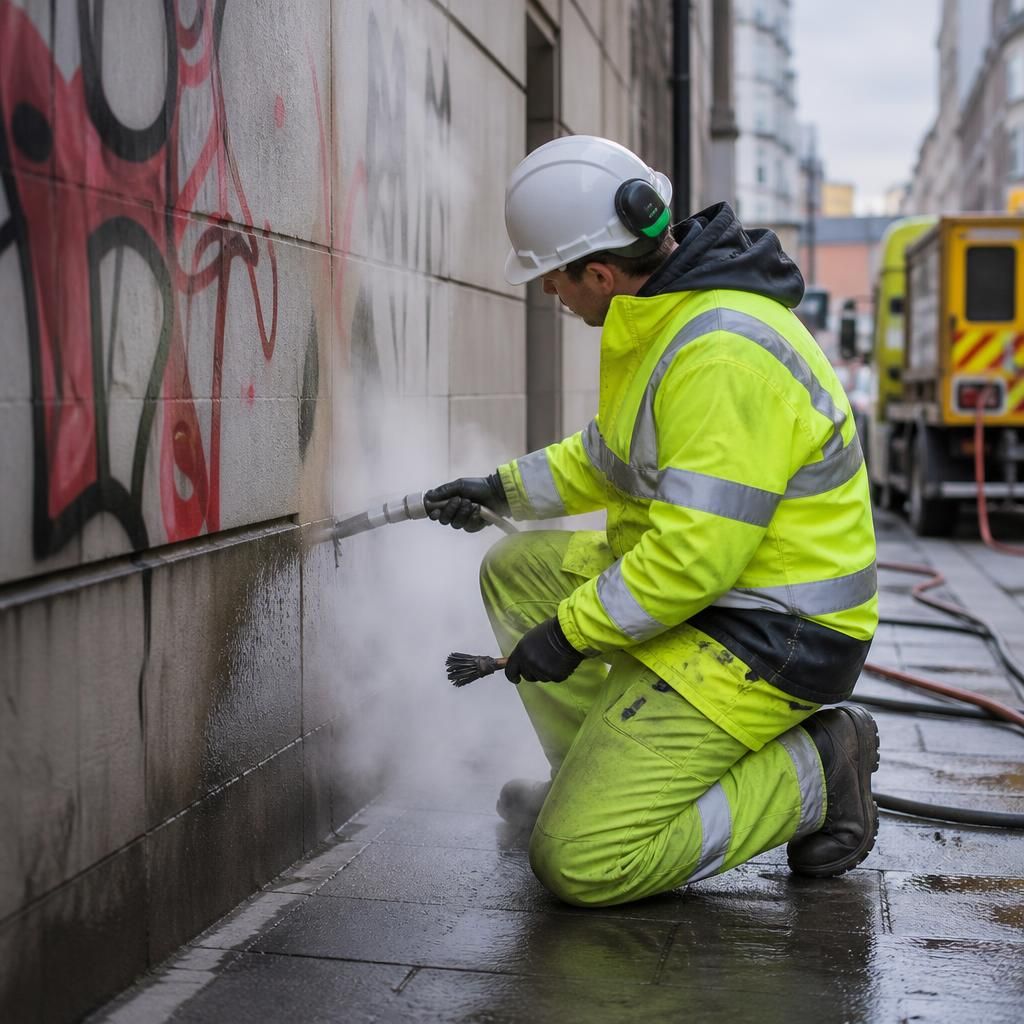
Before steam cleaning graffiti, the operator should test a small, hidden section of the surface to confirm that the heat, pressure and dwell time will not damage the underlying material. This is particularly important on painted render, natural stone, timber, plastics, composite cladding and coated metal, where steam may soften finishes, raise fibres, distort panels or expose existing defects.
The test area should be checked while wet and again after it has dried. Stop and revise the method if the surface shows colour change, blistering, coating loss, cracking, erosion, water ingress or other unexpected reactions. During the main clean, use the lowest effective setting, keep the lance moving and protect nearby joints, openings, electrical fittings and vulnerable fixtures from hot moisture and loosened residue.