
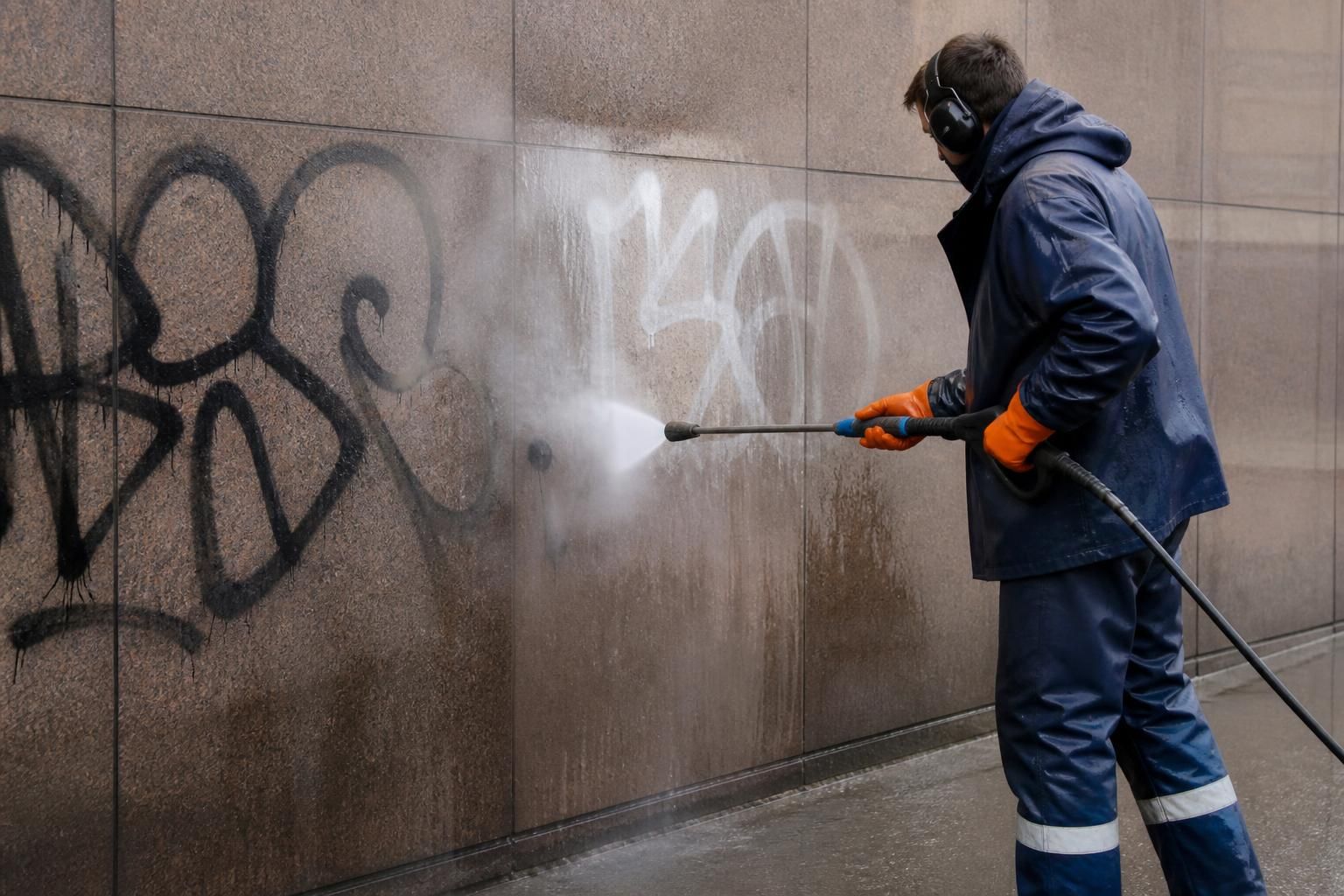
What factors affect the efficiency of steam cleaning when removing graffiti from various surfaces? Steam cleaning efficiency depends on the surface material and condition, graffiti type and age, steam temperature, pressure, dwell time, access, and the operator’s technique. These factors must be assessed together to remove the marking effectively while protecting the underlying surface.
Steam cleaning efficiency when removing graffiti depends on the surface material and condition, the paint or marker type, the age and thickness of the graffiti, and the steam temperature, pressure and dwell time. Access, drainage and the operator’s technique also affect results, as settings must be adjusted to remove the marking without etching, discolouring or loosening the underlying surface.
Steam cleaning efficiency in graffiti removal is determined by how well the heat, moisture, pressure and dwell time are matched to the substrate and the marking. Surface porosity, coating condition, graffiti composition, age, thickness, weather, access and operator technique all influence whether the graffiti lifts quickly or requires repeated, carefully controlled treatment.
Surface material and condition are usually the most important considerations. Dense, non-porous materials such as sound metal, glazed surfaces and some hard stone generally allow graffiti to be removed more efficiently because the paint remains close to the surface. Porous materials, including unsealed masonry, concrete, brick and weathered stone, can absorb paint into their texture and capillaries. Steam can soften the marking, but additional passes or compatible treatment may be needed to draw out residue without forcing it further into the substrate.
The condition of the surface also affects the result. Flaking paint, degraded pointing, friable brick, cracked render and failed coatings may be more vulnerable than the graffiti itself. Excessive heat or pressure can loosen the underlying finish, alter the appearance of painted surfaces or cause water to enter defects. A sound coating may tolerate controlled steam, while a deteriorated coating may require lower settings, gentler working and realistic expectations about the final appearance.
The type of graffiti affects how readily it responds to steam. Water-based paints, some aerosol coatings, marker inks, stickers and adhesive residues behave differently when heated. Solvent-based paints, heavily pigmented coatings and older, hardened markings may need more dwell time or a carefully selected supplementary product. Layered graffiti can be particularly time-consuming because the outer marking may soften before older layers beneath it. Identifying the material as far as practicable helps determine the safest treatment sequence.
Age and thickness also influence efficiency. Fresh graffiti may remain closer to the surface and soften readily. Older markings can cure, weather and bond more firmly, while repeated overpainting creates a thicker film. Sun exposure and surface contamination may further change the coating. This does not mean that old graffiti cannot be removed with steam, but it may require slower working, several controlled passes and closer inspection between passes.
Steam temperature controls how quickly the graffiti softens. Higher heat can improve the breakdown of suitable coatings, but maximum temperature is not automatically the most effective or safest setting. Sensitive paintwork, plastics, sealants, render and some stone surfaces can be marked, softened or damaged by excessive heat. The operator should begin with a controlled setting and increase it only when testing confirms that the substrate is responding safely.
Pressure and flow rate determine how effectively softened material is separated from the surface. Pressure that is too low may leave residue behind, whereas excessive pressure can drive contaminants into porous materials, strip sound coatings or damage joints and edges. Steam cleaning is not simply a matter of applying the greatest force available; the correct balance allows heat to do most of the softening while pressure assists removal without eroding the substrate.
Dwell time and working speed are closely related. Holding the steam over a small area for too little time may not soften the graffiti fully, leading to unnecessary scrubbing or repeat passes. Holding it in one position for too long can overheat the surface, concentrate moisture or affect a coating. A controlled, overlapping movement usually produces a more even result than rapidly sweeping across a large area or concentrating on one spot for an extended period.
Surface texture and geometry can make a significant difference. Smooth, level surfaces are generally quicker to treat than deeply textured brick, rough concrete, profiled cladding or decorative façades. Recesses, joints, corners and porous edges can retain pigment after the exposed face appears clean. These areas may need a smaller nozzle, a different angle of approach or additional inspection rather than simply more pressure.
Previous coatings and protective treatments must be considered before work begins. Anti-graffiti coatings can make removal faster by preventing paint from bonding deeply, but they vary in their tolerance of heat and pressure. A sacrificial coating may be removed with the graffiti and need reapplication, while a permanent coating should remain intact when the correct method is used. Unidentified sealants, waxes and recent paintwork should be tested because steam may alter their gloss, adhesion or colour.
Weather and surface temperature affect the process outdoors. Cold conditions can reduce the rate at which some coatings soften, while strong sunlight can heat parts of a façade unevenly. Wind can cool the working area and spread mist or loosened residue. Rain and existing moisture can dilute residues and make inspection more difficult. Planning the work around suitable conditions helps maintain consistent results and reduces the risk of staining adjacent areas.
Water management and surrounding materials are also relevant. Run-off can carry softened paint into paving, drains, planting beds or nearby façades. Absorbent surfaces below the treated area may require protection, and drainage arrangements should be checked before cleaning starts. Where contaminated water cannot enter a drain, it should be contained and managed in accordance with the site’s environmental requirements. Effective steam cleaning includes control of the removed material, not just treatment of the graffiti itself.
Access and working position can affect both speed and quality. Restricted areas, high elevations, traffic routes and uneven ground may limit nozzle control or require access equipment. A poor angle can leave residue in textured surfaces, while working too far away reduces the useful heat and pressure at the target. Safe, stable access allows the operator to maintain a consistent distance and movement, which is important for an even finish.
Testing and operator judgement are essential to efficient removal. A discreet test area should be used to assess the graffiti, the substrate and any existing coating. The test should check whether the marking softens, whether colour transfers into the surface, and whether the finish changes under treatment. The settings can then be adjusted before larger areas are cleaned. Experienced operators monitor the surface continuously rather than applying identical settings across every material.
In practice, the most efficient approach is usually a controlled sequence: inspect and identify the substrate, protect adjacent areas, test a small section, soften the graffiti with suitable steam settings, remove the loosened residue with measured passes, rinse or wipe as appropriate, and inspect the surface once dry. If a marking does not respond, increasing pressure alone is rarely the best solution. The cause may be the paint type, penetration, an incompatible coating or insufficient dwell time, and a different treatment plan may be safer.
After cleaning, the surface should be checked for remaining pigment, shadows, ghosting and changes to the underlying finish. Some apparent staining is residual paint within the substrate; some is weathering or a difference between the protected and exposed areas. Where complete visual uniformity cannot be achieved without damaging the surface, removal should be balanced against preservation of the substrate. This assessment helps determine whether a further compatible treatment or an anti-graffiti protection system is appropriate.
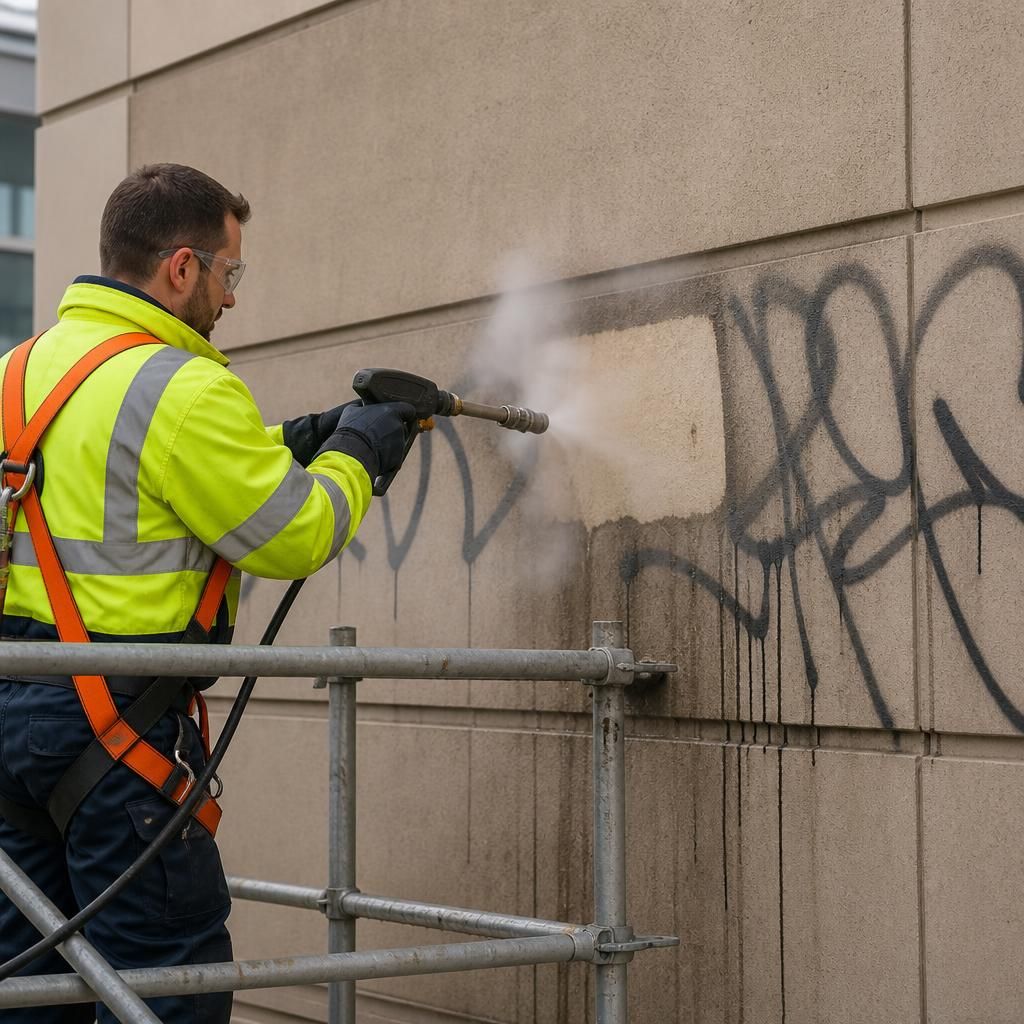
Steam cleaning efficiency depends on matching the heat, pressure and dwell time to both the graffiti and the underlying surface. A discreet test area shows how quickly the marking softens and whether the substrate, coating or finish changes during treatment.
Operators can then adjust the working distance, nozzle angle and movement speed before cleaning the wider area. This is particularly important on porous brick, textured concrete, painted façades and weathered stone, where excessive pressure may drive pigment into the surface or damage the existing finish. Controlled testing usually produces a more consistent result than applying the same settings across every material.
Arrange a professional graffiti removal assessment
Arrange a professional graffiti removal assessment so we can evaluate the substrate, coating and graffiti type before recommending suitable steam cleaning settings. We can also identify access, run-off and surface protection requirements for the work.