
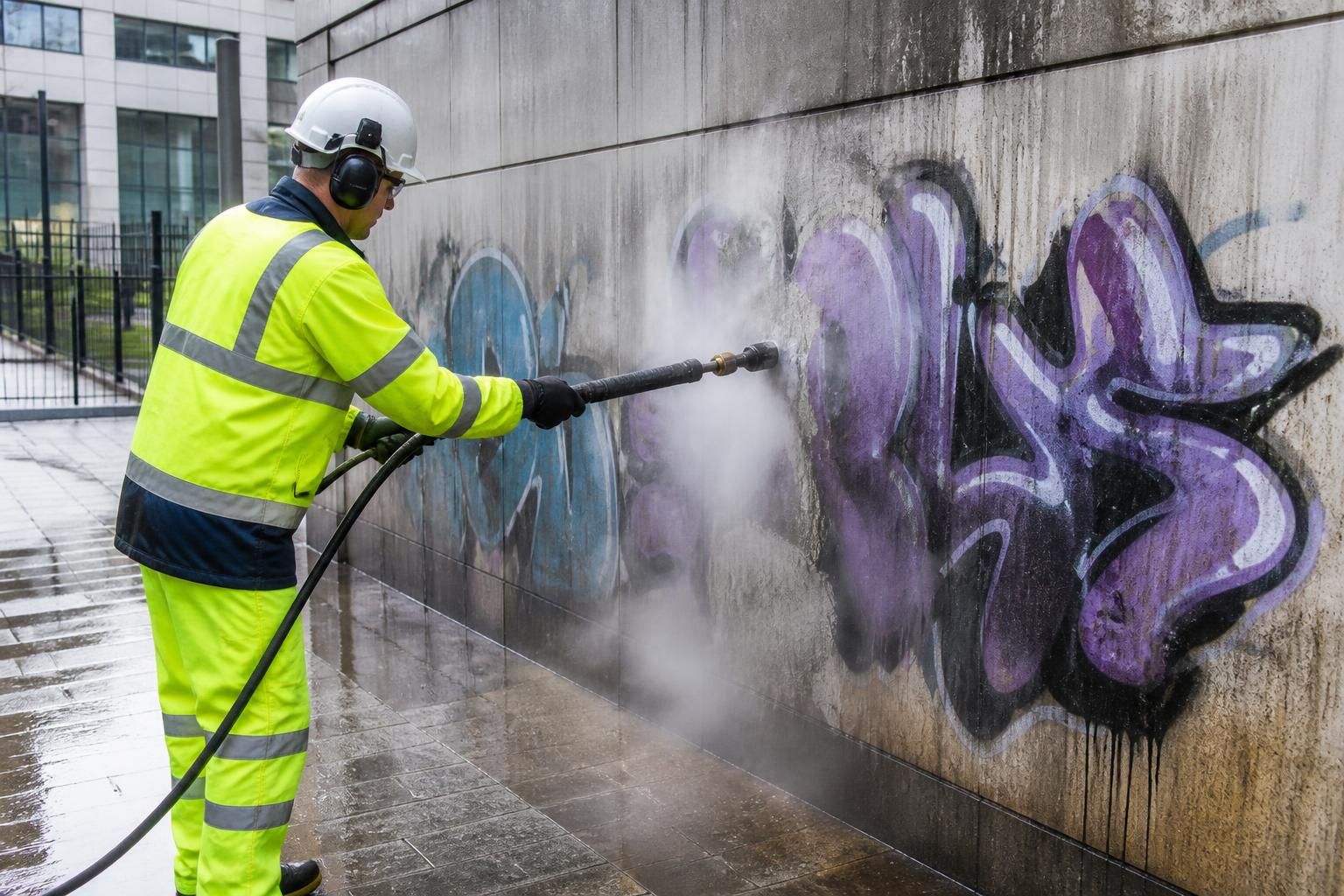
What are the cost implications and potential savings of using steam cleaning over other graffiti removal methods?
Steam cleaning can have a higher upfront cost than some chemical or abrasive graffiti removal methods, but it may reduce overall expenditure by using less chemical product, minimising surface damage and lowering the need for repeat cleaning or repairs. The most cost-effective option depends on the graffiti type, substrate, access requirements and the extent of contamination.
Steam cleaning can cost more initially than a basic chemical treatment or low-cost pressure washing, but it may reduce the total cost of graffiti removal over the life of the surface. The potential savings come from lower chemical use, reduced risk of substrate damage, fewer repairs and less need for repeat cleaning. The most economical method depends on the graffiti medium, the surface, the size and location of the affected area, access requirements and the required finish.
What the initial cost includes
A professional steam-cleaning quotation normally reflects more than the use of the steam equipment. Costs may include site assessment, technician time, transport, water and energy consumption, access equipment, traffic or pedestrian management, surface protection, containment and the responsible handling of removed residues. Restricted access, work at height, out-of-hours working and the need to protect nearby vehicles or occupied premises can also affect the price.
Steam cleaning uses heated water, often at relatively low pressure, to soften and lift graffiti. The equipment and specialist training can make the hourly operating cost higher than that of a simple cold-water wash. However, a direct comparison based only on the initial hourly rate can be misleading if the cheaper method causes staining, removes sound coatings or requires additional treatment.
How steam cleaning compares with other methods
- Chemical removal: Chemical products can be effective and may have a lower initial application cost, particularly on suitable, non-porous surfaces. The overall cost can increase where dwell time, repeated applications, rinsing, neutralisation or controlled wastewater collection is required. There is also a risk that an unsuitable product will soften paint, discolour a coating or affect sealants, creating repair costs.
- High-pressure washing: Pressure washing can remove loose or superficial contamination efficiently, but excessive pressure may drive pigment further into porous materials or damage pointing, coatings and delicate finishes. Steam may achieve the required result at lower pressure, reducing the likelihood of remedial work.
- Abrasive cleaning: Abrasive blasting can be useful for robust substrates and difficult deposits, but it removes a small amount of the underlying surface as well as the graffiti. Reinstatement, repainting or replacement may therefore be needed. Steam is generally less intrusive where preserving the existing finish is important.
- Painting over graffiti: Overcoating may appear economical for a single incident, but it can create visible patches, alter the appearance of the façade and add layers that later need to be stripped. It also does not address graffiti on areas that cannot be painted, such as brick, stone, signs or street furniture.
Where the main savings arise
The largest potential saving is usually avoided surface damage. Removing graffiti without unnecessarily stripping paint, sealant or the face of a material helps retain the existing finish and can avoid making good, colour matching or repainting. This is particularly relevant to commercial façades, entrance areas, cladding, masonry and other surfaces where appearance and material condition both matter.
Steam cleaning can also reduce the quantity of chemical product required. In some cases, heat loosens the graffiti sufficiently for it to be removed with water and controlled agitation. Where a product is still needed, using a smaller amount or a targeted treatment can reduce product costs, rinsing requirements and the volume of contaminated water requiring management. The appropriate approach depends on the paint, marker, adhesive or coating involved, so a test area should be used rather than assuming that steam alone will remove every deposit.
Repeat maintenance is another important consideration. A method that leaves pigment in the pores or damages a protective coating may result in shadowing, ghost marks or quicker recontamination. A suitable steam-cleaning process can improve the quality of the initial removal and help preserve an existing anti-graffiti treatment. This may reduce the frequency of corrective work, although it cannot prevent new graffiti or guarantee that every mark will be removed in one visit.
Factors that determine whether steam is cost-effective
- Surface type and condition: Sound, compatible surfaces are usually more straightforward to treat than weathered, flaking or previously damaged materials. A fragile coating may require slower, more controlled work.
- Graffiti material: Water-based paint, solvent-based paint, marker ink, adhesive and layered or aged graffiti respond differently. Older deposits may require additional passes or a compatible treatment product.
- Porosity: Graffiti embedded in brick, stone or concrete can take longer to remove than a mark on sealed cladding or glass. Residual staining may require specialist treatment even after the surface film has been lifted.
- Area and distribution: Several locations on one site may be more efficient to clean during a planned visit, while an isolated mark may carry a higher minimum attendance cost.
- Access: Work from ground level is generally less complex than cleaning high façades, canopies or restricted service areas. Mobile elevated platforms, towers, barriers and permits can materially affect the total.
- Water and drainage arrangements: Sites without suitable water supplies or drainage may require additional equipment and controls. Run-off must be managed so that removed paint, chemicals and debris do not enter surface-water systems.
- Required appearance: A basic removal may differ in cost from a specification requiring uniform cleaning, stain reduction, coating preservation and close inspection.
- Ongoing maintenance: A planned graffiti-response programme can be more economical than treating repeated incidents as isolated emergencies, particularly where access equipment or site protection can be arranged efficiently.
Assessing the total cost rather than the quoted treatment price
For a meaningful comparison, assess the complete cost of each option: preparation, access, labour, products, water, containment, disposal, surface repairs, repainting, reinstatement and any follow-up visits. The cost of disruption should also be considered where cleaning affects entrances, loading areas, public routes or trading operations.
Ask whether the proposed method is expected to preserve the existing coating, how residues will be controlled, whether a test patch is included and what happens if the first treatment does not fully remove the graffiti. These points help distinguish a genuinely lower-cost solution from one that simply moves expense into later repairs or additional visits.
Steam cleaning is most likely to offer a financial advantage where the substrate is valuable or difficult to replace, the surrounding area must remain presentable, chemical use needs to be limited, or recurring graffiti makes surface preservation important. A chemical or abrasive method may still be more suitable for certain materials or heavily embedded deposits. A site assessment and small test area allow the cleaning method, expected labour and any additional requirements to be identified before full works begin.
For commercial and industrial premises, the best decision is therefore based on whole-life cost and risk, not just the lowest initial quotation. A correctly specified steam-cleaning process can provide controlled graffiti removal while protecting the underlying surface and reducing the likelihood of future repair and maintenance expenditure.
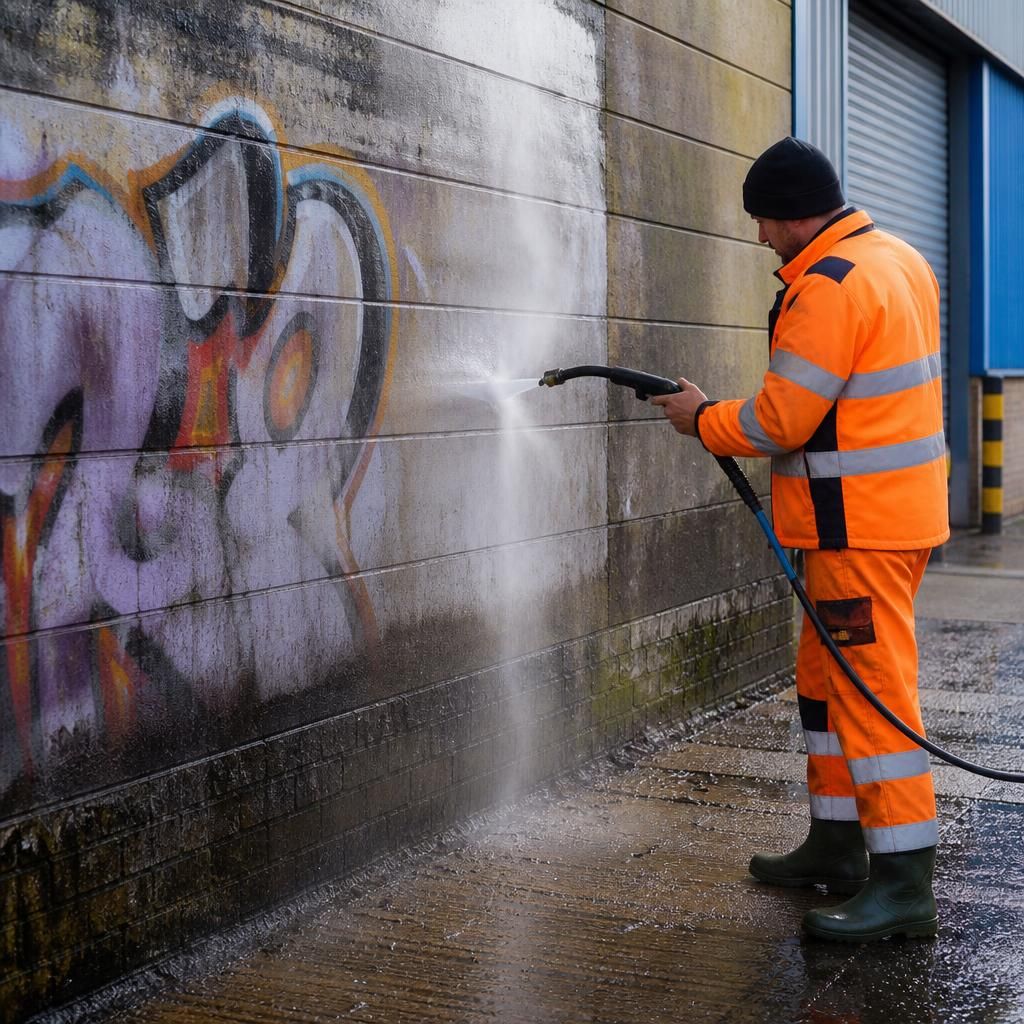
The main cost advantage of steam cleaning for graffiti removal is the potential to avoid surface repairs. Heated water can soften and lift graffiti at relatively low pressure, helping to preserve sound paint, sealants, cladding and masonry where aggressive pressure, abrasive blasting or unsuitable chemicals could cause damage.
This should be assessed as a whole-life cost rather than by comparing treatment rates alone. Include labour, access equipment, chemical products, wastewater controls, repainting, making good and follow-up visits. A suitable steam-cleaning method may also reduce chemical use and help preserve anti-graffiti coatings, which can lower ongoing maintenance costs when the site experiences repeated vandalism. A test area confirms whether the expected finish can be achieved before full works begin.