
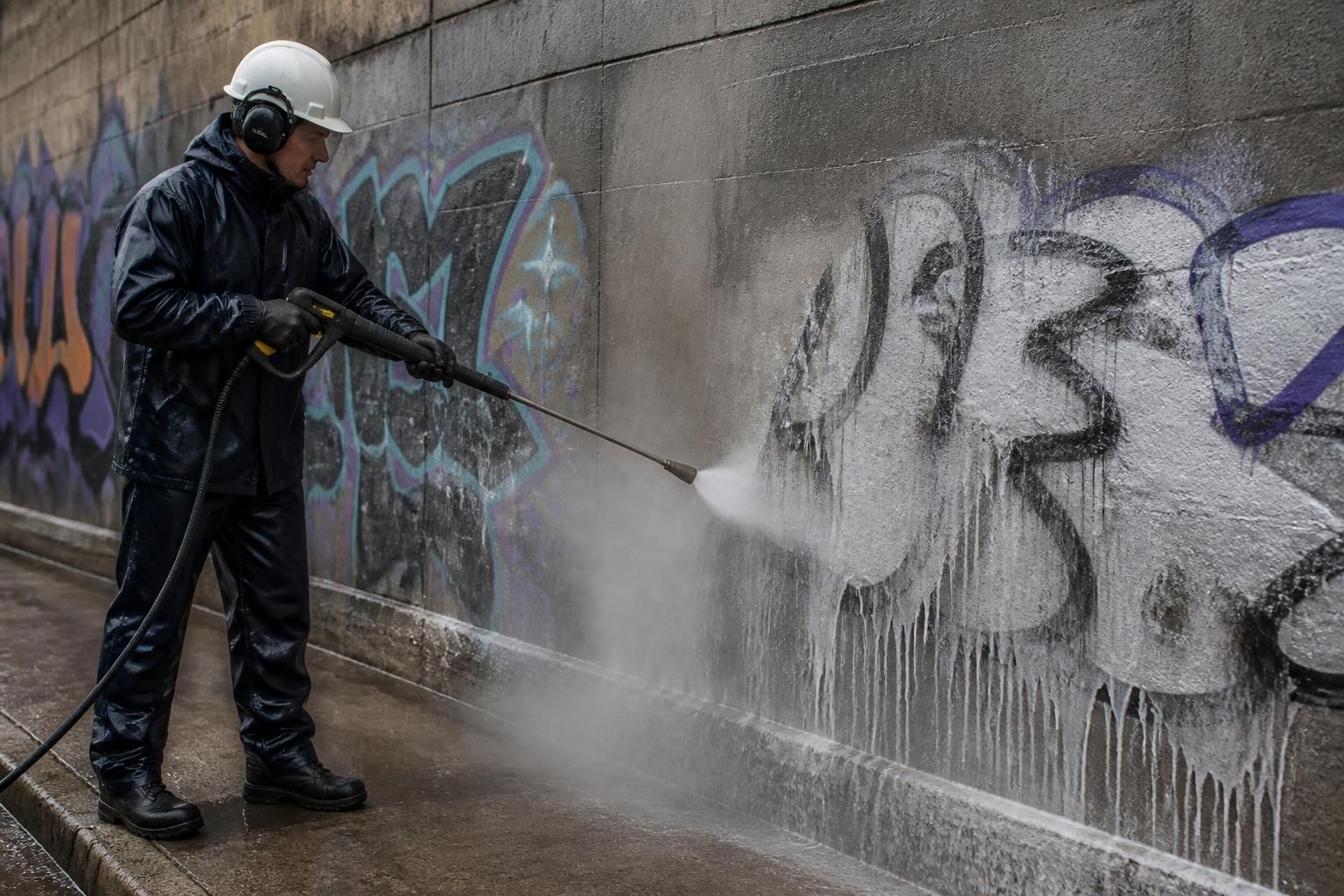
How long does it usually take for steam cleaning to remove graffiti?
Steam cleaning can remove graffiti from a small, accessible area in minutes to a few hours, while larger, heavily marked or difficult-to-access surfaces may require a full day or longer. The exact time depends on the substrate, paint type, age of the graffiti and the preparation and rinsing needed to leave the surface clean without damage.
Steam cleaning can remove graffiti from a small, accessible area in minutes to a few hours. Larger, heavily marked or difficult-to-access surfaces may require a full working day or longer. The actual duration depends on the surface material, the type and age of the graffiti, the number of layers, access arrangements and the preparation and rinsing required to clean the area without damaging the substrate.
For a straightforward tag on a sound, non-porous surface, the cleaning itself is often relatively quick. The operator applies controlled steam to soften the paint, adhesive or marker residue, then removes the loosened material with suitable equipment. Porous masonry, textured coatings and heavily weathered surfaces generally take longer because pigment can penetrate into the surface profile and may need several careful passes.
A typical project time includes more than the period spent directing steam at the graffiti. It may involve:
- Assessing the substrate, paint system and condition of the surrounding area
- Carrying out a small test patch to confirm the safest effective method
- Setting up access equipment, barriers and any necessary protection
- Applying steam progressively rather than holding heat in one place
- Collecting loosened paint and wash water where required
- Rinsing or wiping the surface to remove remaining residue
- Inspecting the finish and treating any shadows, staining or missed areas
- Clearing the work area and making it safe for pedestrians, vehicles or site users
The graffiti itself is one of the main variables. Fresh aerosol paint or marker ink may release more readily than old, sun-baked graffiti that has hardened and bonded to the surface. Multiple colours, overlapping tags and several layers can require repeated treatment. Some paints also leave a faint ghost or shadow after the visible coating has been removed; reducing this appearance may need additional low-impact cleaning or a separate approved treatment.
The substrate has an equally important effect on productivity. Smooth metal, glazed surfaces and some sound painted finishes are usually easier to clean than open-textured brick, concrete, render or stone. On porous materials, the operator must balance cleaning effectiveness against the risk of etching, surface erosion, paint loss or driving contamination further into the substrate. This makes controlled, slower work preferable to simply increasing pressure or heat.
Access can extend the programme even when the graffiti is easy to remove. Ground-level work in an open area may allow continuous cleaning, whereas graffiti on a high façade, bridge, railway structure or enclosed service yard may require mobile elevating work platforms, towers, traffic management or restricted working hours. Equipment setup, permits and coordination with site users can therefore take as long as, or longer than, the cleaning operation itself.
Weather and site conditions also matter. Steam cleaning may be possible in a range of conditions, but rain, freezing temperatures, strong wind and poor drainage can affect safety, visibility, drying and the control of wastewater. If the surface needs to be dry for inspection, recoating or the application of an anti-graffiti treatment, the overall visit may need to include additional drying time or a return visit.
For planned commercial work, the most reliable estimate comes from reviewing photographs or carrying out a site assessment. Useful information includes the graffiti’s location and approximate extent, the substrate, height and access restrictions, whether the area is adjacent to a public route, and whether there are previous coatings or repairs. A test patch can identify the likely cleaning rate and reveal whether the surrounding finish is stable before the full area is treated.
It is also important to distinguish between removal and restoration. Steam cleaning can remove the graffiti coating, but it may not make a permanently stained or previously damaged surface look new. If the graffiti has penetrated a porous material, the remaining shadow may need further treatment, local repair or repainting. These options should be discussed before work starts so that the expected finish and timescale are clear.
In practical terms, a small isolated mark may be dealt with during a short attendance, while a group of tags across a façade, car park, boundary wall or street furniture may take several hours. Extensive coverage, difficult access, repeated layers or sensitive historic materials can extend the work to a full day or beyond. Steam cleaning is deliberately carried out at a controlled pace: rushing the process can increase the risk of damage and create more work through repairs, repainting or repeat cleaning.
Where access, safety controls or wastewater management are required, the total programme should include those arrangements as well as the cleaning time. A professional assessment will normally provide a clearer estimate after the surface and graffiti have been inspected, while allowing for reasonable variation if the coating proves more deeply bonded than it first appeared.
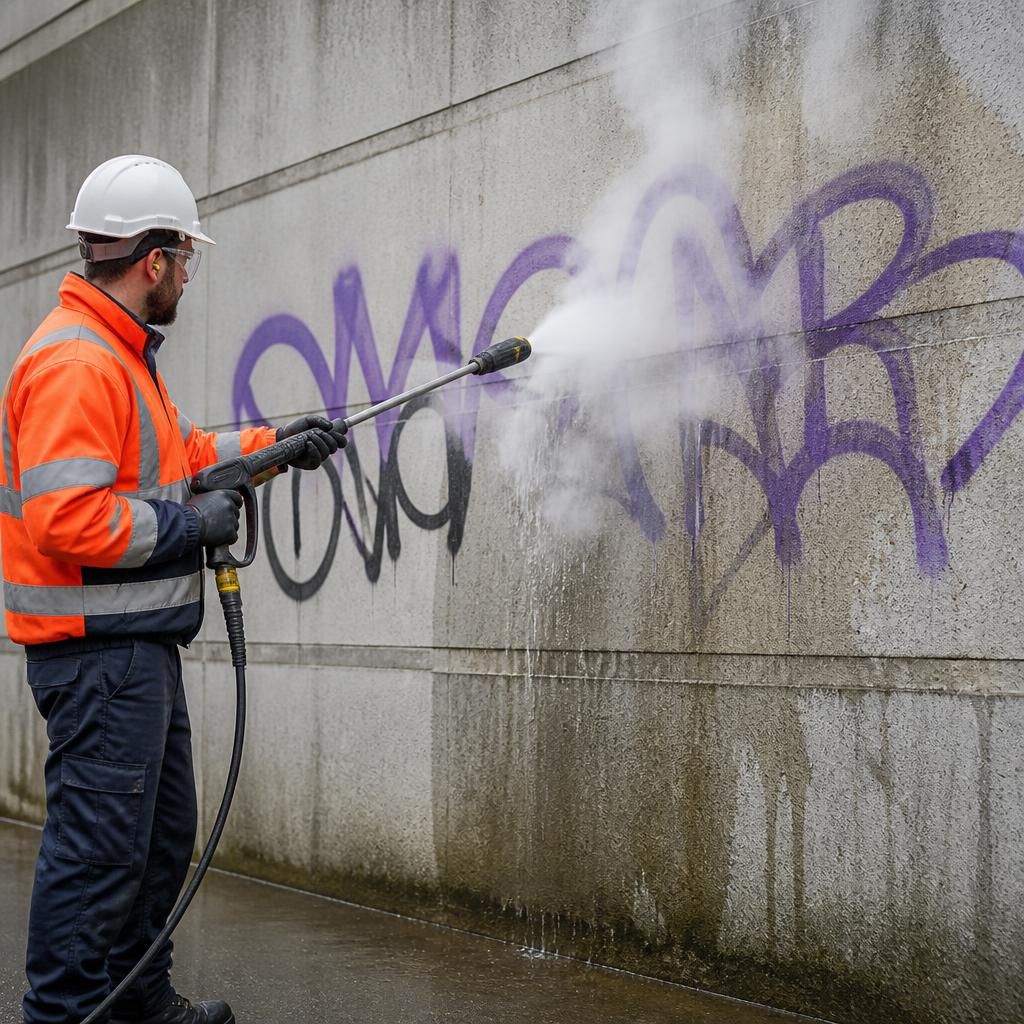
Steam cleaning may remove the graffiti itself relatively quickly, but the total attendance also includes surface checks, test cleaning, equipment setup, access arrangements, rinsing and the final inspection. Ground-level graffiti in an open area is usually quicker to deal with than markings on a high façade, enclosed service yard or public-facing structure.
Where mobile access equipment, barriers, traffic management or wastewater controls are needed, these preparations can extend the programme even when the graffiti is straightforward to remove. A site assessment or clear photographs allow the likely cleaning time and any access requirements to be estimated more accurately.