
How does steam cleaning remove graffiti without damaging surfaces?
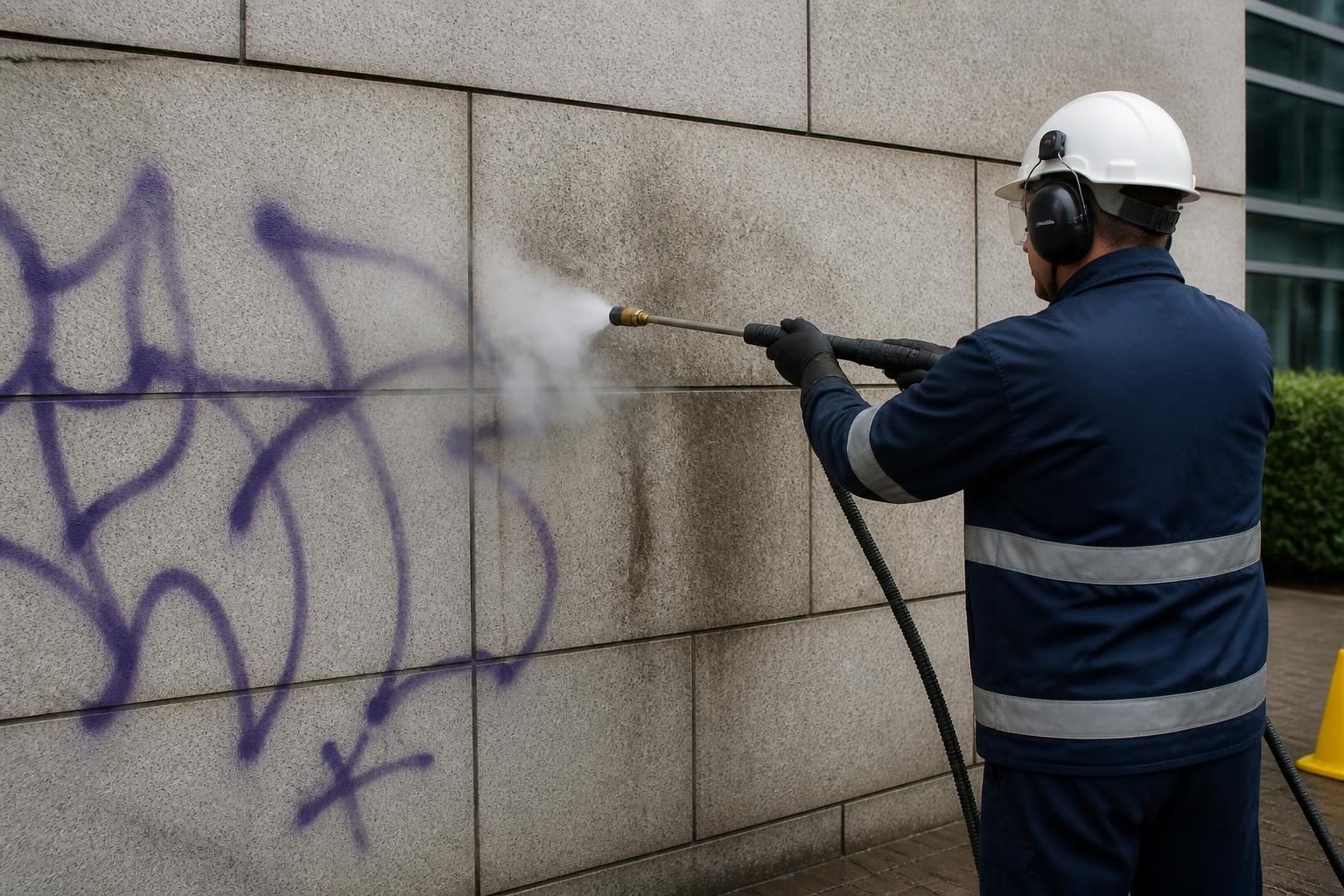
Steam cleaning removes graffiti by using controlled, high-temperature vapour to soften the paint or marker and break its bond with the substrate, allowing it to be lifted away with minimal water and chemical use. Adjusting the steam temperature, pressure and cleaning technique for the surface—along with a discreet test patch—helps remove the graffiti without damaging brick, stone, masonry or cladding.
Steam cleaning removes graffiti without damaging a surface by softening the paint or marker at a controlled temperature, then lifting it away using low-pressure vapour and suitable agitation. Unlike abrasive cleaning, the process does not rely on blasting the substrate with grit or high volumes of water. The operator controls heat, pressure, nozzle distance, dwell time and cleaning direction to break the bond between the graffiti and the surface while preserving the underlying material.
Graffiti coatings are usually made from resins, pigments and solvents that form a film as they dry. High-temperature steam softens this film and reduces its adhesion to brick, stone, concrete, masonry or compatible cladding. Once softened, the residue can be worked away with a brush, pad or carefully selected nozzle. The remaining material is then rinsed or collected using a controlled amount of water, depending on the substrate and the site requirements.
The key to preventing damage is controlled energy rather than maximum pressure. Steam cleaning equipment can deliver significant heat, but it is normally used at substantially lower pressure than conventional pressure washing. This reduces the risk of eroding soft brick, opening the surface of stone, dislodging pointing or forcing water into joints. It also avoids the surface scarring that can occur when abrasive media are used to remove paint.
Before cleaning begins, the surface should be assessed for its material, condition and existing finishes. The operator will look for defects such as cracked masonry, loose coatings, friable mortar, failed sealants, corrosion, water-sensitive areas and previous repairs. The type of graffiti also matters. Aerosol paint, marker ink, masonry paint and adhesive residues may respond differently to heat, and an older or heavily weathered mark may have penetrated the pores of the substrate.
A discreet test patch is an essential part of the process. It shows whether the selected steam temperature and pressure will remove the graffiti without changing the colour, texture or sheen of the surrounding surface. It can also reveal whether the graffiti has stained the substrate rather than remaining as a removable surface film. The cleaning method can then be adjusted before work proceeds across the full affected area.
During the clean, the operator normally works in small sections rather than applying steam indiscriminately across the façade. The nozzle is kept at an appropriate distance and moved consistently to avoid concentrating heat in one location. Short passes and controlled dwell time help soften the graffiti without overheating the substrate. Where necessary, gentle brushing or a non-abrasive pad assists removal, particularly on textured masonry where paint may sit in recesses.
Steam is particularly useful where reducing water and chemical use is important. The vapour can loosen many graffiti coatings with minimal water, which helps limit run-off, saturation and the spread of dissolved paint across adjacent areas. It may also reduce the need for strong chemical removers, although some residues require a compatible detergent or specialist treatment. Any chemical used should be selected for the substrate, applied only where necessary and removed in accordance with the site’s environmental controls.
There are limits to what steam cleaning can safely achieve. Heat can affect certain plastics, painted finishes, films, sealants, timber treatments and delicate architectural coatings. Sudden temperature changes may also stress some materials, particularly where the surface is already damaged or contains moisture. Steam should not be assumed to be suitable simply because a substrate is hard. Soft, porous or previously repaired surfaces require the same assessment and test cleaning as more robust masonry.
Paint removal can also expose a pre-existing difference in colour or texture. Graffiti may have protected the surface from weathering, leaving a cleaner or darker outline after removal. On porous stone and brick, pigment may have penetrated below the surface, so complete removal may require a carefully managed combination of steam, gentle agitation and a compatible poultice or treatment. Attempting to force out embedded staining with excessive pressure can cause more damage than the graffiti itself.
Protection of surrounding areas is another important part of preventing damage. Windows, vents, electrical fittings, signs, door hardware, traffic surfaces and vulnerable landscaping should be protected where appropriate. Run-off should be controlled so that softened paint is not carried onto clean masonry or drainage systems. On commercial and industrial sites, the work plan should also account for pedestrians, vehicles, access equipment and any operational restrictions around the building.
After cleaning, the surface should be inspected in changing light and from a suitable distance. Residual marks, shadows or ingrained pigment may need a further targeted treatment rather than more aggressive steam cleaning. The area may then be rinsed, dried and checked for any change in colour, coating integrity or pointing condition. Where ongoing tagging is a concern, a suitable anti-graffiti coating can be considered after the substrate is clean, dry and confirmed compatible with the existing finish.
In practice, steam cleaning is not damage-free by default; it is a low-impact method when the equipment and technique are matched to the material. Careful assessment, a test patch, controlled heat and pressure, appropriate surface protection and a measured cleaning process are what allow graffiti to be removed while retaining the character and integrity of the underlying surface.
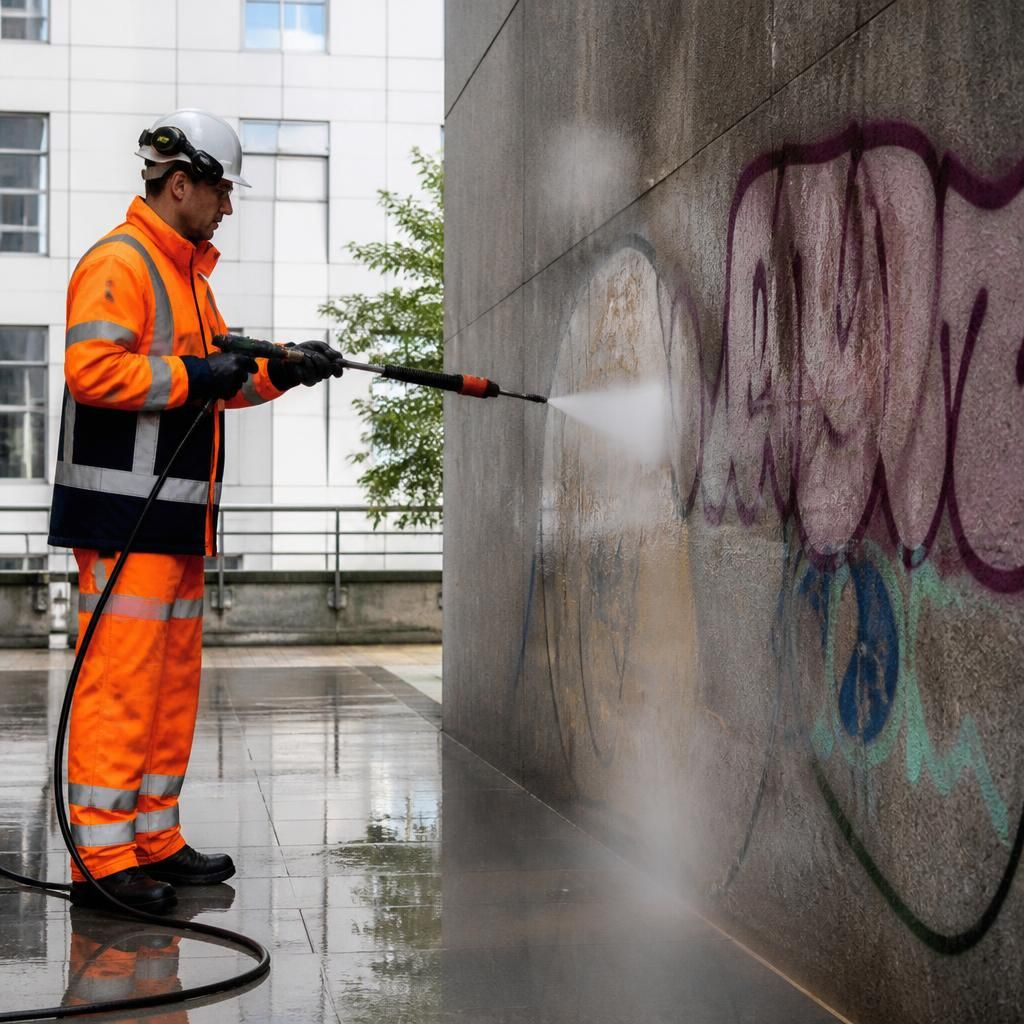
Steam cleaning removes graffiti by using controlled heat to soften the paint or marker, allowing it to be lifted from the surface without abrasive blasting. The equipment is operated at low pressure, with the temperature, nozzle distance and dwell time adjusted to suit the substrate.
A discreet test patch should be completed before treating the full area. This confirms whether the graffiti is a surface coating or has penetrated the pores, while checking that the steam will not alter the colour, texture, pointing or existing finish. The operator can then use short, consistent passes and gentle agitation to remove the softened residue without concentrating heat in one place.