
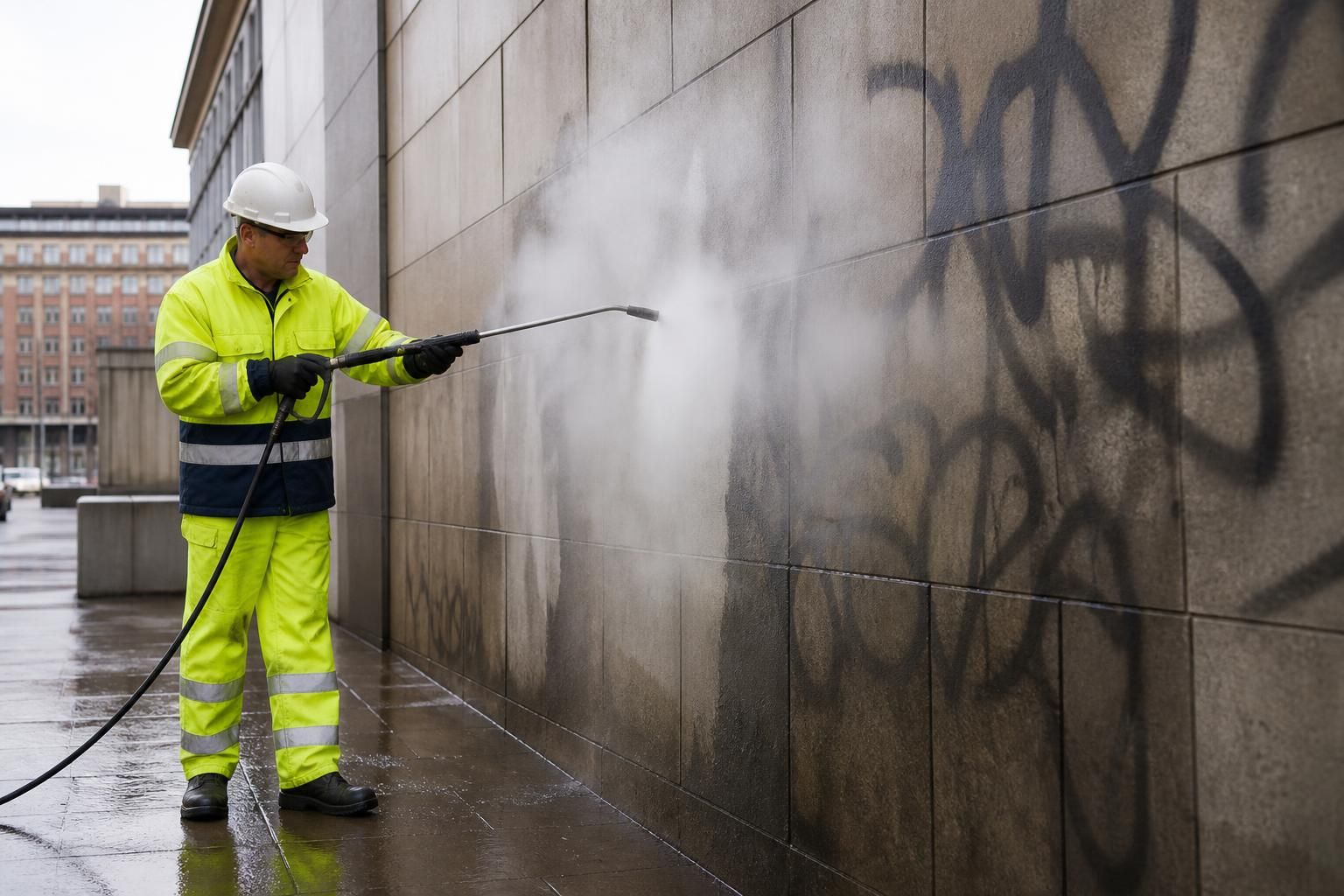
How does steam cleaning compare to chemical methods for graffiti removal in terms of environmental impact?
Steam cleaning typically has a lower environmental impact than chemical graffiti removal because it can lift paint with heat and pressure while using little or no detergent. However, its overall sustainability depends on energy use, removed paint residues and the responsible collection and disposal of wastewater.
Steam cleaning generally has a lower environmental impact than chemical graffiti removal because it can soften and lift many coatings using heat and controlled pressure, with little or no detergent. However, it is not automatically impact-free. Energy consumption, water use, paint residues, wastewater collection and the condition of the surface all affect the sustainability of the work.
Why steam cleaning can be the greener option
- Reduced chemical use: Steam can remove many spray paints, marker inks and surface coatings without relying on solvent-based or highly alkaline products. This reduces the risk of chemical residues entering soil, drainage systems or nearby watercourses.
- Lower product handling requirements: Avoiding chemical application can reduce the storage, transport, decanting and disposal requirements associated with graffiti removers.
- Less risk of substrate damage: When the temperature, pressure and dwell time are controlled correctly, steam can be gentler than aggressive mechanical abrasion or unsuitable chemical products. Preserving the original brickwork, masonry, cladding or coating avoids unnecessary repair, repainting or replacement.
- Limited rinsing in some applications: Steam systems can use considerably less water than conventional pressure washing, although the exact consumption depends on the equipment, surface and amount of residue being removed.
These benefits are particularly relevant on commercial façades, public infrastructure and managed estates where graffiti may need to be removed repeatedly. A method that protects the substrate and limits chemical use can reduce the environmental burden over the full maintenance cycle, not just during one visit.
Environmental considerations for chemical removal
Chemical graffiti removers vary considerably. Some are water-based, biodegradable and designed for controlled use, while others contain solvents, strong alkalis or other ingredients that require careful handling. A product being described as biodegradable does not mean it can be discharged untreated into a surface-water drain. It may still affect aquatic environments, have a high or low pH, carry dissolved paint residues, or require specific disposal arrangements.
Chemicals can also loosen more material than intended, particularly on porous stone, painted surfaces, render or older masonry. The resulting liquid can contain both the cleaning product and dissolved or suspended paint. If this mixture is allowed to run into gullies, soil or watercourses, the environmental impact can be greater than the product label alone suggests. Chemical use also requires suitable risk assessment, personal protective equipment, storage controls and compliance with the product’s safety data sheet.
Steam cleaning still requires responsible water and waste management
Steam cleaning removes the need for many detergents, but it does not eliminate the need to manage contaminants. Paint particles, pigments, binders, dirt and any existing surface treatments can be mobilised during cleaning. On a hard-standing area, the work may produce a small quantity of contaminated liquid; on a porous surface, moisture and residue may remain within the substrate.
Responsible practice includes assessing the drainage layout before work begins, preventing contaminated runoff from entering surface-water systems, using collection or recovery equipment where necessary, and separating solids from liquid waste. Collected residues should be assessed and disposed of through an appropriate waste route rather than being washed away. The correct approach depends on the site, the coating being removed, the surface material and the local drainage arrangements.
Energy use is the main environmental trade-off
Steam equipment needs energy to heat water. Its environmental impact therefore depends on the efficiency of the machine, the duration of the work, the condition of the graffiti and the source of the electricity or fuel used. A poorly planned job that requires repeated passes may use more energy than a carefully selected chemical treatment. Conversely, avoiding chemical manufacture, transport, rinsing and disposal can make steam the better option overall.
Site planning can reduce this impact. Selecting the least intensive setting that will remove the graffiti, limiting unnecessary heating time, maintaining equipment properly and grouping work in the same area can all improve efficiency. The environmental assessment should consider the complete process rather than comparing only the cleaning product with the steam generator.
Choosing between the methods
Steam is often the preferred first option where the graffiti can be removed without damaging the substrate and where the site has sensitive drainage, public access or restrictions on chemical use. It is especially useful when preserving the existing finish matters, because excessive chemical strength or dwell time can cause staining, colour change, coating failure or repeated remedial work.
A suitable chemical product may still be appropriate for stubborn coatings, delicate surfaces or areas where steam could affect a paint system, sealant or bonded material. In those situations, the lowest-impact product should be selected after a test patch, used at the minimum effective concentration and prevented from reaching uncontrolled drainage. Steam and a carefully selected chemical treatment may also be used together, reducing the quantity and contact time of the chemical rather than applying it as the only treatment.
How the environmental impact is controlled on a commercial site
- Inspect and identify the substrate, graffiti medium, surrounding finishes and drainage before selecting a method.
- Carry out a small test area to confirm that the graffiti can be removed without unnecessary heat, pressure, chemicals or repeat cleaning.
- Use steam at the lowest effective setting and avoid prolonged treatment of vulnerable surfaces.
- Use chemical products only where they provide a clear technical benefit, following the manufacturer’s instructions and safety data.
- Contain, recover and dispose of paint-contaminated wastewater and solids through an appropriate route.
- Keep wash water away from surface-water drains, planted areas and open ground unless discharge has been specifically assessed and authorised.
- Record the method and materials used so that future maintenance can be planned with less intensive treatment where possible.
Overall, steam cleaning is commonly the lower-impact graffiti removal method when it removes the coating effectively with minimal detergent, limited water and controlled runoff. The most environmentally responsible choice is determined by the whole operation: the energy required, the risk of substrate damage, the formulation and quantity of any chemical used, and how all paint residues and wastewater are contained and disposed of.
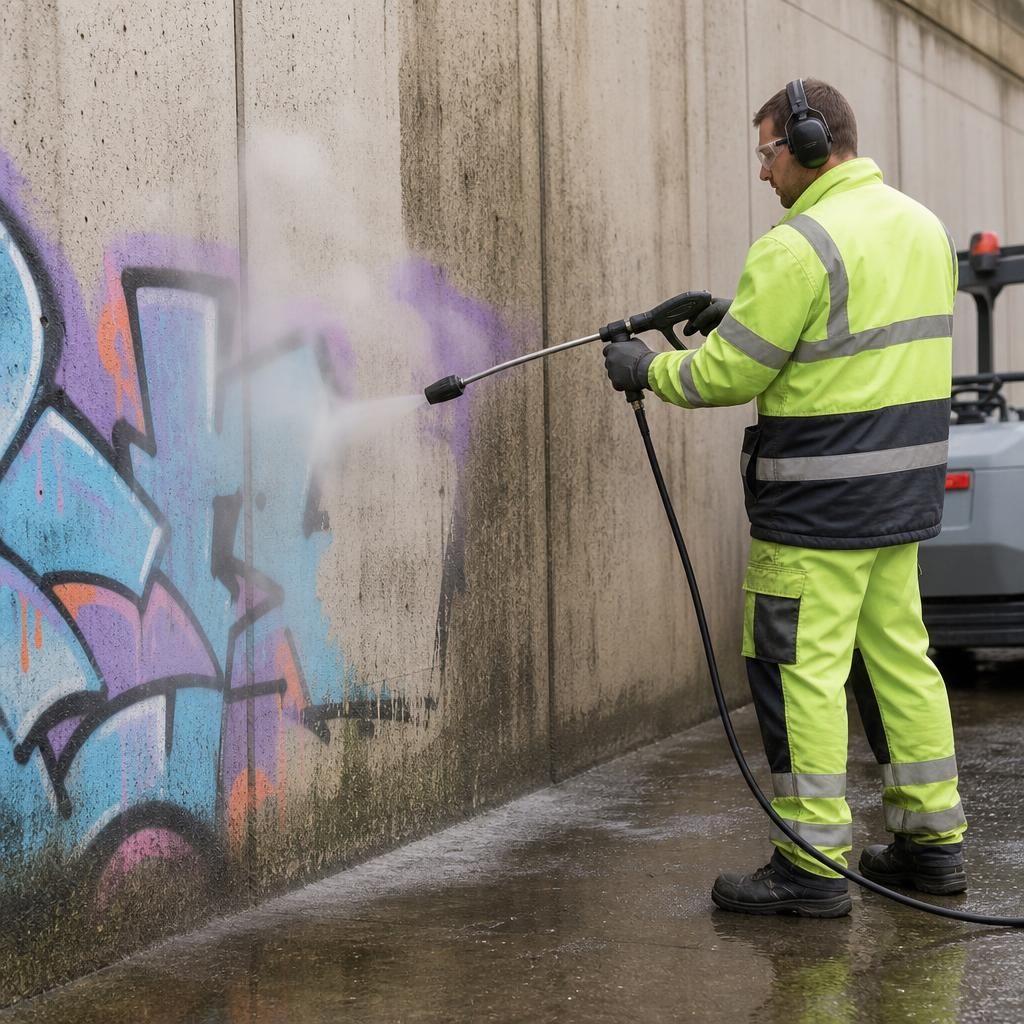
Steam cleaning can reduce the environmental impact of graffiti removal by softening paint with heat rather than relying on solvent-based or highly alkaline chemicals. This limits chemical handling and may reduce the risk of residues affecting masonry, soil or drainage systems.
Steam is not impact-free: the energy used to heat water and any paint-contaminated wastewater still need to be managed responsibly. Effective containment, recovery and disposal of residues are essential, particularly near surface-water drains or planted areas.
Arrange an environmentally responsible graffiti removal assessment
Arrange an environmentally responsible graffiti removal assessment to identify the safest, lowest-impact method for your surface, drainage layout and site requirements. We can recommend suitable steam cleaning, chemical treatment or containment measures before work begins.