
Are there any environmental considerations to be aware of when using steam cleaning for graffiti removal?
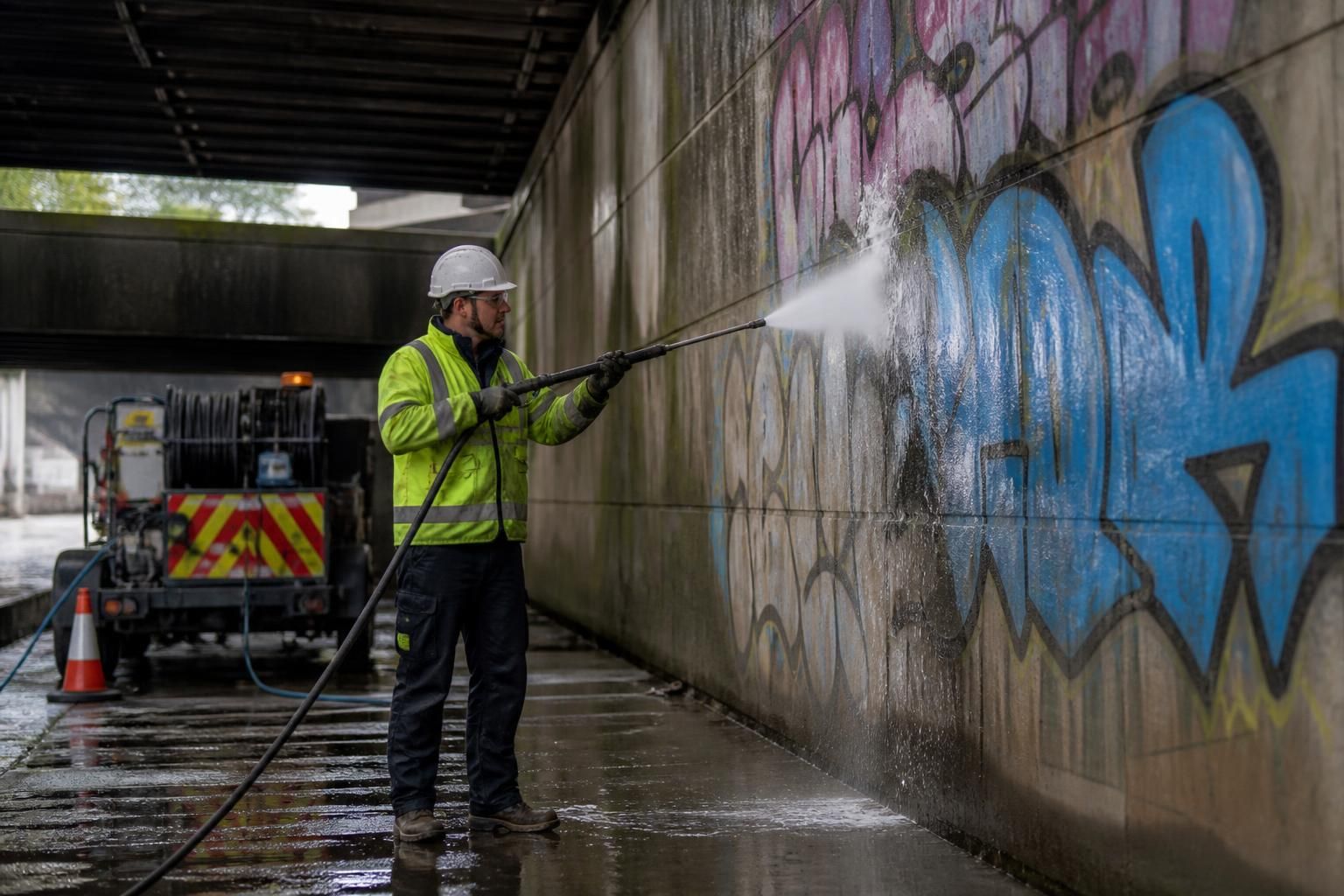
Steam cleaning generally has a lower environmental impact than many chemical graffiti removal methods because it can use minimal detergent and less water, but it still requires energy and produces contaminated runoff. Runoff should be contained and collected where necessary, with suitable wastewater disposal and responsible use of biodegradable cleaning products to prevent pollutants entering drains, soil or watercourses.
Steam cleaning is often a lower-impact option for graffiti removal because it can loosen paint, ink and adhesive residues with very little or no detergent and considerably less water than many pressure-washing methods. It is not impact-free, however. The equipment uses energy, and the dissolved graffiti, surface dirt and any cleaning products can create contaminated wastewater that must be controlled and disposed of responsibly.
The main environmental considerations are energy use, water consumption, runoff, cleaning products and waste disposal. A suitable method should be selected after assessing the substrate, the type and age of the graffiti, the surrounding drainage and the risk of pollutants entering soil or watercourses.
Runoff control is essential. Steam may evaporate during cleaning, but the loosened coating and condensed water still collect at the base of the surface. This residue can contain paint pigments, binders, oils, dirt and metals from the substrate or coating. It should not be allowed to flow into surface-water drains, streams, planted areas or unprotected ground. Where runoff could cause pollution, it should be contained using drain covers, bunding, absorbent materials or a suitable recovery system, then collected for appropriate disposal.
Wastewater should be assessed according to what has been removed and where the work is taking place. Foul-water drainage may sometimes be suitable for controlled discharge, but this should not be assumed. Permission or a trade-effluent arrangement may be required, particularly on commercial, industrial or public sites. Recovered water, sludge, used absorbents and contaminated debris should be handled as controlled waste where appropriate, with disposal through an authorised route.
Water use is usually lower than with conventional high-pressure cleaning, but it still needs to be managed. The operator should use the lowest practical flow and avoid prolonged rinsing. Careful working can also reduce the amount of wastewater requiring collection. On larger projects, the environmental plan should identify where water will come from, how runoff will be captured and how waste will leave the site before cleaning begins.
Energy consumption is another consideration. Steam-cleaning equipment requires fuel or electricity to heat water. Its overall environmental performance therefore depends on the equipment, operating conditions, duration of the work and the source of the energy used. Efficient equipment, correct temperature selection, regular maintenance and avoiding unnecessary idle time can reduce energy consumption. In some locations, electrically powered equipment may help reduce on-site emissions, subject to the available power supply and the wider energy source.
Cleaning products should be kept to the minimum necessary. Many graffiti deposits can be softened with heat and controlled agitation alone. If a detergent, graffiti remover or biocidal product is needed, it should be selected for the specific coating and substrate, used at the manufacturer’s recommended dilution and prevented from entering drains or soil. Biodegradable does not mean harmless in every situation: a product can still affect aquatic life or breach discharge requirements. Safety data and disposal instructions should always be followed.
Environmental protection also depends on preventing unnecessary damage. Excessive heat, dwell time or mechanical action can remove sound paint, coatings or jointing material, creating additional waste and requiring remedial work. A competent operator should test a discreet area first, adjust the steam temperature and working distance, and use the least aggressive approach that removes the graffiti effectively. Protecting nearby vegetation, lighting, signage, sealants and drainage infrastructure is part of the same assessment.
For commercial and industrial sites, a responsible steam-cleaning process will normally include:
- a survey of the substrate, graffiti coating and surrounding area;
- identification of nearby foul and surface-water drains;
- measures to prevent runoff spreading beyond the work area;
- controlled use of water, heat and any detergents;
- collection and suitable disposal of contaminated wastewater and debris; and
- inspection of the cleaned surface to confirm that further treatment is not being applied unnecessarily.
Steam cleaning can therefore be an environmentally preferable graffiti-removal method, particularly where minimal chemicals and water are required, but the result depends on site controls rather than the word “steam” alone. Before work starts, the cleaning plan should account for runoff, drainage, energy use, product selection and waste disposal. For sensitive locations or large areas, these arrangements should be agreed with the site manager and, where necessary, the relevant water or environmental authority.
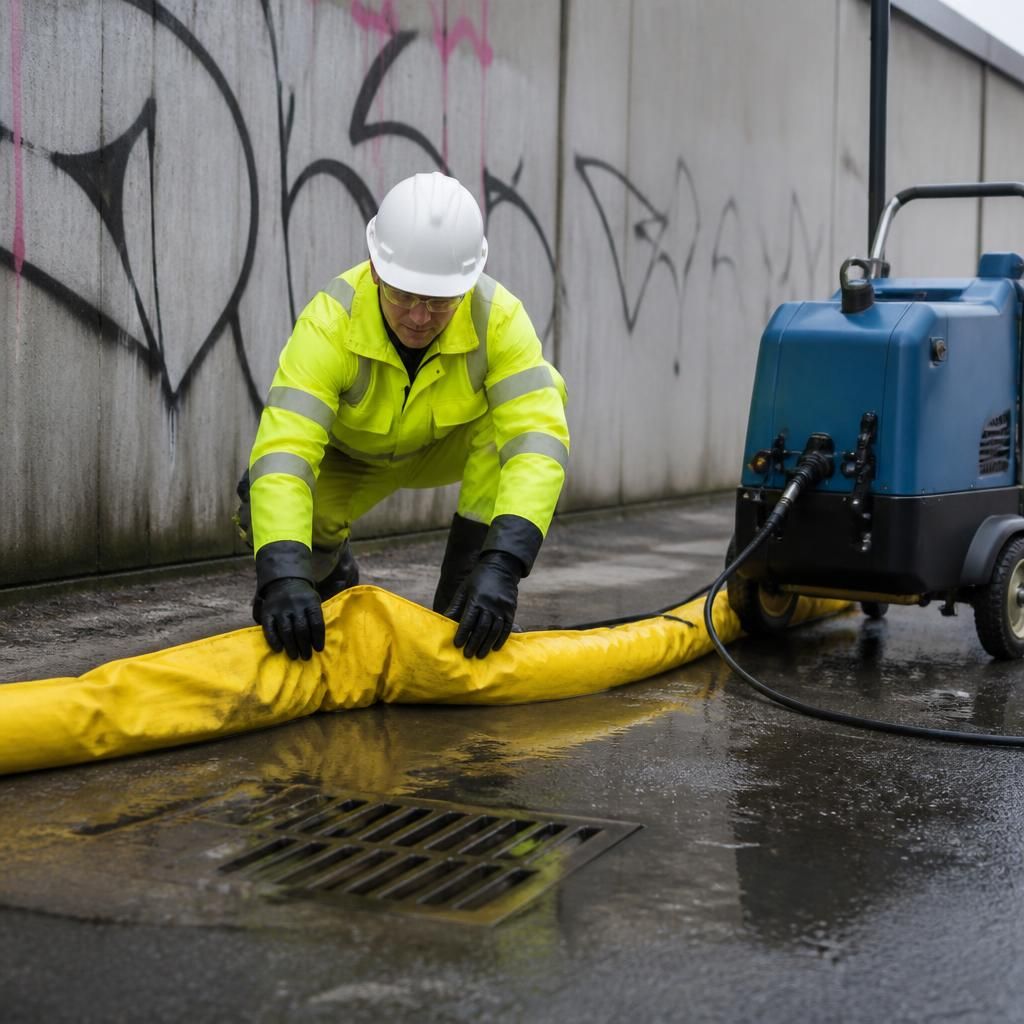
Controlling contaminated runoff is the main environmental consideration when using steam cleaning for graffiti removal. Although much of the water may evaporate as steam, dissolved paint, pigments, oils, dirt and cleaning residues can collect at the base of the surface. This residue should not be allowed to enter surface-water drains, soil, planted areas or nearby watercourses.
Before cleaning starts, the work area should be assessed for drainage risks. Drain covers, bunding, absorbent materials or a suitable recovery system may be needed to contain and collect wastewater. Recovered water, sludge and contaminated debris should then be handled and disposed of through an appropriate route, with discharge arrangements agreed in advance where required.
Plan environmentally responsible graffiti removal
Talk to Encanto Exterior Cleaning about an environmentally responsible graffiti-removal plan that addresses runoff, drainage, water use and waste disposal before work begins. We can assess the site and recommend suitable steam-cleaning controls for the surface and surrounding area.