
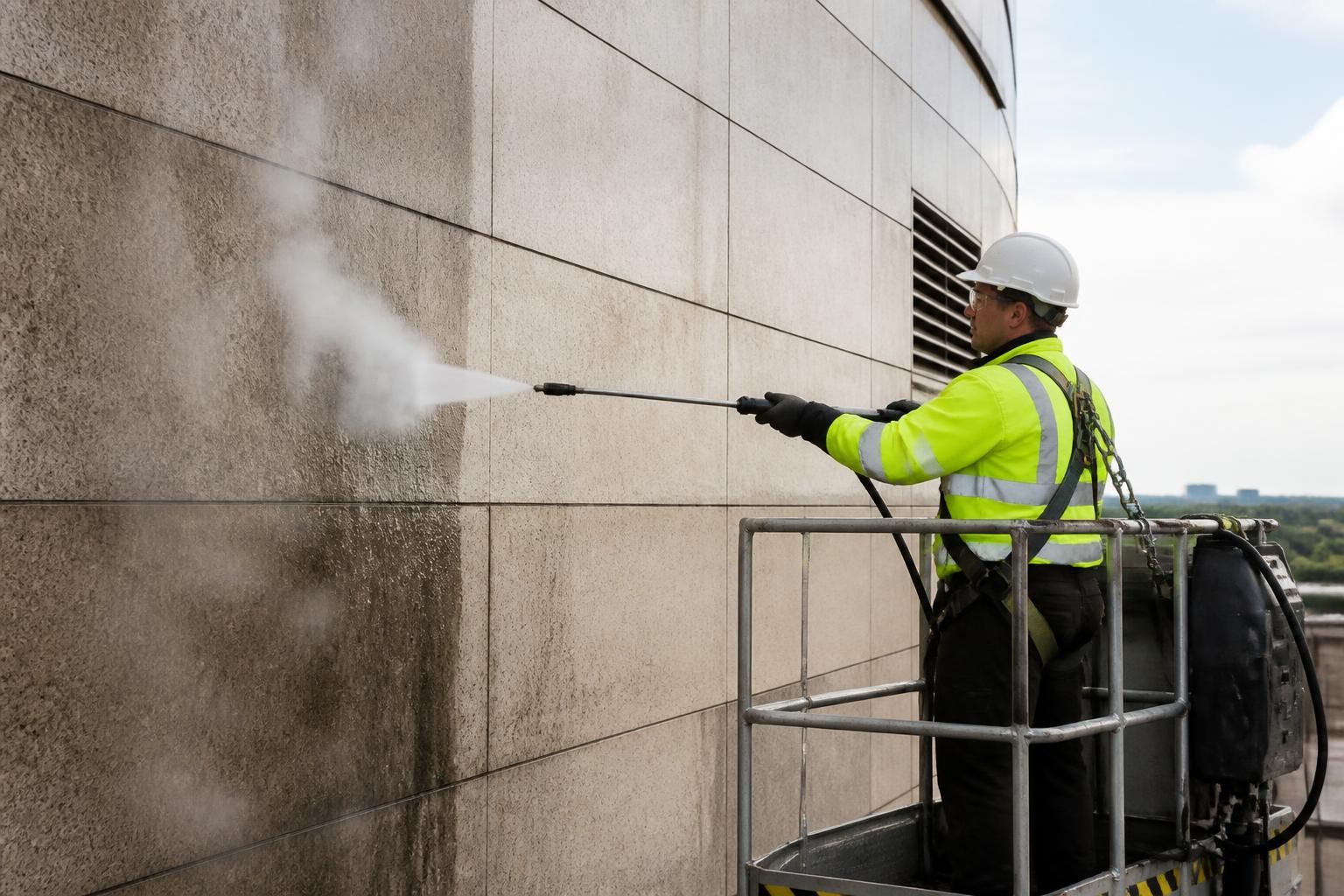
What precautions should be taken to prevent damage during exterior wall steam cleaning?
Prevent damage during exterior wall steam cleaning by inspecting and testing the surface first, controlling steam temperature and pressure, and keeping the nozzle at a suitable distance and angle. Protect vulnerable details such as joints, seals, glazing, coatings and electrical fittings, while adjusting the process for the wall material and weather conditions.
Preventing damage during exterior wall steam cleaning depends on assessing the wall before work begins and controlling heat, pressure, water flow, nozzle position and contact time throughout the clean. The method should be adapted to the substrate and its condition, with vulnerable details protected and a small test area used to confirm that the chosen settings are safe.
Inspect the wall and surrounding features first. A pre-cleaning inspection should identify the wall material, existing coatings, previous repairs, cracks, open joints, loose pointing, failed sealant, corrosion and areas affected by damp or frost. Steam cleaning can expose defects that are not obvious beneath dirt, but it should not be used to force water into already damaged construction. Record particularly delicate areas and agree how they will be treated, protected or excluded.
Check for features that may be affected by heat or moisture, including:
- Painted, rendered or specialist protective coatings that may soften, blister or delaminate.
- Glazing, window frames, door seals, gaskets and movement joints.
- Electrical fittings, external lighting, sensors, cameras, vents and service penetrations.
- Loose masonry, friable stone, deteriorated brick faces and weak mortar joints.
- Decorative mouldings, signage, membranes, insulation systems and previously repaired sections.
Carry out a discreet test patch. Test the proposed steam temperature, pressure, flow, nozzle, working distance and dwell time on an inconspicuous section or a representative sample. Allow the area to cool and dry before assessing it. Look for colour change, gloss variation, softening, surface erosion, coating movement, mortar loss, staining or water penetration. Cleaning should only proceed when the test confirms that the surface and its finish tolerate the process. If the result is uncertain, reduce the intensity, select a different method or refer the material for specialist assessment.
Control heat rather than assuming steam is harmless. Steam cleaning uses heat to loosen contamination, but excessive heat or prolonged application can damage coatings, sealants, plastics and some masonry surfaces. Operators should use the lowest effective temperature and avoid holding the nozzle over one spot. Work in controlled passes, keep the wand moving and allow heat to dissipate around fragile details. Extra care is needed where a wall has dark coatings, resin-based repairs or materials with different rates of thermal expansion.
Use the lowest effective pressure and flow. Steam systems are often used at lower pressure than conventional pressure washing, but the actual impact still depends on the equipment, nozzle, distance and surface. High pressure can open joints, remove friable material, drive water behind cladding or strip a sound coating. Pressure and flow should be increased only when the test area shows that the substrate can withstand them. Avoid concentrating the jet at corners, cracks, joints, edges and previously weakened areas.
Maintain a suitable nozzle position. Keep the nozzle at a controlled distance from the wall and use an angle that lifts contamination away without forcing water behind the surface. Do not allow the nozzle to touch the wall. A closer working distance, narrow nozzle or slower movement increases the cleaning effect and the risk of damage, so these variables should be changed gradually. Around joints, seals and openings, use a wider spread, greater distance or reduced intensity where appropriate.
Protect vulnerable components before cleaning. Cover or shield electrical fittings, sensitive signs, vents, cameras, door furniture and other items that are not designed for direct steam or water exposure. Windows and frames should be checked for failed seals and protected where necessary; sudden heat on cold glazing can also create thermal stress. Masking and sheeting must be secured without trapping moisture against the wall, and coverings should be removed promptly after the work so that concealed damp is not left in place.
Manage run-off and water entry. Clear gutters, downpipes and drainage routes before starting, and confirm that run-off will not enter doorways, service ducts, air intakes, basements or occupied areas. Protect vulnerable ground-level details and arrange suitable collection or diversion where contaminated water could affect other property. Do not seal openings temporarily in a way that prevents the wall from releasing moisture. After cleaning, check sills, joints, cavities and adjacent surfaces for retained water.
Adapt the process to the substrate. Brickwork, natural stone, concrete, render, cladding and painted surfaces do not respond identically to steam. Soft or porous materials require particular care because heat and moisture can loosen particles or move soluble salts. Hard deposits should be softened progressively rather than attacked aggressively. Where a façade contains several materials, use separate settings and techniques instead of treating the entire elevation as one uniform surface.
Choose suitable weather conditions. Avoid cleaning during freezing conditions, when frost is expected, or when strong wind makes it difficult to control the steam and run-off. Very hot surfaces, direct intense sunlight and rapid drying can affect the result and create uneven thermal conditions. Rain can dilute the cleaning action and make inspection difficult. The wall should have adequate time to dry, and any remaining staining or defects should be assessed only after the surface has stabilised.
Use competent operators and safe access. The person controlling the equipment should understand how temperature, pressure, flow, nozzle type and movement affect different materials. Access equipment must be positioned so the operator can maintain a consistent distance without overreaching. Cables, hoses and run-off should be managed to prevent sudden movement or loss of control. On larger façades, agree a work sequence and inspect completed sections before moving on, so an unsuitable setting is not repeated across the elevation.
Monitor the wall continuously. Stop immediately if the surface changes unexpectedly, pointing begins to wash out, a coating lifts, water appears behind cladding, cracks open or delicate details become loose. Do not try to correct damage by increasing pressure or heat. Isolate the affected area, document the condition and reassess the method. A final inspection should check the wall, joints, openings, fittings, drainage routes and surrounding surfaces once cleaning and rinsing are complete.
These precautions reduce the principal risks associated with exterior wall steam cleaning: thermal damage, surface erosion, coating failure and unwanted water penetration. A documented survey, test patch, controlled application and post-clean inspection provide the most reliable basis for cleaning safely while preserving the wall’s existing fabric and finishes.
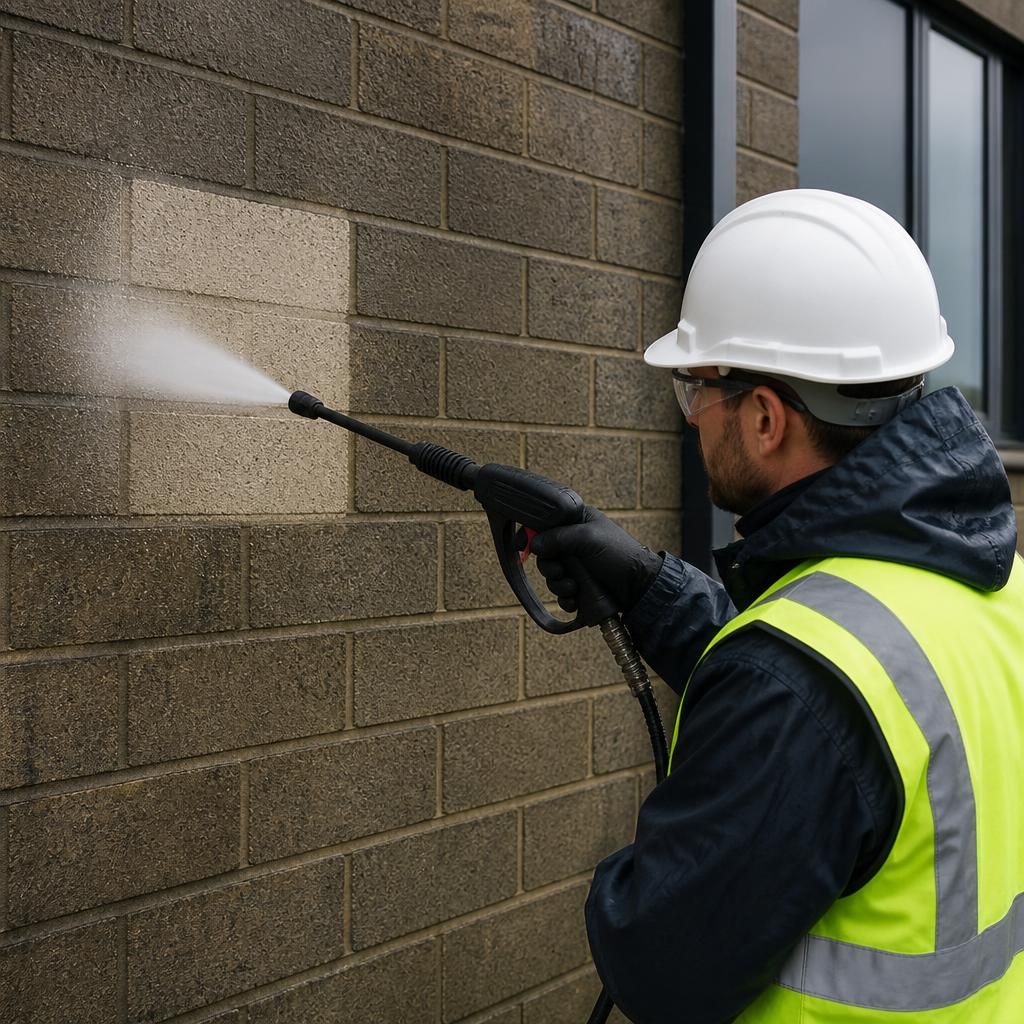
A discreet test patch is one of the most important precautions before exterior wall steam cleaning. Apply the proposed temperature, pressure, flow rate, nozzle and working distance to an inconspicuous area or representative sample, then allow it to cool and dry before inspection.
Check for colour change, coating movement, surface erosion, mortar loss, staining or signs of water penetration. If any alteration appears, reduce the cleaning intensity or select a different method before treating the wider façade. This process is particularly important for painted render, soft masonry, natural stone, cladding, repaired areas and surfaces with existing defects.