
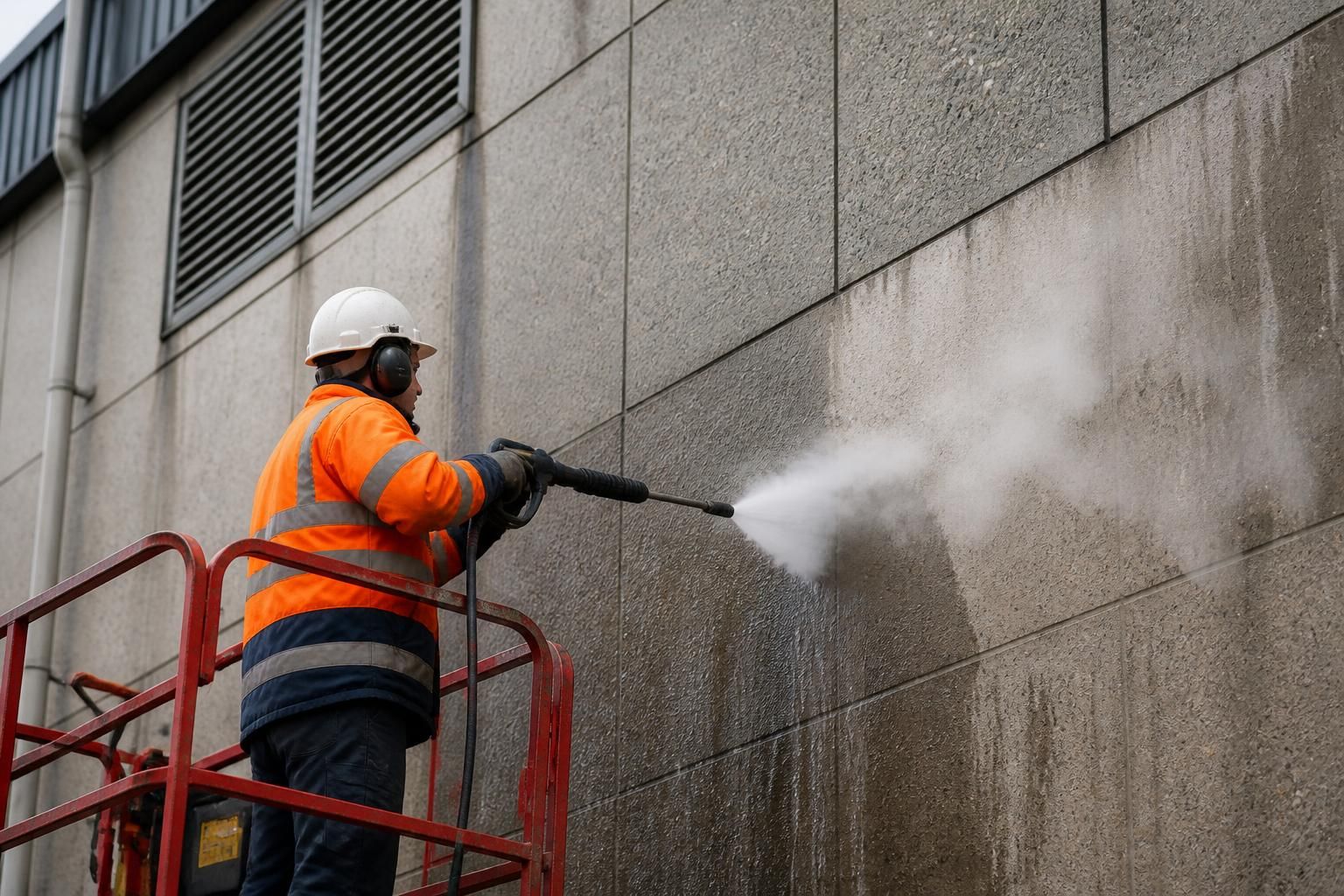
What materials and surfaces are most suitable for exterior wall steam cleaning?
Exterior wall steam cleaning is generally suitable for robust, porous materials such as brick, natural stone, concrete and some mineral renders, where controlled heat can loosen dirt, biological growth and staining without aggressive pressure. Painted, coated, delicate or damaged surfaces require a site assessment and test patch first, as heat and moisture may affect adhesion, finish or existing defects.
Exterior wall steam cleaning is most suitable for robust masonry and mineral-based surfaces, including brick, natural stone, concrete, terracotta and some mineral renders. The combination of controlled heat, low water volume and relatively low pressure can loosen ingrained dirt, atmospheric soiling, algae, moss and some biological staining while reducing the need for abrasive cleaning or harsh chemicals. Suitability still depends on the material’s condition, surface finish, previous treatments and the type of contamination present.
Brickwork
Sound, well-fired brick is one of the most suitable surfaces for steam cleaning. Heat helps soften soot, traffic film, organic growth and general atmospheric deposits, while low-pressure application can reduce the risk of eroding the brick face or washing out sound joints. Steam cleaning is particularly useful on commercial façades, boundary walls, warehouse elevations and older brick buildings where aggressive pressure washing could damage the surface.
Brickwork should be checked for spalling, frost damage, open joints, unstable areas and previous coatings before cleaning. Soft, handmade, historic or salt-contaminated bricks may need a gentler method, a reduced working temperature or specialist conservation advice. Damaged mortar joints should also be identified so that water and heat are not directed unnecessarily into weakened areas.
Natural stone
Many sound natural stone façades respond well to carefully controlled steam cleaning. Granite, some types of sandstone, limestone and other durable masonry can be treated effectively where the stone is stable and the cleaning method is matched to its porosity and condition. Steam can remove carbon deposits, biological growth, bird fouling and surface grime without relying on high impact pressure.
Natural stone is not a single uniform material. Limestone and some sandstones can be comparatively soft or porous, while polished, friable, laminated or previously repaired stone may be more vulnerable. The cleaning process should therefore avoid excessive dwell time, concentrated heat and unnecessary saturation. A test patch should confirm that the method does not alter the colour, texture, tooling marks or protective finish.
Concrete and precast concrete
Sound concrete, rendered concrete panels and many precast concrete surfaces are generally suitable for steam cleaning. The process can remove traffic film, algae, moss, soot, oil-related surface deposits and other discolouration from façades, retaining walls, car park structures and external service areas.
Particular care is needed around cracked concrete, exposed reinforcement, failed sealants, porous repairs and areas affected by carbonation or water ingress. Steam cleaning removes surface contamination but does not repair structural defects, corrosion, failed coatings or deteriorated joints. These issues should be recorded before cleaning and, where necessary, referred for repair.
Terracotta, ceramic and glazed masonry
Sound terracotta, ceramic tiles and glazed architectural masonry can often be cleaned with steam, especially where dirt has accumulated in textured surfaces or joints. The lower water usage can be helpful on façades where run-off needs to be controlled.
Glazed finishes, decorative details and historic terracotta require a test area because thermal shock, existing cracks or defective glaze can cause lifting, crazing or changes in appearance. Steam should not be used to force contamination behind loose tiles, failed joints or damaged decorative units.
Mineral renders and cement-based renders
Some sound mineral, lime-based and cement-based renders are compatible with low-pressure steam cleaning. This can be effective for removing algae, moss, soot and general surface soiling without the aggressive abrasion associated with some other methods.
Render must be assessed for hollow areas, cracking, delamination, powdering, patch repairs and previous paint or water-repellent treatments. Aged lime render can be particularly sensitive to heat, moisture and mechanical action. The operator may need to reduce the temperature, keep the nozzle moving and use a wider spray pattern. A surface that is already unstable should be repaired before cleaning rather than treated as though it were sound.
Painted and coated surfaces
Painted masonry, powder-coated panels and other coated surfaces may be steam cleaned, but they are not automatically suitable. Heat and moisture can soften some paints, reduce adhesion, lift defective coatings or expose differences between weathered and protected areas. Steam can also reveal existing fading, patching and repairs.
Cleaning should begin with a discreet test patch to assess colour stability, adhesion and the appearance of the coating after drying. Where the coating is flaking, chalking, blistered or poorly bonded, removal may be unavoidable and should be considered as part of the project rather than treated as a cleaning defect.
Metal cladding and composite panels
Steel, aluminium and some composite cladding systems can be suitable for controlled steam cleaning when the surface coating, joints and fixings are in good condition. Steam can remove atmospheric deposits and organic growth from profiled panels while limiting water use around entrances and service areas.
Care is required around exposed insulation, open joints, failed sealants, electrical fittings, vents and areas where water could enter the building envelope. Anodised aluminium, painted metal, plastic-faced panels and composite materials can react differently to heat and cleaning pressure, so the manufacturer’s guidance and a test patch should be considered where available.
Surfaces requiring additional caution
- Timber: heat and moisture can raise the grain, move coatings, increase drying time or contribute to distortion. Timber cladding should normally be assessed separately and cleaned using a method suited to its species, finish and condition.
- Painted, rendered or insulated systems: external wall insulation systems, acrylic renders and textured coatings may be damaged by heat, pressure or water entering behind the finish.
- Historic or listed masonry: the material, mortar, previous repairs and patina should be considered together. Conservation requirements may limit the acceptable cleaning method.
- Friable or damaged surfaces: crumbling stone, open mortar joints, delaminated render and spalled brick should not be cleaned at normal production speed until the defects have been assessed.
- Glass, plastics and seals: these may tolerate cleaning in some circumstances but can distort, mark or lose adhesion if exposed to excessive heat or concentrated steam.
How suitability is confirmed on site
A professional assessment should identify the wall material, surface finish, condition, contamination and nearby vulnerable details before work starts. The cleaning team should inspect for cracks, loose units, failed pointing, open joints, electrical equipment, vents, windows and drainage paths. A small test patch is then cleaned using the proposed equipment and settings, with the result checked after the surface has dried.
The test should confirm that the method removes the required contamination without changing the colour, texture or integrity of the wall. It should also establish whether the surface needs pre-treatment, gentle agitation, rinsing or additional measures to control run-off. Areas with different materials or finishes may require different settings rather than one approach across the whole elevation.
In practical terms, steam cleaning is usually a strong option for sound brick, durable stone, concrete, terracotta and compatible mineral render. It is a conditional option for coated masonry, cladding and decorative finishes, and a higher-risk option for fragile, historic, timber or already damaged surfaces. Matching the equipment and technique to the specific wall is more important than applying the same steam-cleaning process to every material.
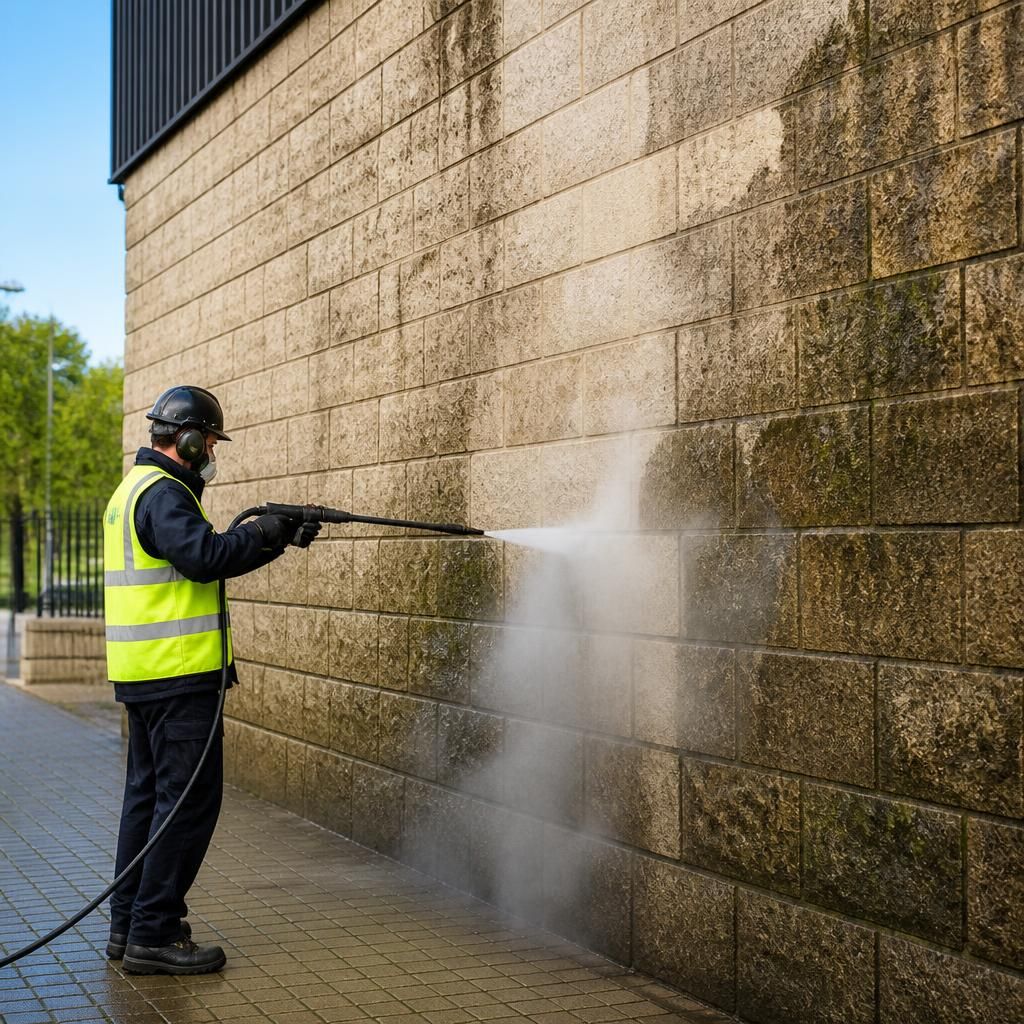
Exterior wall steam cleaning is most suitable for sound, mineral-based surfaces such as brick, natural stone, concrete, terracotta and compatible mineral render. Controlled heat and low-pressure application can loosen atmospheric dirt, soot, algae and biological staining while reducing abrasion and water use.
Suitability depends on the wall’s condition as well as its material. Crumbling brick, open mortar joints, friable stone, hollow render, failing coatings and cracked tiles require additional assessment. A discreet test patch should be cleaned and checked after drying to confirm that the chosen temperature and pressure remove contamination without altering the surface colour, texture or finish.
Arrange an Exterior Wall Steam Cleaning Assessment
Contact Encanto Exterior Cleaning to arrange an exterior wall steam cleaning assessment for your Birmingham, West Midlands or UK site. We will review the materials, surface condition and contamination before recommending suitable equipment and cleaning settings.