
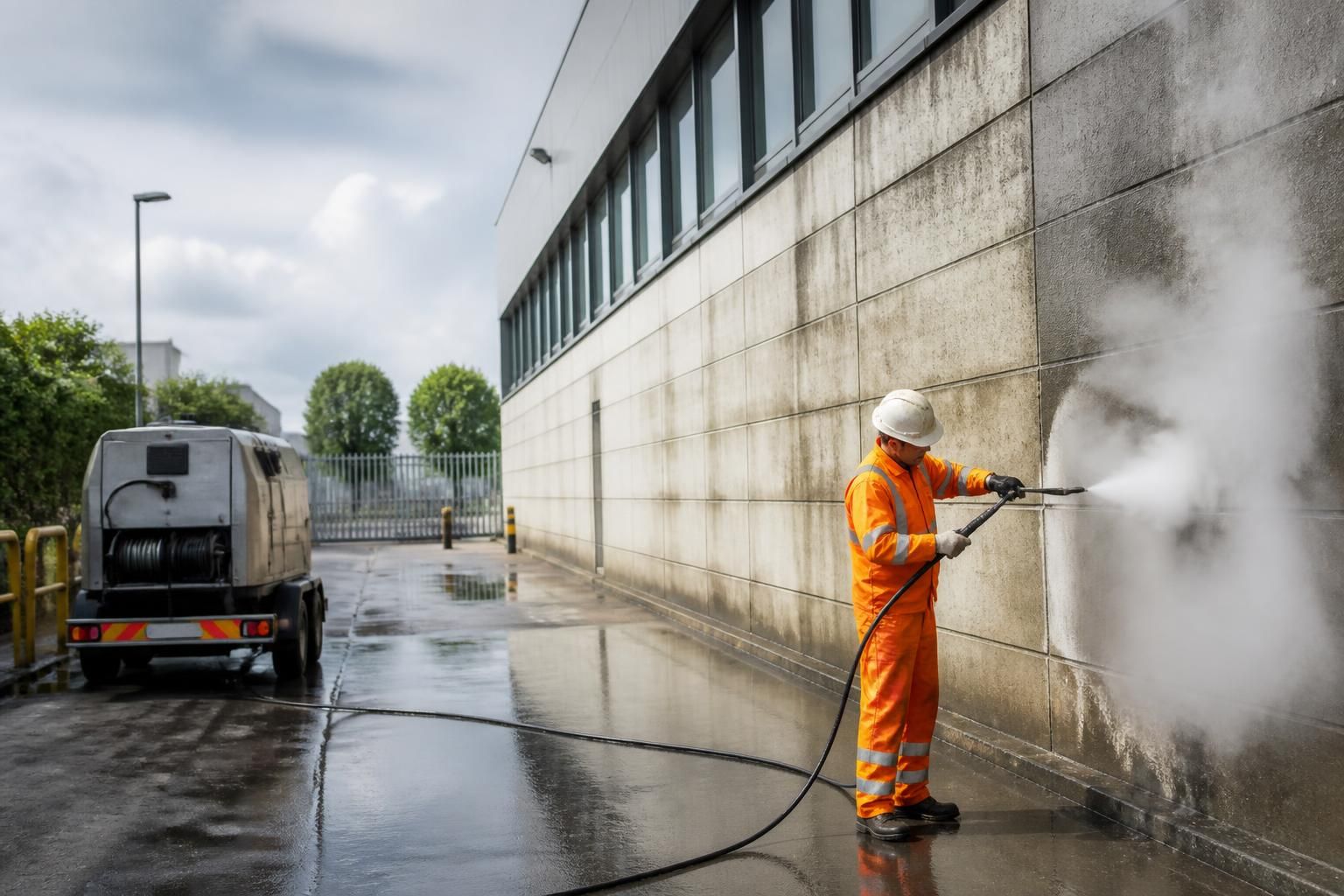
What environmental benefits does steam cleaning offer compared to traditional methods?
Steam cleaning typically uses less water and fewer chemical detergents than conventional pressure washing or chemical cleaning, reducing wastewater, chemical runoff and the risk of pollution around commercial premises. Because it relies on controlled heat to loosen dirt, grease and biological growth, it can also leave surfaces clean with fewer residues, provided the equipment is operated efficiently and wastewater is managed correctly.
Steam cleaning can reduce the environmental impact of commercial exterior cleaning by using controlled heat to loosen dirt, grease, traffic film, algae and other deposits, rather than relying on large volumes of water or strong chemical products. Compared with conventional high-volume pressure washing or chemical treatments, it can reduce water consumption, chemical use and the risk of contaminated runoff when the work is properly planned and managed.
Lower water consumption
Steam cleaning generally uses less water than standard pressure washing because the cleaning action comes from heated water delivered in a controlled flow. This is particularly useful when cleaning façades, cladding, masonry, loading areas and other large surfaces where water use can quickly become substantial. Lower water use can reduce demand on the mains supply and limit the volume of wastewater that must be collected, treated or discharged.
The exact saving depends on the equipment, surface, level of soiling and cleaning method being compared. Steam cleaning is not a water-free process, and heavily soiled areas may still require rinsing. A responsible contractor should therefore assess the site rather than make an absolute claim that steam cleaning will always use less water.
Reduced reliance on chemical detergents
Heat helps soften oils, grease, organic growth and ingrained dirt, allowing many deposits to be removed with little or no detergent. This can reduce the amount of cleaning chemical entering wastewater and lower the risk of residues being left on the surface or surrounding ground. It may also reduce the need to store, transport and dispose of chemical products on site.
Where a detergent, biocide or specialist treatment is necessary, steam cleaning can often be used alongside it in a more targeted way. Product selection remains important. Chemicals should be suitable for the surface and the type of contamination, applied at the correct dilution, and prevented from entering drains, watercourses or planted areas unless the relevant discharge requirements have been met.
Less risk of polluted runoff
Exterior cleaning can mobilise oil, heavy metals, organic matter, paint fragments and other contaminants that have accumulated on a building or hardstanding. High-pressure water can spread this material across a wider area and into surface-water drainage. By loosening deposits with a controlled flow and reducing the amount of water used, steam cleaning can make runoff easier to contain and manage.
This benefit depends on the whole cleaning process, not just the machine. Drain covers, bunding, wet vacuums, collection tanks and suitable filtration may be needed, particularly around car parks, service yards, industrial premises and areas connected to surface-water drains. Collected wastewater should be assessed and disposed of in accordance with the site requirements and applicable UK guidance. Steam cleaning does not make contaminated wastewater safe to discharge automatically.
Fewer residues on cleaned surfaces
Because steam cleaning can remove deposits through heat and mechanical action, it may leave less detergent residue than methods that depend heavily on chemical cleaning. This can be beneficial on façades, wall finishes and cladding where residue could attract further dirt or affect the appearance of the surface. Thorough rinsing may still be required, especially where oils, salts or treatment products have been used.
Potentially lower waste from consumables
Using fewer chemical products can reduce packaging waste and the volume of unused or contaminated product requiring storage and disposal. Steam cleaning may also reduce the need for repeated chemical applications when the source of the soiling is addressed and the surface is maintained appropriately. This is not guaranteed: the environmental outcome depends on the cleaning specification, the condition of the surface and the frequency of future maintenance.
Improved control in sensitive areas
Controlled steam cleaning can be suitable where chemical runoff or excessive water use would create additional environmental concerns, such as near planted areas, public footways, drainage channels or occupied commercial premises. It can also help limit overspray when used with appropriate pressure and access equipment. The operator must still protect nearby vegetation, isolate vulnerable drainage points and prevent loosened contamination from spreading.
Energy use should also be considered
Steam equipment heats water, so it uses fuel or electricity. This means steam cleaning is not automatically the lowest-carbon option in every situation. The environmental balance depends on the machine’s efficiency, the energy source, travel to the site, the duration of the work and the amount of water and chemicals avoided. Efficient equipment, sensible scheduling, correct nozzle selection and cleaning only at the pressure and temperature required for the surface help limit energy use.
For larger commercial projects, the most responsible approach is to consider the complete process:
- identify the type and extent of soiling before selecting the method;
- use the lowest effective water flow, pressure and temperature;
- avoid detergents where heat and controlled agitation are sufficient;
- protect drains and contain or recover wastewater where contamination is possible;
- use biodegradable or surface-appropriate products when treatment is required;
- dispose of wastewater, sludge and chemical residues through suitable routes; and
- record the method and any environmental controls for site management purposes.
For Birmingham, the West Midlands and other UK sites, steam cleaning can therefore offer a lower-impact alternative to high-volume washing or chemical-heavy cleaning, particularly for grease, traffic film, biological growth and sensitive exterior surfaces. Its environmental benefits are greatest when water use, chemical selection, energy consumption and wastewater disposal are considered together rather than treated as separate issues.
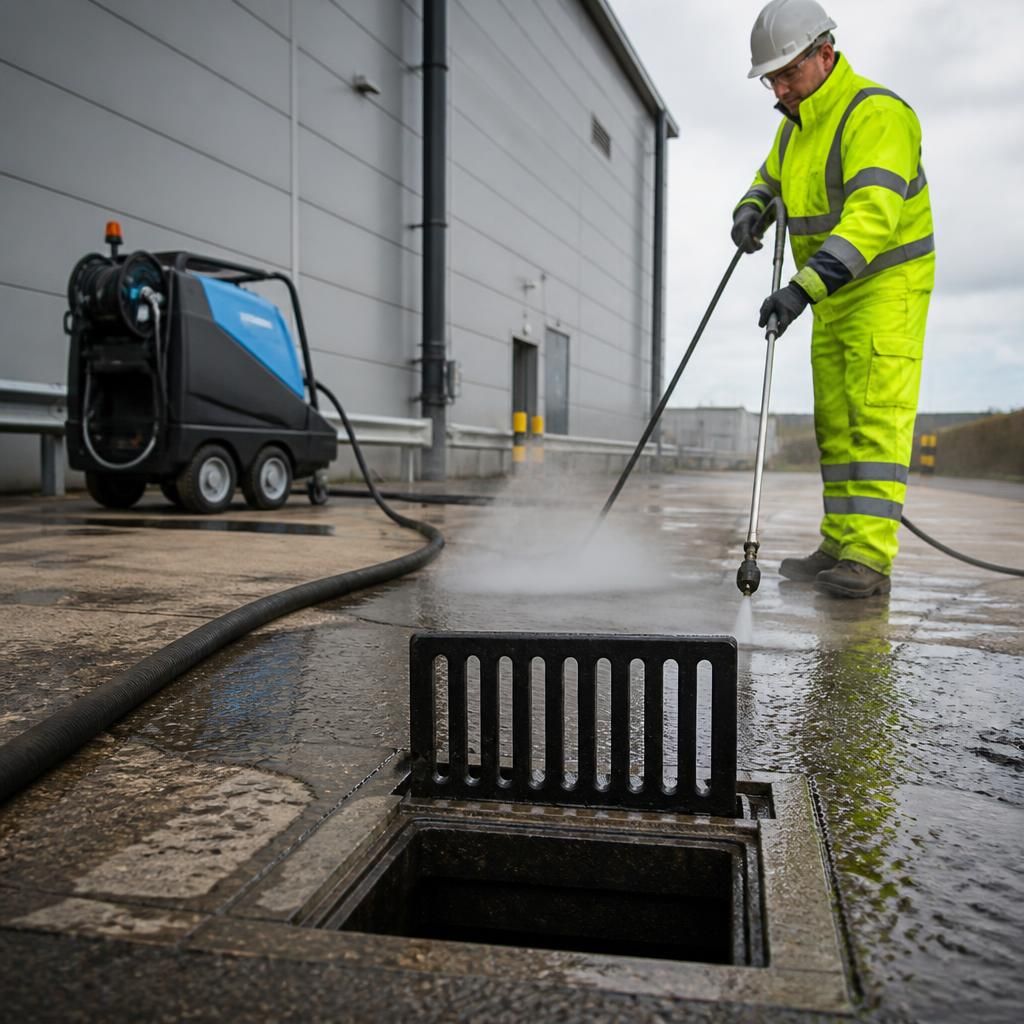
One of the main environmental benefits of steam cleaning is that its controlled water flow can make contaminated runoff easier to contain than high-volume pressure washing. This matters when removing oil, traffic film, algae, paint residue or other deposits from façades, service yards, car parks and industrial surfaces.
Steam cleaning does not make wastewater safe to discharge automatically. Drain covers, wet vacuums, bunding or collection tanks may still be needed, particularly near surface-water drains, planted areas and watercourses. Collected water and sludge should be assessed and disposed of through suitable routes in line with site requirements and applicable UK guidance. The environmental benefit comes from combining reduced water use with proper runoff control, rather than relying on the cleaning method alone.
Discuss a lower-impact steam cleaning plan for your site
Discuss a lower-impact steam cleaning plan for your site, including water use, chemical requirements, energy consumption and wastewater controls. We can help assess the surfaces and contamination so the cleaning method is proportionate, effective and suitable for your environmental responsibilities.