
What are the safety precautions for exterior wall steam cleaning?
Exterior wall steam cleaning requires a site-specific risk assessment, suitable PPE, controlled heat and pressure settings, and secure access equipment operated by trained personnel. The work area should be isolated from occupants and the public, electrical hazards and drainage managed, and the wall and surrounding materials checked beforehand to prevent injury, burns, water ingress or surface damage.
Safe exterior wall steam cleaning depends on a site-specific risk assessment, suitable personal protective equipment (PPE), controlled heat and pressure, secure access equipment, and effective separation of the work area from occupants and the public. Before work starts, the wall, surrounding materials, services, drainage, weather conditions and access arrangements should be assessed so that the cleaning method can be adapted without creating burn, fall, electrical, water-ingress or surface-damage risks.
Complete a site assessment before setting up. The assessment should identify fragile masonry, loose coatings, defective joints, cracks, openings, concealed services, overhead obstructions and areas where water could enter the building. Windows, vents, doors, roof edges, signage and electrical fittings may need protection or temporary sealing. The cleaning team should also agree the working sequence, emergency arrangements, drainage route and any restrictions imposed by the building owner or site manager.
Use trained operatives and appropriate equipment. Steam-cleaning machinery, hoses, lances and access equipment should be inspected before use and operated only by people who understand the equipment and its limitations. Relevant inspection, maintenance and operating requirements should be followed, including those applying to work equipment and lifting or access equipment where applicable. Hoses and cables should be routed to prevent trip hazards, abrasion, kinks and accidental disconnection.
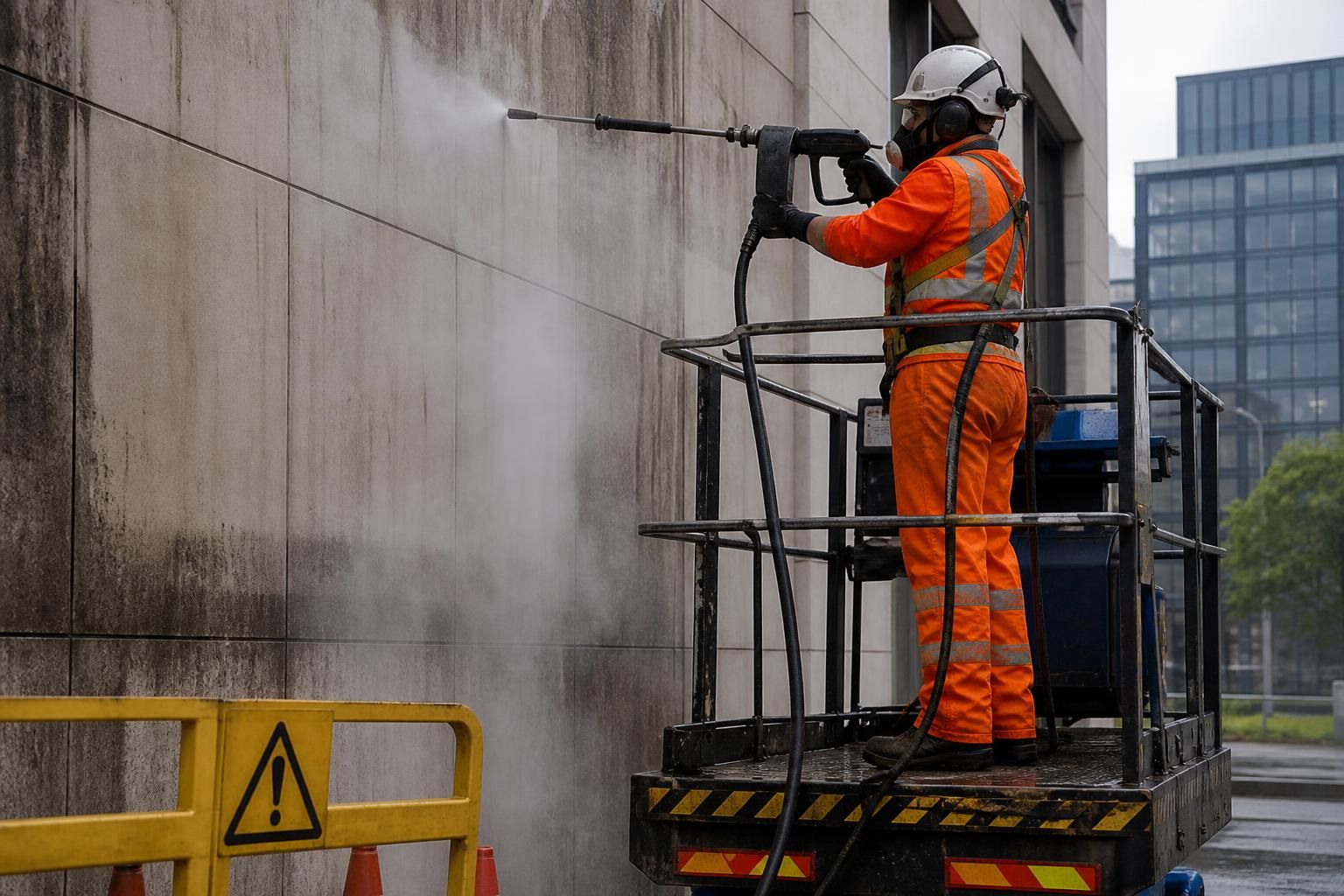
Wear PPE suited to the task. This will normally include protective gloves that provide heat and wet protection, safety footwear with slip-resistant soles, eye protection or a suitable face shield, and protective clothing that covers exposed skin. Additional PPE may be needed where the wall coating, biological contamination, bird fouling, detergents or other substances create a specific hazard. Respiratory protection should not be selected casually; where airborne contaminants or cleaning products present a risk, it should be specified following a suitable assessment.
Control heat and pressure carefully. Steam can cause serious burns even where the water volume is relatively low. Operatives should keep the lance directed away from people, maintain a safe working position and never leave a pressurised or heated machine unattended. Temperature, pressure, nozzle type and the distance from the wall should be selected for the substrate and contamination. A small inconspicuous test area can confirm that the setting will remove soiling without softening coatings, opening joints, dislodging material or driving moisture into the wall.
Particular care is needed around:
- aged brickwork, soft stone, terracotta and friable mortar;
- painted, rendered or coated surfaces;
- cracked masonry, open joints and areas with previous water damage;
- windows, vents, seals, grilles and other openings;
- electrical equipment, lighting, alarms and communications fittings; and
- roofing, insulation or internal finishes that could be affected by moisture.
Manage work at height and access arrangements. Scaffolds, mobile elevated work platforms, towers, ladders or other access systems must be suitable for the location, the operator and the cleaning equipment. They should be positioned on stable ground, secured where necessary and used in accordance with their operating requirements. Operatives should not overreach, climb on guardrails or use unsuitable improvised platforms. Hoses can exert force when pressurised, so access equipment must allow the lance to be controlled without compromising balance.
Keep people and vehicles outside the hazard area. Barriers, warning signs and a controlled exclusion zone should be installed around the work area. The zone should account for spray, falling debris, hot water, moving equipment and the potential swing of hoses or access platforms. Pedestrian routes, entrances, delivery areas and neighbouring properties may need temporary protection or diversion. A banksman or ground operative can help manage vehicle movements and monitor the area while cleaning takes place.
Control electrical and water-related hazards. Electrical supplies and equipment should be kept away from water and protected against foreseeable splashing. Portable electrical equipment, leads and connections should be checked before use and positioned to avoid contact with wet surfaces where possible. Drainage should be confirmed in advance so that runoff does not enter buildings, affect electrical installations, create slippery surfaces or discharge contaminants where it is not permitted. Any detergents or specialist treatments should be handled in line with their safety data and the site’s chemical-control procedures.
Check weather and stop when conditions become unsafe. High winds can affect ladders, platforms, hoses and spray control, while rain, frost or poor visibility can increase slip and access risks. Strong sunlight or rapid drying may affect certain coatings, and low temperatures can create freezing hazards around runoff. The responsible person should monitor conditions throughout the work and pause the operation if access equipment becomes unstable, visibility is reduced, runoff cannot be controlled or the wall behaves differently from the test area.
At the end of each work period, the equipment should be depressurised and safely shut down, hoses and cables removed or secured, and the area checked for standing water, debris, slippery surfaces and damaged protection. Any defect, near miss, injury, unexpected substrate reaction or water ingress should be reported promptly and recorded. A final inspection of the cleaned wall and adjacent features confirms that the precautions have worked and identifies any repairs or drying time required before the building is returned to normal use.
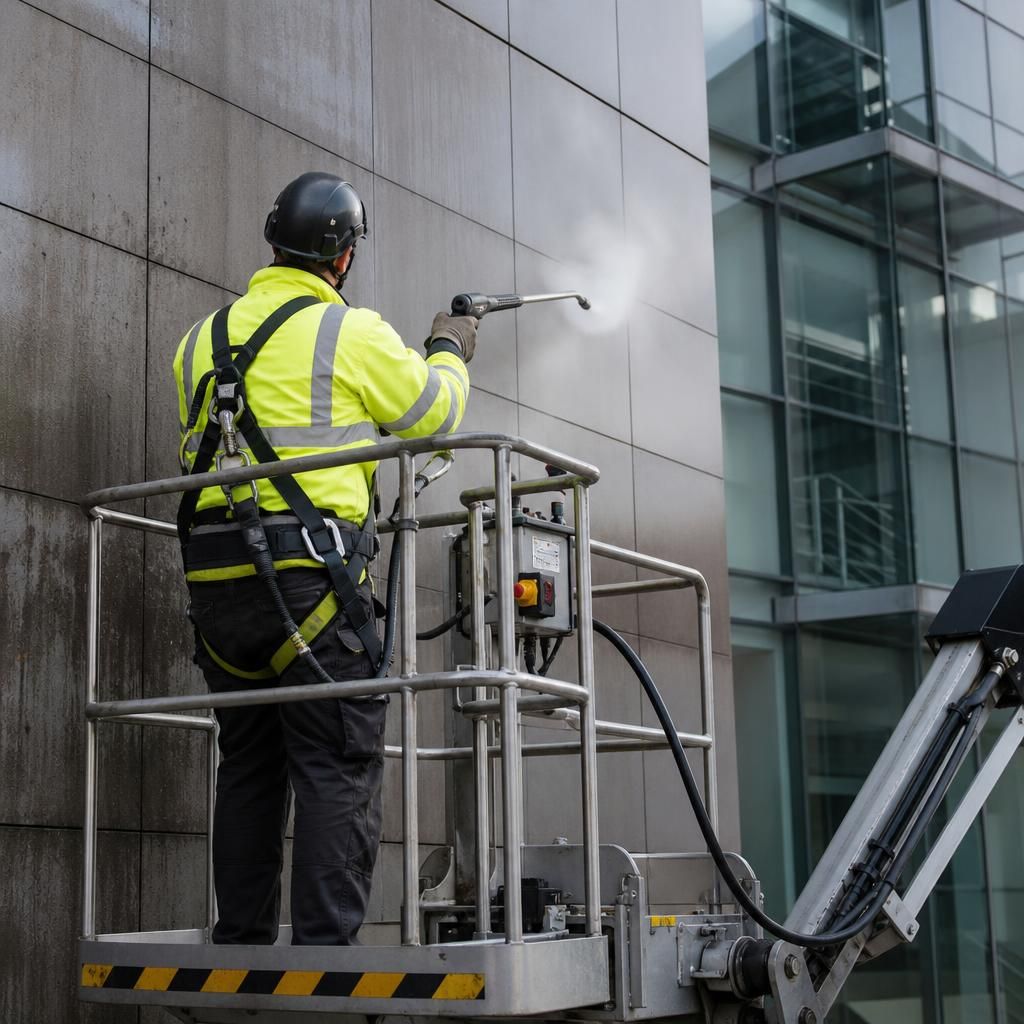
Safe access is essential when steam cleaning exterior walls because the operator must control a hot, pressurised lance without losing balance. Scaffolds, towers and mobile elevated work platforms should be suitable for the surface, secured correctly and used by trained operatives. The platform must provide enough room to handle the hose without overreaching, climbing guardrails or standing on improvised supports.
Hoses should be routed to prevent kinks, trip hazards and sudden movement, while a controlled exclusion zone protects people below from hot spray, falling debris and equipment movement. Work should stop if wind, poor visibility, unstable ground or changing site conditions make the access arrangement unsafe.