
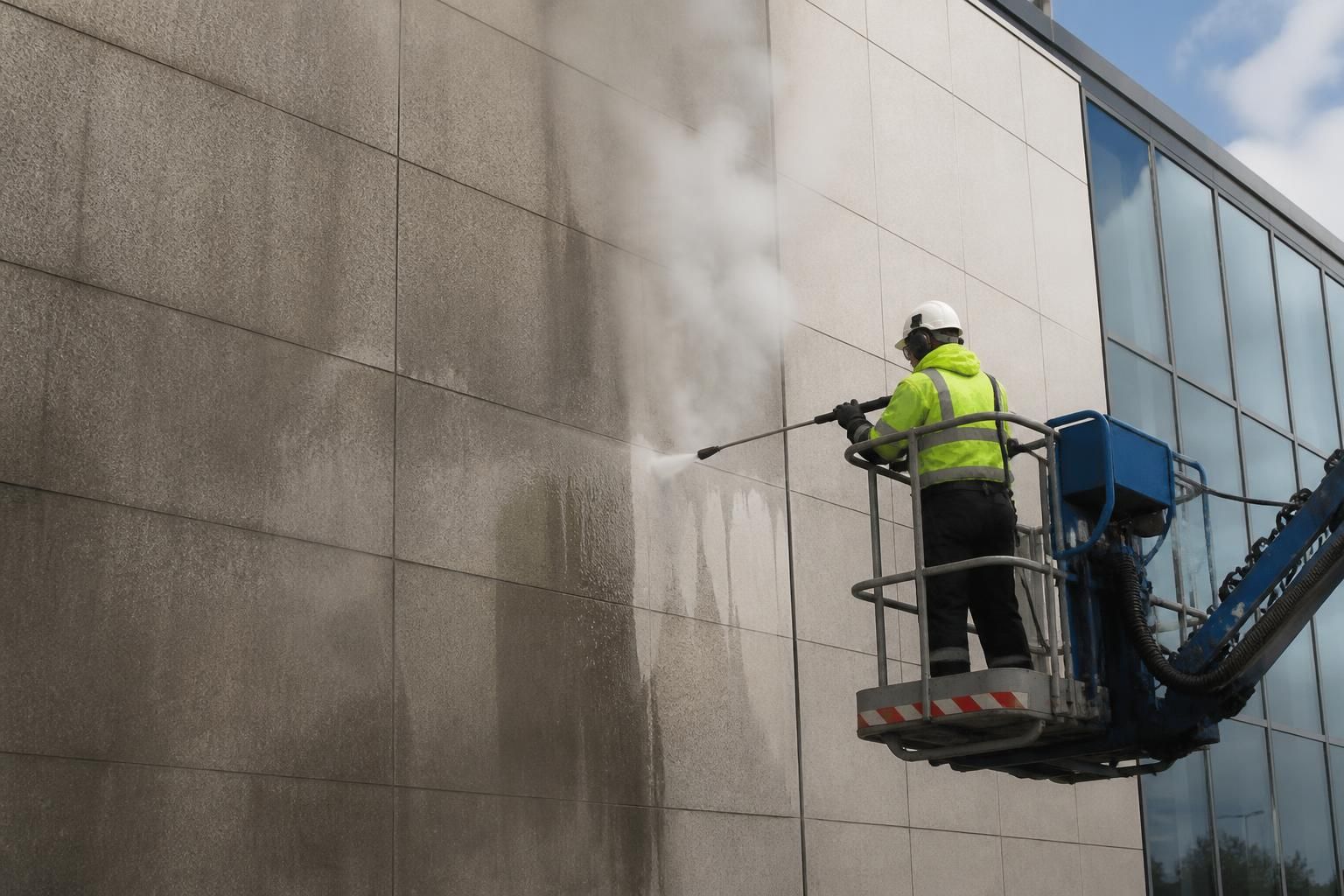
How often should exterior wall steam cleaning be performed for optimal maintenance?
Exterior wall steam cleaning is typically scheduled annually for commercial premises, with more frequent cleaning where walls are exposed to heavy traffic, pollution, coastal conditions, vegetation or persistent staining. A site assessment should determine the appropriate interval, while prompt treatment of new biological growth, grime or graffiti helps prevent deeper soiling and protects the façade’s appearance.
Exterior wall steam cleaning is commonly carried out annually on commercial premises, but the correct interval depends on the building’s materials, exposure and use. Walls beside busy roads, loading areas or industrial sites may need more frequent cleaning, while sheltered façades with limited soiling may remain in good condition for longer. A site assessment and planned maintenance record provide a more reliable schedule than applying the same interval to every property.
Regular cleaning removes atmospheric grime, traffic film, algae, moss, bird deposits and other contaminants before they become firmly bonded to the surface. Keeping the façade clean also makes it easier to identify defects such as cracked render, failed sealant, damaged pointing, corrosion, staining caused by leaks or deterioration around windows and doors. Steam cleaning should not be used to conceal defects; any underlying maintenance issue should be addressed as part of the cleaning plan.
Factors that influence the cleaning interval
- Traffic and pollution: Façades near busy roads, transport routes or industrial activity collect soot, oil-related deposits and airborne particles more quickly.
- Weather exposure: Wind-driven rain, prolonged dampness, frost and shaded elevations can encourage organic growth and leave surfaces soiled for longer.
- Building position: North-facing walls, enclosed courtyards and areas beneath trees often dry slowly and are more vulnerable to algae, moss and staining.
- Surface type: Brick, stone, render, concrete, metal cladding and coated surfaces have different tolerances and may show contamination at different rates. The cleaning approach and frequency must suit the substrate and its existing condition.
- Site activity: Construction works, deliveries, waste storage, car parks and loading bays can introduce dust, mud, grease and other deposits onto nearby walls.
- Appearance requirements: Retail, hospitality, office, education and public-facing premises may require a shorter interval to maintain a consistent professional appearance.
- Local contamination: Bird fouling, graffiti, plant growth and leaks can require targeted treatment between planned façade cleans.
For many commercial properties, an annual inspection with cleaning scheduled when the façade requires it is a practical starting point. Some sites benefit from a planned clean at regular intervals, while others are better managed through condition-based maintenance. Large premises can also be divided into elevations or zones so that heavily exposed areas are treated more often without unnecessarily cleaning unaffected surfaces.
Signs that cleaning is due
- Visible darkening, streaking or a patchy appearance across the façade.
- Green growth, moss, lichen or persistent damp-related discolouration.
- Traffic film, soot, dust or deposits around entrances, vents and loading areas.
- Bird fouling or staining that is becoming difficult to remove.
- Graffiti or other contamination that may penetrate coatings or porous materials if left untreated.
- A noticeable difference between cleaned and uncleaned elevations.
- Deposits that are beginning to affect signage, windows, doors, paving or adjoining areas.
Graffiti, bird fouling and fresh spills should generally be treated promptly rather than waiting for the next routine visit. Early removal is usually more controlled and can reduce the need for stronger cleaning methods. Organic growth should also be addressed before it spreads across joints, coatings or porous surfaces.
Before each steam-cleaning visit, the wall should be inspected for loose material, open joints, damaged coatings, defective sealants and vulnerable fixtures. A suitable test area confirms the lowest effective steam pressure, temperature and cleaning duration for that substrate. This is particularly important on older brickwork, historic masonry, rendered walls and surfaces with previous repairs. Steam cleaning is a low-chemical method, but incorrect application can still damage a weak or defective surface.
Weather conditions should be considered when planning the work. Excessively cold conditions, strong wind, heavy rain or prolonged dampness can affect access, drying and the final appearance. Cleaning should be timed to allow the wall to dry properly and to prevent loosened deposits being redistributed onto adjacent areas. The method statement should also cover pedestrian control, electrical equipment, drainage, nearby vehicles, landscaping and protection of windows or building services.
After cleaning, the façade should be inspected and any remaining staining, biological growth or damage recorded. Keeping photographs and notes for each elevation helps compare condition over time and refine the maintenance interval. If soiling returns quickly, the cause may be ongoing dampness, defective rainwater goods, vegetation, pollution or a building detail that needs repair rather than simply a shorter cleaning cycle.
A sensible maintenance plan therefore combines a scheduled condition inspection, routine steam cleaning when contamination reaches an unacceptable level and immediate treatment of isolated problems. For a specific premises, the recommended frequency should be confirmed after assessing the wall construction, previous cleaning history, exposure, access requirements and the standard of appearance required by the site.
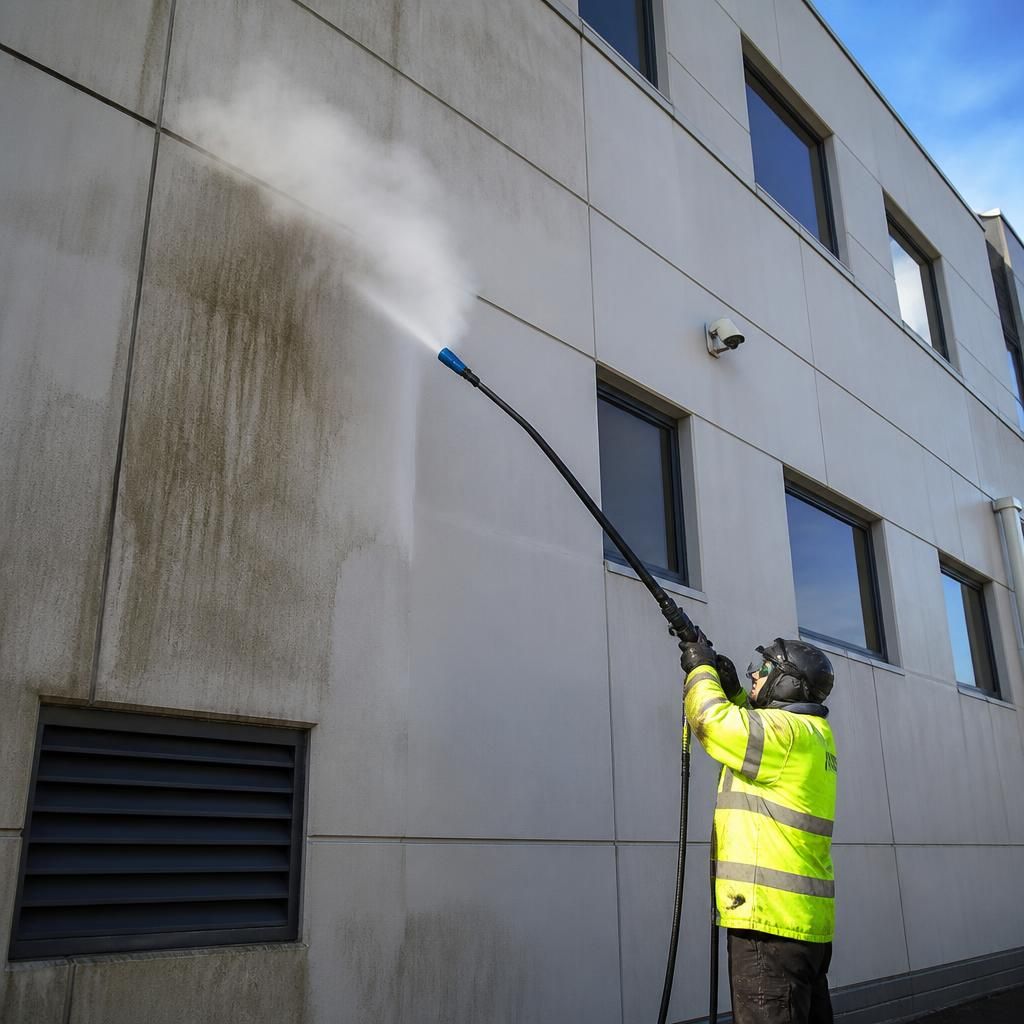
Exterior wall steam cleaning is best scheduled according to the façade’s condition and exposure, rather than by a fixed interval alone. An annual inspection is a practical starting point for most commercial premises, while walls beside busy roads, loading areas, industrial activity or dense vegetation may require cleaning more frequently.
During each inspection, check for traffic film, dark streaks, algae, moss, bird fouling and staining around entrances or drainage points. Promptly treating isolated contamination can prevent it becoming firmly bonded to the surface and may avoid the need for more intensive cleaning across the whole façade.