
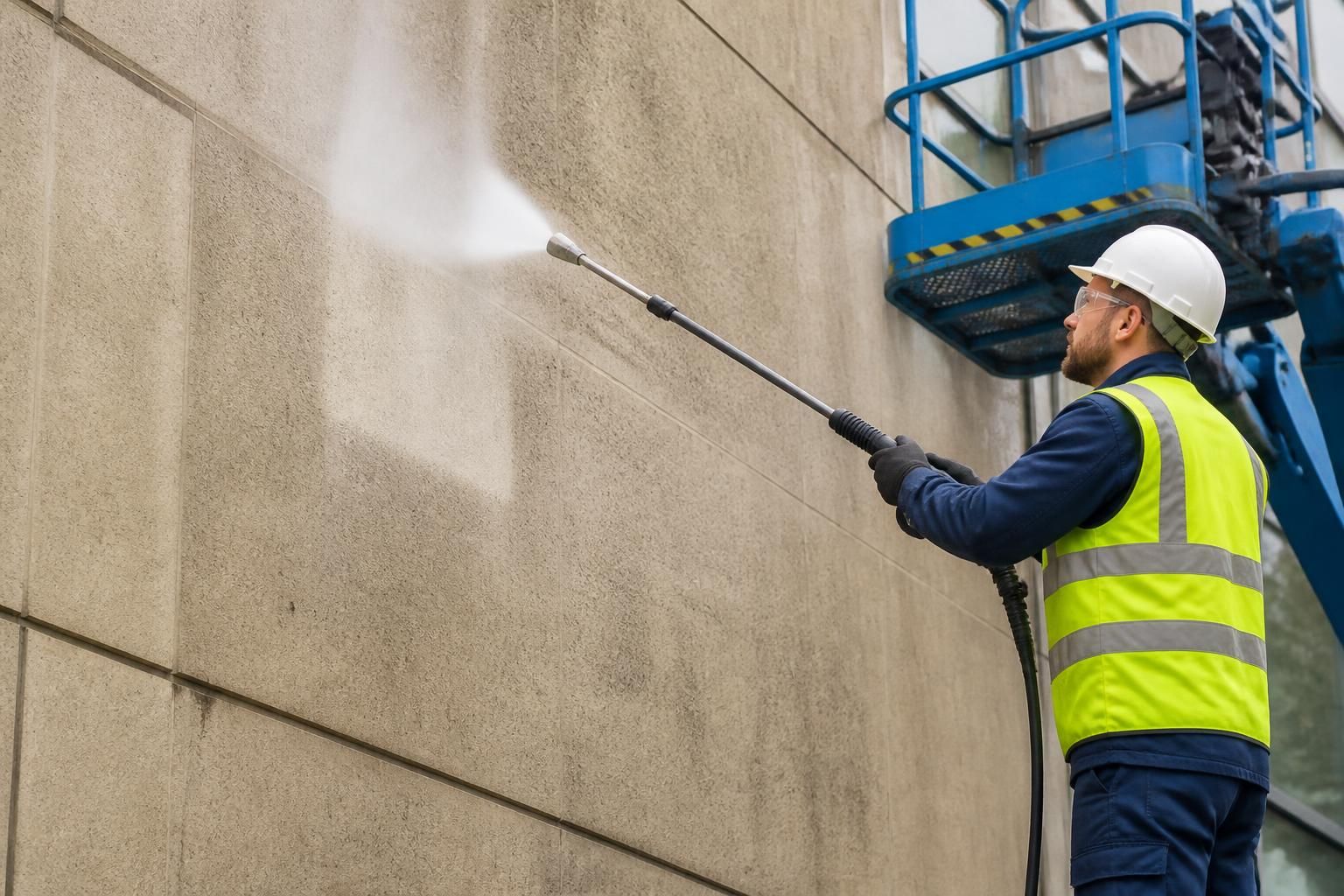
How does steam cleaning protect the surface integrity of exterior walls?
Steam cleaning protects exterior wall surface integrity by using controlled heat and moisture to loosen dirt, grease, biological growth and staining without the abrasive action of aggressive pressure washing. When the temperature, pressure and cleaning technique are matched to the wall material, it reduces the risk of surface erosion, coating damage and chemical deterioration while leaving the façade clean.
Steam cleaning protects the surface integrity of exterior walls by using controlled heat, moisture and pressure to loosen contamination without relying on aggressive abrasion or concentrated chemicals. The process can remove dirt, grease, organic growth, carbon deposits and some staining while reducing the risk of eroding masonry, scouring coatings or disturbing sound pointing.
Unlike conventional high-pressure washing, steam cleaning does not depend primarily on force to detach contamination. Heated water softens and breaks down deposits, allowing them to be rinsed away at a pressure selected for the wall material. This is particularly useful where the surface has a weathered finish, delicate coating, historic masonry or joints that could be damaged by excessive impact.
Surface protection depends on controlling several variables throughout the clean:
- Pressure: The operating pressure must be low enough to avoid driving water into the wall, opening the surface or dislodging mortar, render and coatings.
- Temperature: Heat should be sufficient to soften the contamination but appropriate for the substrate and any existing finish. Excessive heat or prolonged application can affect some paints, sealants and resin-based coatings.
- Moisture: Water application should be controlled to limit saturation, particularly on porous masonry, internally insulated walls and façades with vulnerable joints or defects.
- Distance and movement: Keeping the lance moving and maintaining a suitable working distance prevents concentrated heat or pressure from marking the surface.
- Rinsing: Loosened residue should be removed thoroughly without leaving dirty run-off to dry on the wall and create further staining.
A professional clean begins with an assessment of the wall rather than a standard machine setting. The substrate, age, condition, previous repairs, paint or coating system, pointing and likely causes of staining are considered before work starts. Existing cracks, hollow render, friable mortar, failed sealant and areas of water penetration need to be identified because cleaning cannot correct these defects and may expose them more clearly.
A small, discreet test area is normally cleaned first. This confirms whether the selected temperature, pressure, nozzle and technique remove the contamination without changing the colour, texture or sheen of the surface. It also helps establish whether staining is superficial or has penetrated the material. The full clean can then be adjusted to suit different elevations or materials instead of treating the entire building in the same way.
Steam is especially effective where contamination is held to the wall by grease, atmospheric deposits, algae, moss residue or other organic material. Heat helps soften the bond between the deposit and the substrate, while the controlled water flow carries the residue away. This can reduce the need for strong detergents, which may discolour some finishes, leave residues or react with older masonry and metal fixtures.
The method still needs to be matched to the surface. Brick, stone, render, painted walls, architectural concrete, cladding and coated façades do not respond identically to heat and moisture. Softer stone, lime-based mortar, porous brick and aged render may require particularly gentle settings. Painted or resin-coated surfaces may need lower temperatures and a wider spray pattern, while metal components, electrical fittings, seals and glazed areas require suitable protection.
Steam cleaning also helps preserve the appearance of a façade by avoiding the strip effect that can occur when high-pressure water removes part of a weathered coating or exposes a cleaner, newer layer beneath it. On masonry, excessive pressure can widen joints, remove the surface face of brick or stone and increase water absorption. A controlled steam process is intended to remove soiling while leaving the underlying character and protective surface intact.
There are limits to the protection it provides. Steam will not repair failed pointing, replace missing coatings or resolve rising damp, penetrating damp or defective drainage. Some salts, rust marks, deeply embedded carbon staining and old paint may require a separate treatment, and repeated cleaning of a fragile surface can still cause deterioration. Where a chemical pre-treatment is appropriate, it should be selected for the specific substrate, applied in a controlled manner and rinsed away according to the manufacturer’s guidance.
Good practice after cleaning is equally important. Run-off should be managed so that loosened contaminants do not dry on adjacent surfaces, windows, paving or drainage channels. The wall should be allowed to dry naturally, then inspected for remaining staining, exposed defects or areas requiring repair. Any necessary repointing, coating repairs or water-management work should be completed once the condition of the substrate is clear.
In practical terms, steam cleaning protects exterior walls when it is treated as a surface-specific process rather than simply a high-temperature wash. Careful assessment, test cleaning, controlled application and appropriate post-cleaning inspection allow contamination to be removed while preserving masonry, coatings, joints and the overall function of the façade.
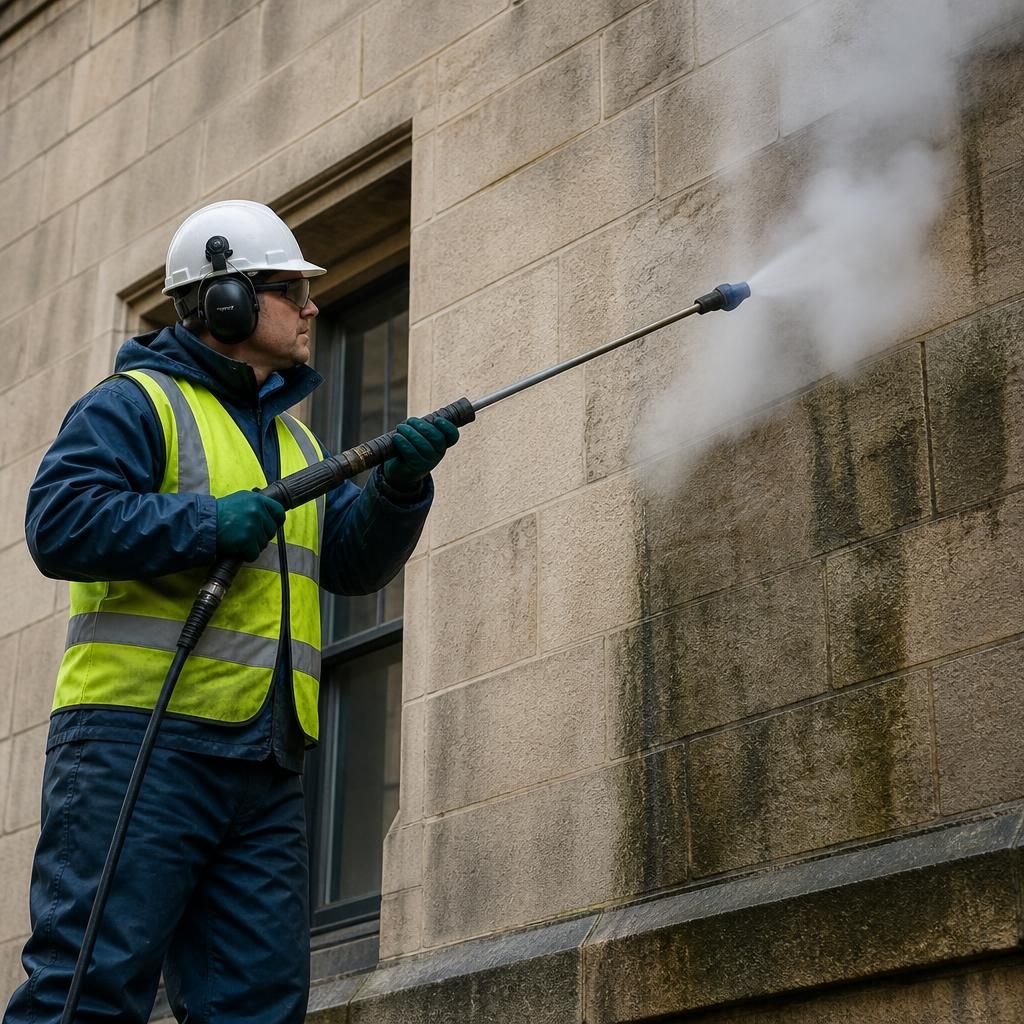
Steam cleaning protects exterior wall surfaces by using heat to loosen contamination, allowing it to be removed with less pressure and fewer harsh chemicals than conventional washing. This reduces the risk of eroding masonry, disturbing pointing or stripping sound coatings when the method is correctly matched to the wall.
Protection depends on controlling the temperature, pressure, moisture and distance from the surface. A professional assessment and discreet test clean help identify the safest settings for the particular brick, stone, render, coating or cladding. The lance should remain moving, with no concentrated heat or water directed at one area for too long.
- Porous masonry and aged mortar may require gentle pressure and limited moisture.
- Painted or resin-coated surfaces may need lower temperatures to prevent softening or discolouration.
- Cracks, hollow render, failed sealant and defective pointing should be identified before cleaning.
- Run-off should be controlled so loosened dirt does not dry on adjoining surfaces or leave new marks.
Steam cleaning cannot repair structural defects, damp problems or failed coatings, but careful preparation and post-cleaning inspection help preserve the wall’s existing surface and reveal any repairs that are needed.