
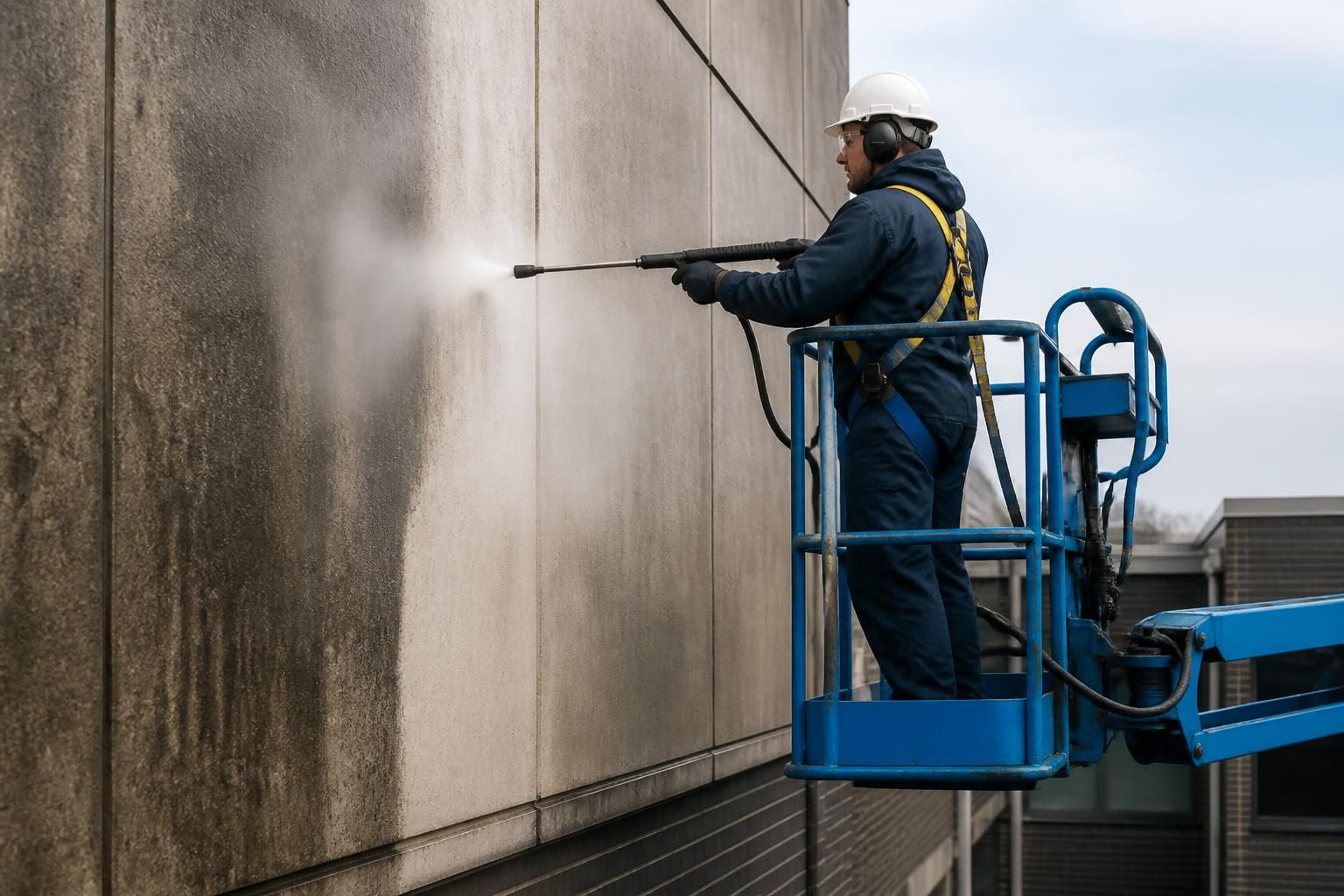
How does exterior wall steam cleaning compare to other cleaning methods in terms of cost and efficiency?
Exterior wall steam cleaning often costs more per visit than standard pressure washing because it uses specialist equipment and can be slower, but it may be more efficient for removing ingrained dirt, biological growth, and residues while using less water and reducing the need for chemicals. Pressure washing can be quicker and more economical on durable surfaces, whereas steam is often the better-value option where surface protection, detailed cleaning, or reduced chemical use is important.
Exterior wall steam cleaning usually has a higher initial cost than standard pressure washing, but it can provide better overall efficiency where walls have ingrained dirt, biological growth, oily residues, soot or delicate finishes. Pressure washing is often faster and more economical on robust surfaces, while steam cleaning can deliver better results with less water, fewer chemicals and a lower risk of surface damage. The most cost-effective method depends on the wall material, contamination, access requirements and the standard of finish required.
Why steam cleaning can cost more initially
Steam cleaning requires specialist equipment, trained operators and careful control of temperature, pressure and working distance. The process may also take longer than conventional pressure washing because contamination is softened and removed progressively rather than being cleared by high water force alone. On a large, lightly soiled façade, this can make the price per visit higher.
Access can also affect the cost. High-level walls, restricted areas and complex façades may require mobile elevated work platforms, scaffold towers or other access equipment. These costs are not unique to steam cleaning, but the chosen method must be assessed alongside the access plan, water supply, drainage and protection of nearby areas.
When steam cleaning can be more efficient
Steam is particularly effective when heat helps break down contamination that would otherwise require aggressive pressure or chemical treatment. It can be suitable for removing:
- Ingrained atmospheric dirt and soot
- Algae, moss and other biological growth
- Oil, grease and traffic film
- Bird fouling and general organic residue
- Some paint, adhesive and surface deposits
- Residues that have been left on the wall for an extended period
Because the cleaning action relies on heat as well as controlled water pressure, operators can often work at a lower pressure than would be needed for the same result using cold water alone. This is important on masonry, render, brickwork, stone and coated surfaces where excessive force could remove pointing, erode a soft face or disturb an existing finish.
Steam cleaning also uses considerably less water than many conventional pressure-washing applications. That can simplify water management and reduce the volume of wastewater requiring collection or controlled discharge. Where a site has limited drainage, water restrictions or sensitive surroundings, this operational advantage may outweigh the higher equipment and labour cost.
Comparison with pressure washing
Pressure washing remains a practical option for durable surfaces with surface-level dirt. It is generally quick, widely available and effective on hard concrete, robust paving and suitable cladding when the correct pressure and nozzle are used. For a large area with loose contamination and good drainage, pressure washing may offer the lowest immediate cost.
However, high pressure is not automatically more effective. It can drive water into joints, remove friable material, damage coatings or dislodge weak pointing. It may also spread contaminated water and leave some organic or greasy deposits behind if heat or a suitable treatment is needed. Correct pressure, nozzle selection, pre-treatment and rinse control are essential.
Steam can be the better choice where a façade has delicate finishes, historic features, sensitive mortar joints or contamination that does not respond well to cold water. It is not suitable for every surface, and a test area should be completed before the full clean. The operator must still control temperature and dwell time, as excessive heat can affect certain coatings, sealants, plastics and painted finishes.
Comparison with chemical cleaning and soft washing
Chemical cleaning and soft washing can be efficient for algae, mould and other biological contamination, particularly on extensive external walls. They may require less mechanical action and can provide useful treatment where growth has penetrated textured surfaces. However, the selected chemical must be compatible with the substrate and surrounding landscaping, drainage systems, glazing, metals and other building materials. Chemical application, dwell time, rinsing and wastewater management all need to be controlled.
Steam may reduce or avoid the need for some chemical treatments, which can simplify site controls and reduce the risk of chemical staining or damage to adjacent areas. It may not, however, replace chemical treatment in every situation. Heavy biological growth, deep staining or contamination that has entered porous material may require a combined method, subject to a professional assessment.
Comparison with abrasive cleaning and manual methods
Abrasive blasting and other aggressive mechanical techniques can remove hard coatings, corrosion or substantial deposits quickly, but they may alter the surface profile and are unsuitable for many façades. They can create dust, increase containment requirements and remove part of the underlying material if poorly controlled. Steam is generally less abrasive and is often preferable where retaining the original surface is important.
Manual brushing and scraping can be useful for localised deposits, edges and detailed features. For a large commercial building, however, manual cleaning alone can be labour-intensive and inconsistent. Steam equipment can improve productivity while still allowing operators to work carefully around architectural details.
How to assess the true cost
The lowest quotation is not always the lowest-cost solution over the life of the building. When comparing methods, consider:
- The time required to complete the work and any effect on tenants, visitors or site operations
- Equipment, access, water supply and wastewater arrangements
- Whether chemicals, containment or additional rinsing are required
- The risk of damage to masonry, coatings, joints, windows and fixtures
- Whether the method removes the cause of the staining or only improves its appearance temporarily
- The likely need for remedial work or repeat cleaning
- The finish standard required by the property owner, managing agent or local authority
A method that causes surface damage can create costs far beyond the original cleaning invoice. Repointing, repainting, replacement cladding panels, water ingress repairs and disruption to occupants should all be considered when selecting a technique.
Choosing the most suitable method
A professional assessment should identify the wall construction, coating, condition, height, contamination type and nearby risks before a price or method is confirmed. A small test clean helps establish whether steam, pressure washing, a chemical treatment, manual work or a combination will achieve the required result without affecting the substrate.
For straightforward cleaning of sound, durable surfaces, pressure washing may be the most efficient option. For sensitive façades, heavily ingrained contamination, reduced-water requirements or situations where chemical use should be limited, steam cleaning may offer better value despite its higher initial cost. The right comparison is therefore not simply the price per visit, but the balance between cleaning performance, site efficiency, surface protection and future maintenance.
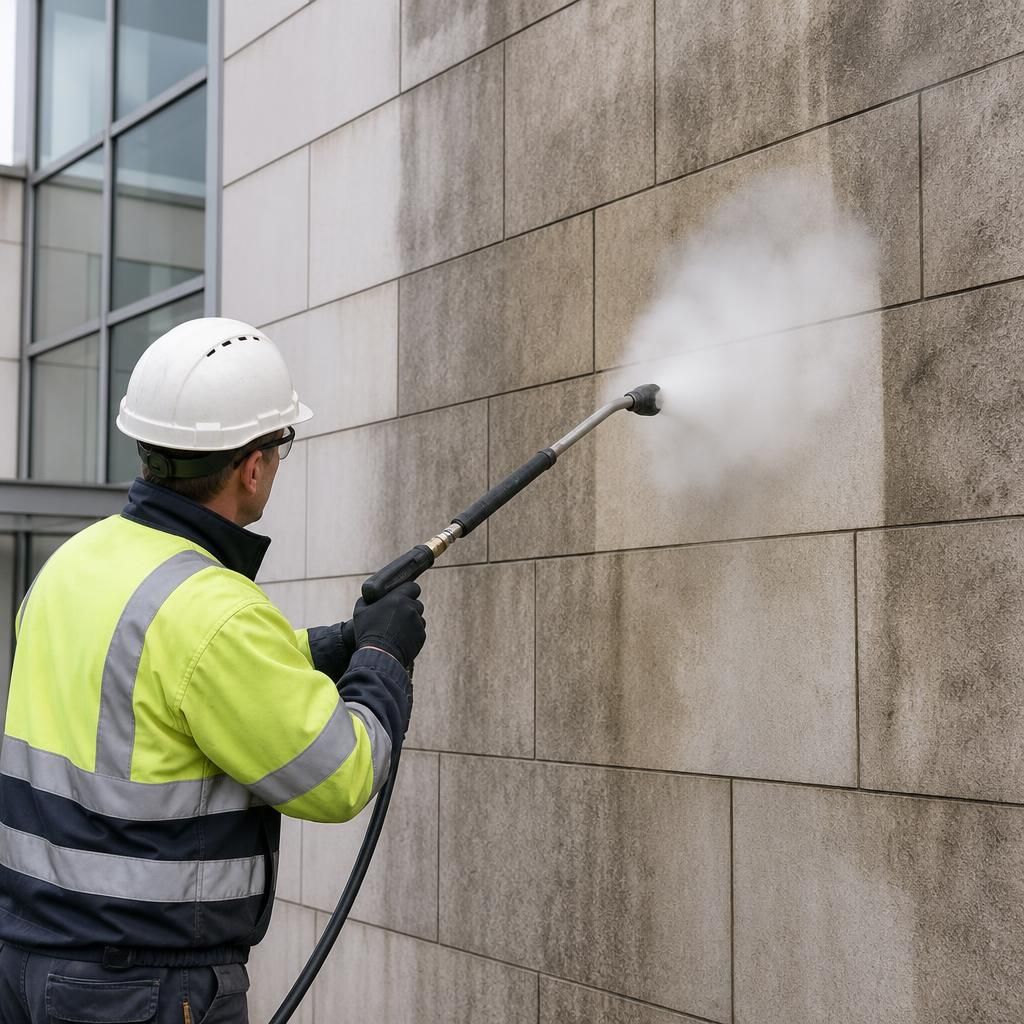
Exterior wall steam cleaning can offer better overall value than pressure washing when lower water use, reduced chemical requirements and surface protection are important. Although the initial visit may cost more, controlled heat can remove ingrained dirt, organic growth and oily residues without relying on high water pressure.
The most useful comparison is the total cost of achieving and maintaining the required finish. Pressure washing may be more economical on sound, durable surfaces with loose contamination, while steam cleaning can reduce the risk of damage to masonry, coatings and pointing. A professional assessment and small test area help identify the method that delivers the required result with the least disruption and risk of future remedial work.
Request an Exterior Wall Steam Cleaning Assessment
Request an exterior wall steam cleaning assessment to compare the most suitable cleaning method for your façade, contamination and access requirements. We can recommend an efficient approach based on surface condition, finish standards and the risk of future remedial work.