
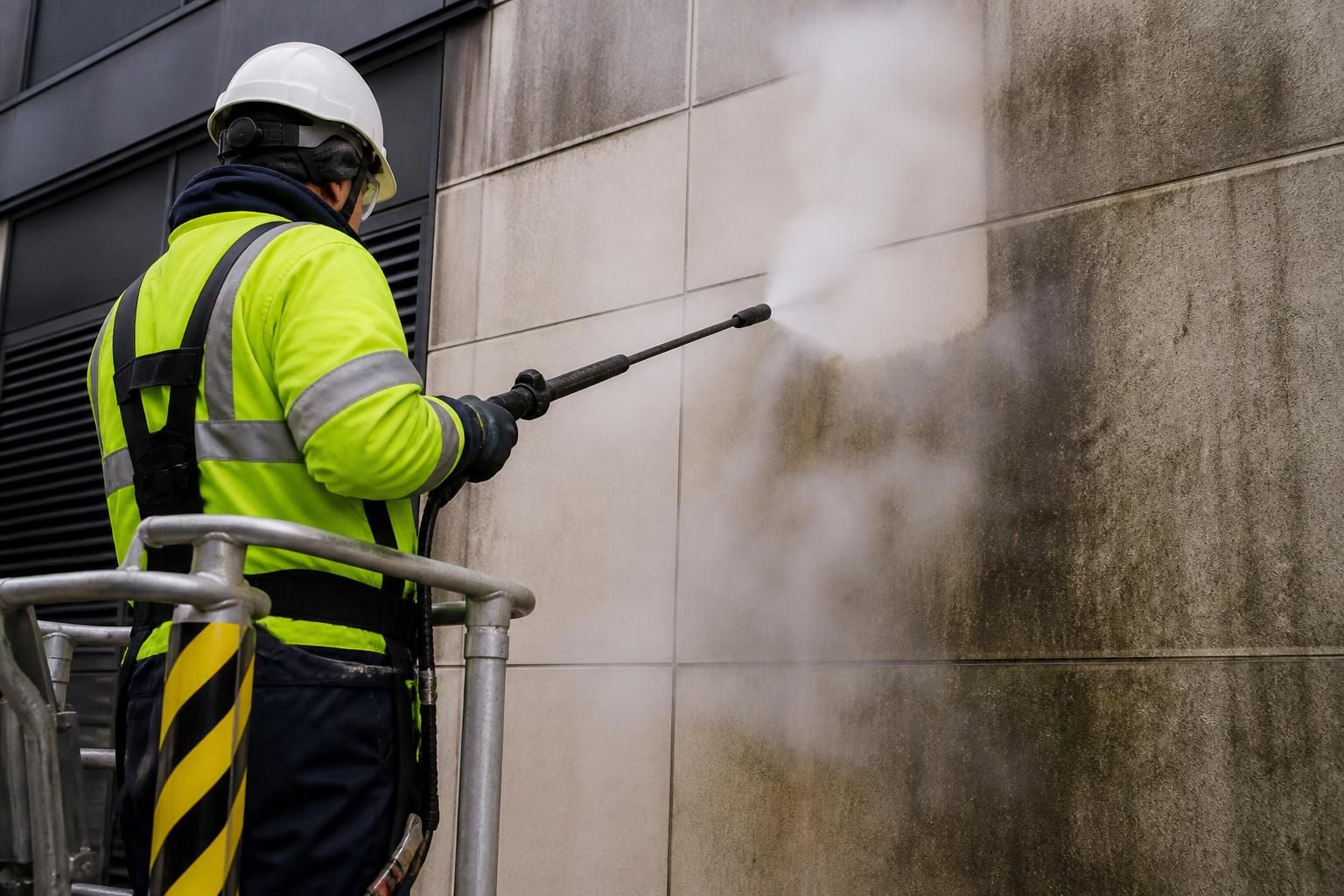
How can weather conditions impact the effectiveness of exterior wall steam cleaning?
Weather conditions can affect exterior wall steam cleaning by changing how quickly surfaces dry, how well contaminants respond to heat and how safely equipment can be operated. Rain, strong wind, freezing temperatures and excessive heat may reduce cleaning effectiveness or require the work to be postponed until conditions are suitable.
Weather conditions directly affect exterior wall steam cleaning by changing the surface temperature, drying time, behaviour of dirt and the safety of the work area. The most suitable conditions are generally dry, reasonably mild and stable, with limited wind. Rain, frost, high winds, extreme heat and rapidly changing weather can reduce cleaning results or mean that work needs to be rescheduled.
Rain and persistent damp
Rain can dilute the cleaning action, wash loosened contaminants over areas that have already been cleaned and make it difficult to assess the final result. Although steam cleaning uses relatively little water compared with some pressure-washing methods, the wall still needs time to dry so that staining, streaks and missed areas can be identified accurately.
Wet conditions can also make surrounding ground, access routes and working platforms slippery. Where rain is light and intermittent, the work may sometimes continue on suitable surfaces, but persistent rain usually makes the process less controlled. Rainwater can also interfere with the management of dirty run-off, particularly around entrances, drainage channels and pedestrian routes.
Low temperatures and frost
Cold weather slows evaporation and extends the time that a wall remains damp after cleaning. If water held in pores, joints or small surface defects freezes, it can expand and place stress on vulnerable materials. This is particularly relevant to aged masonry, cracked render, porous stone and surfaces with existing defects.
Frost can also affect hoses, connections and other equipment, while ice creates additional risks for operatives and people using the site. A wall may look suitable from ground level but still contain frozen moisture in shaded areas. The surface, access equipment and surrounding ground should therefore be checked before work begins, and cleaning should be postponed where freezing conditions cannot be managed safely.
Wind
Strong or gusty wind can carry steam, loosened dirt and run-off away from the intended work area. This may cause overspray or contamination of windows, vehicles, neighbouring façades and pedestrian routes. Wind can also make it harder to maintain a consistent cleaning distance and can affect the stability and safe use of access equipment.
Wind direction matters as well as wind strength. A façade that is sheltered at ground level may still be exposed higher up, especially around roof edges and corners. Work may need to be limited to protected elevations, carried out in shorter stages or delayed until conditions are more predictable.
High temperatures and direct sunlight
Hot surfaces can dry too quickly, leaving loosened residue or mineral deposits before they have been rinsed or wiped away properly. Direct sunlight can also make it difficult to judge whether a wall is uniformly clean because wet and dry areas appear different in strong light. Rapid drying is particularly noticeable on dark cladding, metal panels and exposed stone.
High temperatures may increase the risk of heat stress for operatives and can make equipment, hoses and access areas more difficult to manage. Cleaning shaded elevations or working during cooler parts of the day can help, provided the surface and site conditions remain safe.
Humidity and drying time
High humidity reduces the rate at which moisture evaporates, even when there is no rain. This can leave walls damp for longer and delay the final inspection. Poorly ventilated courtyards, covered loading areas and north-facing elevations often dry more slowly than exposed façades.
Extended dampness is not usually a problem for sound, suitable surfaces, but it can highlight existing defects and increase the risk of temporary streaking or water marks. The cleaning plan should allow time for the wall to dry naturally before results are assessed or protective treatments are applied.
How weather affects different contaminants
Temperature and moisture also influence the contaminants being removed. Grease, traffic film and some biological growths may respond differently in cold or damp conditions than in mild, dry weather. Weathered deposits can become more difficult to assess when a façade is wet, while soot and particulate staining may spread with uncontrolled run-off.
Steam remains useful in variable conditions because its heat helps soften many deposits without relying on aggressive pressure. However, it does not remove the need for suitable weather. The cleaning method, temperature, dwell time and rinsing approach must still be adjusted to the material, contamination and conditions on the day.
Planning the work around the forecast
Weather should be reviewed before mobilisation and checked again at the start of each shift. A suitable assessment considers:
- rainfall and the likelihood of interruptions;
- surface temperature and the risk of frost;
- wind speed, direction and exposure at height;
- humidity and expected drying time;
- sunlight and the temperature of the façade;
- the condition of access equipment, ground and pedestrian routes; and
- how dirty water will be contained and directed to suitable drainage.
Large buildings should not automatically be treated as one continuous job. Work can often be divided into elevations or manageable sections so that sheltered areas are cleaned first and each section can be inspected before moving on. Test cleaning in the prevailing conditions helps confirm how quickly the surface dries and whether the selected steam settings are appropriate.
Where conditions deteriorate during cleaning, the priority is to make the area safe, protect adjacent surfaces and prevent uncontrolled run-off. Continuing solely to keep to a programme can lead to inconsistent results or unnecessary risk. Rescheduling is usually the more effective option when rain, frost or high winds prevent proper control of the equipment and work area.
After cleaning, the wall should be allowed to dry sufficiently for a proper inspection. Any remaining marks can then be distinguished from temporary moisture variation, and further treatment can be planned without applying unnecessary heat, pressure or chemical products. Choosing a stable weather window therefore improves both the appearance of the finished façade and the protection of the underlying material.
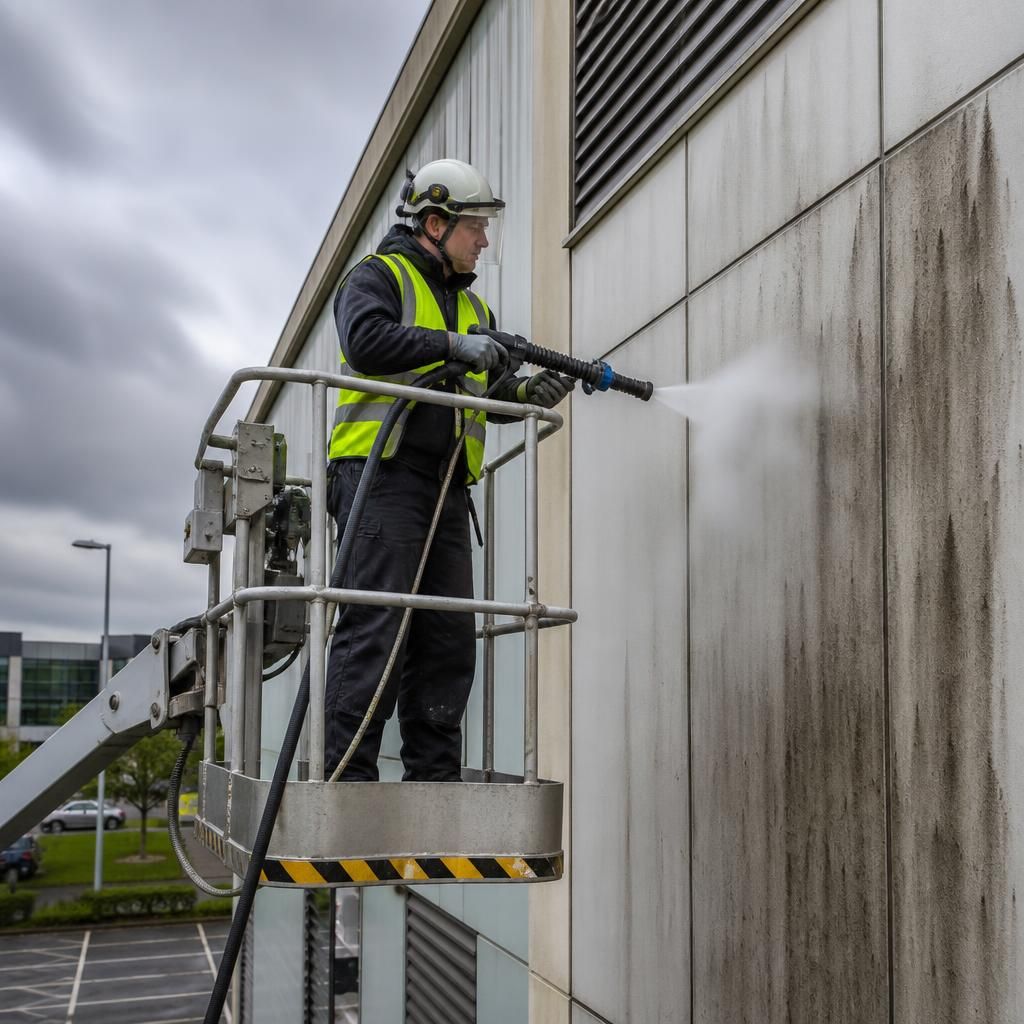
Weather affects exterior wall steam cleaning by changing how quickly the surface dries, how easily loosened dirt can be controlled and how safely the work can be carried out. Dry, stable conditions with limited wind generally provide the clearest results.
Rain and high humidity can prolong drying and make streaks or missed areas harder to identify, while strong wind can spread steam, run-off and loosened contaminants beyond the intended work area. Frost may leave moisture frozen in porous masonry or joints, and direct sunlight can cause some surfaces to dry before residue has been removed. Reviewing the forecast, surface temperature, wind exposure and drying conditions before each stage helps determine whether cleaning should proceed, be limited to a sheltered elevation or be rescheduled.