
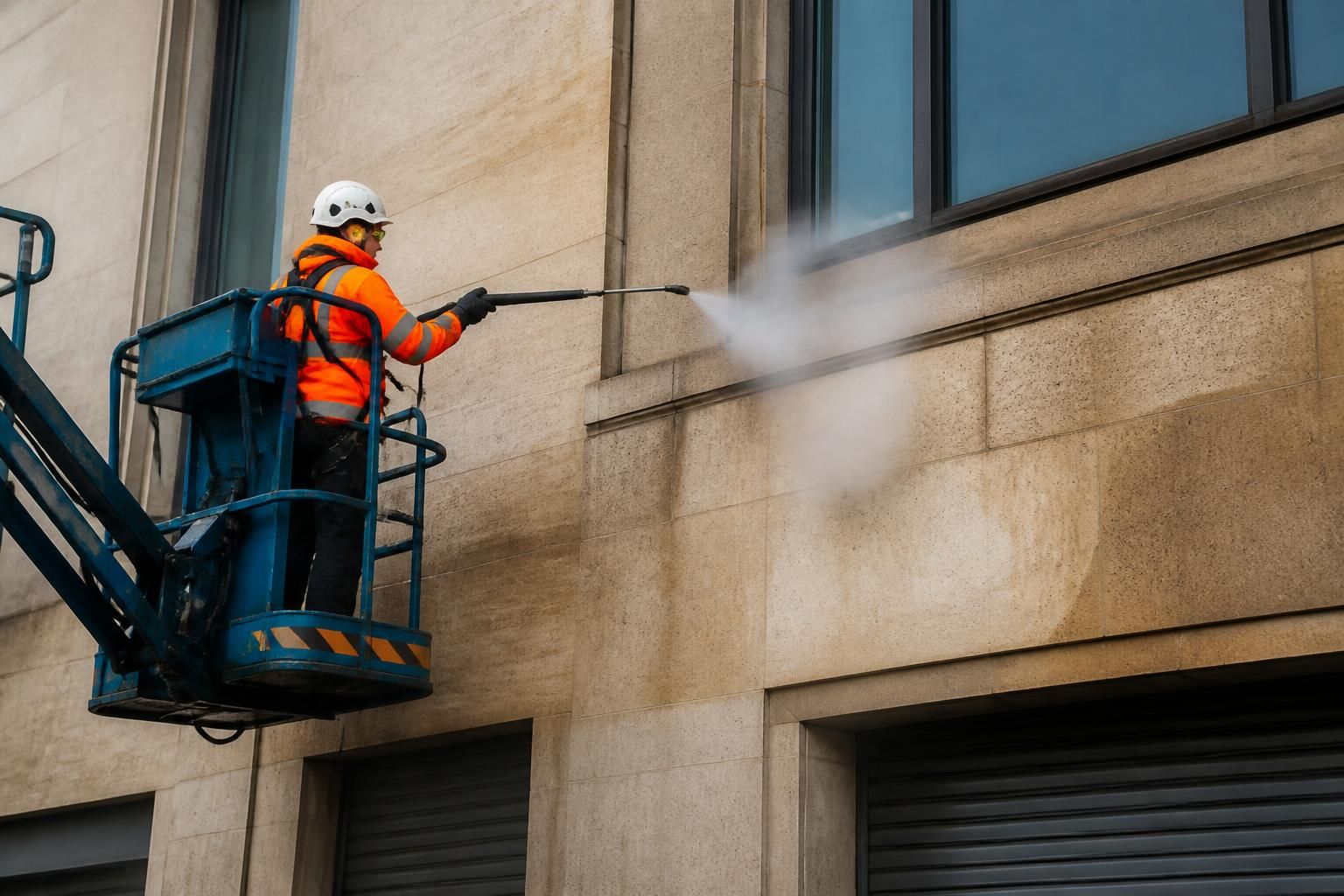
Are there specific maintenance practices to follow after exterior wall steam cleaning to ensure longevity of the results?
After exterior wall steam cleaning, maintain the results by inspecting the surface regularly, removing new marks promptly, keeping gutters and drainage clear, and addressing leaks or damp areas that can cause staining or biological growth. Arrange follow-up cleaning according to the wall material, exposure and site conditions, and ensure any repairs or coatings are completed only after the surface is fully dry.
After exterior wall steam cleaning, longevity depends on keeping the wall dry, well drained and free from new sources of staining. Regular inspections, prompt removal of fresh marks, effective rainwater management and timely repairs will help preserve the cleaned appearance. Any coating, repointing or other remedial work should be carried out only when the wall is fully dry and the substrate is suitable for the proposed treatment.
Steam cleaning removes established dirt, organic growth, traffic film and some surface deposits, but it does not prevent the conditions that caused them. Persistent dampness, defective pointing, leaking gutters, overflowing downpipes and nearby vegetation can quickly lead to renewed staining or biological growth. Post-cleaning maintenance should therefore address both the appearance of the wall and the building defects affecting it.
Inspect the wall after cleaning and drying
Allow the surface to dry fully before making a final assessment. Moisture can temporarily darken masonry, highlight existing defects or make some deposits appear to remain. Once dry, inspect the façade from ground level and, where appropriate, from a safe access platform. Look for:
- Areas of recurring dampness, water tracking or discolouration
- Cracked render, failed sealant, open joints or damaged pointing
- Loose masonry, flaking finishes or hollow-sounding render
- Blocked or leaking gutters, hoppers, downpipes and outlets
- White crystalline deposits that may indicate moisture movement through masonry
- New algae, moss or other biological growth in shaded or persistently wet areas
Record any defects with photographs and location notes. This provides a useful comparison during future inspections and helps distinguish normal weathering from a recurring water ingress problem.
Keep rainwater away from the façade
Rainwater management is one of the most important measures after cleaning. Gutters and outlets should be kept clear of leaves and debris, while downpipes should discharge correctly and remain securely connected. Check that water is not spilling over the wall, collecting at the base or being directed towards entrances and adjoining structures.
Where the building has flat roofs, parapets, balconies or projecting features, inspect the associated drainage and waterproofing. A clean wall can become stained again if runoff from these areas continues to carry dirt or remains trapped against the surface. Repairs should be completed by an appropriately qualified contractor, particularly where access, roofing or structural defects are involved.
Deal with fresh marks promptly
Remove new bird deposits, spills, mud splashes, plant residue and other localised marks before they dry or weather into the surface. Use a method suitable for the wall material and finish. Avoid abrasive pads, aggressive chemicals and unapproved pressure washing, as these can etch masonry, strip coatings or drive water into vulnerable joints. If the mark cannot be removed safely with light maintenance, arrange an assessment rather than repeatedly treating the area.
Graffiti should also be addressed quickly. The correct removal method depends on the paint, substrate and any protective coating present. Inappropriate solvents can spread pigment or damage the underlying finish, so treatment should follow the material manufacturer’s guidance or be undertaken by a suitably experienced cleaning contractor.
Control dampness and biological growth
Shaded elevations, north-facing walls, areas beneath leaking services and surfaces close to dense planting are more likely to develop algae, moss or mildew. Keep vegetation trimmed away from the wall where practicable, remove leaves from ledges and prevent irrigation systems from wetting the façade. Do not seal or paint over dampness, staining or biological growth without first identifying and correcting the cause.
If growth returns in the same location, the issue may be ongoing moisture rather than inadequate cleaning. A targeted treatment or further steam cleaning may be appropriate, but the longer-term solution could involve improving ventilation, repairing pointing, correcting drainage or removing a source of persistent shade.
Protect the cleaned substrate during repairs and alterations
Building work, loading operations and landscaping can introduce dust, mortar splashes, oil, soil and mechanical damage after the wall has been cleaned. Use suitable sheeting or temporary protection during nearby works, while allowing enough ventilation to prevent condensation being trapped against the surface. Protection should not be fixed in a way that abrades the finish or holds moisture against the wall.
Before applying paint, water-repellent treatments, anti-graffiti coatings or other finishes, confirm that the product is compatible with the substrate and that the wall has reached the required dryness. Some coatings can restrict vapour movement or conceal defects if applied prematurely. Product instructions and the requirements of the wall manufacturer should take precedence over a standard application timetable.
Use a planned inspection and cleaning schedule
The suitable interval between inspections and maintenance cleans depends on the wall material, building use, exposure to traffic or pollution, surrounding vegetation and local weather. High-use commercial sites, car parks, industrial premises and façades close to busy roads may need closer observation than sheltered buildings in a cleaner environment. Include the façade within the site’s planned preventative maintenance programme rather than waiting for heavy staining to develop.
At each inspection, note changes in colour, deposits, damp patches, surface damage and the condition of drainage components. A light, localised intervention is generally easier to control than allowing contamination or biological growth to become widespread. Any repeat steam cleaning should be specified for the particular substrate and carried out using appropriate temperature, pressure, access and recovery controls.
Keep maintenance records
Retain the cleaning report, photographs, areas treated, observed defects and any recommendations. Record subsequent repairs, coating applications, incidents of graffiti and localised cleaning. These records help establish whether staining is recurring because of weather exposure, a building defect or a change in site use, and they provide useful information when planning future works.
In practical terms, the most effective aftercare is to keep drainage working, prevent avoidable contamination, monitor vulnerable areas and investigate recurring dampness rather than repeatedly cleaning the symptom. Where the wall shows cracking, movement, significant moisture ingress or loose material, arrange an inspection by the appropriate building or structural professional before further cleaning or coating work is undertaken.
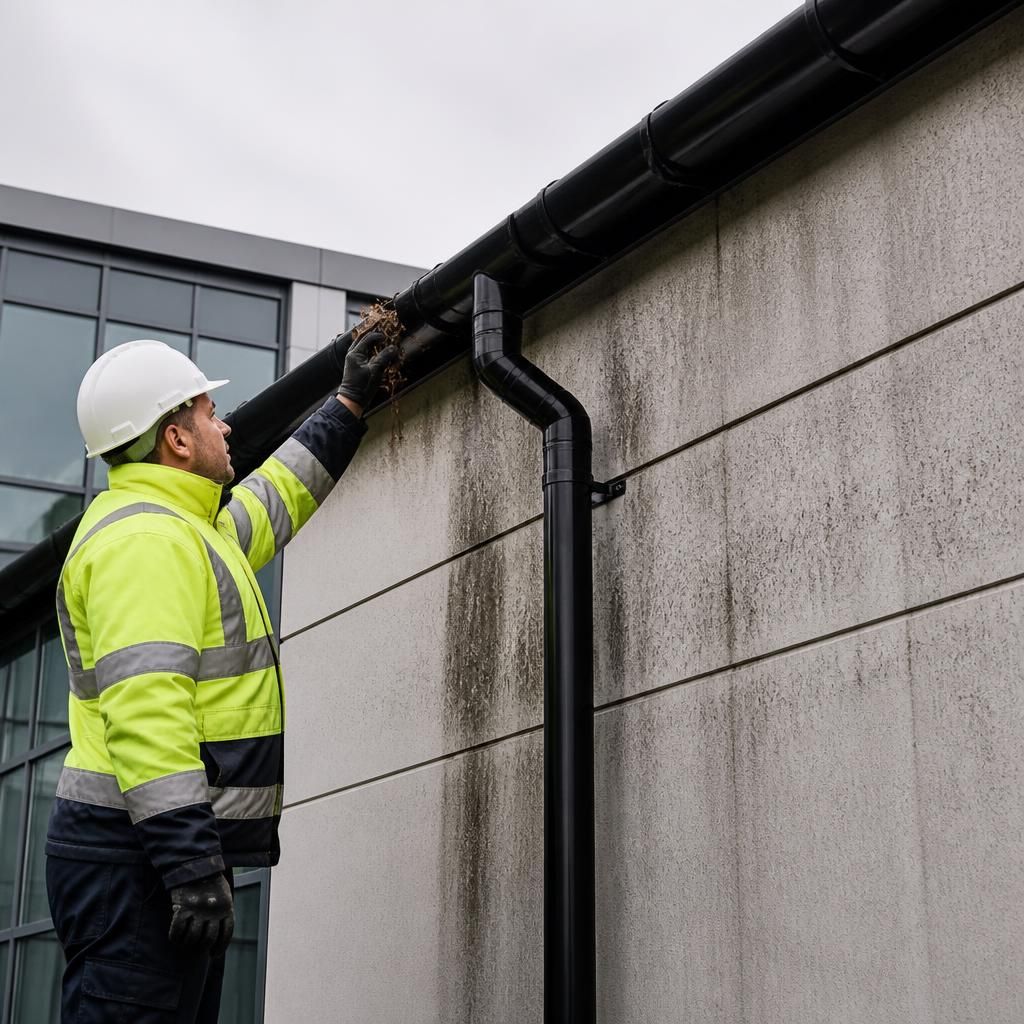
Keeping rainwater away from the façade is one of the most effective ways to preserve exterior wall steam cleaning results. Clear gutters, secure downpipes and correct leaks or overflowing outlets so water does not repeatedly run over the cleaned surface or collect at its base.
Inspect shaded areas, parapets and ledges for recurring dampness, algae or discolouration. These signs may indicate a drainage or building defect rather than a need for more frequent cleaning. Address the underlying cause before applying coatings or arranging further steam cleaning, and allow the wall to dry fully after any repairs.
Arrange a Follow-Up Exterior Wall Steam Cleaning Assessment
If staining, dampness or biological growth returns after cleaning, arrange a follow-up exterior wall steam cleaning assessment with Encanto Exterior Cleaning. We can help identify the likely cause and recommend suitable maintenance or remedial cleaning.