
Can steam cleaning be used on all types of roofing materials?
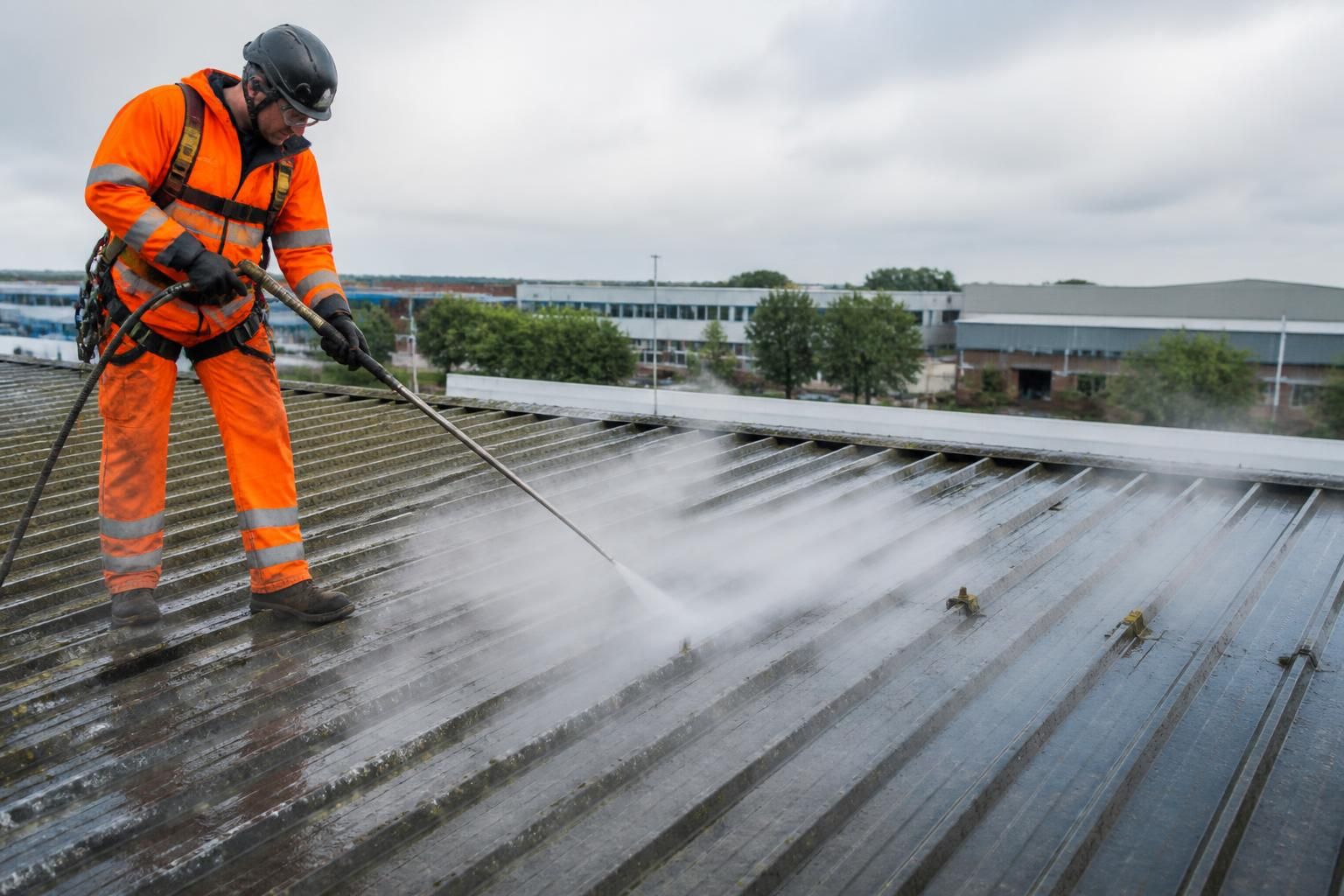
Steam cleaning is suitable for some roofing materials, including sound slate, clay or concrete tiles and certain metal roofs, but it cannot be used safely on every roof. The material, condition, protective coatings, fixings and underlying membrane must be assessed first, as heat and moisture may damage fragile, aged, coated, thatched, bituminous or asbestos-containing roofing.
No. Steam cleaning is suitable for some roofing materials, but it must not be treated as a universal roof-cleaning method. Sound slate, clay tiles, concrete tiles and some coated metal roofing can often be cleaned with controlled low-pressure steam, provided the roof, fixings, coatings and underlying construction are suitable. Fragile, damaged, heavily aged, thatched, bituminous or asbestos-containing roofs may be unsuitable and require a different approach or specialist assessment.
Steam cleaning uses heat and moisture to soften organic growth, dirt, traffic film and some surface deposits. Compared with high-pressure washing, it can reduce the mechanical force applied to the roof surface. However, the heat and water still need to be controlled. Excessive temperature, prolonged application or poor technique can damage protective finishes, loosen materials, force water beneath laps and flashings, or expose defects that were already present.
Roofing materials that may be suitable
- Slate: Sound natural slate may be suitable for carefully controlled steam cleaning. Loose, delaminating, cracked or heavily weathered slate should not be cleaned until its condition has been assessed, as the surface can break or shed layers.
- Clay and concrete tiles: These can often tolerate steam when they are structurally sound. Older tiles, fragile edges, damaged glaze and porous surfaces require particular care because heat and moisture may worsen existing deterioration.
- Coated metal roofing: Steel, aluminium and other metal roof systems may be suitable, but the coating, sealants, joints and fixings must be checked first. Steam can affect failing paint, powder coating, plastic finishes or exposed corrosion.
- Some profiled or composite systems: Suitability depends on the manufacturer’s guidance, the condition of the surface and the materials used in the joints, insulation and underlying build-up.
Material alone does not determine whether steam cleaning is appropriate. The same type of roof may be suitable on one building and unsafe on another because of age, previous repairs, water ingress, coating failure or concealed defects.
Roof types that commonly require alternative treatment
- Thatched roofs: Steam and additional moisture can affect the thatch, its structure and its ability to shed water. Thatch should be assessed and maintained by a contractor experienced in that specific roofing system.
- Bituminous felt, asphalt shingles and similar membranes: Heat may soften, distort or disturb the surface, particularly where it is aged, exposed or already lifting. The manufacturer’s instructions and the membrane’s condition must be confirmed before any treatment.
- Asbestos-containing roofing: Cleaning can release hazardous fibres if the material is disturbed. Suspected asbestos cement or other asbestos-containing products require identification and management by suitably competent specialists under applicable UK regulations; steam cleaning should not proceed simply because the material appears stable.
- Damaged or unstable roofs: Cracked tiles, loose sheets, failed mortar, open laps, exposed membranes and defective flashings should be repaired or made safe before cleaning.
Leadwork, copper, zinc, roof coatings, sealants, rooflights and solar-panel installations also need separate consideration. A process that is acceptable for the main roof covering may not be appropriate for adjacent details. Solar panels should be isolated and cleaned in accordance with the system manufacturer’s instructions rather than treated as ordinary roof glazing.
What should be checked before cleaning
- Identify the roof covering and any concealed or secondary materials, including membranes, insulation, sealants and protective coatings.
- Inspect for cracked or loose units, corrosion, coating failure, defective flashings, blocked drainage and signs of water ingress.
- Check whether the manufacturer, building owner or warranty provider places restrictions on heat, moisture, detergents or mechanical cleaning.
- Consider the age and condition of the roof, the pitch, access requirements and the risk of damage to surrounding façades, glazing, plant and occupied areas.
- Carry out a discreet test area where the material appears suitable, then review the result before proceeding across the full roof.
For commercial premises, the assessment should also cover safe access, edge protection, weather conditions, exclusion zones and the collection or control of contaminated runoff. Moss, algae and other growth can make roof surfaces slippery, while steam and water can affect walkways, entrances and building services below. Cleaning should be planned so that loosened material does not block gutters, outlets or rainwater systems.
The cleaning method should be adjusted to the roof rather than selected in advance. This may involve low-pressure steam, controlled rinsing, manual removal, a compatible treatment or no cleaning where disturbance would create more risk than benefit. High pressure is not automatically a better alternative: it can dislodge tiles, drive water under coverings and strip coatings. Equally, steam is not automatically safer merely because it uses less mechanical force.
Where a roof is suitable, controlled steam cleaning can remove organic soiling while limiting aggressive abrasion and reducing the need for strong chemical treatment. It can also provide a precise method for treating localised contamination. These benefits depend on correct temperature, pressure, working distance, water management and operator experience.
The correct decision is therefore based on a site assessment rather than the roof material’s name alone. Before work begins, Encanto Exterior Cleaning can review the covering and its condition, identify sensitive details, discuss any manufacturer or warranty requirements, and recommend steam cleaning only where the risks are properly controlled. If the roof is unsuitable, the scope should specify a safer alternative or recommend repair and specialist input first.
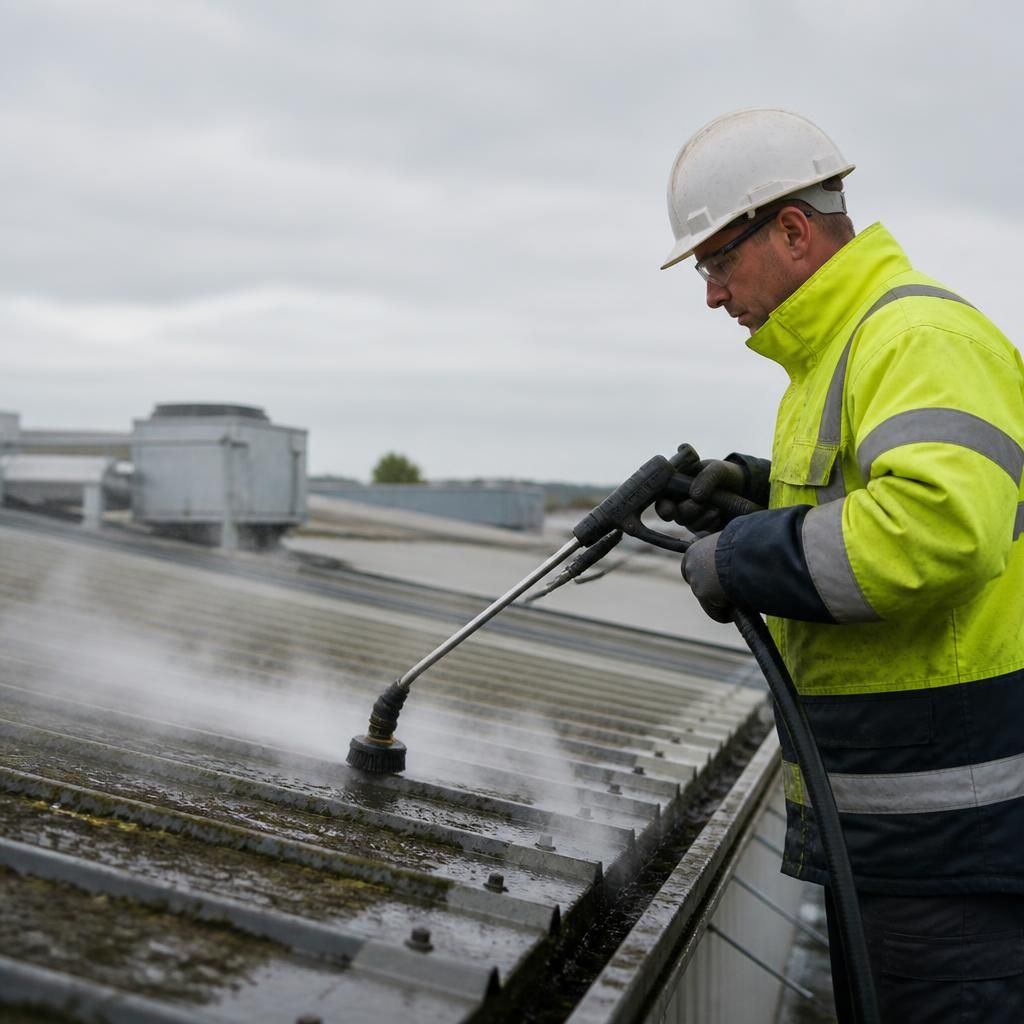
Steam cleaning is suitable for a roof only when its covering, coatings and underlying construction are in sound condition. A discreet test area should be checked first for loose tiles, delamination, coating failure, water penetration or changes to the surface finish. This is particularly important on older slate, clay and concrete tiles, where existing defects may not be visible from ground level.
The cleaning method can then be adjusted to the roof’s condition, using controlled heat, low pressure and careful water management where appropriate. If the covering is damaged, unstable, bituminous, thatched or suspected to contain asbestos, steam cleaning should not proceed without specialist assessment and a safer, suitable treatment plan.
Ask Us to Assess Your Roof for Steam Cleaning
Contact Encanto Exterior Cleaning to arrange a professional assessment of your roof’s materials, condition and sensitive details before steam cleaning is considered. We will recommend a suitable, controlled cleaning method or advise when specialist repair or an alternative treatment is needed.