
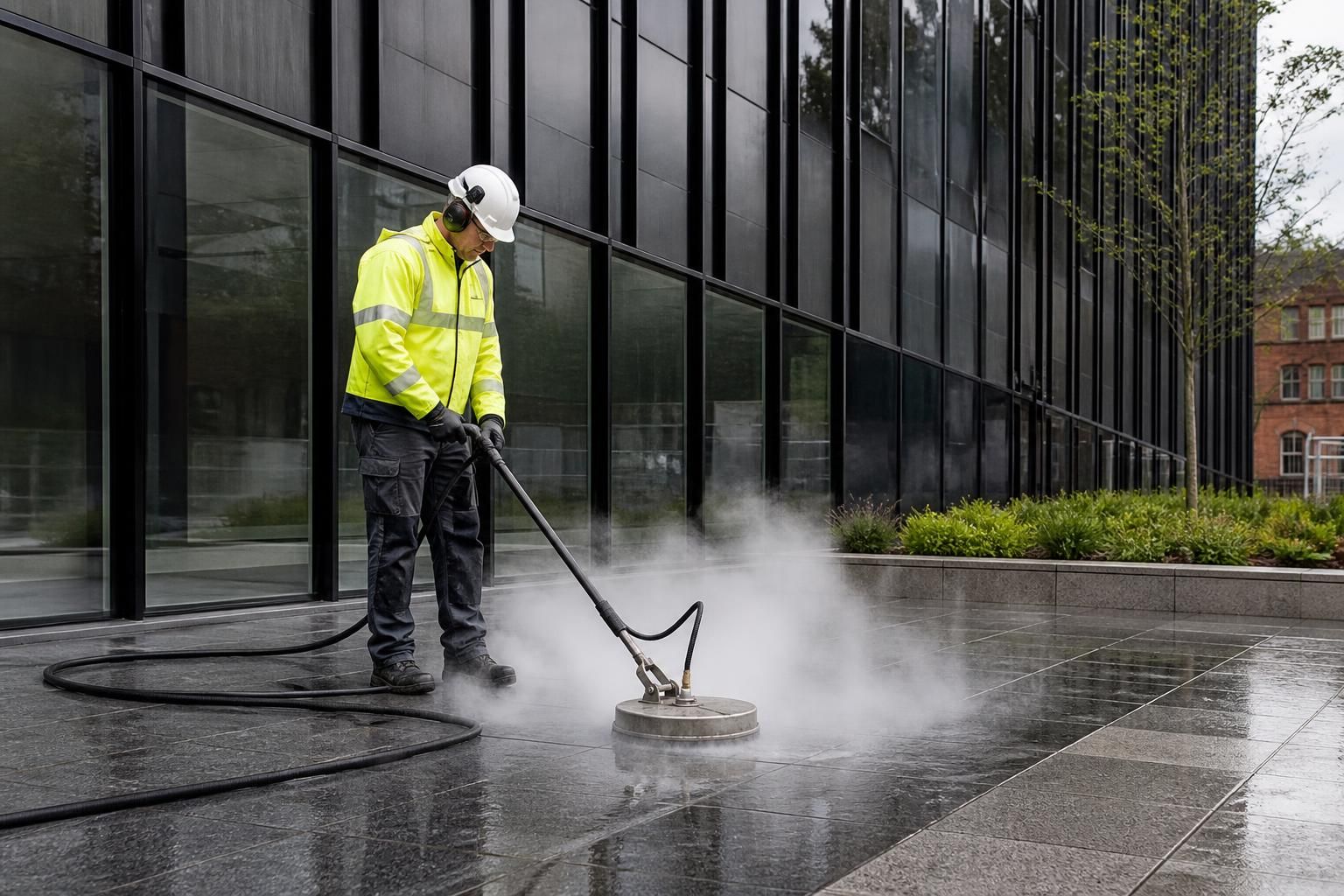
Are there environmental benefits to using steam cleaning for exterior surfaces?
Yes. Exterior steam cleaning can reduce water consumption and the need for chemical detergents compared with some pressure-washing methods, while effectively removing dirt, algae, oil and certain coatings; its overall environmental impact still depends on the equipment’s energy source and responsible collection or disposal of wastewater.
Yes. Steam cleaning can offer environmental benefits for exterior surfaces because it generally uses less water than many conventional pressure-washing approaches and can often clean effectively with little or no chemical detergent. It can also help remove organic growth, oil residues, dirt and some surface contamination without relying on abrasive methods. However, the environmental outcome depends on the equipment used, the energy source, the condition of the surface and how loosened contaminants and wastewater are managed.
Reduced water consumption
Steam cleaning heats water to a high temperature and applies it in a controlled, low-volume flow. This means that less water may be required to soften and remove contamination than with high-volume rinsing. The saving is most relevant on large commercial façades, paved areas, walls, cladding and other surfaces where conventional cleaning could generate substantial runoff.
Lower water use can reduce demand on mains supplies and limit the volume of wastewater requiring management. It may also make it easier to control runoff around entrances, loading areas, drainage channels and landscaped parts of a site. The exact saving varies according to the equipment, the surface material, the level of soiling and whether a final rinse is needed, so steam should not be treated as a guaranteed low-water solution in every application.
Fewer chemical detergents
The heat and moisture produced by steam can help break down grease, oils, biological growth and ingrained dirt. On suitable surfaces, this may reduce the need for strong detergents, solvents or biocides. Avoiding or reducing these products can lower the risk of chemical residues entering drainage systems, soil or nearby watercourses, provided the removed material is handled correctly.
Using less chemical product can also reduce packaging, storage and transport requirements. It does not mean that chemicals are never appropriate. Certain stains, heavy oil contamination, specialist coatings or biological growth may require a carefully selected treatment. Any chemical should be compatible with the surface, used at the lowest effective concentration and managed in accordance with its safety and disposal requirements.
Less abrasive cleaning
Steam can loosen contamination without depending on aggressive mechanical abrasion or harsh blasting media. This can be beneficial where the objective is to retain the existing surface rather than remove a layer of masonry, paint, render or protective coating. Preserving the surface can extend the interval before repair, replacement or recoating is needed, reducing the materials and waste associated with remedial work.
Suitability still needs to be assessed. Excessive heat, prolonged application or incorrect technique can damage sensitive finishes, sealants, joints, coatings and some roofing materials. A controlled test area and an appropriate working method are important environmental measures as well as quality controls, because preventing damage avoids unnecessary replacement and repeat work.
Potentially lower contamination of runoff
Where steam cleaning removes dirt without detergent, the resulting wastewater may contain fewer added chemicals. This can simplify the environmental management of runoff, although the water may still contain oil, traffic film, paint particles, algae, moss, metals or other pollutants collected from the surface. These contaminants must not be assumed to be harmless simply because no detergent was used.
Before work begins, the site should be assessed for nearby drains, watercourses, planted areas and vulnerable surfaces. Appropriate controls may include drain protection, temporary bunding, wet vacuum recovery, filtration, settlement or other suitable collection methods. Wastewater should be discharged or removed in line with site requirements and applicable environmental controls rather than allowed to flow uncontrolled into surface-water drainage.
Energy use remains part of the assessment
Steam equipment requires energy to heat water, so its environmental performance is not determined by water consumption alone. The fuel or electricity used, the efficiency and maintenance of the machine, the distance travelled to site and the time required to complete the work all affect the overall impact. An electric machine powered by a lower-carbon electricity supply may have a different profile from equipment using a fossil fuel, while a poorly maintained or inefficient system may use more energy than necessary.
For a responsible assessment, the cleaning method should be matched to the surface and contamination rather than selecting the hottest or most intensive setting by default. Efficient equipment, sensible operating temperatures, controlled application and avoiding unnecessary repeat passes can reduce energy use. Planning several tasks during one site visit may also reduce vehicle movements.
How steam cleaning compares with other methods
Steam cleaning may have a lower environmental impact than high-volume pressure washing where it achieves the required result with less water, fewer chemicals and limited runoff. It may also be preferable to abrasive cleaning where protecting the existing surface reduces dust, media waste and the need for repairs. However, pressure washing can be the more efficient option for some robust surfaces and loose contamination, while dry methods may be suitable where water recovery is difficult. The best choice depends on the material, the contamination, access, drainage and the required finish.
For commercial and industrial premises, the most sustainable approach is therefore a documented method statement that considers water use, chemical selection, energy demand, runoff controls, waste handling and surface protection. A pre-cleaning inspection should identify risks such as lead-based coatings, oil contamination, fragile masonry or biological growth. Where necessary, the cleaning process should be adjusted to protect the building and the surrounding environment.
In practical terms, steam cleaning is most environmentally beneficial when it is used selectively, with efficient equipment, minimal chemicals, controlled water application and proper recovery of contaminated runoff. It is not automatically greener in every situation, but a carefully planned steam-cleaning programme can reduce resource use while maintaining exterior surfaces to the required commercial standard.
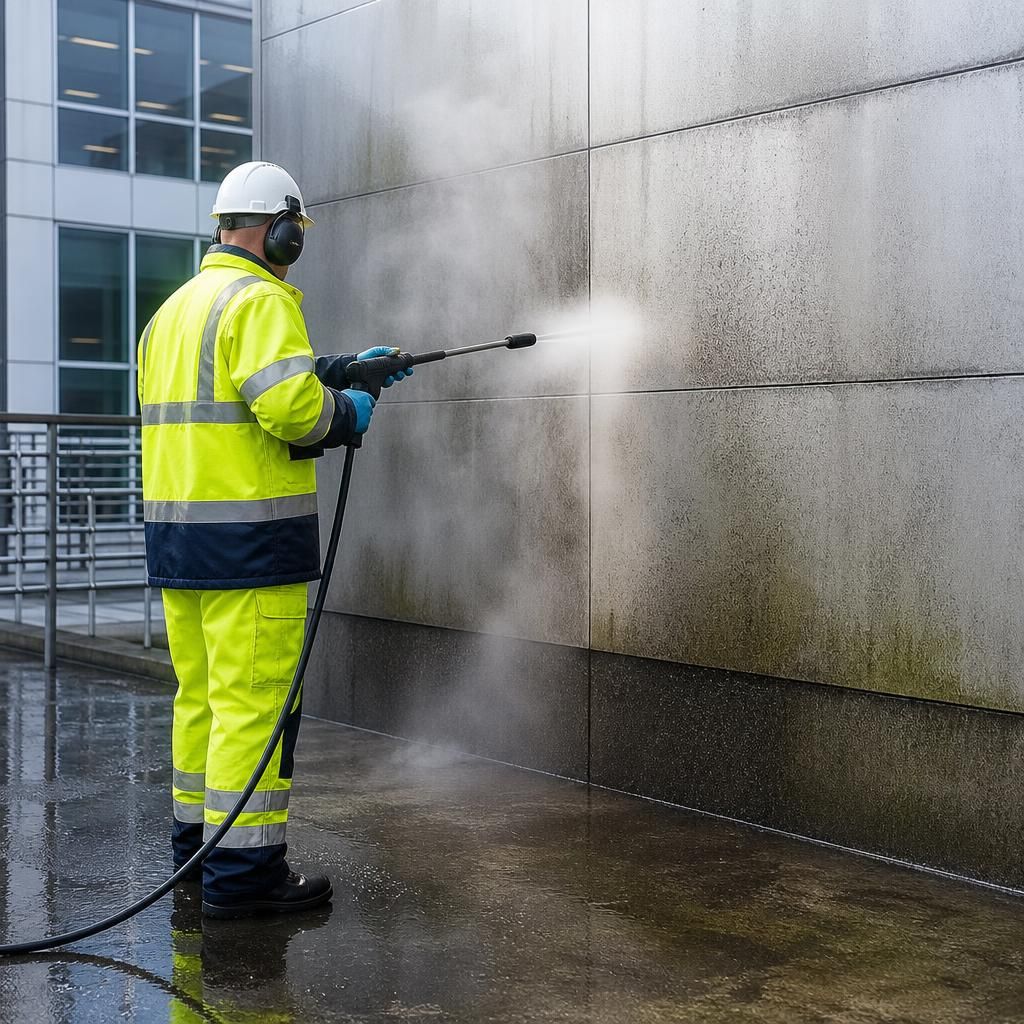
One of the main environmental benefits of exterior steam cleaning is the reduced use of water and chemical detergents. Steam applies heated water in a controlled, low-volume flow, which can loosen oil, algae, traffic film and ingrained dirt without the high-volume rinsing often associated with conventional pressure washing.
However, reduced water use does not remove the need for responsible wastewater management. Runoff may still contain oil, paint particles, metals, biological growth and other contaminants collected from the surface. Drain covers, wet-vacuum recovery, filtration or controlled collection may therefore be needed to prevent polluted water entering surface-water drains, planted areas or nearby watercourses. The most sustainable result comes from combining efficient steam equipment and minimal chemicals with careful surface assessment, runoff control and appropriate waste disposal.