
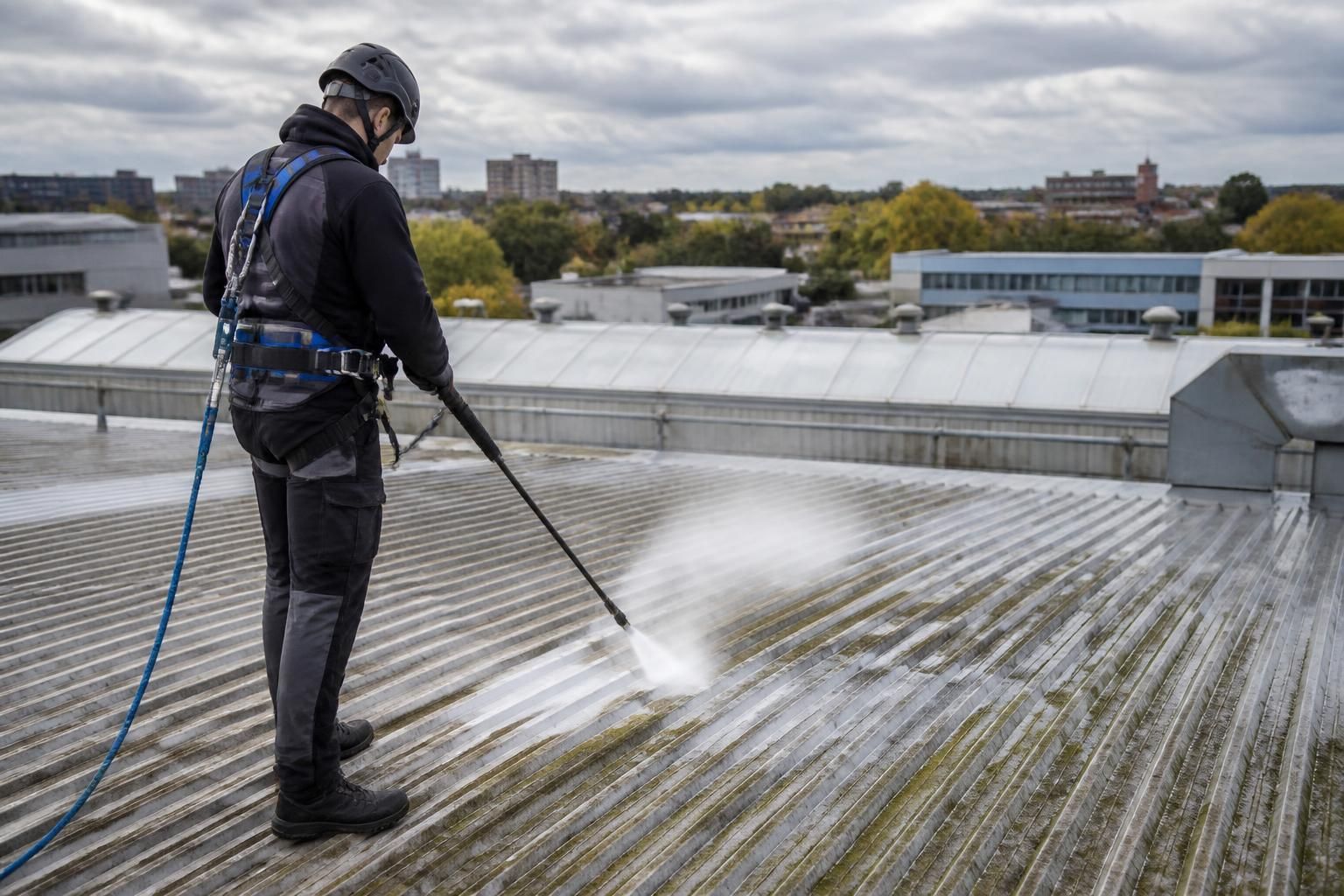
What techniques are most suitable for maintaining the integrity of my specific roof material during cleaning?
The safest technique depends on the roof material and its condition: use low-pressure soft washing or controlled steam for most tiles and membranes, gentle cleaning with suitable detergents for coated metal, and avoid abrasive methods or high pressure that can remove finishes, force water beneath laps or damage brittle surfaces. Before cleaning, inspect the roof and confirm the manufacturer’s requirements so the method, pressure, temperature and chemical treatment are appropriate for the specific system.
The most suitable roof-cleaning technique is determined by the roofing material, its coating or finish, its age, its condition and the way it is installed. In most cases, preserving roof integrity means using the least aggressive method that will remove the contamination effectively: careful manual preparation, low-pressure rinsing, a compatible detergent or biocide, and controlled steam where appropriate. High-pressure washing, abrasive cleaning and unsuitable chemicals can remove protective finishes, force water beneath joints and laps, or damage brittle, aged and weathered surfaces.
Before work begins, the roof should be identified and inspected rather than treated as a generic surface. The inspection should record cracked or loose materials, open laps, failed sealants, exposed reinforcement, corrosion, ponding water, fragile areas and previous repairs. Manufacturer or system requirements should be checked where they are available, particularly for single-ply membranes, coated metal and specialist roofing systems. Cleaning should not be used to disguise defects: damaged areas should be reported and, where necessary, repaired by an appropriately qualified roofing contractor before or after cleaning.
Clay and concrete roof tiles
Sound clay and concrete tiles normally respond well to a controlled soft-wash process. Loose moss, lichen and heavy debris can be removed carefully by hand or with tools that do not scrape the tile surface. A suitable detergent or biocidal treatment can then be applied at low pressure to break down organic growth. Rinsing should be controlled and directed down the roof rather than into tile joints, underlaps, flashings or ventilation openings.
Concrete tiles may have a surface coating or coloured finish that can be stripped by aggressive pressure washing. Clay tiles can become porous, cracked or weakened with age, and older interlocking profiles may be particularly vulnerable to water being driven beneath the tiles. Pressure should therefore be kept low and adjusted to the condition of the roof. Where deposits are bonded to the surface, controlled steam may be preferable to forceful water pressure, provided the temperature and dwell time are suitable for the tile and any adjacent sealants.
Slate roofing
Natural slate should be treated as a fragile material, especially on older commercial roofs. Moss and lichen should be removed with minimal disturbance, using hand tools and a compatible treatment rather than aggressive scraping or high-pressure washing. Walking directly on slate can cause fractures, so access should be planned using suitable roof access equipment and load distribution methods.
Water should not be forced beneath slate laps, around fixings or through defective flashings. Steam can sometimes remove biological growth effectively with less water volume, but it still requires careful control because heat and movement can affect old slates, nails, mortar bedding and sealants. Broken or slipped slates should be recorded rather than dislodged during cleaning.
Profiled and coated metal roofing
Metal roofs are generally cleaned with a low-pressure rinse and a mild, material-compatible detergent. The treatment must be selected according to the coating, whether the surface is plastisol, polyester, powder-coated, galvanised or another finish. Abrasive pads, harsh solvents and overly alkaline or acidic products can dull the coating, expose the underlying metal or accelerate corrosion.
Particular care is needed around laps, fasteners, penetrations, gutters and sealants. Cleaning should follow the direction of the profile where possible, with water controlled so that it does not enter joints or drive debris into drainage points. Rust staining should not automatically be treated with a strong chemical: the source of the corrosion should be identified, and damaged coating or fixings may require remedial work. A small test area is useful for confirming that the detergent and rinsing method will not mark or soften the finish.
Single-ply membranes, including EPDM, PVC and TPO systems
Single-ply membranes require a low-impact approach because the membrane, welded seams, adhesives, edge details and protective coatings can all be affected by unsuitable cleaning. Loose debris should be removed without dragging sharp objects across the surface. A membrane-compatible cleaner, applied at low pressure, is usually more appropriate than aggressive chemicals or mechanical abrasion.
High-pressure water can lift edges, damage seams, open weak details and force water into insulation or the roof build-up. Strong solvents, petroleum-based products and unapproved biocides can cause swelling, softening, staining or loss of flexibility. Cleaning equipment should not be placed where it can puncture or excessively load the membrane, and operatives should avoid unnecessary traffic. Ponding areas, failed seams and exposed insulation should be reported for specialist roof repairs.
Built-up felt and bituminous roofing
Bituminous felt and built-up systems should be cleaned gently because the surface may be aged, mineral-finished, locally repaired or vulnerable to softening. Loose moss and debris can be removed manually, followed by a controlled low-pressure rinse or a compatible treatment. Abrasive brushing and high-pressure washing can remove the mineral layer, disturb laps and expose the bitumen beneath.
Solvent-based products and excessive heat should be avoided unless the roofing manufacturer or a qualified roofing specialist has confirmed that they are suitable. Steam may be appropriate in limited circumstances, but it must be carefully controlled around laps, details and sealants. Any bubbling, exposed bitumen, loose chippings or cracking should be documented before cleaning proceeds.
Fibre-cement and potentially asbestos-containing roofing
Fibre-cement sheets must be identified before cleaning. Older sheets may contain asbestos, and their condition cannot be confirmed safely by appearance alone. Suspected asbestos-containing materials should not be pressure washed, brushed aggressively or disturbed by standard cleaning methods. They require an appropriate asbestos assessment and a method carried out in accordance with current UK health and safety requirements by suitably competent specialists.
Even non-asbestos fibre-cement can be brittle and porous. It should be cleaned with minimal access over the sheets, avoiding concentrated pressure, impact and water directed beneath overlaps. Fragile areas, corrosion around fixings and damaged sheets should be isolated and referred for appropriate repair or replacement.
Glass, GRP and specialist roof surfaces
Rooflights, translucent GRP panels and other specialist surfaces can scratch, craze or become opaque when cleaned with abrasive tools or incompatible chemicals. They should be cleaned with a soft, non-abrasive method and a product confirmed as suitable for the material. Rooflights must also be treated as fragile unless their load-bearing capacity has been specifically established; operatives should never rely on them as access surfaces.
How the cleaning method is controlled
- Use a test area: Apply the proposed chemical and cleaning action in an inconspicuous location, then check for colour change, coating loss, streaking, softening or altered texture before treating the wider roof.
- Start with the least aggressive option: Begin with manual removal and low-pressure cleaning. Increase mechanical action only where the material and condition allow it, and only when gentler methods cannot achieve the required result.
- Control chemicals: Select products compatible with the roof, surrounding finishes, rainwater goods and drainage system. Observe the required contact time and prevent concentrated product from drying on the surface.
- Protect vulnerable details: Flashings, sealants, membranes, rooflights, vents, solar equipment and edge trims need separate consideration. They should not be struck by concentrated jets or treated with unapproved chemicals.
- Manage water and runoff: Gutters, outlets and downpipes should be checked before work, and runoff should be contained or diverted where necessary. Cleaning residues must not be allowed to enter surface-water drains without suitable controls.
- Inspect after cleaning: The finished roof should be checked for remaining defects, blocked outlets, displaced materials, coating damage and areas requiring repair. Photographic records can help distinguish pre-existing defects from issues identified during the work.
Steam cleaning can be useful for certain hard surfaces and stubborn organic contamination because it can reduce water use and mechanical pressure, but it is not automatically safe for every roof. Temperature, dwell time and proximity to joints, membranes, coatings and sealants must be controlled. Likewise, soft washing is not simply a low-pressure version of pressure washing: the chemical formulation, application rate, contact time and rinsing process all need to be suitable for the roofing system.
For a commercial roof, the correct method also depends on access and the roof’s ability to support operatives and equipment. A cleaning plan should identify fragile zones, specify safe access arrangements and prevent hoses, tools and machinery from dragging across the surface. Where the roof is beyond its expected service condition, has widespread defects or is covered by a specialist warranty, the cleaning approach should be agreed with the roof manufacturer, warranty provider or a competent roofing professional before work starts.
In practical terms, sound tiles usually need a gentle biocidal or soft-wash treatment, slate needs particularly careful low-impact cleaning, coated metal needs compatible detergents and controlled rinsing, and membranes and felt systems need minimal pressure with close attention to seams, laps and coatings. If the material cannot be confirmed, or if it is fragile, damaged or potentially asbestos-containing, cleaning should pause until the roof has been properly assessed. This material-specific approach removes contamination while reducing the risk of shortening the roof’s service life or increasing future repair and maintenance requirements.
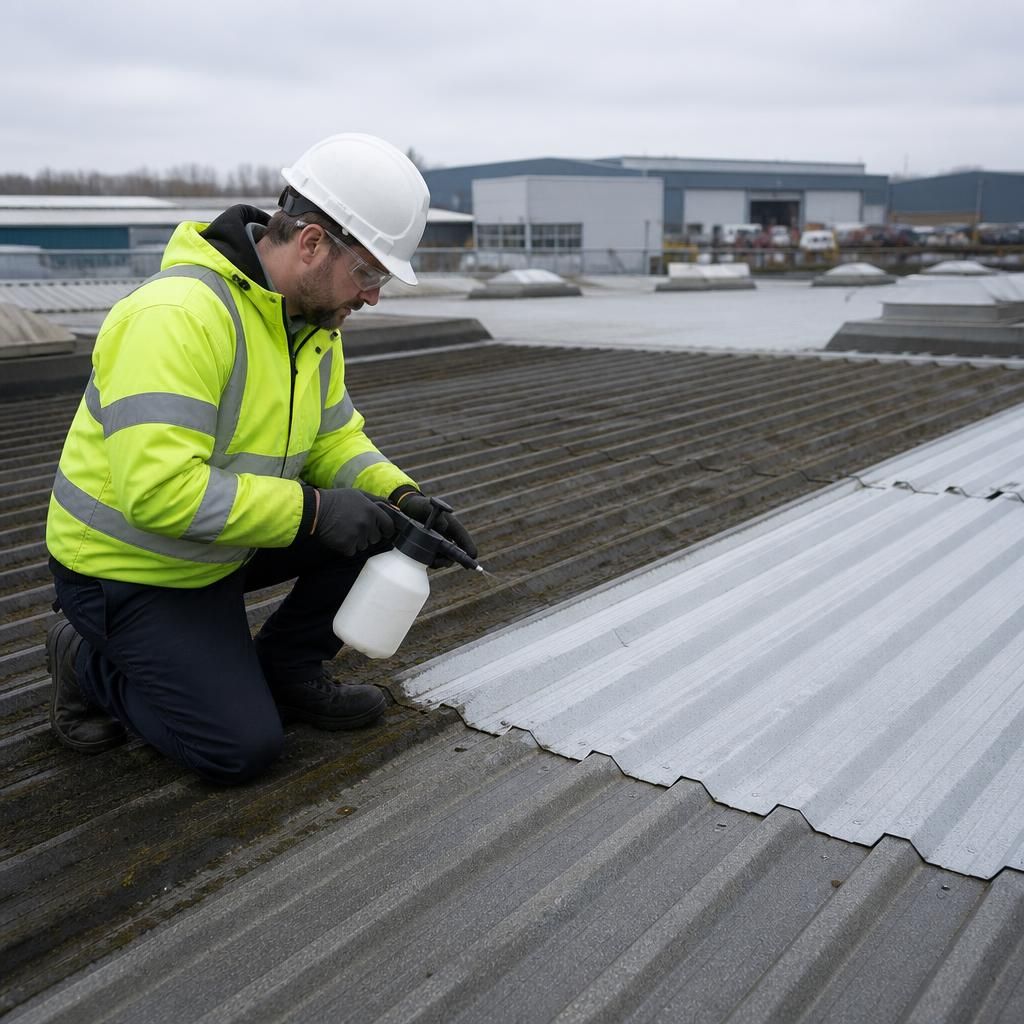
Testing the proposed cleaning method on a small, inconspicuous area is one of the most effective ways to protect a commercial roof’s integrity. It confirms that the pressure, temperature, detergent and contact time are suitable before the treatment is applied across the wider surface.
The test area should be checked for coating loss, colour change, streaking, softening, surface marking or damage to nearby sealants. Cleaning can then begin with the least aggressive effective method, usually manual debris removal followed by controlled low-pressure rinsing or a compatible treatment. Roof details such as laps, fixings, seams, flashings, rooflights and drainage outlets require separate care and should not be exposed to concentrated jets or unapproved chemicals.