
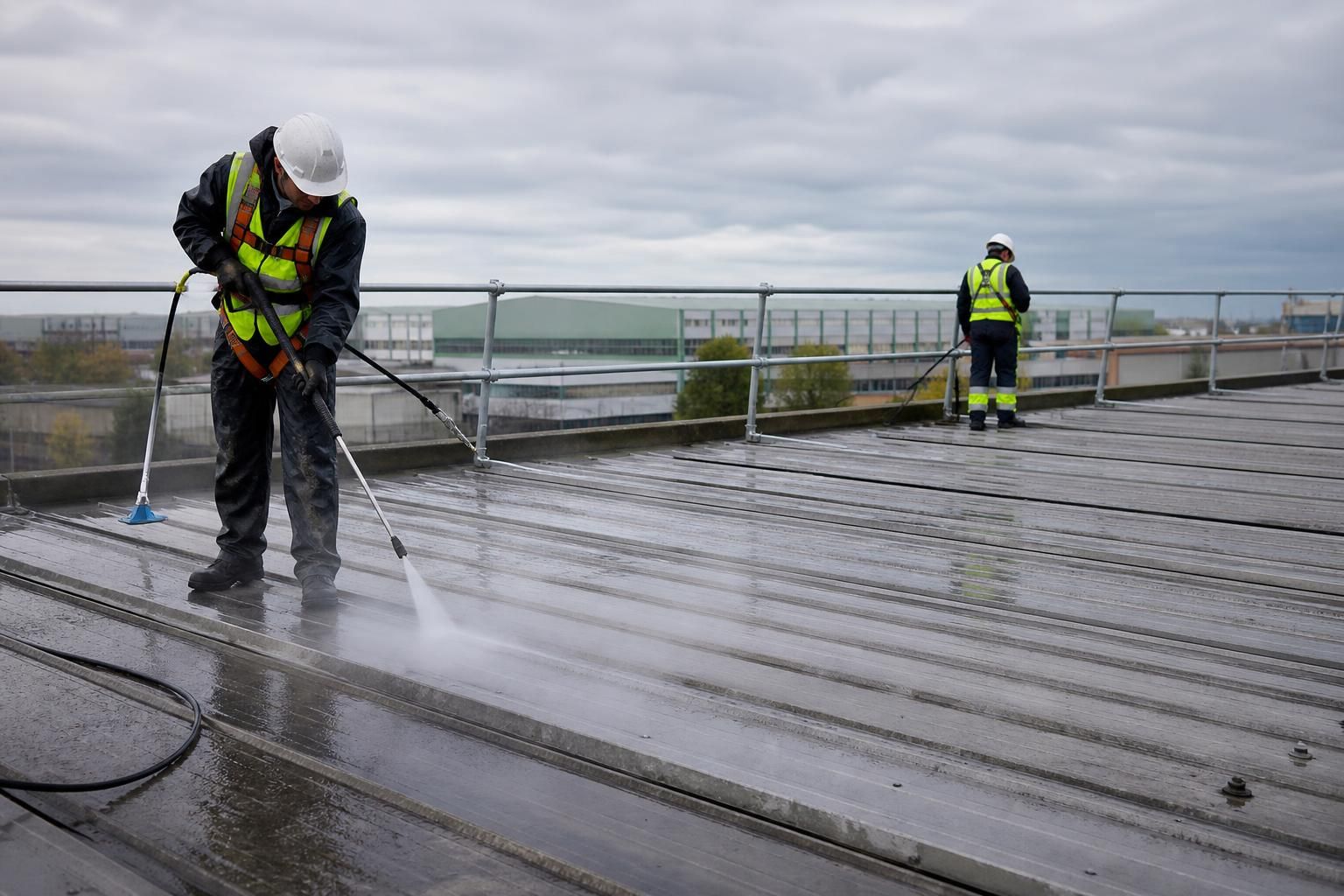
What safety measures should be taken during commercial roof cleaning?
Commercial roof cleaning should be carried out under a planned safe system of work, using suitable access equipment, edge protection, fall-arrest measures and appropriate personal protective equipment (PPE). Professional contractors also control access to the work area, assess roof condition and weather, manage cleaning chemicals and runoff, and protect people, equipment and the building below.
Commercial roof cleaning should be completed under a documented safe system of work, supported by a site-specific risk assessment and method statement. The main controls are safe roof access, prevention of falls, identification of fragile areas, suitable personal protective equipment (PPE), controlled use of cleaning equipment and chemicals, protection of people and property below, and a clear emergency and rescue procedure.
Roof cleaning presents several hazards at the same time. Operatives may be working at height on wet or sloping surfaces, close to roof edges, skylights, plant and electrical equipment, while pressure washing or chemical application can create spray, slippery surfaces, contaminated runoff and falling debris. A competent contractor should control these risks before work begins rather than relying on PPE alone.
Site assessment and safe system of work
Before attending site, the contractor should establish how the roof will be accessed, what materials and systems are present, where the fragile or unsupported areas are located, and how cleaning will affect the building and its occupants. The assessment should consider roof condition, access points, roof pitch, edges, rooflights, openings, parapets, gutters, drainage routes, nearby roads and pedestrian areas.
The method statement should set out the equipment, work sequence, exclusion zones, control measures, weather limits, chemical handling arrangements and emergency procedures. It should also identify who is responsible for site supervision and how the work will be coordinated with the client, building users and other contractors. Where the project falls within construction work, the relevant duties under UK health and safety legislation, including the Construction (Design and Management) Regulations, should also be considered.
Safe access and work at height
Access should be selected according to the roof design, duration and nature of the cleaning. Depending on the site, this may involve a properly positioned mobile elevating work platform, scaffold, scaffold tower, fixed access system, roof ladder or other suitable arrangement. Equipment must be appropriate for the ground conditions and installed, inspected and used by trained personnel.
Work at height should be avoided where a safer method from ground level or a platform is reasonably practicable. If operatives need to work on the roof, collective protection such as guardrails and properly designed edge protection is generally preferred. Where this is not sufficient, an appropriately designed personal fall-protection system may be required. Harnesses, lanyards and anchor points must be compatible, inspected and used within a planned system; wearing a harness without a suitable rescue plan is not an adequate control.
- Access equipment should be inspected before use and used within its manufacturer’s limitations.
- Mobile platforms should stand on suitable, stable ground, with adequate clearance from traffic, overhead services and building features.
- Roof ladders and walkways should be positioned to spread loads and reduce slipping or damage to the roof surface.
- Operatives should not step onto rooflights, translucent panels, unsupported sheets or areas suspected to be fragile.
- Openings, edges and access hatches should be guarded or otherwise controlled.
- Tools and hoses should be managed to prevent trip hazards and falling objects.
Fragile roofs require particular care. Older fibre-cement sheets, glass-reinforced plastic rooflights, corroded metal decking and deteriorated roof coverings may not safely support a person, even if they appear sound from ground level. The cleaning plan should specify how these areas will be avoided or crossed using suitable platforms, staging or other engineered controls. If the roof cannot be accessed safely, the work method should be changed rather than forcing access.
Fall prevention, rescue and supervision
A fall-arrest system is not a substitute for preventing a fall wherever possible. If fall-arrest equipment is used, the system must be suitable for the roof and anchor arrangement, and there must be enough clearance below to prevent impact. A rescue plan should explain how a suspended or injured operative will be recovered promptly, who will raise the alarm and what equipment is available. Calling the emergency services alone may not provide a sufficiently rapid rescue.
Supervision should match the complexity of the work and the competence of the team. Operatives should understand the risk assessment, method statement, access arrangements, equipment controls and site-specific emergency process. They should stop work if conditions change or the agreed controls can no longer be maintained.
Weather and roof-surface conditions
Rain, frost, ice, high winds and poor visibility can make roof cleaning unsafe. Water and cleaning solutions can reduce grip on tiles, metal sheets, membranes and access equipment. Wind can affect ladders, platforms, hoses, spray patterns and unsecured materials. The contractor should monitor conditions throughout the work and follow the operating limits for access equipment and fall-protection systems.
Cleaning should be paused when surfaces become dangerously slippery, when wind affects control of equipment or when lightning and other severe weather create additional risk. Wet areas should be managed progressively so that operatives are not required to walk across an unnecessarily contaminated or slippery surface.
PPE and operative protection
PPE should be selected after other controls have been applied and must suit the cleaning method and roof material. Depending on the task, this may include a safety helmet with a secure chin strap, slip-resistant safety footwear, protective gloves, eye protection or a face shield, waterproof protective clothing, hearing protection and respiratory protection.
Respiratory protection should only be used as part of a suitable assessment, with the correct filter or system, face-fit testing where required and appropriate maintenance. Protective clothing and gloves must be compatible with the chemicals being used. PPE should be checked before use, kept clean and replaced when damaged or contaminated. It should not restrict movement or interfere with harnesses and other safety equipment.
Pressure washing, steam cleaning and equipment controls
Pressure washing equipment can cause injection injuries, loss of balance, flying debris and damage to roof coverings, seals, flashings or coatings. Operatives should use the lowest effective pressure and a nozzle and technique suitable for the roof material. The lance should never be directed at people, live electrical equipment, unprotected openings or vulnerable building components.
- Hoses should be routed and secured to reduce trip, snagging and falling-object risks.
- Connections, trigger mechanisms and safety devices should be checked before use.
- Equipment should be isolated before clearing blockages or carrying out adjustments.
- Operators should maintain stable footing and avoid working beyond a safe reach.
- Spray drift should be controlled, particularly near entrances, ventilation intakes, vehicles and neighbouring premises.
- Steam equipment should be handled with controls for hot surfaces, burns, pressure and condensate.
Electrical equipment should be suitable for the environment, protected from water and connected through appropriate residual-current protection where required. Operatives should identify overhead and nearby electrical services before positioning access equipment or routing hoses. Electrical installations, roof-mounted plant and solar panels should be protected, isolated or kept outside the work area as appropriate.
Chemical handling and COSHH controls
Where detergents, biocides, treatments or other substances are used, the contractor should carry out a Control of Substances Hazardous to Health (COSHH) assessment. This should cover the product hazards, safe dilution, application method, required PPE, storage, spill response, first aid and disposal arrangements. Product labels and safety data sheets should be available to the team.
Chemicals should never be mixed unless the manufacturer specifically permits it. Containers should be clearly identified and secured against tipping or falling from the roof. Application should be controlled to prevent drift onto people, neighbouring property, glazing, vehicles, vegetation, air intakes and sensitive roof components. Operatives should know how to deal with skin or eye contact and should have access to suitable washing facilities or emergency eyewash where the assessment requires it.
Exclusion zones and protection of people below
The area below and around the work should be assessed before cleaning starts. Falling tools, dislodged moss, roof fragments, dirty water and overspray can injure people or damage property. Barriers, cones, warning signs and, where necessary, a banksman or additional site marshal should prevent unauthorised access.
Entrances, footpaths, loading bays and vehicle routes may need temporary diversion or controlled access. The client should be informed about the work area and any restrictions. Items that could be damaged by water or debris should be moved or covered, while doors, windows, ventilation intakes and sensitive equipment should be protected. Barriers must remain effective for the duration of the work, including during breaks if hazards are still present.
Runoff, drainage and environmental protection
Roof cleaning water can contain moss, silt, dirt, coatings, detergents or biocidal residues. It should not be allowed to enter surface-water drains, watercourses, soil or neighbouring property without suitable controls. Before work begins, the contractor should identify drainage routes and determine whether gutters and downpipes need to be isolated, filtered, diverted or protected.
Runoff should be contained, collected or managed in accordance with the substance used and local requirements. Removed debris should be prevented from blocking gutters and outlets, and waste should be handled through an appropriate disposal route. These controls protect the environment as well as reducing slip hazards and preventing damage to the drainage system.
Building and roof protection
Safety includes preventing avoidable damage to the roof and the building below. The cleaning method should reflect the roof’s material, age, condition, coatings, joints, seals and drainage design. A pre-work inspection should record existing defects such as cracked tiles, corrosion, loose flashings, failed sealants or damaged membranes.
Operatives should avoid excessive pressure, concentrated spray on joints and flashings, unnecessary foot traffic and the storage of equipment or chemicals on vulnerable surfaces. Roof-mounted plant, solar installations, vents, alarms and other services should be identified and protected. Any defects discovered during cleaning should be reported rather than concealed or disturbed without authorisation.
Emergency arrangements and completion checks
The site team should know the arrangements for falls, injury, chemical exposure, fire, electrical contact, equipment failure and sudden weather changes. A reliable means of communication, first-aid provision and clear site address information should be available. Emergency access routes should remain unobstructed.
At the end of the work, the contractor should inspect the roof, access equipment, gutters, downpipes, surrounding ground and exclusion area. Hoses, tools, debris, chemical containers and temporary protection should be removed safely. Drainage should be checked for blockage, surfaces should be left in a safe condition and the client should be told about any defects or follow-up work required.
For a commercial roof, the safest approach is a planned and supervised process that combines competent operatives, suitable access and fall protection, controlled equipment and chemicals, environmental safeguards and a practical rescue plan. If any part of the roof or site cannot be cleaned within those controls, the method should be reviewed before work continues.
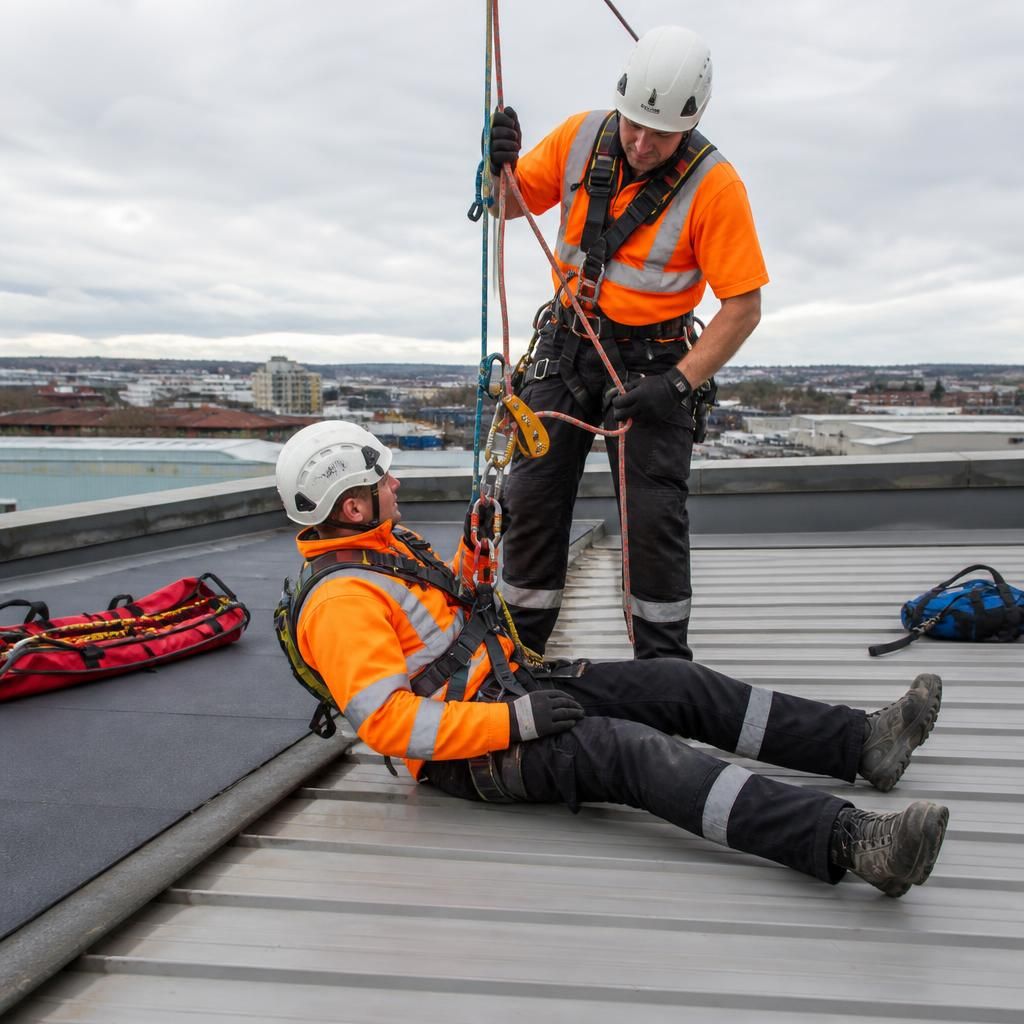
A commercial roof cleaning safety plan must include a practical rescue procedure wherever operatives could fall or become suspended in harness equipment. Fall-arrest equipment can reduce injury during a fall, but it does not remove the need for prompt recovery.
The method statement should identify who raises the alarm, how access is maintained for rescuers, what recovery equipment is available and how the injured operative will be reached safely. The team should also have a reliable means of communication, first-aid arrangements and clear information for emergency services. If the roof cannot be accessed or cleaned without exposing workers to an uncontrolled fall risk, the cleaning method should be changed before work starts.
Discuss Your Commercial Roof Cleaning Safety Requirements
Contact Encanto Exterior Cleaning to discuss your commercial roof cleaning safety requirements, including access, fall protection, chemical controls and site-specific risks. We can help plan a suitable method for your building and surrounding operations.