
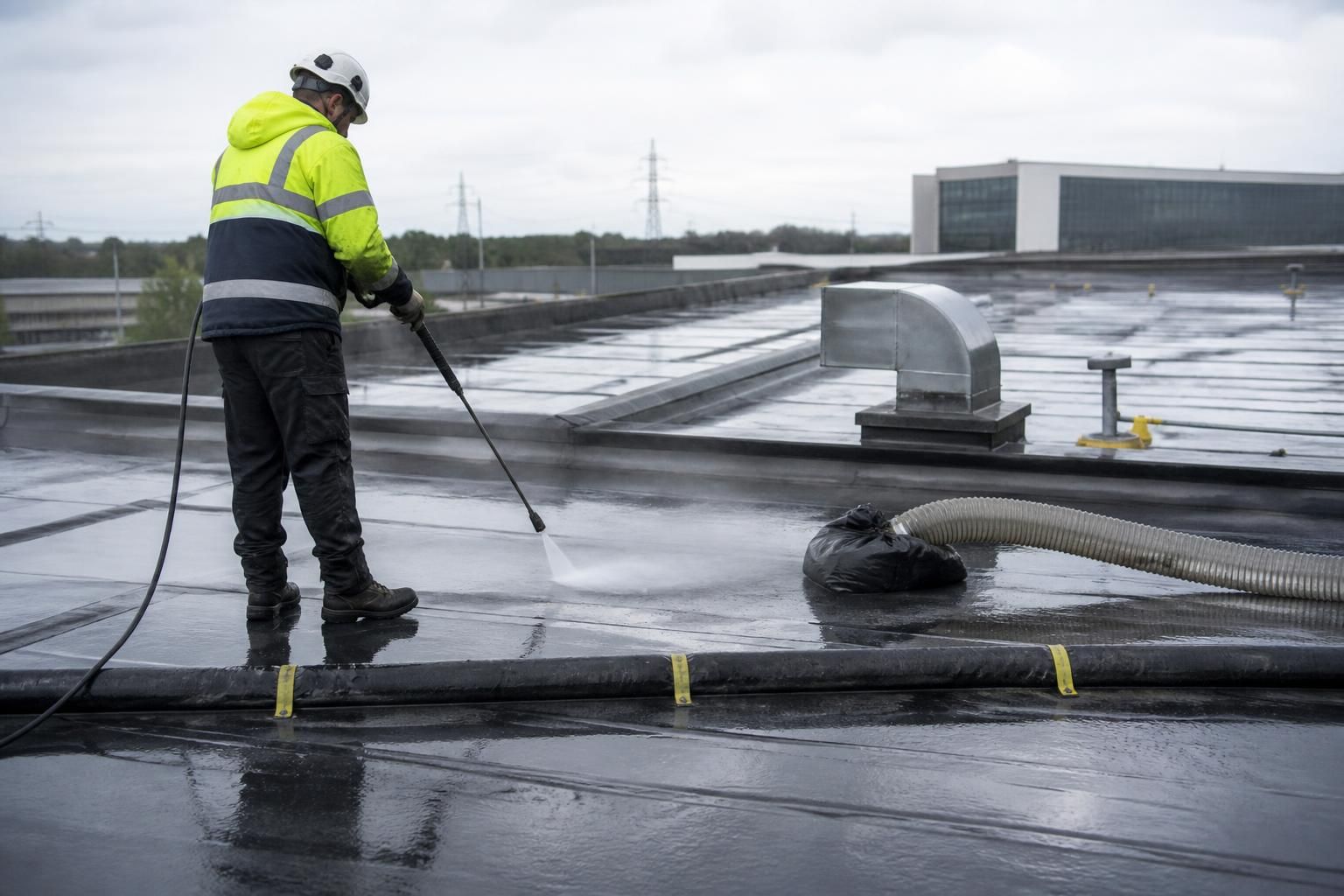
What measures does the commercial roof cleaning service take to ensure compliance with environmental regulations?
Our commercial roof cleaning service supports compliance with UK environmental regulations by selecting proportionate cleaning methods, controlling chemical use, preventing contaminated run-off from entering drains or watercourses, and managing removed moss, dirt and wastewater responsibly. We assess the site before work, use suitable containment and collection measures, follow product and COSHH requirements, and dispose of controlled waste through appropriate channels.
Commercial roof cleaning is carried out with environmental controls planned around the site, the roof material, the cleaning method and the type of waste or run-off produced. Before work begins, we assess drainage, watercourses, surface conditions, access arrangements, weather exposure and nearby sensitive areas. This allows us to select a proportionate method and put controls in place to prevent pollution, unsafe chemical use and inappropriate waste disposal.
Site assessment and method selection are the starting points for compliance. We consider whether the roof can be cleaned using low-pressure washing, steam cleaning, soft washing, biocidal treatment, manual removal or a combination of methods. The least aggressive effective method is preferred where practical, as this can reduce water consumption, chemical use, airborne spray and the volume of contaminated water requiring control.
The roof material and existing coatings are also checked before cleaning. This helps prevent damage that could release roof fragments, coatings or contaminants into drainage systems. Where moss, algae, bird fouling, oil residues or other deposits are present, the planned controls are adapted to the likely composition of the waste and the sensitivity of the surrounding environment.
Chemicals are controlled through product selection, storage and application. Any detergents, biocides or other treatment products used must be suitable for the intended application and applied in accordance with the manufacturer’s instructions, label requirements and relevant UK controls. Product information and safety data are reviewed, and the risks to people, drainage, vegetation, watercourses and roof materials are considered under the Control of Substances Hazardous to Health requirements.
- Only the quantity of chemical required for the planned treatment is prepared.
- Products are stored securely and kept away from drains, watercourses and areas where a spill could spread.
- Mixing and transfer are controlled to reduce the risk of splashes, leaks and incorrect dilution.
- Application is stopped or adjusted where wind, rain or other conditions could cause drift or uncontrolled run-off.
- Unused products and empty containers are managed in accordance with product instructions and waste requirements.
Run-off prevention is a key part of the work plan. Cleaning water, loosened moss, sediment and chemical residues are not allowed to enter surface-water drains or watercourses uncontrolled. Before cleaning, we identify drain locations and determine whether they need to be protected, temporarily sealed, isolated or fitted with suitable filtration and collection measures. Where a discharge to a foul sewer or trade effluent system is proposed, the relevant water company requirements and any necessary consent are considered first. Water is never discharged merely because a drain is nearby.
Where practical, contaminated water is collected for controlled removal or directed to an agreed disposal point using suitable equipment. Solid material such as moss, silt, lichen and damaged coating is gathered rather than swept into gullies. Temporary barriers, absorbent materials, drain covers and collection equipment may be used according to the site conditions. These controls are checked during the work and improved if the volume or direction of run-off changes.
Weather and site conditions are monitored throughout the project. Heavy rain can overwhelm containment, while strong wind can carry spray or loosened debris beyond the work area. Work may therefore be postponed, paused or changed when conditions make pollution control unreliable. Nearby landscaping, soil, pedestrian areas, vehicles and building entrances are protected from spray and contaminated water where required.
Waste is handled under the applicable duty of care requirements. Removed deposits, contaminated absorbents, used filters, empty containers and collected wastewater are assessed according to their contents and the circumstances in which they were produced. Waste is kept secure, separated where appropriate and transferred using suitable documentation. Where a licensed waste carrier or authorised disposal facility is required, the relevant arrangements are made and records are retained.
The classification of waste is not assumed in advance. For example, ordinary moss and sediment may need different handling from material contaminated with oils, hazardous substances or concentrated treatment products. If testing, specialist advice or a particular disposal route is necessary, this is identified during planning rather than relying on an unapproved discharge or general waste collection.
Pollution incidents are managed through preparation and site controls. Equipment and materials for containing minor spills are kept available where appropriate, and operatives know how to stop the source, protect drains, contain the spread and report the incident. A significant spill, uncontrolled discharge or suspected pollution event is escalated promptly in line with the site’s emergency arrangements and the requirements of the relevant authorities.
Environmental compliance also depends on competent working practices. Operatives follow the agreed method statement, risk assessment, chemical information and site rules. Access equipment, hoses and pumps are positioned to minimise damage to the building and surrounding area, and equipment is checked for leaks before use. Work areas are inspected after cleaning so that debris, temporary drain protection and contaminated materials are removed safely.
Records may include the site assessment, risk and COSHH documentation, product details, waste transfer information, discharge arrangements, weather-related decisions and any incident reports. Keeping this information provides an auditable explanation of how the cleaning was planned and delivered. Requirements can vary between sites, particularly where a premises has its own environmental management system, drainage restrictions, trade effluent agreement or permit conditions, so those requirements are incorporated into the work plan before cleaning starts.
For commercial clients, the practical result is a controlled roof cleaning process that limits chemical use, prevents contaminated run-off, protects drainage and surrounding areas, and ensures waste is managed through appropriate channels. If your premises has unusual drainage, a nearby watercourse, sensitive landscaping, strict discharge conditions or known contamination, this should be raised during planning so that additional containment, collection or specialist waste arrangements can be specified.
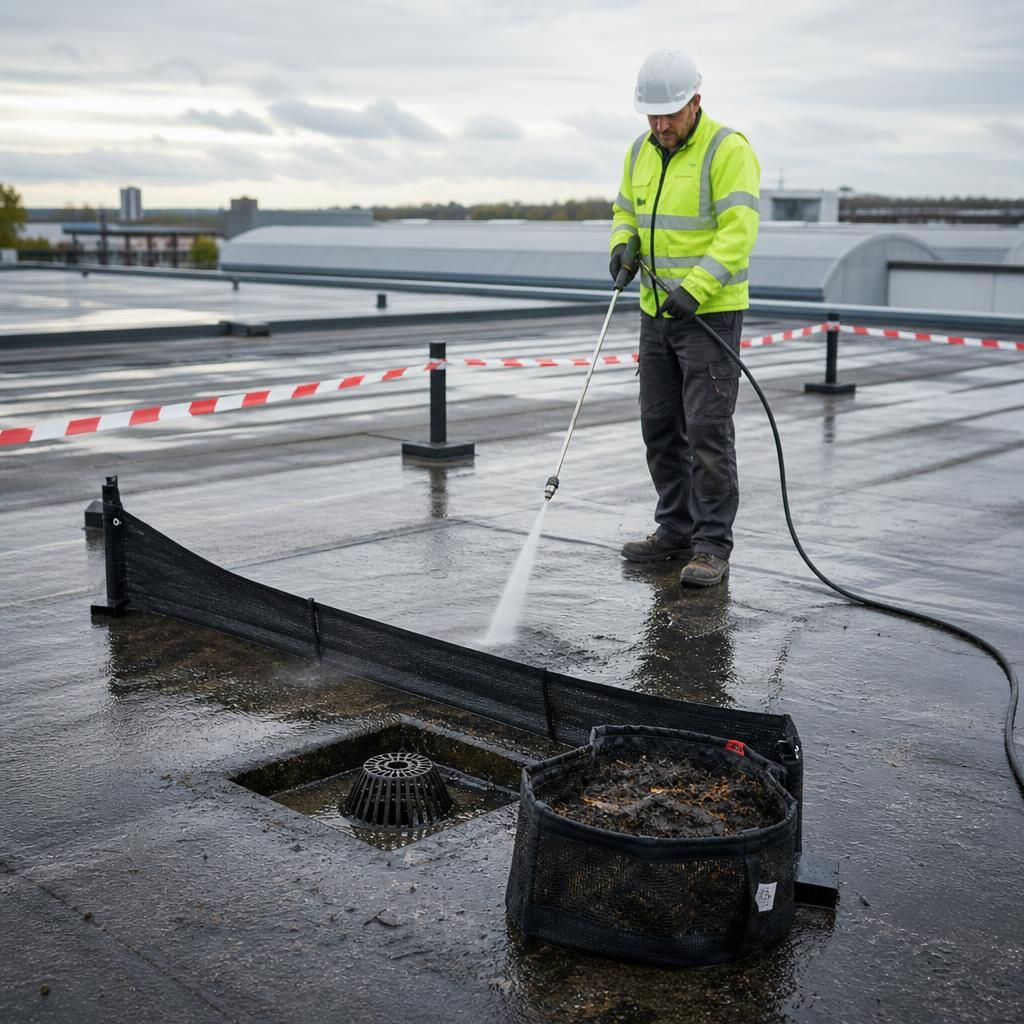
Preventing contaminated run-off is a central environmental control during commercial roof cleaning. Before work starts, we identify surface-water drains, foul drainage, nearby watercourses and sensitive landscaped areas so that loosened moss, sediment, cleaning chemicals and dirty water are not allowed to spread uncontrolled.
Depending on the site, suitable drain covers, temporary barriers, filtration or collection equipment may be used. Solid debris is gathered rather than washed into gullies, while collected wastewater is managed through an agreed disposal route. Cleaning can be paused or adapted if rain or wind makes containment unreliable, helping protect the drainage system and surrounding environment.