
What environmental considerations should be taken into account during commercial roof cleaning?
Commercial roof cleaning should minimise water and chemical use, prevent contaminated runoff entering drains or watercourses, and protect surrounding buildings, vegetation and wildlife. The cleaning plan should also include responsible collection and disposal of residues, compliance with environmental regulations, and selection of the least harmful effective method for the roof material.
Commercial roof cleaning should be planned to control water use, prevent contaminated runoff, limit chemical impacts and ensure that removed material is collected and disposed of responsibly. The appropriate approach depends on the roof covering, the type of contamination, the surrounding drainage system and the environmental controls required at the site.
Cleaning a roof is not simply a matter of applying water or treatment and allowing the residue to drain away. Dirt, algae, moss, bird fouling, coatings, oils and cleaning products can enter surface-water drains, soil or watercourses if they are not controlled. A suitable method statement and site-specific risk assessment should therefore address the following considerations.
Runoff and drainage protection
Runoff is one of the most important environmental issues during commercial roof cleaning. Water from a roof may carry suspended solids, organic growth, detergents, biocides, corrosion products or other contaminants. Surface-water drainage generally leads to the environment rather than a sewage treatment works, so contaminated water must not be allowed to enter gullies, channels, streams or ponds without appropriate controls.
- Identify all roof outlets, downpipes, gullies, channels and nearby watercourses before work starts.
- Isolate or protect vulnerable drains using suitable drain covers, bunding, socks or temporary containment systems.
- Prevent dirty water from spreading across loading areas, footpaths, neighbouring property or landscaped ground.
- Recover, filter, store or otherwise manage contaminated water in accordance with the agreed site procedure.
- Check whether discharge to a foul sewer requires permission or trade effluent consent from the relevant sewerage provider.
Controls should remain in place until the cleaning area and drainage points have been inspected and any collected residue has been removed. Simply diluting contaminated runoff with additional clean water is not an acceptable substitute for containment.
Water consumption
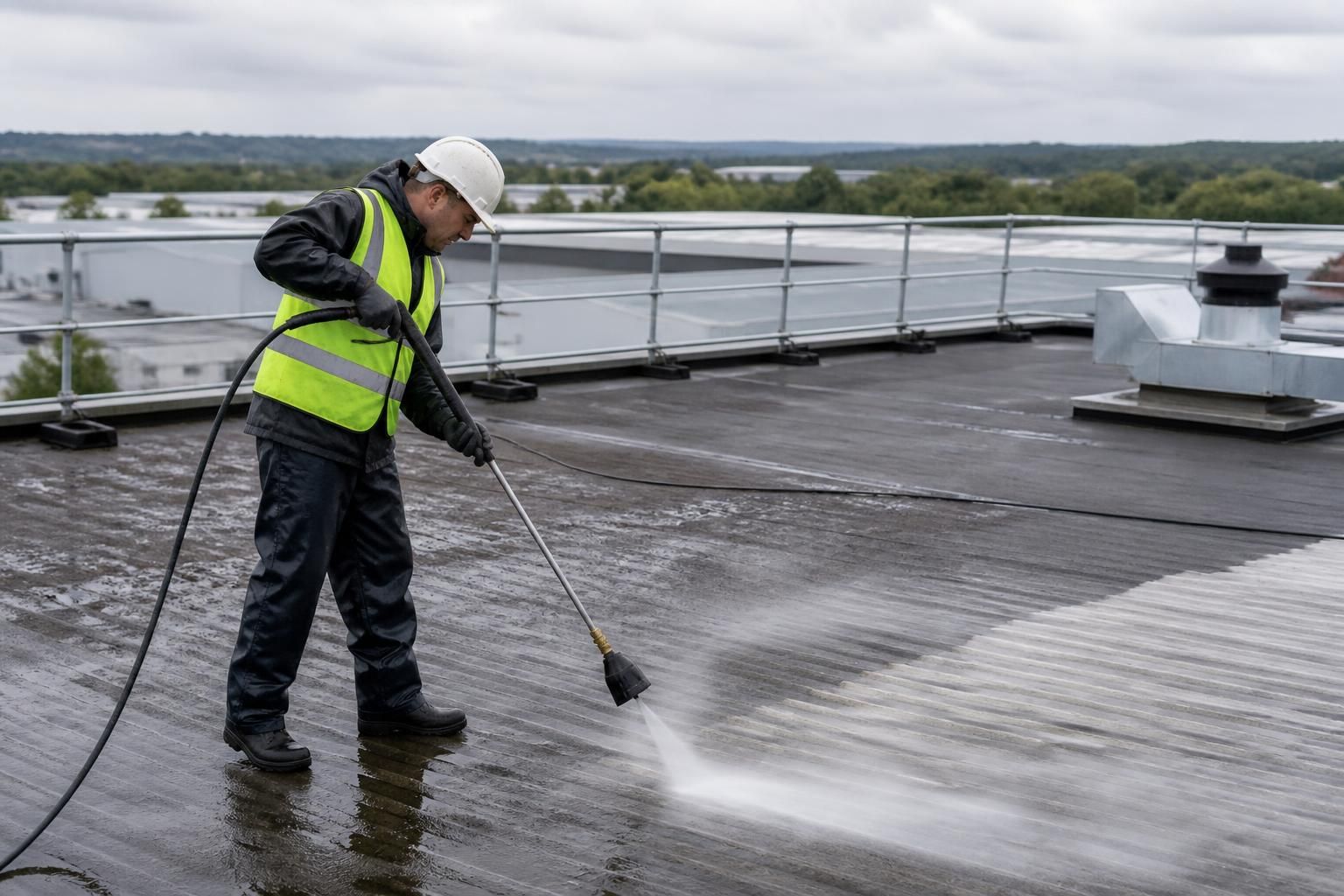
Pressure washing can use substantial volumes of water, particularly on large industrial roofs or where repeated rinsing is needed. The contractor should select equipment and techniques that achieve the required result without unnecessary consumption. This may include controlled low-flow systems, targeted rinsing, recovery of wash water where practical and avoiding cleaning during conditions that would cause rapid runoff or overspray.
Water use should also be matched to the roof material. A fragile or porous covering may need a low-pressure approach, whereas a robust surface may tolerate more mechanical cleaning. Using excessive pressure can damage the roof while wasting water, so environmental efficiency and asset protection often support the same method.
Choice and control of cleaning products
Chemicals should be used only where they are necessary and suitable for the roof covering and the level of contamination. A professional assessment should consider whether mechanical cleaning, steam cleaning or water-only methods can achieve the required standard before a detergent, biocide or other treatment is selected.
Where products are required, the cleaning team should:
- Use the least harmful effective product and apply it at the manufacturer’s recommended dilution.
- Review the product safety data sheet and relevant COSHH assessment before use.
- Prevent overspray and drift onto cladding, vehicles, air intakes, glazing, soil, plants and neighbouring properties.
- Keep chemicals in labelled, secure containers with suitable spill controls.
- Prevent unused product, empty containers and concentrated residues from entering drains or waste streams incorrectly.
Biocidal treatments require particular care because they are intended to control living organisms. Their use, application and disposal must follow the product label and applicable requirements. A treatment should not be selected merely because it is convenient; its environmental behaviour, compatibility with the roof and likely runoff route all need to be considered.
Protecting vegetation, wildlife and surrounding areas
Roof cleaning can affect trees, planted areas, soil, ponds, nesting sites and other habitats around a building. Moss and debris can also fall from roof edges, affecting ground-level areas and site drainage. Before work, the contractor should identify sensitive areas and use sheeting, temporary barriers, controlled application and suitable collection methods where needed.
Work may need to be adjusted if birds, bats or other protected species are present, particularly where nests, roosts or regular nesting activity could be disturbed. A site assessment should consider the building’s eaves, roof voids and plant growth before access equipment or cleaning begins. If protected wildlife is suspected, specialist advice may be needed rather than proceeding as normal.
Waste, moss and debris management
Loose moss, silt, flakes of coating, spent filters and contaminated absorbent materials should be collected rather than swept into gullies or left on surrounding ground. Waste should be kept separate where necessary, stored securely and transferred using an appropriate waste carrier to a suitably authorised facility.
The correct classification depends on what has been removed from the roof and whether it has been contaminated by chemicals, oils or other substances. Waste transfer documentation should be retained, and hazardous waste requirements should be followed where the material meets the relevant definition. Roof cleaning waste must not be mixed with general rubbish simply to simplify disposal.
Air quality, noise and energy use
Steam cleaners, pressure washers, generators and access equipment can create noise, exhaust emissions and airborne spray. These impacts can be reduced by maintaining equipment properly, using electrically powered equipment where suitable, positioning generators away from air intakes and occupied areas, and using low-drift application methods.
Cleaning should be scheduled with regard to wind, rain, temperature and site occupancy. Strong winds can carry spray or vapour beyond the work area, while rain can increase runoff and reduce treatment control. Avoiding unsuitable weather is an environmental control as well as a safety measure.
Legal and site compliance
Commercial roof cleaning in the UK must be carried out with regard to applicable environmental and waste controls, site rules and local discharge requirements. Depending on the work, relevant considerations may include pollution prevention guidance, water protection legislation, waste duty-of-care requirements, COSHH controls, hazardous waste rules and trade effluent arrangements. Requirements can vary between England, Wales, Scotland and Northern Ireland, so the site location and discharge route should be confirmed rather than assumed.
The building owner or facilities manager should provide information about drainage plans, interceptors, asbestos-containing materials, sensitive occupants, environmental permits and any restrictions imposed by the landlord or local authority. The contractor should record the proposed method, products, containment arrangements, weather conditions, waste route and any incidents or corrective action.
How the environmental approach is agreed
- Inspect the roof, surrounding ground, drainage and nearby sensitive receptors.
- Identify the contamination and determine whether cleaning, treatment or a combination is actually necessary.
- Select a method that is effective for the roof material while minimising pressure, water, chemicals and disturbance.
- Plan containment, runoff recovery, spill response and waste disposal before equipment arrives.
- Confirm product information, COSHH controls, discharge permissions and site-specific requirements.
- Monitor the work and stop or modify it if runoff, weather or site conditions change.
- Inspect the area afterwards and remove temporary controls only when the site is clean and secure.
An environmentally responsible roof-cleaning programme is therefore based on prevention and control, not just the choice of a product described as eco-friendly. The safest option is the least intensive method that reliably cleans the particular roof, combined with effective containment, compliant disposal and clear records of how water, chemicals and waste were managed.
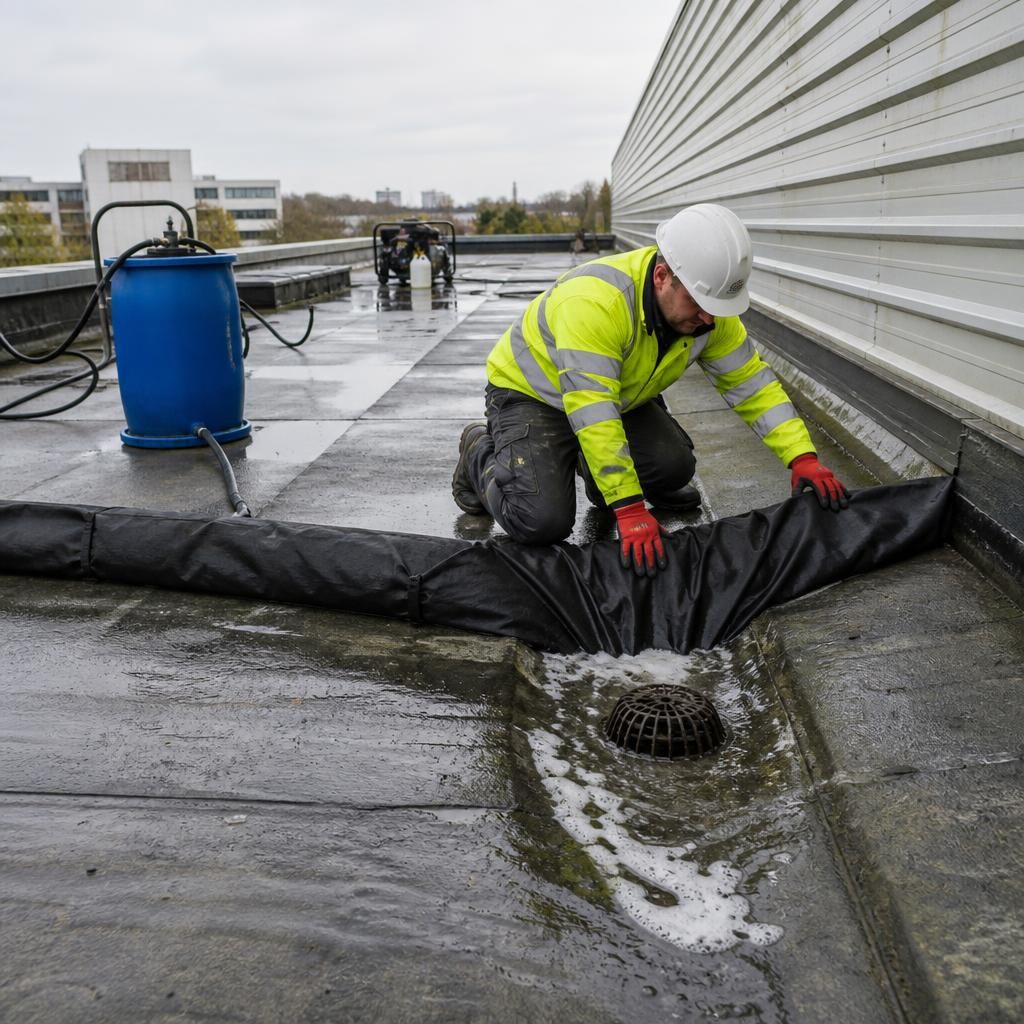
Runoff control is a central environmental consideration during commercial roof cleaning. Wash water can carry moss, algae, sediment, detergents and biocides into surface-water drains, soil or nearby watercourses, so it must be contained and managed rather than allowed to drain away uncontrolled.
Before cleaning begins, the drainage layout should be checked and vulnerable outlets protected with suitable covers, bunding or temporary containment. Where practical, dirty water and solid debris should be recovered, filtered, stored and disposed of through the correct route. Additional clean water should not be used simply to dilute contaminated runoff, and any discharge to a foul sewer should be authorised where required.
Arrange an Environmentally Responsible Roof Cleaning Assessment
Contact Encanto Exterior Cleaning to arrange an environmentally responsible commercial roof cleaning assessment. We will review the roof, drainage, surrounding areas and cleaning requirements before recommending suitable methods and runoff controls.