
What environmental considerations are involved in commercial roof cleaning?
Commercial roof cleaning should consider water consumption, contaminated runoff, chemical selection, energy use and waste disposal. Responsible contractors choose the least intensive effective method, prevent pollutants entering drains or soil, contain and dispose of residues correctly, and comply with relevant environmental requirements.
Environmental considerations in commercial roof cleaning centre on controlling water use, preventing contaminated runoff, selecting the least harmful effective treatment and disposing of removed material responsibly. The cleaning method should be matched to the roof surface and level of soiling so that environmental impacts are controlled without compromising the roof, surrounding property or drainage system.
Water consumption and method selection
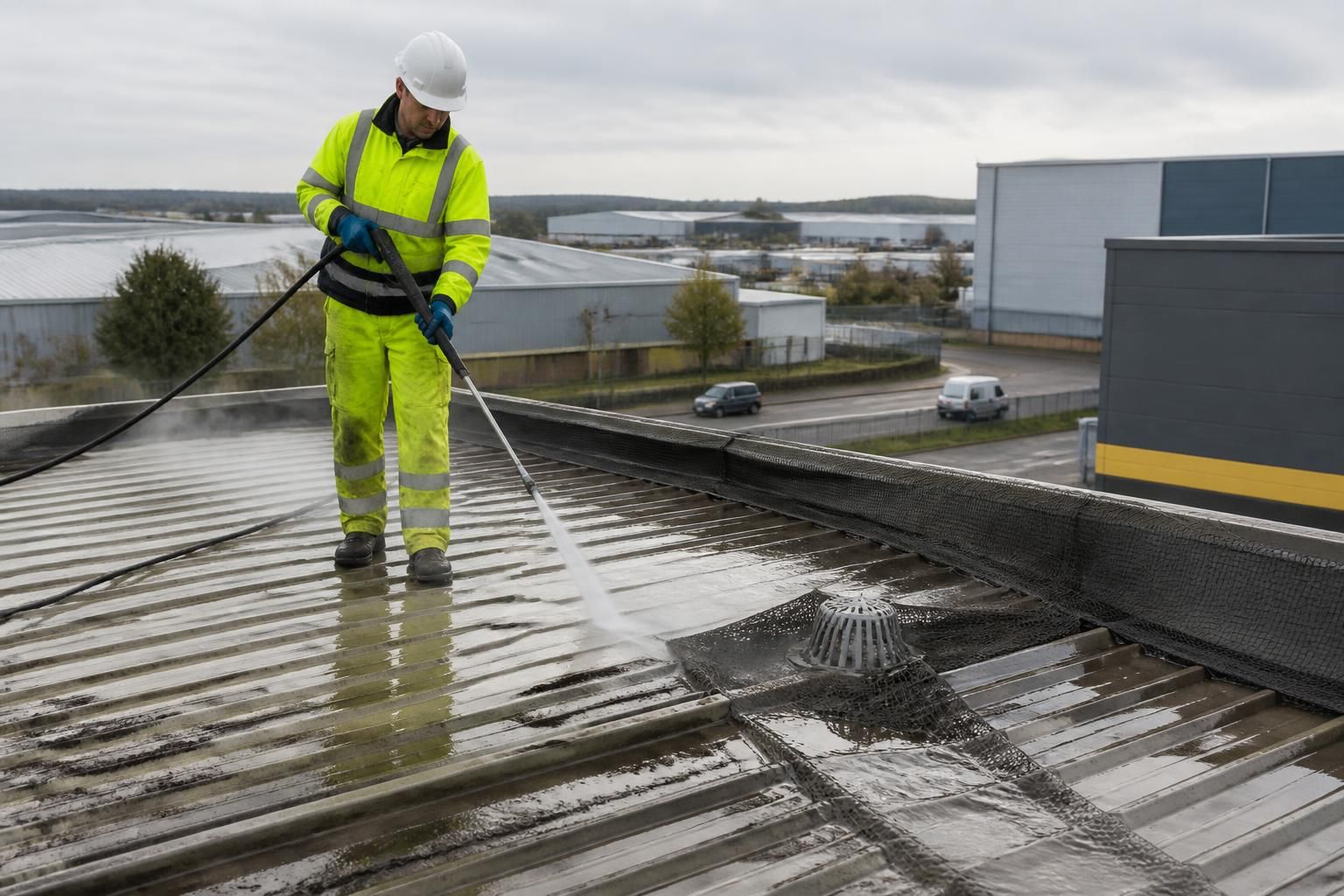
Pressure washing can use substantial volumes of water, particularly on large roofs or where repeated rinsing is required. A responsible contractor should assess whether washing is necessary and use the lowest practical pressure and water volume for the material and contamination involved. Dry removal, controlled low-pressure washing, steam cleaning or a carefully managed soft wash may be more suitable, depending on the roof covering, moss growth, staining and access arrangements.
Water use can be reduced by:
- removing loose moss, leaves and debris before wet cleaning;
- using adjustable equipment and targeted application rather than indiscriminate rinsing;
- avoiding unnecessary repeat applications;
- collecting suitable rinse water where practicable; and
- planning the work to prevent rain from washing treatment products or loosened contaminants into drainage systems.
Water-saving should not mean inadequate rinsing where a product or contaminated residue must be removed. The correct balance depends on the roof material, the cleaning product and the condition of the surrounding drainage.
Runoff and drainage protection
Roof cleaning can release silt, moss fragments, bird fouling, algae, detergents, biocides, rust particles and other contaminants. These must not be allowed to enter surface-water drains, watercourses, unprotected soil or neighbouring property. Surface-water drainage commonly discharges to the environment without treatment, so it must not be treated as a disposal route for dirty wash water.
Before work begins, the contractor should identify roof outlets, downpipes, gullies, soakaways, nearby watercourses and areas of exposed ground. Suitable controls may include drain covers or temporary isolation, bunding, collection of solids, filtration, wet vacuum recovery and controlled transfer of wastewater for appropriate disposal. Controls must be selected carefully: blocking a drain without providing an alternative route can create flooding or water ingress risks.
Where wastewater is proposed for discharge to a foul sewer, consent from the relevant water company may be required. Discharge to a surface-water drain, watercourse or ground may require additional assessment or regulatory approval. The contractor should confirm the proposed disposal route before cleaning rather than relying on assumptions about local drainage.
Chemical and biocide selection
Cleaning chemicals, fungicides and biocides should be used only where they are necessary and appropriate for the roof material and type of growth. A product described as environmentally friendly is not automatically harmless to aquatic life, vegetation, animals or drainage infrastructure. The product label and safety data should be checked for application controls, dilution, storage, spill response and disposal requirements.
Good practice includes:
- using the least hazardous effective product and the lowest effective concentration;
- avoiding application when rain, strong wind or freezing conditions could cause drift or uncontrolled runoff;
- protecting planted areas, ponds, water features, vehicles and building occupants;
- storing chemicals securely in labelled containers with suitable spill controls;
- preventing mixing of incompatible products; and
- recording the products used and the way residues and containers were managed.
Biocidal treatments should not be applied routinely where physical cleaning alone will achieve the required result. Conversely, removing visible growth without addressing the underlying contamination may lead to rapid regrowth and repeat cleaning, increasing overall resource use.
Debris, sludge and packaging
Moss, silt and roof debris should be gathered rather than swept into gutters, drains or surrounding landscaping. Collected waste must be assessed and handled according to its nature. Material contaminated with chemicals, oils, heavy deposits or other hazardous substances may require different storage and disposal arrangements from ordinary green waste.
Waste should be kept contained during the work, transported securely and passed to an appropriately authorised waste carrier or disposal facility where required. Chemical containers, contaminated absorbents, filters and disposable protective materials should not be placed in general waste unless this is permitted by their classification and the relevant disposal arrangements. Waste transfer and treatment records should be retained when applicable.
Energy, equipment and access
Environmental impact also comes from fuel and electricity used by pressure washers, steam systems, pumps, vacuum equipment and access machinery. Efficient, well-maintained equipment can reduce unnecessary fuel use, noise and emissions. Planning the sequence of work properly can limit idling, repeated visits and avoidable movement of powered access equipment.
Access equipment should be selected for the building and task rather than simply using the largest available machine. This can reduce ground disturbance, fuel use and the risk of damage to landscaping or drainage infrastructure. Any fuel, oil or hydraulic-fluid spill should be contained immediately and managed using an appropriate spill response procedure.
Protection of wildlife and surrounding areas
Commercial roofs can provide nesting or roosting locations for birds and may support other wildlife, particularly around roof edges, plant areas, gutters and concealed spaces. The roof and nearby structures should be checked for active nests or protected species before work starts. If wildlife could be disturbed or harmed, the programme may need to be altered and specialist advice obtained.
Contractors should also control overspray, noise, dust and falling debris around occupied premises. Vegetation, planted roofs, rainwater harvesting equipment, ventilation intakes and water storage systems need particular protection. A pre-cleaning inspection should record vulnerable areas and define how they will be isolated or covered.
Compliance and evidence
Environmental controls should be planned as part of the method statement and risk assessment, not added after cleaning has begun. The plan should identify the cleaning products, water source, expected contaminants, drainage arrangements, runoff controls, waste route, spill procedure and responsibilities on site. It should also take account of applicable environmental legislation, water company requirements, product instructions and local site rules.
For larger or higher-risk projects, useful evidence may include product safety data, waste transfer documentation, discharge approvals or correspondence, photographs of drain protection, and records of any incidents or remedial action. These records help the building owner demonstrate that cleaning was carried out with reasonable environmental controls.
What the customer should confirm
Before approving the work, ask for a clear explanation of the proposed method and how runoff will be controlled. Confirm whether chemicals or biocides will be used, where wastewater will go, how moss and sludge will be removed, and how nearby drains, plants and watercourses will be protected. The most environmentally responsible approach is not necessarily the method with the lowest water use in isolation; it is the method that achieves the required result while minimising water, chemical, energy and waste impacts and preventing pollution.
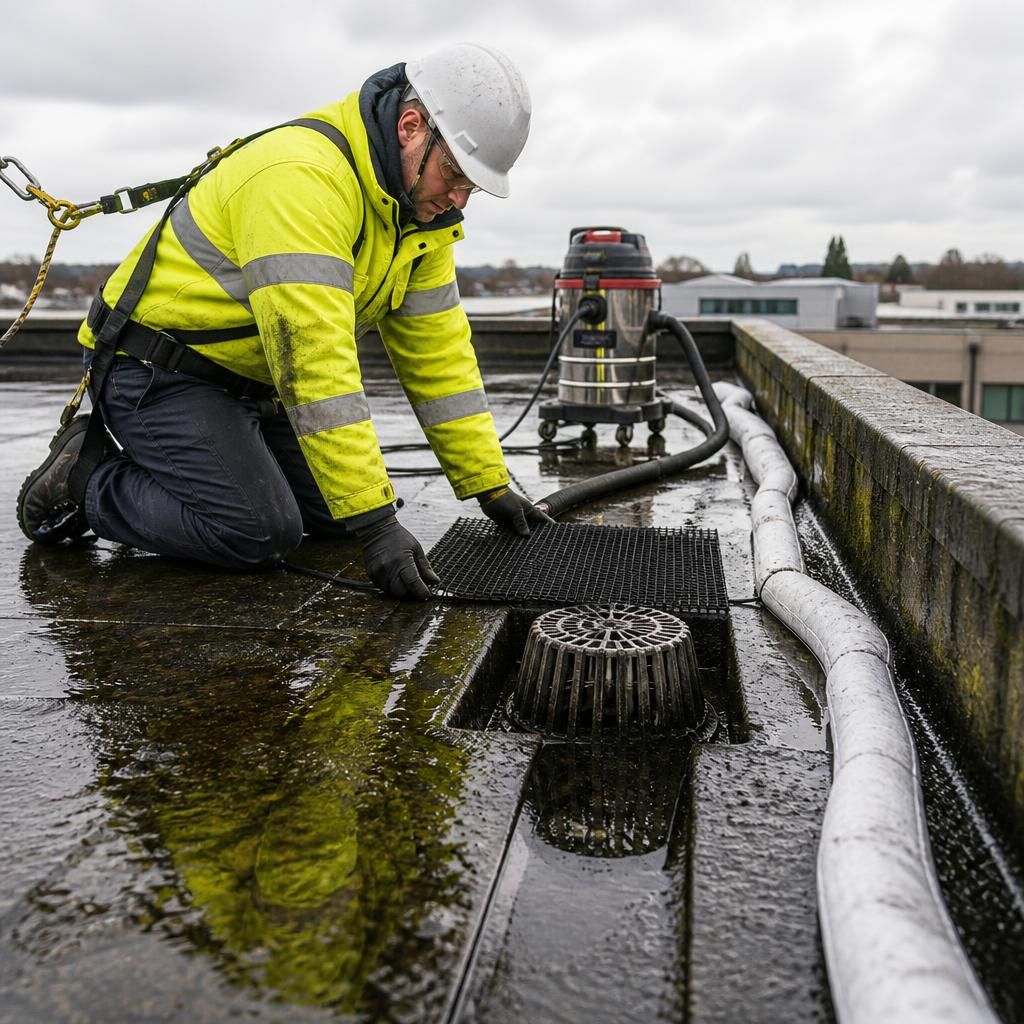
Runoff control is a key environmental consideration during commercial roof cleaning because wash water can carry moss, silt, bird fouling, detergents and biocides into drains, soil or nearby watercourses. Before work starts, the cleaning team should identify roof outlets, downpipes, gullies, soakaways and vulnerable landscaped areas, then agree how contaminated water and solid debris will be contained.
- Remove loose moss, leaves and sludge before wet cleaning wherever practical.
- Protect or temporarily isolate drainage points, while providing a safe alternative route for rainwater and recovered wastewater.
- Use collection, filtration or wet-vacuum equipment where the roof and site conditions make recovery practicable.
- Prevent chemical overspray and runoff reaching plants, ponds, water features, ventilation intakes and neighbouring property.
- Confirm the proposed wastewater disposal route in advance; surface-water drains and watercourses should not be used as disposal points without appropriate approval.
These controls should be recorded in the method statement and adjusted for the roof material, cleaning product and condition of the drainage system. Effective runoff management reduces pollution risk without creating flooding or water-ingress problems.