
What cleaning methods are recommended for different types of commercial roof materials?
Recommended commercial roof cleaning methods depend on the material and its condition: low-pressure soft washing is generally suitable for tiles and membranes, controlled pressure washing or steam cleaning may suit robust metal surfaces, and slate usually requires gentle soft washing with minimal agitation. The method should always be selected after inspecting the roof, checking the manufacturer’s guidance and controlling run-off to avoid damaging the covering, fixings, seals or drainage system.
The recommended commercial roof cleaning method depends on the roof covering, its age, condition, design and the type of contamination present. Low-pressure soft washing is generally appropriate for many tiled, slate and membrane roofs, while controlled pressure washing or steam cleaning may be suitable for robust metal surfaces and heavily soiled areas. The method should always be confirmed following a roof inspection, a review of the manufacturer’s guidance and an assessment of how wash water and chemicals will be contained.
Using the wrong technique can damage more than the visible surface. Excessive pressure may dislodge tiles, strip protective coatings, force water beneath laps or flashings, and damage seals around rooflights and penetrations. Inappropriate chemicals can corrode metal, weaken membranes, stain concrete products or harm surrounding landscaping. Commercial roof cleaning therefore requires material-specific preparation rather than a single method applied across the whole building.
Metal roofing
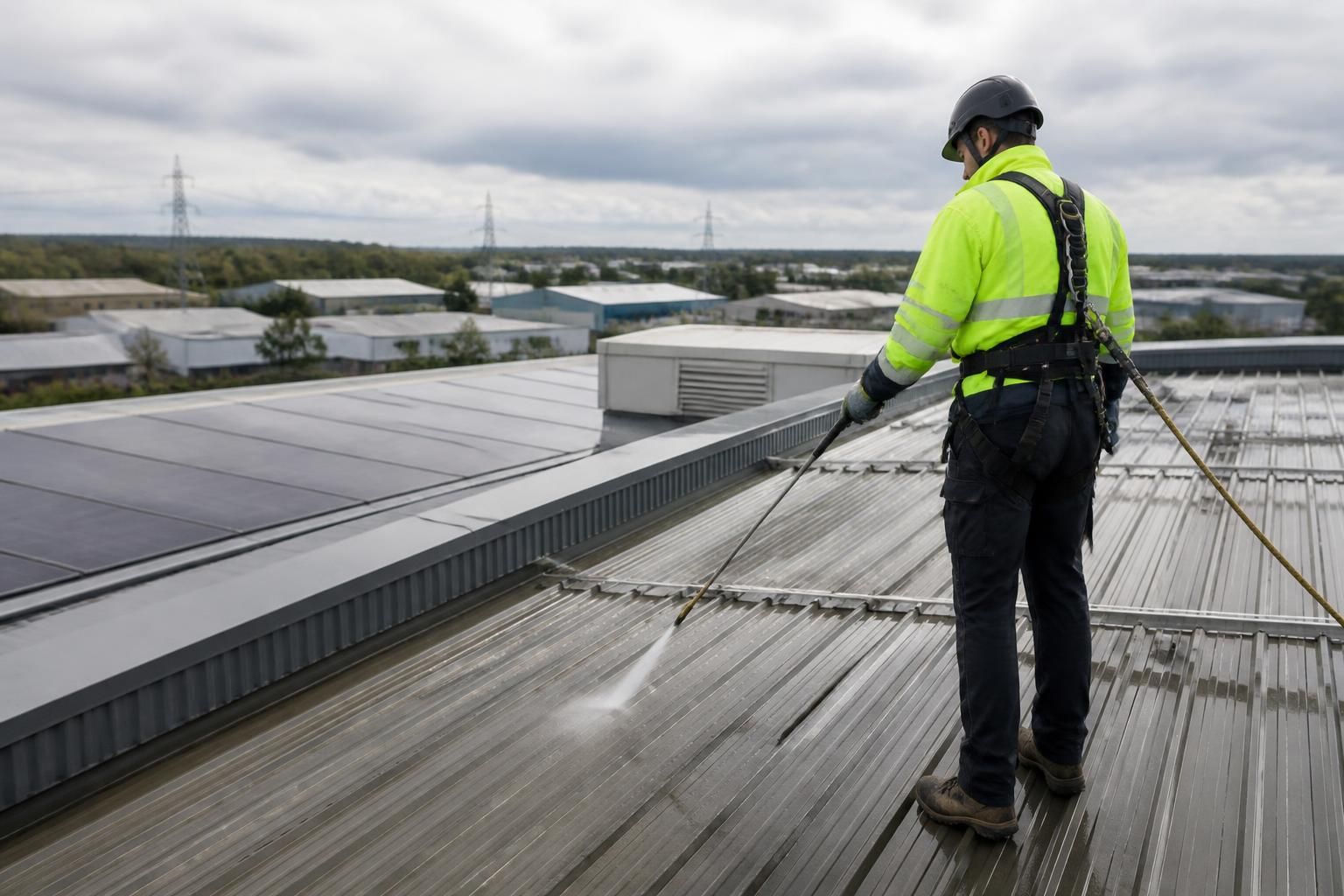
Coated steel, aluminium and other metal roof systems can often tolerate controlled pressure washing, provided the coating, fixings, joints and drainage details are in sound condition. Pressure should be kept at the lowest effective level and adjusted to suit the coating and degree of soiling. Broad spray patterns are preferable to concentrated jets, particularly around laps, sealants, fasteners, rooflights and edge details.
For general dirt, atmospheric deposits and some organic growth, a suitable detergent or biocidal treatment may be used before a controlled rinse. Steam cleaning can be useful where a lower-volume cleaning process is preferred or where bonded grime needs to be softened without relying on high pressure. Heat must be controlled, as excessive temperatures can affect coatings, sealants and aged finishes.
Before cleaning metal roofing, the condition of the protective coating should be checked for chalking, blistering, flaking, exposed substrate and corrosion. Aggressive abrasion or strong chemicals can accelerate deterioration. Rusted fixings and damaged coating are maintenance issues that should be recorded rather than concealed by cleaning. Any treatment should also be checked for compatibility with the roof finish and with adjacent materials such as glazing, cladding and painted walls.
Concrete and clay roof tiles
Concrete tiles are commonly cleaned using a low-pressure soft wash process. Organic growth is treated with a compatible biocide or cleaning solution, allowed to work for the required contact time and then removed with a controlled rinse or gentle agitation where appropriate. This approach is usually safer than directing high pressure at the tile surface, as forceful cleaning can erode the finish, expose the aggregate and drive water beneath overlapping tiles.
Clay tiles can be more variable in strength and surface condition. Older, handmade or weathered tiles may be porous, brittle or vulnerable to surface damage, so they normally require a gentler treatment. Manual removal of heavier moss may be used where it can be done without levering or cracking the tiles. Soft washing is then applied carefully to address remaining organic staining and reduce regrowth.
Tile cleaning should include checks for slipped, cracked or loose tiles, deteriorated bedding and pointing, damaged underlay, defective flashings and blocked valleys or gutters. Cleaning does not repair these defects. If a roof is already allowing water beneath the covering, rinsing or chemical application may need to be modified until the defect has been addressed.
Slate roofing
Natural slate is usually cleaned with a gentle, low-pressure method and minimal physical agitation. Slate can split, delaminate or become loose when subjected to impact, and its fixings may have corroded over time. High-pressure washing is therefore generally unsuitable, particularly on older roofs or areas where the slate is already showing signs of failure.
Loose surface moss may be removed by hand using suitable tools, followed by a carefully selected biocidal treatment. The aim is to remove contamination without scraping the slate, damaging the edges or disturbing the laps. Operatives should avoid walking directly on slate wherever possible and should use an access system that does not place loads on fragile areas.
Slate roofs also require attention to leadwork, ridges, valleys, abutments and rainwater outlets. Chemical products must be compatible with the slate and adjacent metals, and run-off should be controlled so that loosened deposits do not block gutters or stain façades.
Single-ply membrane roofs
Single-ply systems, including common PVC, TPO and EPDM-type membranes, are generally cleaned using a low-pressure rinse and a manufacturer-approved detergent or biocide. The surface may look robust while remaining vulnerable at seams, edge restraints, penetrations, walkway connections and rooflight details. High-pressure cleaning can lift seams, damage the membrane surface or force water below the system.
Cleaning solutions should be tested in an inconspicuous area before wider use. Compatibility is particularly important where the membrane has a factory finish, a refurbishment coating or bonded details. Strong solvents, abrasive pads and unapproved degreasers should be avoided. Equipment should not be dragged across the membrane, and access routes should use designated walkways or suitable protection.
Where ponding water, exposed insulation, damaged seams or failed detailing is found, cleaning should be coordinated with the roofing contractor or building manager. Removing dirt from a membrane will not resolve drainage or waterproofing defects, and water should not be directed towards open seams or unsealed penetrations.
Built-up felt and modified bitumen roofs
Built-up felt and modified bitumen roofs normally require a low-pressure approach, with careful control around laps, chippings, mineral finishes and perimeter details. Loose debris can often be removed by hand or with a soft brush before applying a compatible cleaning treatment. High-pressure washing may remove surface granules, disturb laps and expose the waterproofing layer.
Some bituminous roofs have protective coatings that are sensitive to solvents, heat or aggressive detergents. The coating specification should be established before cleaning, particularly where the roof has recently been refurbished. Steam may be considered for selected applications, but only after confirming that heat and moisture will not affect the membrane, adhesive or insulation system.
Asbestos cement roofing
Asbestos cement sheets must be treated as a specialist material. Pressure washing, dry brushing and other methods that can release fibres are not appropriate. The roof should be identified through suitable records or a competent survey, and the work should be planned in accordance with current UK asbestos requirements. Where cleaning is necessary, a suitably competent asbestos professional should determine the safest method, controls, waste arrangements and whether cleaning is preferable to leaving the material undisturbed.
Fragile asbestos cement sheets also present a serious fall risk. Access should never rely on walking directly on the sheets. Cleaning, encapsulation or removal decisions should be based on the material’s condition and the building’s management plan rather than appearance alone.
Green, vegetated and specialist roof systems
Green roofs, photovoltaic installations and roofs with specialist coatings need additional planning. Vegetation, growing media and drainage layers must be protected from cleaning chemicals and contaminated run-off. Solar panels should be cleaned using the equipment and process recommended for the installation, with care taken around cables, fixings and seals. Roofs with reflective, waterproofing or anti-slip coatings should be tested for chemical and mechanical compatibility before treatment.
How the cleaning method is selected
A proper commercial roof cleaning assessment should consider:
- the roof material, coating, age and manufacturer’s maintenance requirements;
- the condition of tiles, sheets, membranes, seams, fixings, flashings and rooflights;
- whether contamination consists of moss, algae, lichen, bird fouling, oil, industrial deposits or general atmospheric dirt;
- the roof pitch, loading limits, fragile areas and safe access arrangements;
- the position of gutters, outlets, downpipes and sensitive neighbouring surfaces;
- how cleaning water, loosened debris and chemical residue will be contained and disposed of; and
- weather conditions, operational constraints and the need to keep entrances, loading areas and occupied parts of the premises safe.
Small test areas are useful where the surface, coating or contamination is uncertain. They allow the operator to check cleaning results, colour changes, run-off, surface reaction and the effectiveness of the proposed treatment before the full roof is addressed. The final method may also vary across one building if, for example, newer metal sheets are connected to older membrane areas or different roof coverings have been added during extensions.
Pressure washing, soft washing and steam cleaning compared
Pressure washing uses mechanical force to remove deposits and can be effective on suitable, robust surfaces. It should not be confused with applying the same high pressure to every roof. Soft washing relies primarily on a compatible cleaning or biocidal solution, low mechanical pressure and controlled rinsing. It is often the preferred option for porous, aged or fragile coverings and for organic growth.
Steam cleaning uses heated water at controlled pressure. It can help loosen stubborn deposits and may reduce the volume of water used, but it is not automatically safe for every roof. Heat, moisture and run-off must be assessed against the covering, seals, coatings and adjacent construction. Manual scraping or brushing may be appropriate for isolated deposits, but tools must be selected to avoid scratching, gouging or lifting the surface.
After cleaning, gutters, outlets and surrounding surfaces should be checked for displaced debris and residue. Any cracked coverings, loose fixings, failed sealants or damaged coatings identified during the work should be documented and referred for repair. A suitable maintenance record should note the material, method, products used, areas treated and any restrictions for future cleaning. This helps prevent incompatible methods being used during the next maintenance visit and supports longer-term roof management.
In practical terms, soft washing is the usual starting point for tiles, slate and many membrane systems; controlled pressure or steam may suit sound metal roofing and selected robust surfaces; and asbestos cement, fragile coverings and specialist roofs require dedicated procedures. The safest recommendation is the least aggressive method that achieves the required result while preserving the waterproofing system, controlling run-off and maintaining safe access throughout the work.
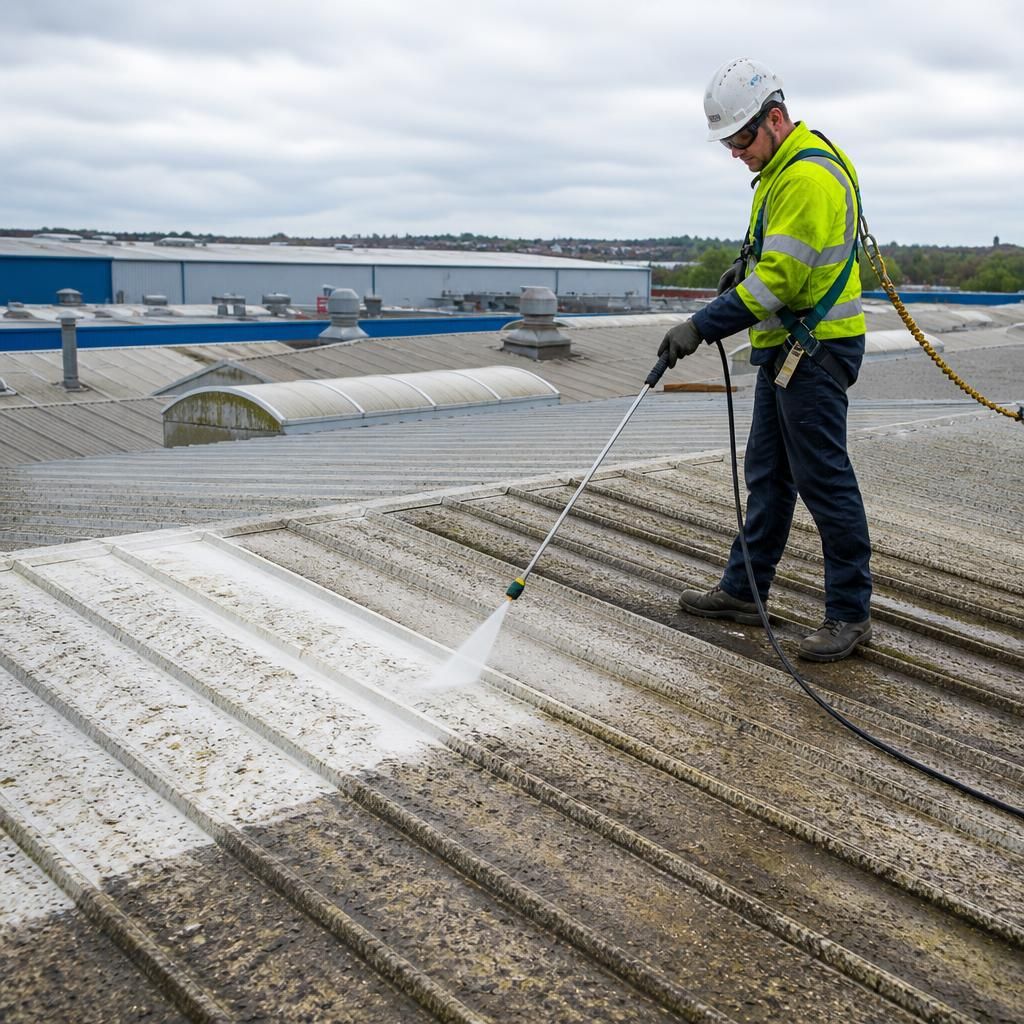
The safest commercial roof cleaning method is the least aggressive process that removes the contamination without affecting the roof covering, waterproofing details or protective finish. Soft washing is commonly suitable for tiles, slate and membrane roofs because the cleaning solution does most of the work, reducing the need for forceful pressure.
Before full treatment, the proposed product and method should be checked on a discreet area. This confirms compatibility with the material and coating, while allowing the cleaning team to assess surface reaction, staining and run-off. Metal, bitumen and specialist roofs may require a different approach, such as carefully controlled pressure or steam, following an inspection of seams, fixings, flashings, rooflights and drainage points.