
What are the best methods for cleaning different types of commercial roofing materials?
The best commercial roof cleaning method depends on the roofing material, its condition and the type of contamination: low-pressure soft washing is generally suitable for membranes, felt and coated surfaces, while controlled pressure washing or steam cleaning may be appropriate for robust metal, tile and slate roofs. The process should always use material-compatible detergents, avoid damage to protective coatings and seams, and be carried out with suitable access and safety controls.
The best method for cleaning a commercial roof depends on its material, condition, age, protective coatings and the type of contamination present. Low-pressure soft washing is generally the safest approach for membranes, felt and coated surfaces, while controlled pressure washing or steam cleaning may be suitable for robust metal, concrete tile and slate roofs. The method should always be selected after a roof survey so that seams, laps, fixings, coatings, sealants and drainage details are not damaged.
Metal roofing
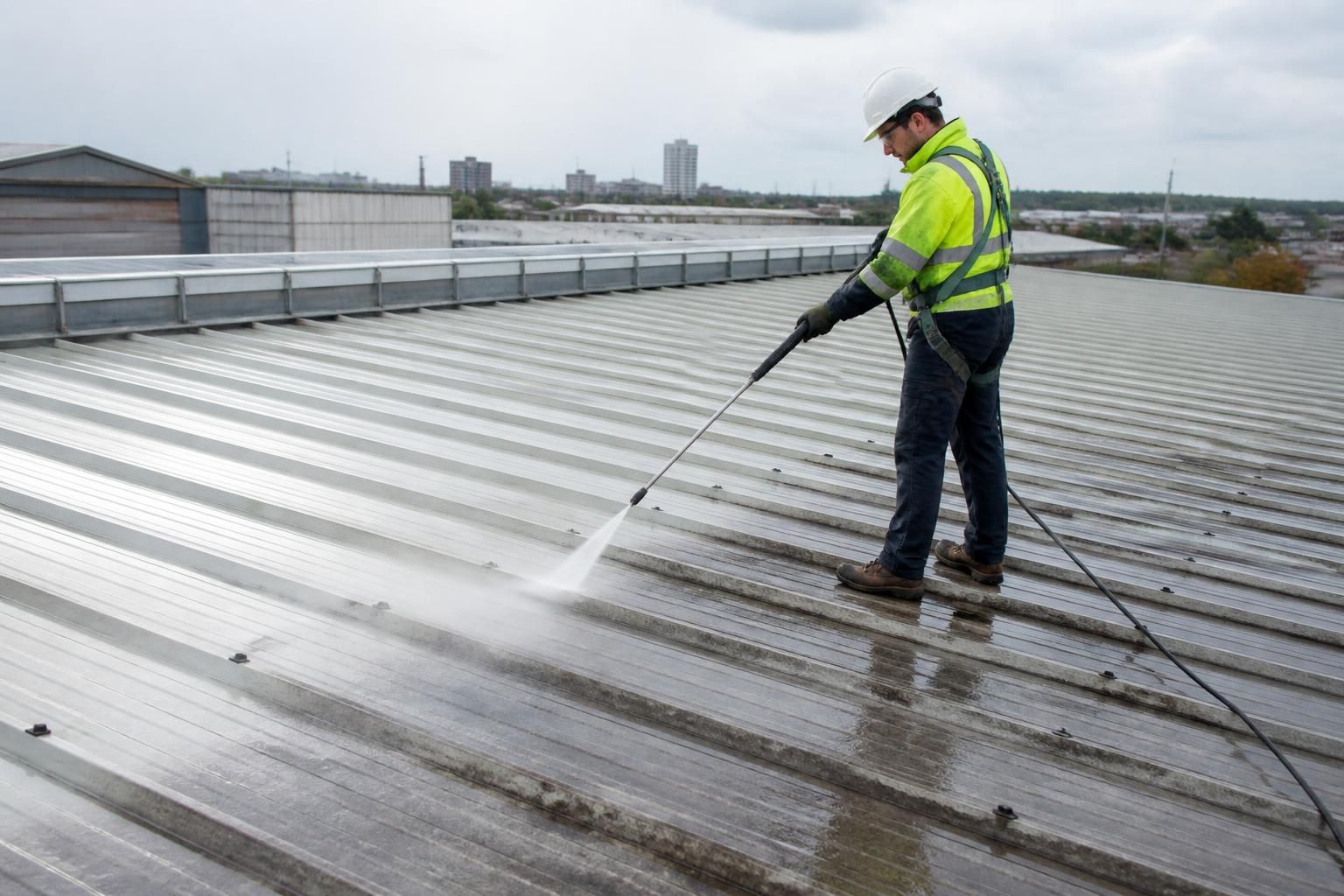
Steel, aluminium and coated metal roofs can usually be cleaned using a controlled low- to medium-pressure wash, combined with a compatible detergent where required. This removes atmospheric soiling, algae, bird fouling and loose moss without relying on excessive force. Heavily contaminated areas may benefit from steam cleaning, particularly where the roof has sensitive coatings or where reduced water use is important.
Care is needed around panel laps, fasteners, penetrations, gutters and sealant lines. High pressure can lift coatings, force water beneath laps or expose corrosion around damaged fixings. Abrasive pads and aggressive chemicals should be avoided unless the coating manufacturer has confirmed their suitability. Any areas of rust, blistering, failed paint or loose coating should be recorded before cleaning, as washing alone will not correct underlying corrosion.
Single-ply membrane roofing
EPDM, PVC and TPO membranes are normally cleaned with a soft-wash process using low pressure and a material-compatible cleaning solution. This is effective for surface dirt, organic growth and staining while reducing the risk of puncturing or lifting the membrane. The solution should be applied evenly, allowed suitable dwell time and rinsed gently rather than being blasted into seams or edge details.
Single-ply roofs require particular caution because the membrane may be loose-laid, mechanically fixed or bonded. Avoid directing water beneath seams, around perimeter details or into unsealed penetrations. Solvent-based products, strong alkalis and unapproved biocides can affect the membrane or its warranty. Cleaning should also be coordinated with inspections of ballast, walkways, outlets and protection pads.
Built-up felt and asphalt roofing
Traditional felt, bituminous and asphalt roofs are generally cleaned using a low-pressure soft-wash method. This can remove moss, algae, lichen and general atmospheric deposits without stripping the mineral surface or disturbing bonded layers. Steam cleaning may be considered for selected areas, but only where the roof build-up, surface condition and insulation beneath it have been assessed.
Pressure washing is usually unsuitable for ageing felt because it can dislodge mineral granules, open laps and drive water into defects. Moss should not simply be scraped aggressively from the surface, as this may remove the protective finish or expose the bitumen. After cleaning, outlets, flashings and edge trims should be checked and any defects referred for roofing repairs rather than concealed beneath further treatment.
Concrete and clay roof tiles
Concrete tiles can often tolerate controlled pressure washing when they are sound, securely fixed and not excessively weathered. A preliminary treatment may loosen biological growth, followed by carefully directed rinsing. The pressure should be sufficient to remove contamination but not so high that it erodes the tile surface, damages the finish or forces water beneath overlaps.
Clay tiles are more variable. Older, porous or hand-finished tiles may be damaged by aggressive washing, so soft washing or low-pressure cleaning is often preferable. Tiles should be checked for cracks, slipped sections, degraded pointing and fragile edges before work begins. Cleaning from a suitable access system is important because walking directly on tiles can cause breakage, particularly on older roofs.
Where moss has formed thick mats, it should be removed in a controlled manner before the final wash. Chemical treatments can help suppress regrowth, but the product must be appropriate for the tile and surrounding drainage system. Recoating or sealing should only be considered where it is compatible with the tile and specified as part of a separate maintenance plan.
Natural slate
Slate is strong but can be brittle, layered and vulnerable to damage at its edges and fixings. Cleaning is usually carried out with a gentle soft-wash or low-pressure technique, rather than forceful pressure washing. Organic growth should be softened and removed without scraping across the slate or levering beneath overlapping courses.
Before cleaning, the roof should be assessed for delamination, cracked slates, failed nails and loose flashings. Operatives should avoid standing directly on the slates wherever possible and should use suitable access equipment. Strong acids, abrasive methods and excessive heat can alter the surface or damage adjacent metals, so any treatment must be selected for the particular slate and roof construction.
GRP, fibreglass and coated panels
GRP and fibreglass roofs should normally be cleaned with a mild, compatible detergent and low-pressure rinsing. Abrasive cleaning can dull or remove the surface finish, while unsuitable solvents may soften resins or affect joints. Coated composite panels should be treated in a similar way, with particular attention to the manufacturer’s cleaning guidance.
Where the surface is chalking, cracked or delaminating, cleaning should be limited to what can be achieved without worsening the defect. The condition of trims, rooflights, sealants and fixings should be assessed separately because these components may be more vulnerable than the main roof surface.
Asbestos cement roofing
Asbestos cement must not be treated as ordinary sheet roofing. It should be identified and risk-assessed before any cleaning takes place. Abrasive brushing, high-pressure washing and methods that release fibres are unsuitable. Where cleaning is necessary, it must be planned and carried out under the relevant asbestos controls by appropriately trained and competent personnel, with contaminated water and waste managed correctly.
If the material is damaged, deteriorating or difficult to identify, the priority may be inspection, encapsulation or controlled removal rather than cosmetic cleaning. The presence of asbestos should be confirmed through available building records or specialist assessment where necessary.
Green and biodiverse roofs
Green roofs should not be pressure washed or treated with general-purpose biocides. Cleaning is normally limited to removing unwanted plants, litter and debris by hand, while preserving the specified vegetation and growing medium. Drainage outlets, inspection zones, protective membranes and edging details should be kept clear.
Maintenance must follow the roof design and planting specification. Any treatment that could harm vegetation, pollinators or waterproofing layers should be excluded. Where moss or invasive growth is affecting the roof system, a specialist green-roof assessment is more appropriate than conventional roof washing.
How the method is selected
A suitable commercial roof cleaning specification should consider:
- the roof material, surface finish and installation method;
- the age and condition of membranes, tiles, coatings, seams and fixings;
- whether contamination is loose dirt, oil, moss, algae, lichen, bird fouling, rust or construction residue;
- the roof’s fall, access arrangements, fragile areas and load restrictions;
- the location of outlets, rainwater systems, rooflights, plant and electrical equipment; and
- how cleaning water, detergents and removed debris will be contained and disposed of.
A test area is useful where the material or coating is uncertain. It confirms whether the chosen pressure, temperature and cleaning solution achieve the required result without marking, bleaching, lifting or roughening the surface. The same approach should not automatically be applied across a mixed-material commercial roof; metal, membrane, tile and rooflight sections may each require different controls.
After cleaning, the roof should be inspected for defects that have become visible, with photographs and maintenance recommendations provided where appropriate. Keeping gutters, outlets and surrounding drainage clear is part of effective roof maintenance, but cleaning should never be used to mask failures in waterproofing, flashing or roof structure. A material-specific method, careful access planning and controlled water management provide the best balance between removing contamination and preserving the roof’s serviceable condition.
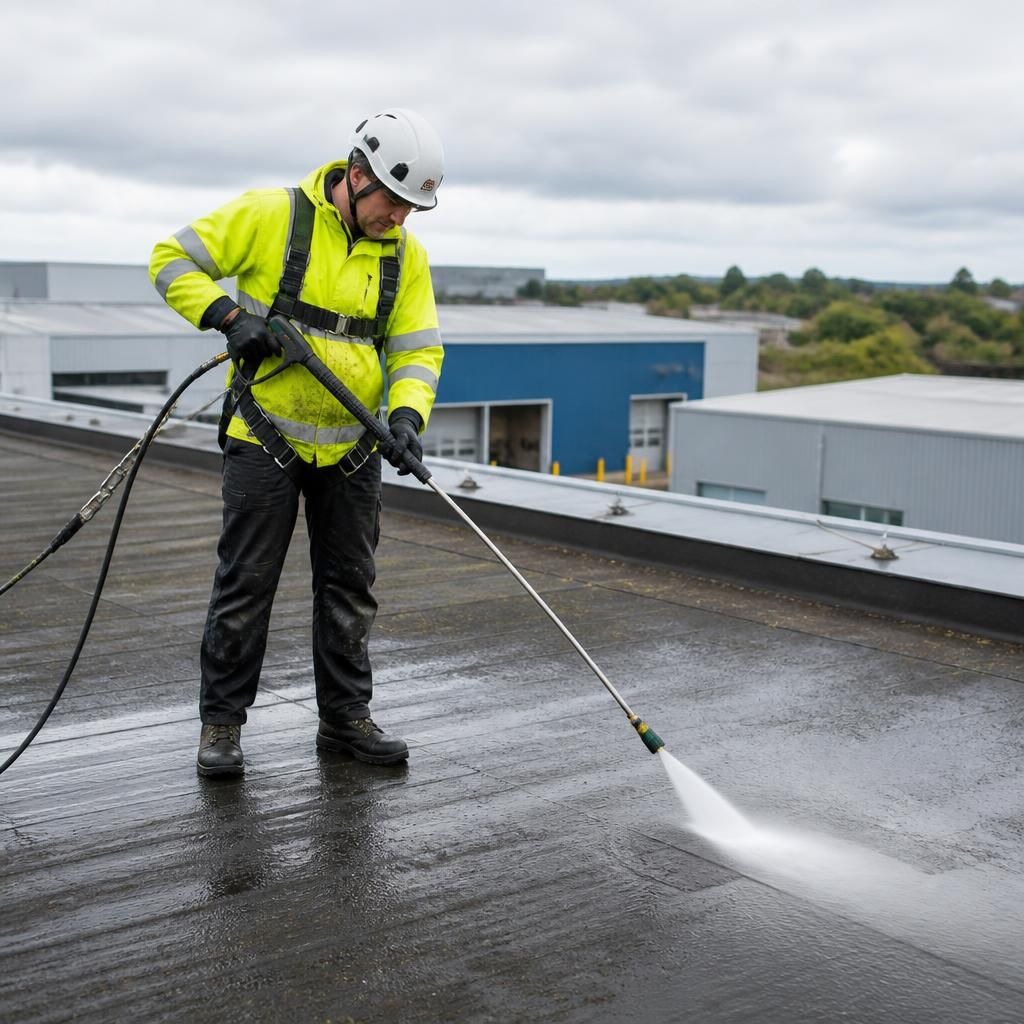
The safest commercial roof cleaning method is determined by the roof material, its condition and the type of contamination present. Soft washing with a compatible detergent is generally suitable for membranes, felt, coated panels and older tiles, while controlled low-pressure cleaning may be appropriate for sound metal or concrete tile roofs.
A small test area should be assessed before full cleaning, particularly where coatings, sealants or weathered surfaces are present. This confirms that the chosen pressure, temperature and cleaning solution remove the contamination without lifting coatings, damaging seams, eroding tile surfaces or driving water beneath laps and fixings.