
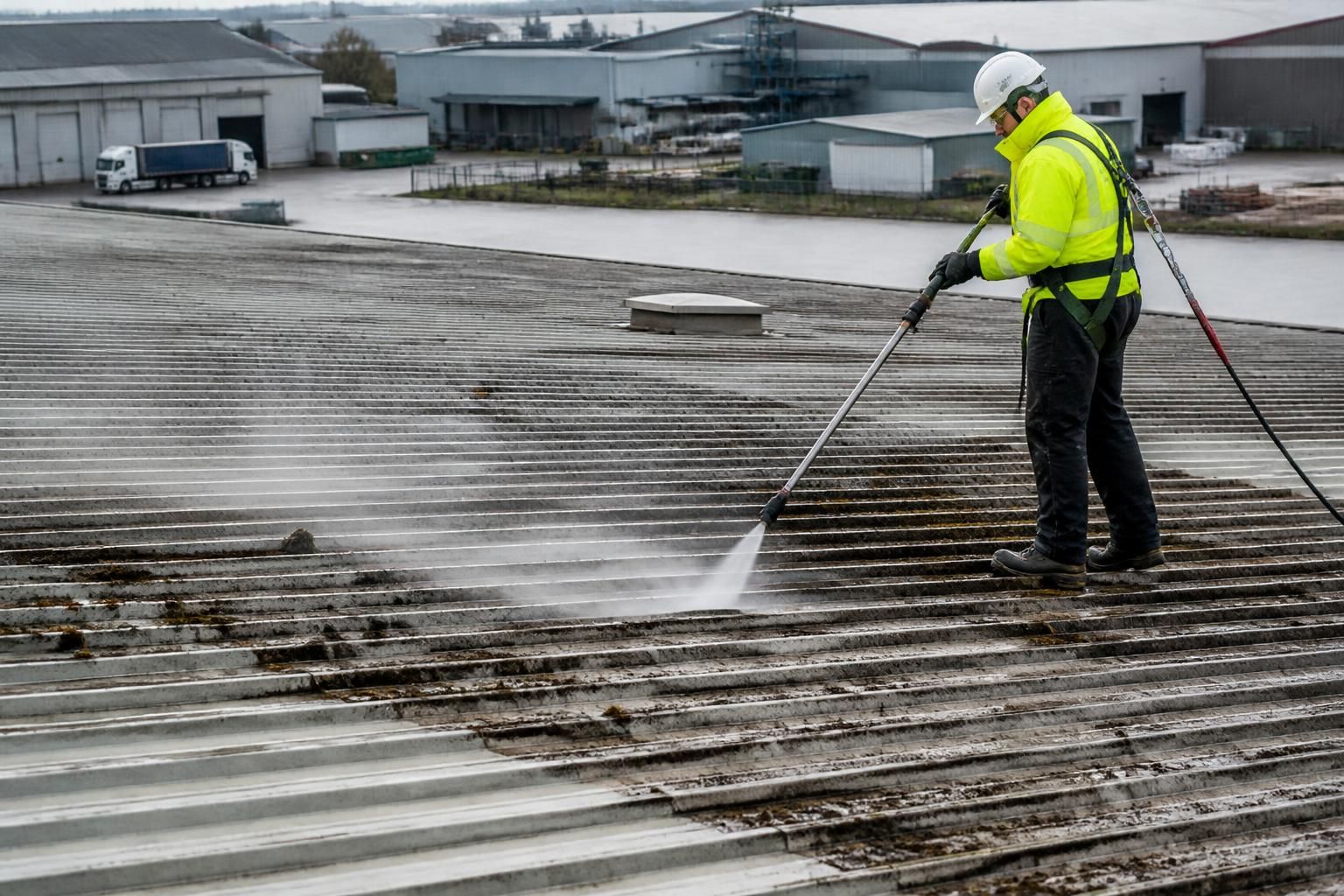
What are the benefits of using professional commercial roof cleaning services?
Professional commercial roof cleaning removes moss, algae, dirt and other contaminants that can retain moisture, obstruct drainage and contribute to roof deterioration. It helps protect the roofing system, extend its serviceable life, support safer premises and reduce the risk of disruptive, costly repairs.
Professional commercial roof cleaning helps protect the roofing system from moss, algae, lichen, dirt, organic debris and other contaminants that retain moisture, obstruct drainage and accelerate surface deterioration. When the work is planned around the roof material and carried out safely, it can extend the roof’s serviceable life, reduce avoidable repair requirements and help keep the premises safe, presentable and operational.
It helps prevent moisture-related damage. Moss, leaf litter and accumulated sediment can hold water against roof coverings, joints, laps, fixings and edge details. On pitched roofs, moss may lift or disturb tiles and restrict the movement of rainwater. On flat roofs, debris can collect around outlets and create localised standing water. Cleaning removes these deposits before they contribute to leaks, corrosion, frost damage or deterioration of waterproofing details.
It supports effective drainage. Gutters, valleys, outlets and downpipes are particularly vulnerable to blockages from moss and organic debris washed from the roof. Restricted drainage increases the risk of overflowing water, staining to façades, damp around roof edges and water entering areas below. A professional service can include inspection and cleaning of relevant drainage components, subject to the agreed scope, so rainwater has a clearer route away from the building.
It can extend the useful life of the roof. Dirt and biological growth do not affect every roofing material in the same way, but prolonged contamination can place additional stress on many systems. Regular, appropriately specified cleaning helps preserve roof coverings and allows developing defects to be identified before they become more extensive. Cleaning is not a substitute for roof replacement or remedial work, but it can form an important part of a planned maintenance programme.
It makes defects easier to identify. Heavy growth and staining can conceal cracked tiles, damaged sheets, failed sealant, loose flashings, blocked outlets, corroded fixings and areas of ponding. Once the surface has been cleaned, a competent contractor can report visible concerns and distinguish cleaning requirements from repairs. This gives property managers and facilities teams better information for prioritising maintenance and arranging specialist repairs where necessary.
It can reduce the risk of expensive disruption. A preventable roof leak may affect stock, equipment, office areas, production space or tenant operations. It can also lead to emergency call-outs, internal water damage and disruption to staff or visitors. Planned cleaning does not eliminate these risks, but it can reduce the likelihood of contamination and blocked drainage contributing to avoidable failures. Scheduling the work as part of routine maintenance is generally easier to manage than responding to an urgent problem.
It improves the appearance of commercial premises. Roofs are highly visible from surrounding buildings, roads and neighbouring properties. Heavy moss, algae, bird fouling and dark staining can make a well-maintained building appear neglected, particularly at customer-facing, retail, industrial or managed sites. Removing deposits helps maintain a cleaner external appearance and can support the presentation standards expected by occupiers, visitors, tenants and local stakeholders.
It supports safer site conditions. Moss and organic growth can make roof surfaces and adjacent access areas slippery, while loose debris may fall or be blown from exposed sections. Professional contractors assess access requirements, working-at-height risks, weather conditions and the need for exclusion zones before work begins. They use suitable access equipment and controlled cleaning methods rather than relying on unsafe access or excessive pressure.
It reduces the risk of inappropriate cleaning. Commercial roofs vary considerably, including concrete and clay tiles, metal sheets, coated systems, membranes, asbestos-containing materials and other specialist coverings. Excessive pressure, unsuitable chemicals, aggressive scraping or poorly controlled water can damage coatings, force water beneath laps or disturb fragile materials. A professional assessment determines whether pressure washing, soft washing, steam cleaning, biocide treatment or a combination of methods is appropriate.
It helps preserve roof coatings and finishes. Dirt and biological growth can obscure the condition of protective coatings on metal and other roof surfaces. Correctly selected cleaning can remove contaminants without unnecessarily abrading the finish. Where a coating is already failing, the contractor should identify this rather than presenting cleaning as a permanent solution. Additional preparation, recoating or repair may be required to restore protection.
It can contribute to better maintenance planning. Cleaning provides an opportunity to review the roof’s general condition, drainage, access points and vulnerable details. Reports and photographs can provide a useful baseline for facilities records, planned preventative maintenance and future budgeting. Where a roof is cleaned on a recurring schedule, changes in contamination and condition can be monitored over time.
It supports environmental and regulatory control. Commercial cleaning generates wastewater and may remove contaminants such as oils, faecal matter, paint residues or treatment chemicals. Responsible contractors plan containment, collection and disposal so polluted water is not allowed to enter surface-water drains or nearby ground. Method selection should also consider chemical use, water consumption, the building’s surroundings and any relevant site or regulatory requirements.
It can protect warranties and compliance records. Some roofing systems require maintenance to be carried out in accordance with the manufacturer’s guidance. Records showing the inspection, chosen method, products used and completed work may help demonstrate that the roof has been maintained responsibly. Warranty terms differ, so the building owner or facilities manager should check any specific cleaning restrictions before work starts. Asbestos-containing roofing also requires separate assessment and legally compliant controls; it must not be treated as an ordinary roof-cleaning project.
The benefits depend on the specification. Cleaning should begin with an assessment of the roof material, age, condition, contamination, drainage and access arrangements. The method should be tested or suitably controlled where there is a risk to coatings, pointing, membranes or fragile surfaces. Any repairs, outlet clearance, biocide application, waste-water management and follow-up inspection should be clearly included or excluded in the quotation.
Professional commercial roof cleaning is therefore most effective when it is treated as planned asset maintenance rather than a cosmetic one-off service. It can help maintain drainage, reveal defects, protect compatible roof surfaces, improve the appearance of the premises and reduce operational risk. The appropriate frequency and cleaning method depend on the roof type, surrounding environment, level of biological growth, building use and previous maintenance history.
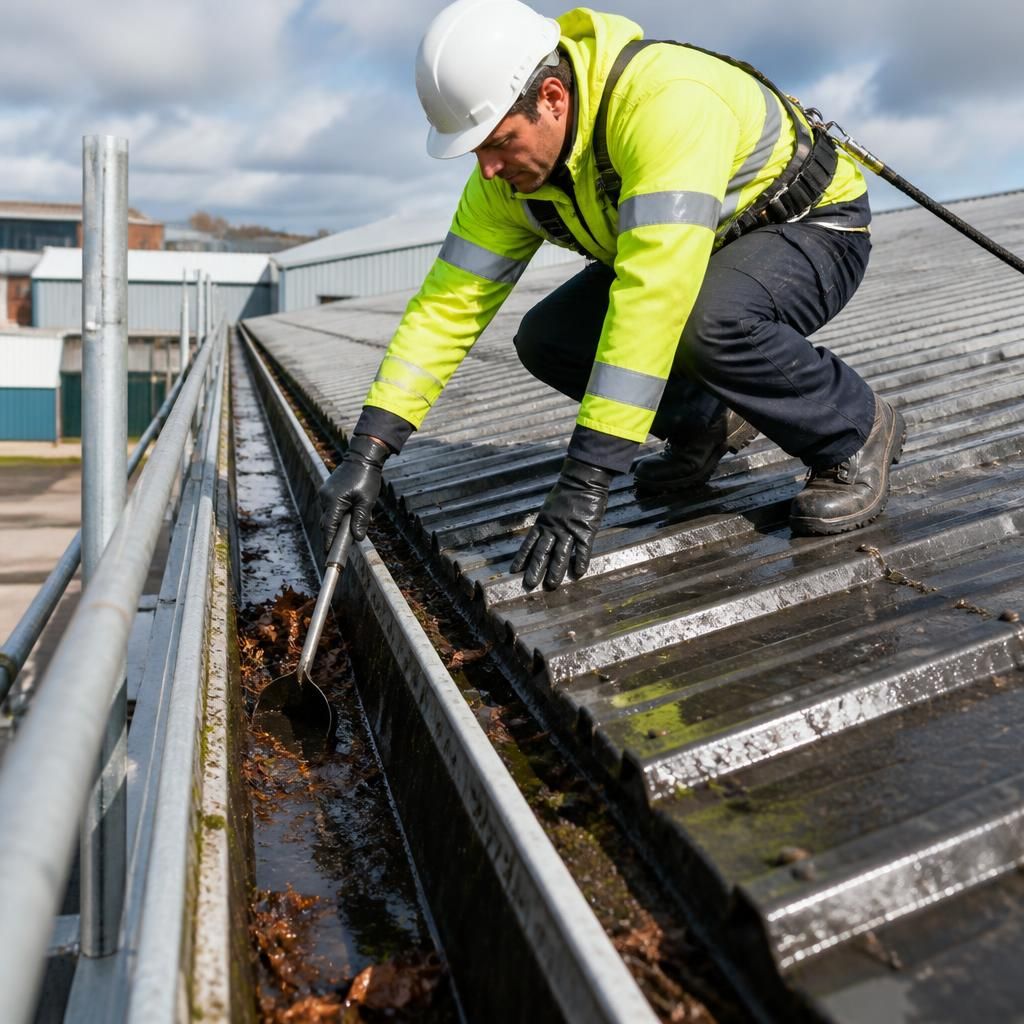
One of the main benefits of professional commercial roof cleaning is improved drainage. Moss, leaves, silt and other debris can collect around gutters, valleys, outlets and downpipes, restricting the flow of rainwater and increasing the risk of overflowing, ponding and leaks.
Professional cleaning removes these deposits using a method suited to the roof covering, while access and working-at-height risks are controlled. Where included in the agreed scope, the contractor can also clear relevant drainage components and identify damaged outlets, blocked channels or areas where water is not draining correctly. Addressing these issues as part of planned maintenance helps reduce avoidable water damage and disruption to the building.