
What measures do you have in place to ensure the safety and compliance of the soft wash roof cleaning process?
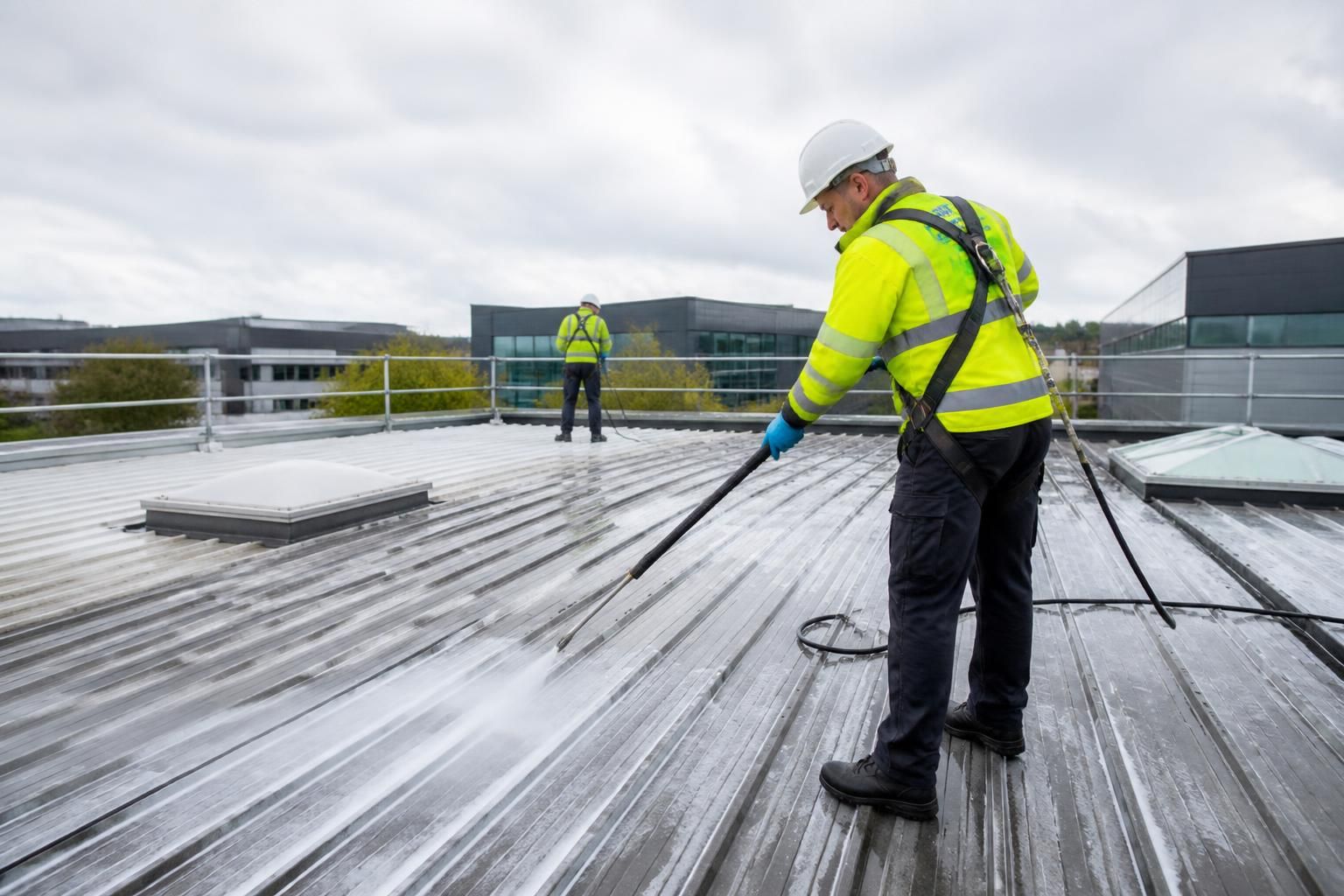
Our soft wash roof cleaning process is controlled through site-specific risk assessments, method statements, COSHH procedures, trained operatives, suitable PPE and inspected access equipment. We also protect people and property by isolating work areas, checking roof condition before cleaning, controlling chemical application and runoff, following manufacturer guidance, and completing post-cleaning inspections in line with relevant UK health, safety and environmental requirements.
Safety and compliance are managed through a documented, site-specific process covering the roof, people, equipment, cleaning products, access arrangements and environmental controls. Before work begins, we prepare suitable risk assessments and method statements, review the property and roof condition, confirm the correct access method, and establish controls for chemical use, runoff, weather and public safety.
Site assessment and planning
Each commercial roof is assessed before cleaning rather than treated as a standard surface. The assessment considers the roof covering, age and condition, fragile areas, rooflights, parapets, gutters, drainage outlets, nearby plant, ventilation openings and any areas that must not be wetted. We also consider the building’s occupancy, pedestrian routes, vehicle movements, neighbouring properties and the potential effect of overspray or runoff.
The findings are recorded in the project risk assessment and method statement. These documents set out the proposed soft wash method, access arrangements, exclusion zones, control measures, emergency procedures and responsibilities on site. Where the work forms part of a larger construction or facilities-management project, the method is coordinated with the client’s site rules and other contractors.
Competent operatives and supervision
Soft washing is carried out by operatives who have been trained and instructed in roof cleaning, work at height, safe chemical handling, equipment use and emergency procedures. They are expected to understand the limitations of the roof and the cleaning system, including when a surface should not be treated. Supervision is proportionate to the risks and complexity of the site, with arrangements for communicating changes in weather, access conditions or roof condition.
Operatives receive information about the products used through current safety data sheets and task-specific instructions. This helps ensure that dilution, application, storage, handling and first-aid arrangements are understood before the work starts.
Work at height and access controls
Roof cleaning is planned in accordance with the principles of the Work at Height Regulations. We aim to avoid unnecessary roof access and use suitable access equipment where access is required. The selected equipment depends on the building, roof geometry, height, ground conditions and the need to protect the roof covering. This may include edge protection, guarded platforms, mobile access equipment or other appropriate systems.
Access equipment is selected, used and inspected by competent personnel. Equipment is set up on suitable ground, positioned to maintain stability and kept clear of unauthorised users. Where lifting equipment or lifting accessories are involved, the relevant inspection and examination requirements are considered, including the requirements that apply under LOLER where applicable. Work equipment is maintained and checked in line with the relevant requirements of PUWER.
Roof edges, openings, fragile rooflights and other fall hazards are identified before work begins. Operatives do not rely on the roof covering as a safe working platform simply because it appears solid. Suitable fall-prevention or fall-restraint measures are used where the risk assessment requires them, and access is stopped if conditions cannot be controlled safely.
Personal protective equipment
PPE is selected from the risk assessment and the product information rather than used as a substitute for safer work methods. Depending on the task, this can include protective footwear with suitable grip, gloves, eye or face protection, protective clothing, head protection, hearing protection and respiratory protection where the assessment identifies a need. PPE is checked before use, maintained correctly and replaced when damaged or unsuitable.
Controlled chemical use
Soft wash solutions are prepared and applied in accordance with the product safety data, manufacturer instructions and the site risk assessment. Operatives control the application rate and direction to reduce misting, overspray and unnecessary contact with surrounding surfaces. Chemicals are kept in labelled, secure containers and are not left where they could be accessed by the public, mixed incorrectly or enter drainage systems without control.
COSHH procedures are used to assess the risks associated with cleaning products. These procedures cover storage, handling, dilution, exposure controls, PPE, first aid, spill response and disposal. Products are not mixed unless the manufacturer’s instructions specifically permit it. Particular care is taken around occupied buildings, air intakes, windows, doors, ventilation systems, planted areas and water features.
Protecting the building and surrounding areas
A pre-cleaning inspection identifies defects that could be made worse by water or cleaning solution, such as failed sealant, open joints, damaged tiles, loose coatings, cracked render or defective flashings. These issues are reported before cleaning, and the method is amended or paused where necessary. Fragile roofing materials are treated with controlled, low-pressure application rather than aggressive pressure that could dislodge tiles, strip finishes or force water beneath the covering.
Windows, doors, vents, electrical equipment, signage, vehicles, landscaping and sensitive external finishes are protected or isolated where required. Gutters and drainage routes are checked so that blockages or uncontrolled discharge do not create additional risk. A small test area may be used to confirm compatibility, dwell time and the appearance of the treated surface before wider application.
Public, occupant and traffic safety
Work areas are segregated using suitable barriers, signs and exclusion zones. The controls are adjusted for pedestrian traffic, deliveries, car parks, shared access routes and occupied premises. Where access equipment is positioned near roads or vehicle routes, additional traffic-management measures are agreed with the client when necessary.
Windows and doors may need to remain closed during application, and building occupants are informed of any restrictions that affect them. Hoses, cables and equipment are routed to minimise trip hazards and are not left across active walkways without suitable protection. The site is kept orderly throughout the work, not only at the end of the shift.
Weather and changing conditions
Weather conditions are monitored because wind, rain, frost, heat and poor visibility can affect access, chemical control, drying and runoff. Application is postponed or stopped when conditions could cause overspray, unsafe footing, ineffective treatment or uncontrolled discharge. The method statement is reviewed if conditions change materially or if the roof is found to differ from the information available during planning.
Runoff and environmental controls
Runoff is controlled so that cleaning residues do not enter surface-water drains, watercourses, neighbouring land or sensitive planted areas. Drainage arrangements, collection methods, temporary protection and neutralisation or disposal requirements are determined by the site conditions and product information. Waste, contaminated materials and empty containers are handled in accordance with applicable environmental and waste requirements.
Vegetation, wildlife and nesting activity are considered during the site assessment. Work is adapted or deferred where cleaning could harm protected wildlife or sensitive habitats. The use of solution is kept controlled and proportionate to the contamination, avoiding unnecessary application beyond the roof area.
Emergency arrangements and records
The site plan includes arrangements for falls, injury, chemical contact, spills, equipment failure, adverse weather and the need to recover an incapacitated person. First-aid provision, emergency access, communication methods and site contacts are confirmed before work begins. Operatives know how to stop the task and make the area safe if an unexpected hazard is identified.
Relevant records may include the risk assessment and method statement, product safety data, COSHH assessment, equipment inspection records, training or competency records, daily checks and any incident or defect reports. These records provide a clear audit trail for the client and help ensure that the agreed method is followed.
Completion checks
After cleaning, the roof and surrounding areas are inspected for missed contamination, displaced materials, blocked gutters, residue, overspray, damage or remaining access hazards. Protective coverings and barriers are removed only when it is safe to do so, and controlled areas are left clean and accessible. Any pre-existing defect, newly identified issue or limitation affecting the result is reported rather than concealed.
This combination of planning, competent working practices, controlled chemical use, suitable access equipment, environmental protection and documented checks is how the soft wash roof cleaning process is kept safe, compliant and appropriate for commercial properties across Birmingham, the West Midlands and the wider UK.
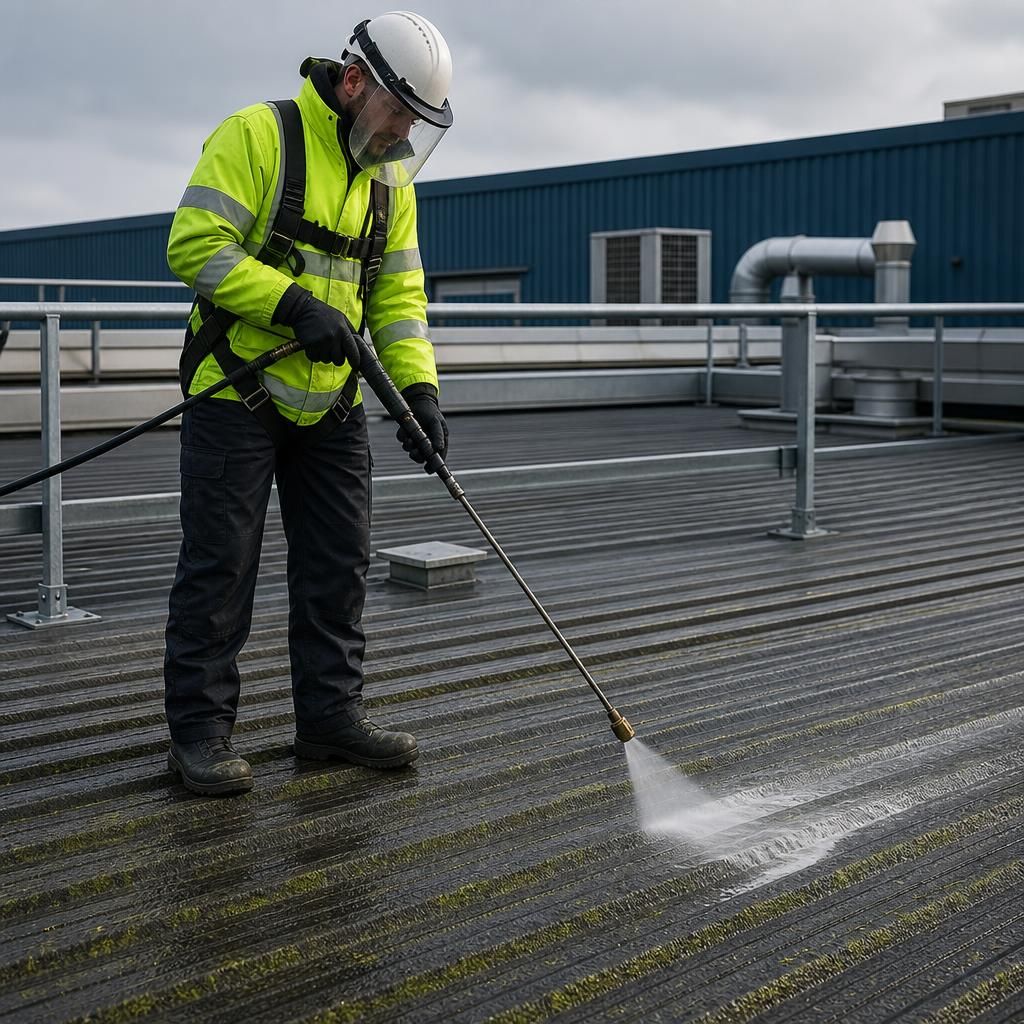
Controlled chemical use and runoff management are central to a safe, compliant soft wash roof cleaning process. Before application, the cleaning solution is assessed under COSHH procedures and handled according to its safety data sheet, manufacturer guidance and the site-specific risk assessment.
- Solutions are stored in labelled, secure containers and diluted only as instructed.
- Operatives use suitable gloves, eye or face protection, protective clothing and other PPE identified by the assessment.
- Application is controlled to minimise misting, overspray and contact with windows, ventilation openings, landscaping and sensitive finishes.
- Gutters, drains and discharge routes are checked, with suitable protection or collection arrangements used where required.
- Work is paused if wind, rain or other conditions could cause uncontrolled spread or discharge.
Any spill, unexpected reaction or change in site conditions is dealt with under the agreed emergency procedure. This approach protects building occupants, surrounding property and the environment while creating a clear record of how the cleaning products were selected, used and managed.
Discuss your soft wash roof cleaning requirements
Discuss your soft wash roof cleaning requirements with our team, including roof condition, access arrangements, occupant safety and environmental controls. We can help establish a suitable, compliant cleaning plan for your Birmingham, West Midlands or UK property.