
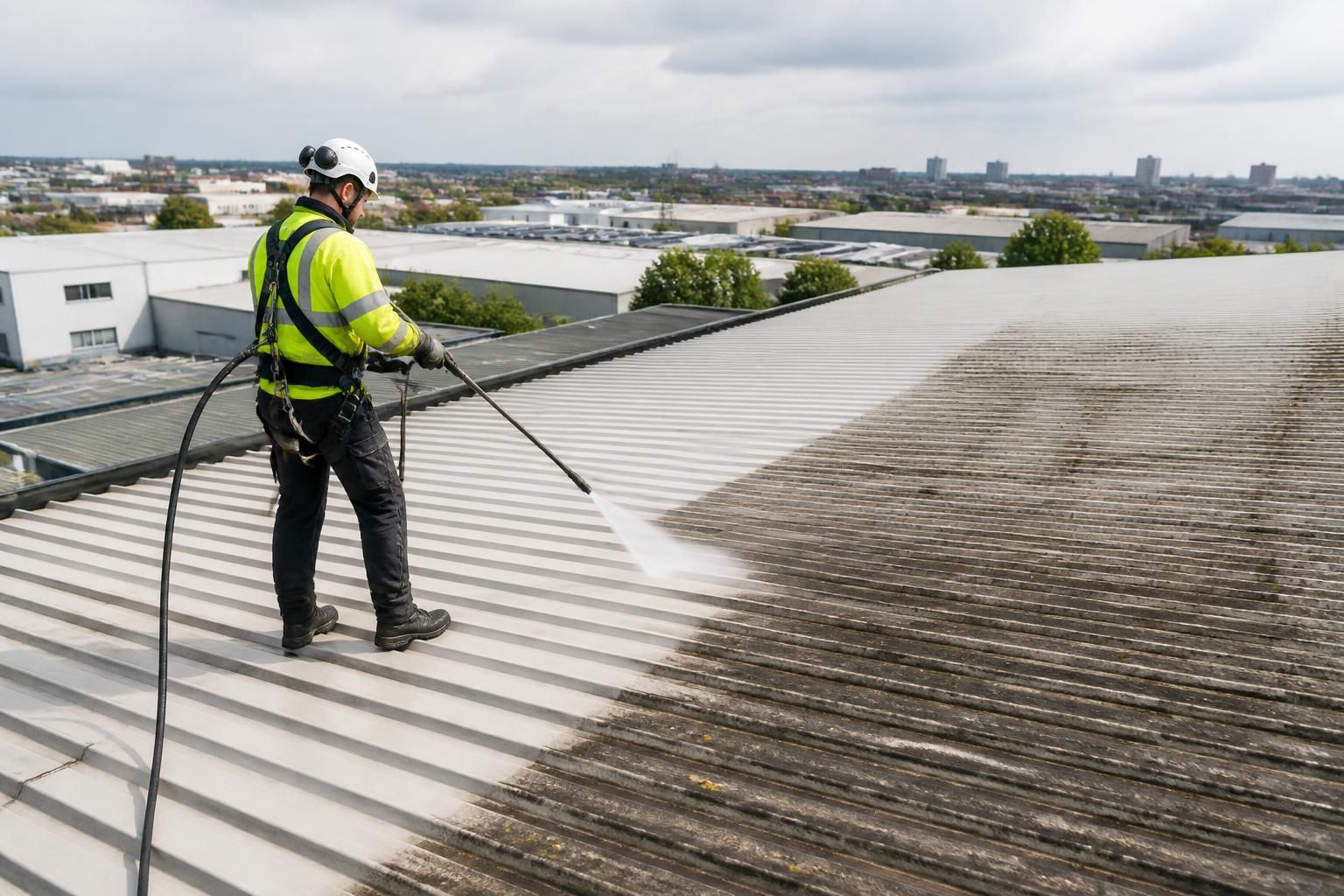
What criteria should be used to evaluate the effectiveness of a soft wash roof cleaning service?
An effective soft wash roof cleaning service should be evaluated by the thoroughness of its results, the safety of its low-pressure method, protection of the roofing materials, responsible chemical and wastewater handling, and the durability of the clean. It should also include a documented inspection, suitable treatment for the roof type, clear checks after cleaning, and practical maintenance recommendations.
The effectiveness of a soft wash roof cleaning service should be judged by more than how clean the roof looks immediately afterwards. A proper assessment considers the thoroughness of the clean, the suitability and control of the treatment, protection of the roofing materials, management of runoff, safety, and how long the result is expected to remain effective. The service should also include a documented inspection before work starts and a clear post-cleaning review.
Pre-cleaning inspection and assessment
An effective contractor begins by assessing the roof rather than applying the same treatment to every property. The inspection should identify the roof covering, its age and condition, existing repairs, areas of deterioration, drainage arrangements, access requirements and the type of contamination present. Organic growth such as moss, algae, lichen and mould may require a different approach from atmospheric dirt, bird fouling, oil deposits or construction residue.
The inspection should also record fragile or vulnerable areas, including cracked or slipped tiles, exposed fixings, failing sealants, damaged flashing, rooflights, membranes and sections with limited structural access. Where defects are found, they should be reported before cleaning so that pre-existing damage is not confused with damage caused during the service.
Suitability of the soft wash method
Soft washing is effective when the cleaning method is matched to the roof material and the condition of the contamination. It uses a controlled application of cleaning solution, followed by appropriate rinsing, rather than relying on high pressure to force dirt and growth from the surface. This is particularly important on older or delicate coverings where aggressive pressure could remove protective finishes, drive water beneath tiles or damage joints.
The contractor should be able to explain why the chosen solution, application method and rinsing approach are suitable for the particular roof. Fragile materials such as fibreglass, concrete tiles, coated metal and aged or weathered surfaces require careful control. An effective service does not assume that low pressure alone prevents damage; equipment, dwell time, chemical strength, temperature, agitation and rinsing must all be managed properly.
Thoroughness of the cleaning result
The finished roof should be assessed across the entire agreed area, not only from ground level or from the most visible elevations. Evaluation should include:
- Removal or substantial treatment of moss, algae, lichen, mould and general surface soiling.
- Cleaning of roof edges, valleys, ridges, verges, abutments and areas around roof-mounted equipment where access permits.
- Clearing of loose debris from gutters, outlets and drainage channels where this forms part of the agreed scope.
- Checking that treated contamination has not been redistributed onto façades, walkways, vehicles or neighbouring surfaces.
- Identification of staining that is embedded, permanent or caused by a defective material rather than by removable surface growth.
Some organic staining may fade progressively after treatment rather than disappear instantly. That can still represent an effective result, provided the expected process has been explained and the roof has received the correct treatment. The contractor should distinguish between a surface that has been properly treated and one that has merely been rinsed to create a short-lived visual improvement.
Protection of the roof and surrounding property
A successful service leaves the roof cleaner without compromising its weatherproofing or surface finish. There should be no evidence of unnecessary abrasion, broken tiles, displaced components, damaged coatings, blocked drainage or water penetration caused by the cleaning process. Surrounding walls, windows, signage, plant, vehicles, paved areas and landscaped surfaces should be protected from chemical contact and contaminated runoff.
Particular attention is needed on commercial and industrial premises, where roof construction may include rooflights, photovoltaic equipment, ventilation plant, fragile cladding or areas that cannot safely support foot traffic. Effective work planning should define where operatives can stand, which areas require access equipment and which surfaces must be excluded or separately protected.
Controlled use of cleaning solutions
The cleaning solution should be selected and applied in a controlled manner. The contractor should understand the product’s intended use, relevant safety information, required dilution, contact time and compatibility with the roof covering and adjacent materials. More solution is not necessarily more effective; excessive concentration or uncontrolled application can increase the risk to people, plants, drainage systems and building components without improving the result.
Good practice includes protecting sensitive areas, avoiding unnecessary overspray, monitoring weather conditions and stopping work if wind or rain could compromise control. The effectiveness of the treatment should be judged alongside responsible chemical handling, not separately from it.
Runoff, wastewater and environmental controls
Roof cleaning can release organic matter, sediment and cleaning solution into gutters and drainage systems. An effective service therefore includes a plan for containing, diverting, collecting or otherwise managing runoff in accordance with the site conditions and applicable requirements. Downpipes, surface water drains, planted areas and watercourses need particular consideration.
The contractor should be able to explain how gutter discharge and contaminated water will be managed, how nearby vegetation and sensitive surfaces will be protected, and how waste will be handled. Environmental performance is an important measure of effectiveness because a clean roof should not be achieved by transferring pollution to another part of the site.
Safety and compliance
Roof cleaning is a work-at-height activity, so the service should be evaluated by the quality of its risk controls as well as its cleaning result. Suitable measures may include a site-specific risk assessment and method statement, competent operatives, safe access equipment, exclusion zones, fall protection, chemical handling controls and arrangements for protecting building occupants and members of the public.
For commercial properties, the contractor should coordinate with the responsible site contact and take account of vehicle movements, pedestrian routes, tenant activity, emergency access and operational restrictions. A service that produces a clean roof but creates an avoidable safety risk is not effective professional cleaning.
Post-cleaning inspection and evidence
The result should be checked after the work is complete. This may involve a visual inspection from suitable access points, photographs of representative roof areas, confirmation that gutters and surrounding surfaces are clear where included, and a record of any areas that could not be treated. Photographs are most useful when they show comparable pre-cleaning and post-cleaning views rather than isolated images selected only to present the best result.
The completion record should identify the areas cleaned, the method used, any limitations caused by access or roof condition, defects observed and recommendations for follow-up work. This gives the property manager a practical record for maintenance planning and helps separate cleaning requirements from repair requirements.
Durability and maintenance value
A durable result is a stronger indicator of effectiveness than immediate appearance alone. The expected longevity will depend on roof orientation, moisture, shade, nearby trees, airborne pollution, the type of growth and the condition of the covering. A responsible contractor should not promise an identical maintenance interval for every roof.
Instead, the service should include practical advice on monitoring regrowth, keeping drainage routes clear, addressing overhanging vegetation where appropriate and arranging future inspections or treatments when required. If a roof repeatedly becomes contaminated because of a drainage fault, persistent dampness or damaged materials, cleaning alone will not resolve the underlying issue.
Clear scope and measurable acceptance criteria
Before work starts, the agreed scope should state which roof areas, elevations, gutters, access routes and related surfaces are included. It should also clarify how heavily weathered staining, permanent discolouration, repairs and inaccessible sections will be treated. These details make the final assessment objective and prevent the clean from being judged against expectations that were never part of the specification.
Overall, an effective soft wash roof cleaning service combines a suitable low-pressure treatment with careful preparation, controlled application, thorough inspection, responsible runoff management and evidence of the completed work. For a commercial property, the best measure is a roof that has been cleaned consistently across the agreed areas, with its materials and surrounding premises protected, the work completed safely, and a clear maintenance record left for the person responsible for the building.
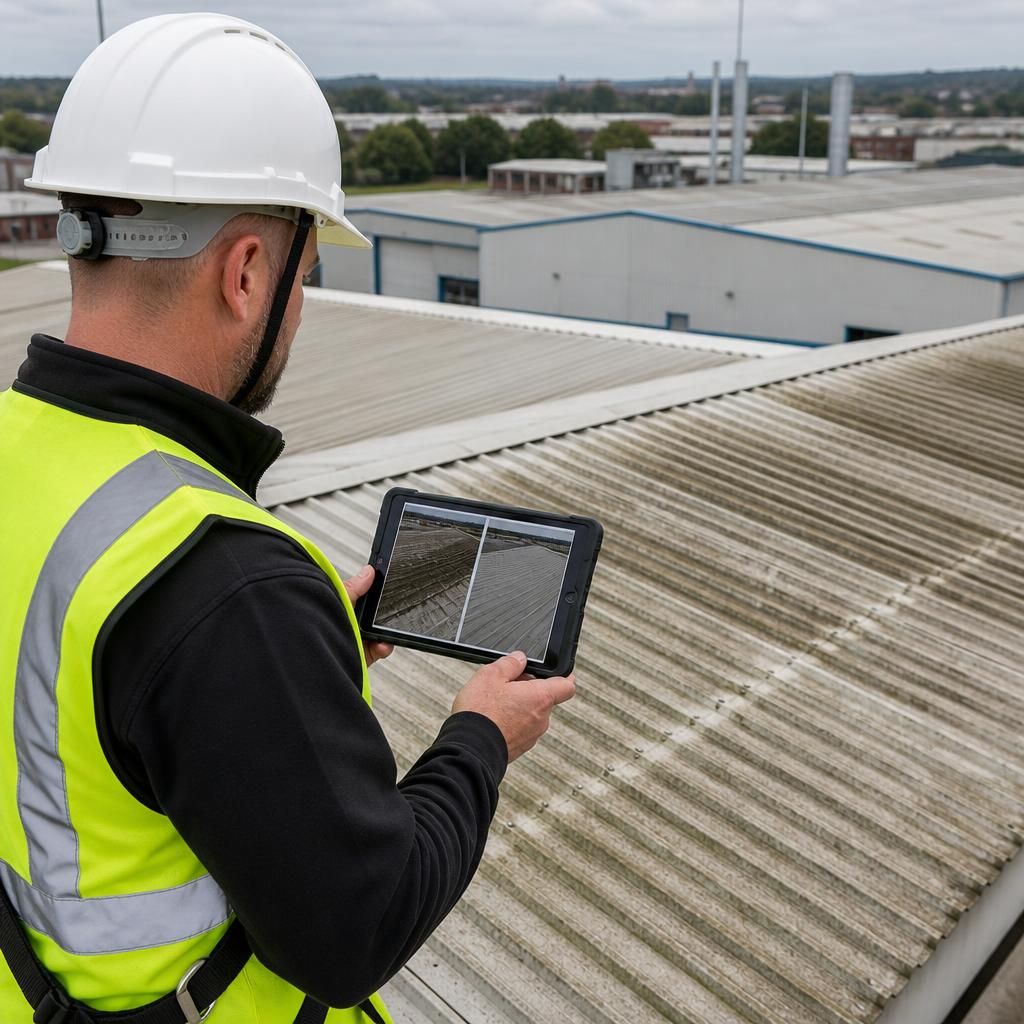
Photographic evidence and a documented post-cleaning inspection are essential criteria when evaluating a soft wash roof cleaning service. They show whether the agreed roof areas were treated properly and help distinguish a completed cleaning from a limited improvement visible only from ground level.
The completion record should compare representative pre-cleaning and post-cleaning views, note any inaccessible or heavily weathered sections, and confirm the condition of gutters, roof edges and surrounding surfaces where these were included in the scope. It should also record defects such as cracked tiles, damaged flashing or failing sealants that require repair rather than further cleaning.
This evidence gives the property manager a practical maintenance record and provides a fair basis for assessing the result. Some staining may continue to fade after treatment, so the contractor should explain what has been removed immediately, what is expected to improve over time and whether follow-up treatment or inspection is recommended.
Request a Soft Wash Roof Cleaning Assessment
Request a soft wash roof cleaning assessment to review your roof’s condition, cleaning requirements, access arrangements and any areas requiring protection or repair. We will provide a clear scope of work and practical recommendations for ongoing maintenance.