
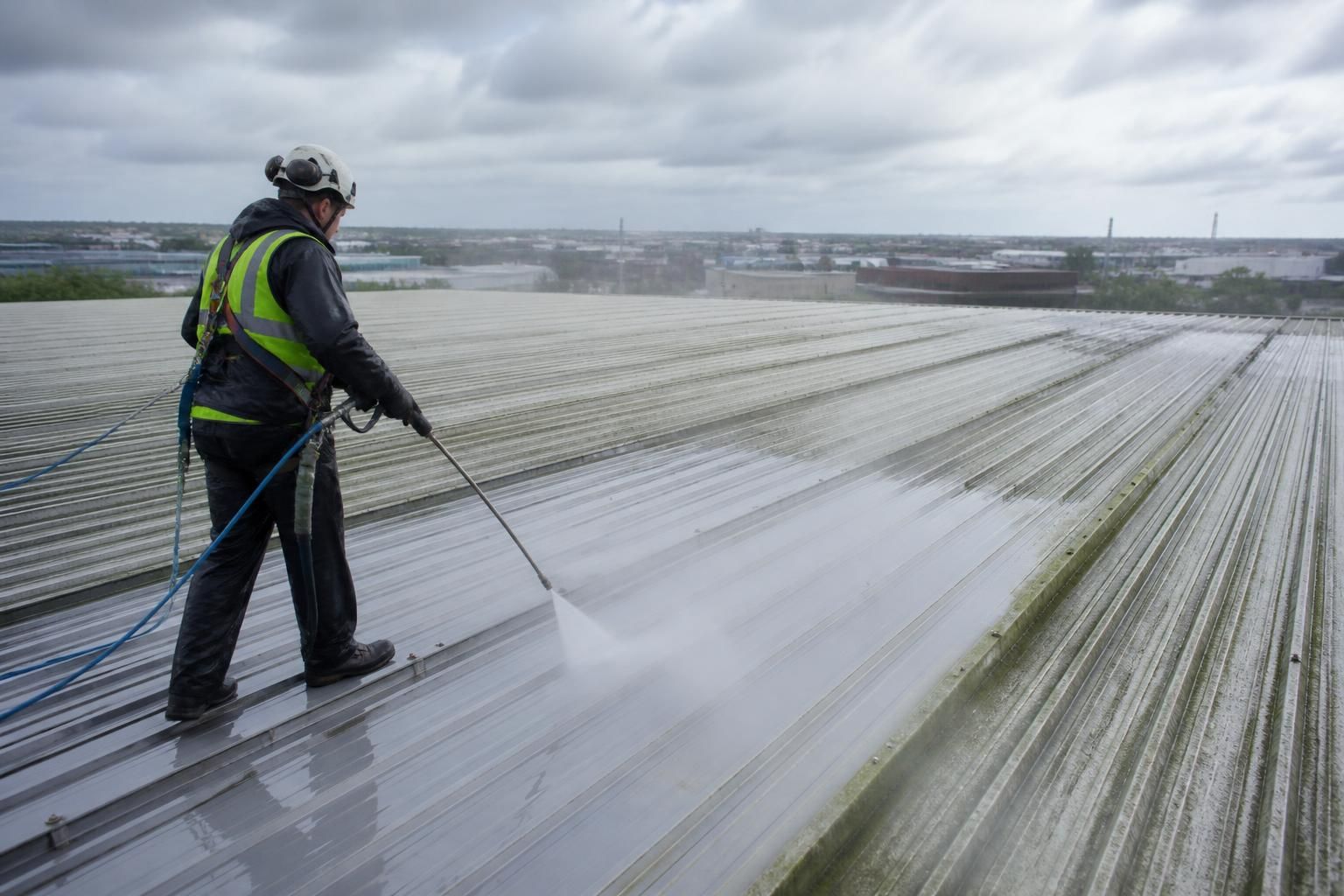
What are the benefits of using a soft wash system for roof cleaning?
A soft wash system cleans roof surfaces using low water pressure and specialist cleaning solutions, reducing the risk of damage associated with high-pressure washing. It removes algae, moss, lichen and other organic growth while helping to protect delicate roofing materials, improve appearance and provide longer-lasting results.
A soft wash system benefits roof cleaning by combining low-pressure water with a purpose-selected cleaning solution. Rather than relying on force to strip contamination from the roof, it loosens and treats algae, moss, lichen, mould and general atmospheric soiling. This provides effective cleaning while reducing the risk of damage to roofing materials, fixings, coatings and adjoining surfaces.
Reduced risk of surface damage
High-pressure washing can dislodge granules from concrete tiles, force water beneath laps and flashings, damage aged coatings, or mark softer and more delicate surfaces. Soft washing uses substantially less pressure, so the cleaning action comes primarily from the solution and controlled rinsing rather than mechanical impact. This is particularly useful when cleaning older roofs, coated sheets, fibreglass, concrete tiles and other surfaces where aggressive pressure could shorten service life.
Low pressure does not remove the need for care. The roof still needs to be assessed before work begins, including its material, condition, drainage arrangements, access requirements and any visible defects. A soft wash system reduces the likelihood of pressure-related damage, but it cannot repair cracked tiles, failed sealants, defective flashings or existing leaks.
More effective treatment of organic growth
Moss and lichen can attach firmly to roof surfaces, while algae and mould may leave staining that is not removed reliably by water pressure alone. A suitable soft wash solution penetrates and breaks down this organic contamination, allowing it to be rinsed away in a controlled manner. Treating the underlying growth can also help reduce rapid visual regrowth compared with simply blasting the surface clean.
The correct solution and application method depend on the roof material and the type of contamination present. Experienced operatives also control dwell time carefully. Allowing a solution to work is important, but it must not be left to dry on the roof or surrounding materials.
Longer-lasting cleaning results
Because soft washing treats organic contamination rather than only removing its visible surface, the result can remain cleaner for longer. This is especially valuable on commercial premises, where repeated heavy cleaning can disrupt building users, affect access and increase maintenance demands. A planned soft wash programme can form part of a wider roof maintenance schedule, with inspections used to identify new growth, blocked outlets or emerging defects before they become more serious.
Longevity is influenced by shade, moisture, nearby trees, pollution, roof orientation, surface condition and the presence of overhanging vegetation. Soft washing is therefore a maintenance treatment, not a permanent way of preventing contamination.
Improved appearance and presentation
Roof staining and biological growth can make a well-maintained building appear neglected. Cleaning can restore a more consistent appearance across roof areas, which is useful for managed estates, commercial units, industrial premises, public buildings and properties being prepared for inspection, handover or refurbishment. Removing contamination may also make defects easier to identify during a subsequent inspection.
Lower risk to adjoining areas
Compared with high-pressure cleaning, soft washing produces less forceful spray and is less likely to drive dirty water into roof edges, wall cavities, vents or vulnerable joints. The process still requires careful protection of façades, windows, vehicles, planted areas and pedestrian routes. Downpipes and drainage points should be considered in advance, and any runoff must be managed in accordance with the site conditions and applicable environmental requirements.
Suitable for larger and more complex properties
Soft wash equipment can be used with access systems and controlled application methods, making it practical for many commercial and industrial roofs where safe access and consistent coverage are essential. It can be incorporated into planned works alongside façade cleaning, cladding maintenance, gutter clearance or other exterior cleaning tasks. For larger sites, the work should be organised around access restrictions, occupied areas, weather conditions, drainage and the need to keep entrances or operational zones available.
Potentially more sustainable maintenance
Using low pressure can reduce the need for excessive mechanical force and may reduce water demand compared with prolonged high-pressure washing. The environmental performance of the service depends on the cleaning products selected, dilution, application volume, runoff controls and disposal arrangements. Solutions should be chosen for the material being cleaned and used only at the strength required for the contamination.
A responsible roof cleaning process includes a site assessment, suitable access and fall protection, protection of sensitive areas, controlled chemical application, managed rinsing and a final inspection. Soft washing is not appropriate as a blanket treatment for every roof: fragile, severely deteriorated or structurally defective surfaces may require repair, specialist advice or a different cleaning approach first.
Overall, the main benefits are effective removal of organic growth, less reliance on damaging pressure, improved presentation, better compatibility with many roofing materials and a practical option for planned commercial maintenance. The quality of the result depends on correct surface assessment, product selection, application control, runoff management and safe access—not simply on the equipment used.
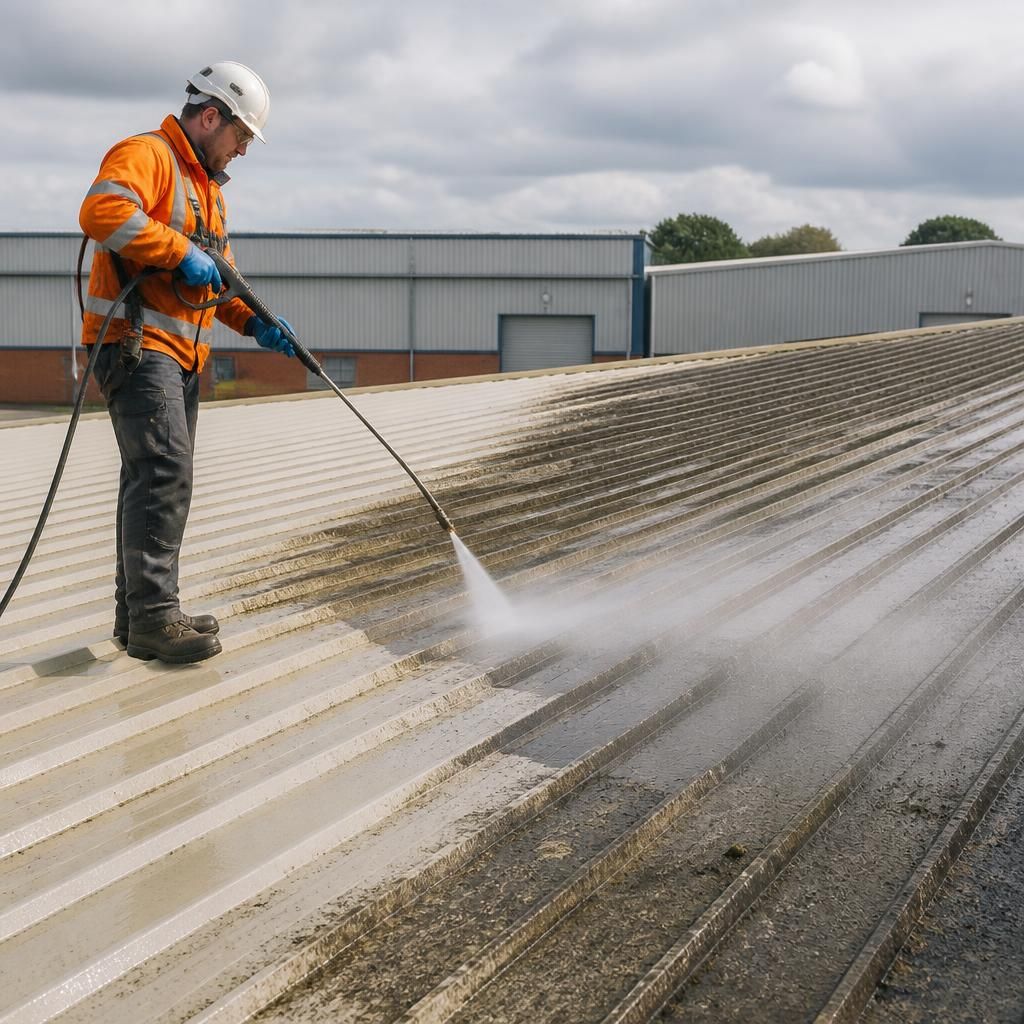
A soft wash system cleans roofing with low-pressure water and a specialist solution, rather than relying on force to remove contamination. This reduces the risk of dislodging tile granules, disturbing roof coatings or driving water beneath laps, flashings and seals.
The method is particularly useful for older or delicate commercial roofs, but it still requires a condition assessment, controlled application and suitable runoff management. Soft washing cannot correct cracked tiles, failed flashings or existing leaks, so any visible defects should be identified before cleaning begins.