
Is soft wash roof cleaning suitable for all types of roofs?
Soft wash roof cleaning is suitable for many roof types, including concrete tiles, slate, coated metal and some fibreglass systems, because it uses low pressure rather than abrasive force. However, the method and cleaning solution must be assessed against the roof’s material, condition, coatings, age and existing damage; some roofs may require an alternative treatment or should not be cleaned.
Soft wash roof cleaning is suitable for many roof types, but it is not automatically appropriate for every roof. The method uses low water pressure and a carefully selected cleaning solution to remove organic growth, staining, algae, moss and lichen without relying on abrasive force. Suitability depends on the roofing material, its age and condition, any protective coating, the type of contamination and the manufacturer’s maintenance guidance.
Roof types that may be suitable for soft washing
- Concrete tiles: These can often be treated effectively, provided they are not cracked, badly eroded, loose or already allowing water into the building.
- Clay tiles: Soft washing may be appropriate, although older or porous tiles require careful assessment because their surface and coatings can be more vulnerable.
- Slate: Natural slate can sometimes be cleaned using a controlled low-pressure treatment. The slate, fixings and supporting structure should be checked first, as cleaning can expose existing weakness or disturb poorly secured tiles.
- Coated metal roofing: Many coated steel and aluminium roofs can be cleaned with a compatible solution. The chemical must not attack the coating, joints, sealants or exposed metal.
- Some fibreglass and GRP roofing systems: These may be suitable where the surface, resin, gel coat and any applied finish are compatible with the proposed treatment. A test area and product guidance are particularly important.
- Some flat roof membranes: EPDM, PVC and similar systems may be cleanable, but the membrane manufacturer’s requirements must be followed. Edges, seams, outlets and areas around penetrations need additional care.
These examples do not mean that every roof made from a particular material can be treated in the same way. Two roofs with the same covering may differ significantly in age, surface condition, coating and previous maintenance history.
Roofs requiring additional caution
Soft washing may be unsuitable, restricted or require a specialist method where the roof is heavily weathered, brittle, delaminating or structurally unsound. Cracked tiles, missing slates, failed pointing, open laps, exposed insulation, defective flashing and damaged membranes should be recorded before cleaning. Applying a cleaning solution will not repair these defects, and introducing water to a roof with existing failures can increase the risk of internal leakage.
Thatch, living green roofs and roofs containing fragile or specialist finishes should not be treated as standard soft-wash projects. Older asbestos-containing roofing materials also require a separate risk assessment and legally compliant handling arrangements; they must not be cleaned simply as though they were conventional cement sheets. Lead, zinc, copper and other metals can react with unsuitable chemicals, so the treatment must be selected for the specific substrate and surrounding materials.
How suitability is assessed
- Identify the roof covering, coating and any previous treatments, using available building or manufacturer information where appropriate.
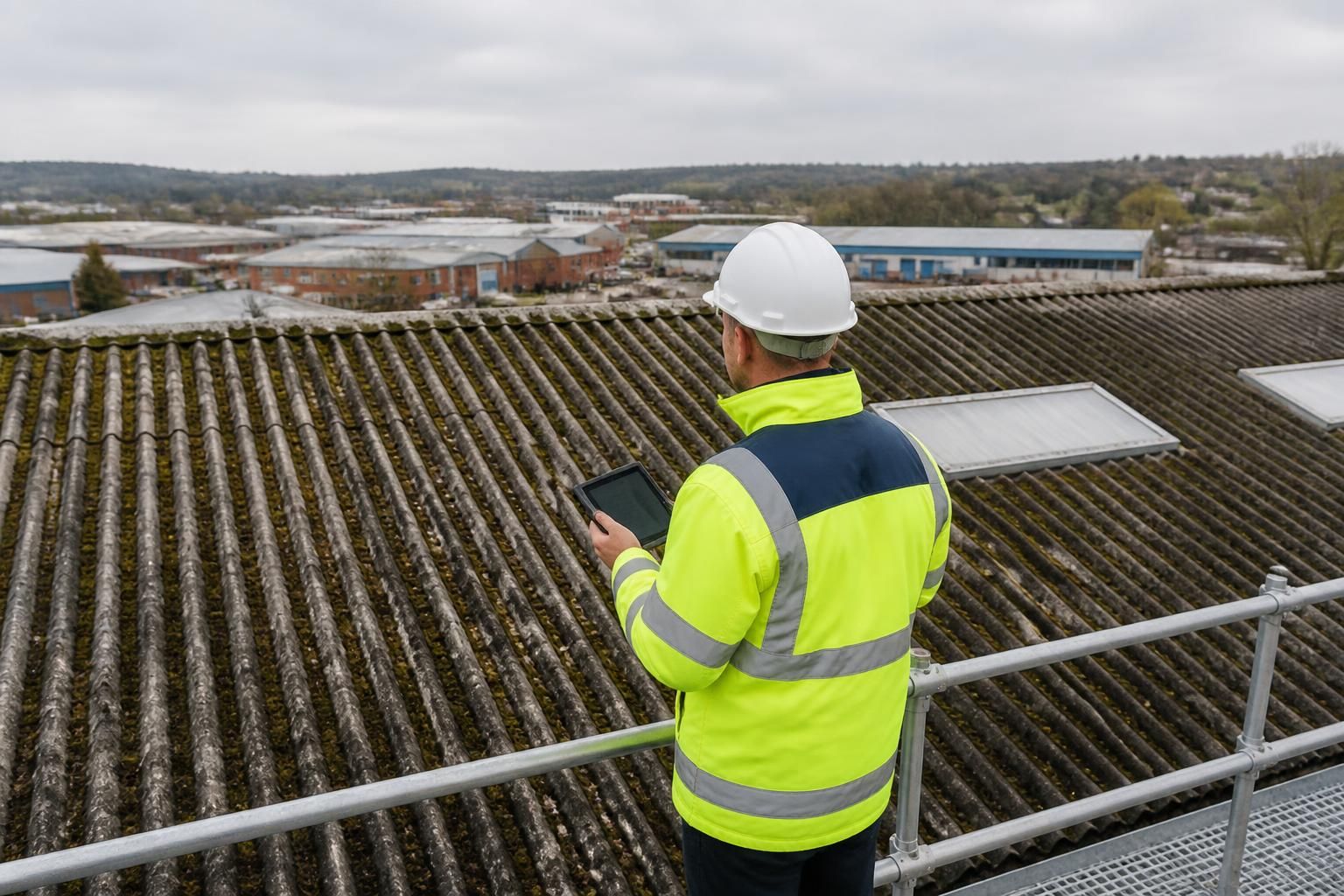
- Inspect the roof and accessible elevations for damage, organic growth, water ingress, loose components, drainage issues and sensitive details.
- Consider the contamination. Moss, lichen, algae, atmospheric soiling and bird deposits may require different dwell times, agitation and rinsing controls.
- Check the compatibility of the proposed cleaning solution with the roof, gutters, façade materials, glazing, landscaping and nearby equipment.
- Carry out a controlled test area where the material or finish is sensitive, unfamiliar or heavily weathered.
- Agree any necessary repairs, protection measures and runoff controls before the main work begins.
The cleaning process should use the lowest effective pressure, rather than treating low pressure as a guarantee that damage is impossible. Excessive pressure can drive water beneath laps and flashings, remove weathered surface material or dislodge tiles and slates. A trained operative should also manage access and exclusion zones so that roof traffic is limited and the building remains protected during the work.
For commercial premises, the assessment should include adjacent façades, plant, rooflights, solar equipment, rainwater systems and areas used by staff or the public. Runoff and chemical use must be controlled so that cleaning residues do not enter unsuitable drains or affect surrounding surfaces and vegetation. Where the roof is not suitable for soft washing, the appropriate decision may be a gentler manual treatment, a manufacturer-approved cleaning system, repair before cleaning, or no cleaning at all.
In practical terms, soft wash roof cleaning is a versatile method for sound concrete, clay, slate, compatible coated metal and selected fibreglass or membrane roofs. Its suitability should always be confirmed by a site-specific inspection rather than assumed from the material name alone. This approach protects the roof covering, reduces the risk of disturbing existing defects and ensures that the chosen treatment is appropriate for the property and its maintenance requirements.
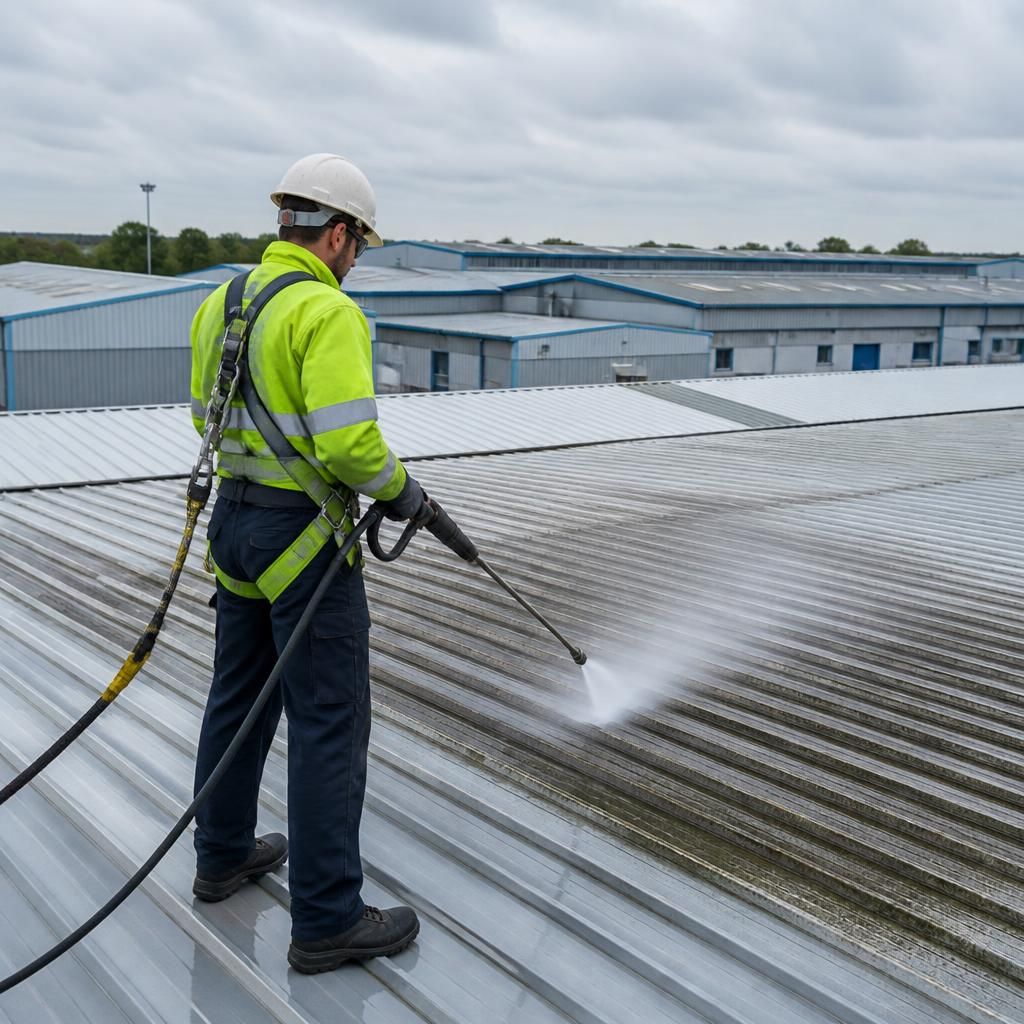
Soft wash roof cleaning is not suitable for every roof simply because it uses low pressure. The roofing material, surface condition, protective coating and manufacturer’s maintenance requirements must be checked before treatment begins.
Concrete and clay tiles, slate, compatible coated metal and some fibreglass or membrane systems may be suitable when they are sound and securely fixed. Cracked tiles, loose slates, failed flashing, damaged membranes, heavy erosion or existing water ingress require additional investigation and may need repair before cleaning. A controlled test area can also confirm that the cleaning solution is compatible with the roof and nearby materials.