
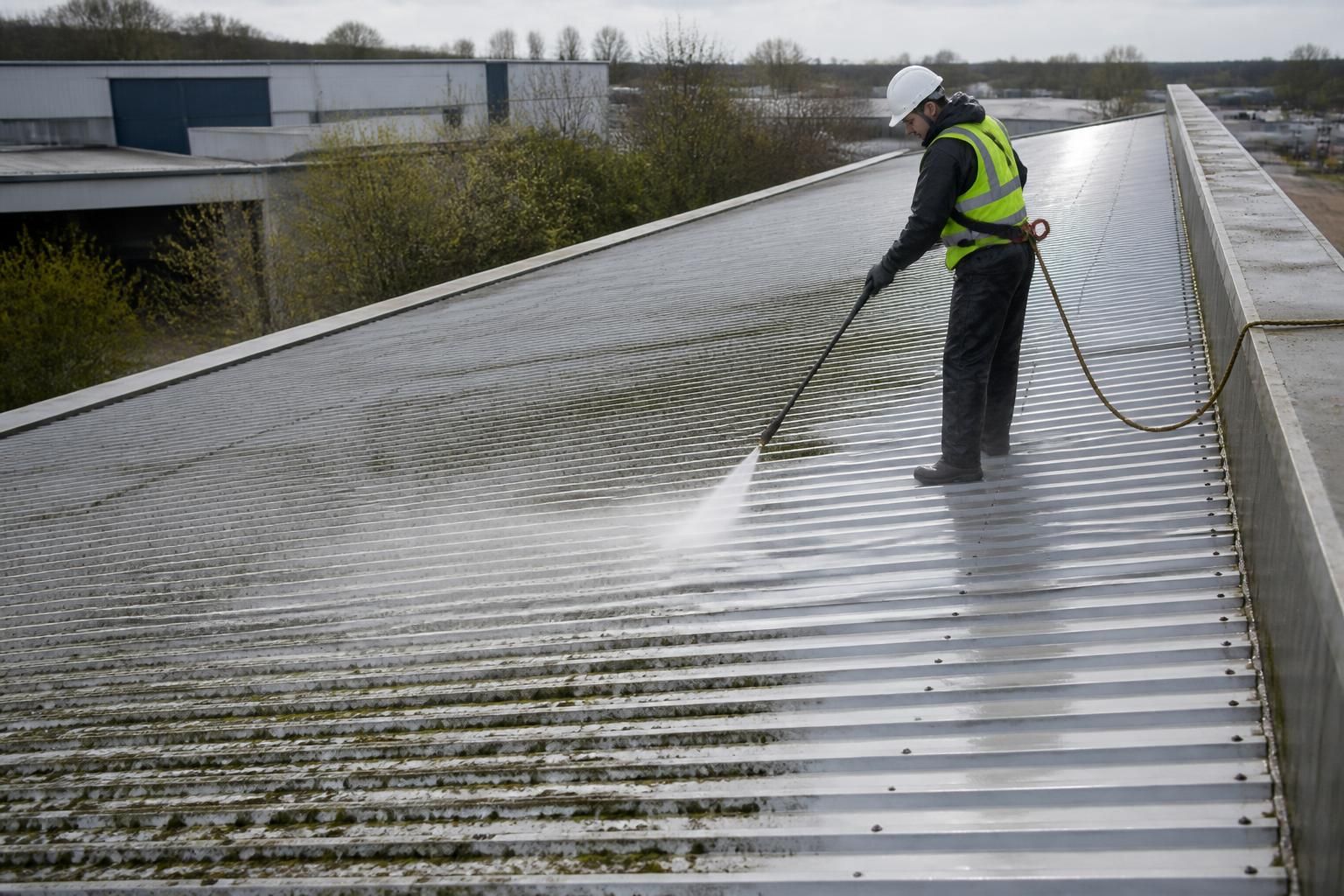
How often should soft wash roof cleaning be performed for optimal maintenance?
Soft wash roof cleaning is typically scheduled every few years, with an annual inspection to identify moss, algae, lichen, staining and blocked drainage before they affect the roof. More frequent cleaning may be appropriate for shaded, damp or heavily polluted properties, while clean, well-maintained roofs in less exposed locations may require it less often.
For most commercial and industrial properties, soft wash roof cleaning is best carried out every few years, supported by an annual roof inspection. The correct interval depends on the roof material, surrounding environment, level of contamination and condition of the drainage system. Roofs in shaded, damp or heavily polluted locations may need cleaning more frequently, while exposed roofs with limited organic growth may remain suitable for longer between treatments.
Cleaning should be planned as part of the property’s wider maintenance schedule rather than delayed until moss, algae, lichen or staining becomes extensive. A soft wash treatment removes organic contamination using low-pressure application, helping to clean the roof without the mechanical force associated with conventional pressure washing. Regular inspections allow the cleaning interval to be adjusted according to the actual condition of the roof.
A practical maintenance schedule
- Annual inspection: Check the roof surface, edges, valleys, outlets, gutters and downpipes for moss, algae, lichen, staining, leaf build-up and blocked drainage. Inspection is also an opportunity to identify damaged tiles, deteriorating coatings, defective flashings or areas where water may be collecting.
- Periodic soft wash cleaning: Arrange a full treatment when organic growth or atmospheric staining is becoming established, rather than relying on a fixed calendar date. For many properties, this will be every few years.
- Additional inspections after severe weather: Strong winds, prolonged rainfall and frost can expose defects or dislodge debris. A post-weather inspection may identify issues that should be resolved before cleaning takes place.
- Ongoing observation: Site teams should report visible regrowth, blocked gutters, damp patches or staining on adjacent walls. These signs can indicate that the roof needs an earlier assessment.
The surrounding environment has a significant effect on how quickly a roof becomes contaminated. Buildings beneath trees can receive falling leaves, seeds and organic debris, while shaded roof sections dry more slowly and provide favourable conditions for moss and algae. Properties near busy roads, construction activity or industrial areas may also accumulate airborne dirt and pollutants more quickly. Coastal exposure, persistent dampness and poor airflow can further shorten the interval between treatments.
Roof design and material should also be considered. Textured concrete tiles and older porous surfaces can retain moisture and support organic growth more readily than smooth, well-maintained surfaces. Flat or low-pitched roofs may hold standing water or debris if outlets are restricted. Fragile, coated or weathered materials require a careful assessment before cleaning, as the appropriate method and solution strength will depend on their condition. Soft washing is low pressure, but it is not a substitute for checking whether the roof is structurally suitable for access and treatment.
Cleaning too frequently is not normally necessary and may add avoidable disruption to the site. Conversely, leaving heavy moss, lichen or algae untreated can allow contamination to spread, retain moisture against the surface and obstruct drainage. Organic growth can also make roof access more hazardous and contribute to staining on façades, paving and other parts of the building. The objective is to clean at an appropriate point in the contamination cycle, before these issues become more difficult to manage.
Before recommending a treatment, the roof should be assessed for access requirements, material type, surface condition, drainage, nearby occupants and potential run-off controls. Where a commercial property forms part of a managed estate, the cleaning plan should account for operating hours, tenant access, vehicle movements and any areas that need to remain protected. Appropriate containment and collection measures are particularly important where treatment could affect entrances, planted areas, rainwater systems or neighbouring surfaces.
After cleaning, keeping gutters, valleys and outlets clear can help extend the useful period between treatments. Overhanging branches should be managed where appropriate, and recurring sources of debris or shade should be recorded as part of the maintenance plan. Photographic records from each inspection can also help compare regrowth over time and provide a more reliable basis for scheduling future work.
There is no single annual frequency that applies to every roof. A yearly inspection, combined with soft wash cleaning every few years or sooner when site conditions require it, is a sensible starting point for many commercial properties. The interval should then be reviewed after each visit in light of the roof’s material, contamination level, drainage performance and exposure. This approach maintains the roof more consistently while avoiding unnecessary cleaning and disruption.
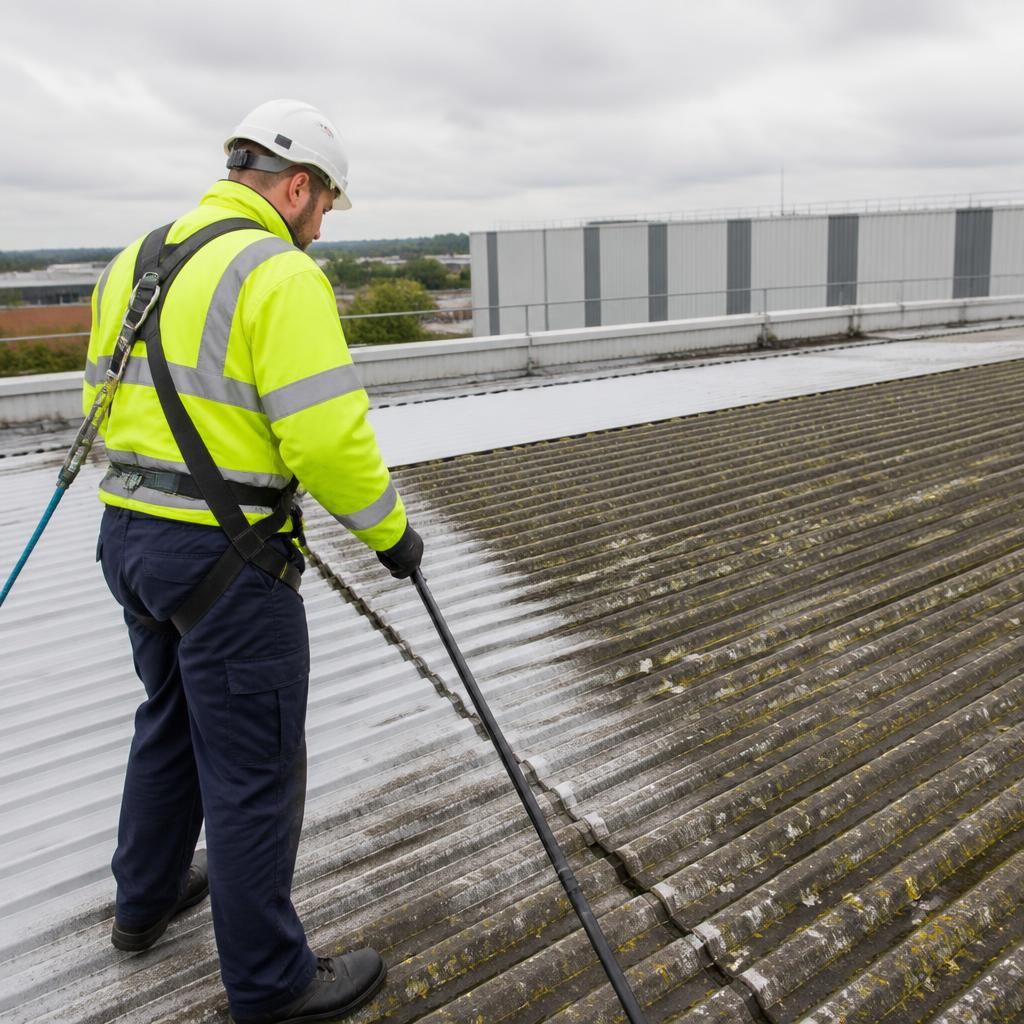
Soft wash roof cleaning does not usually need to be performed every year. For many commercial roofs, a periodic treatment supported by an annual inspection is more appropriate. The inspection checks for moss, algae, lichen, staining, debris and blocked drainage, allowing cleaning to be scheduled before contamination becomes extensive.
Roofs beneath trees, in shaded areas or exposed to persistent dampness and pollution may require earlier treatment. Conversely, a clean, well-drained roof with limited organic growth may remain suitable for longer. Reviewing the roof after each inspection provides a practical basis for adjusting the cleaning interval without causing unnecessary disruption.