
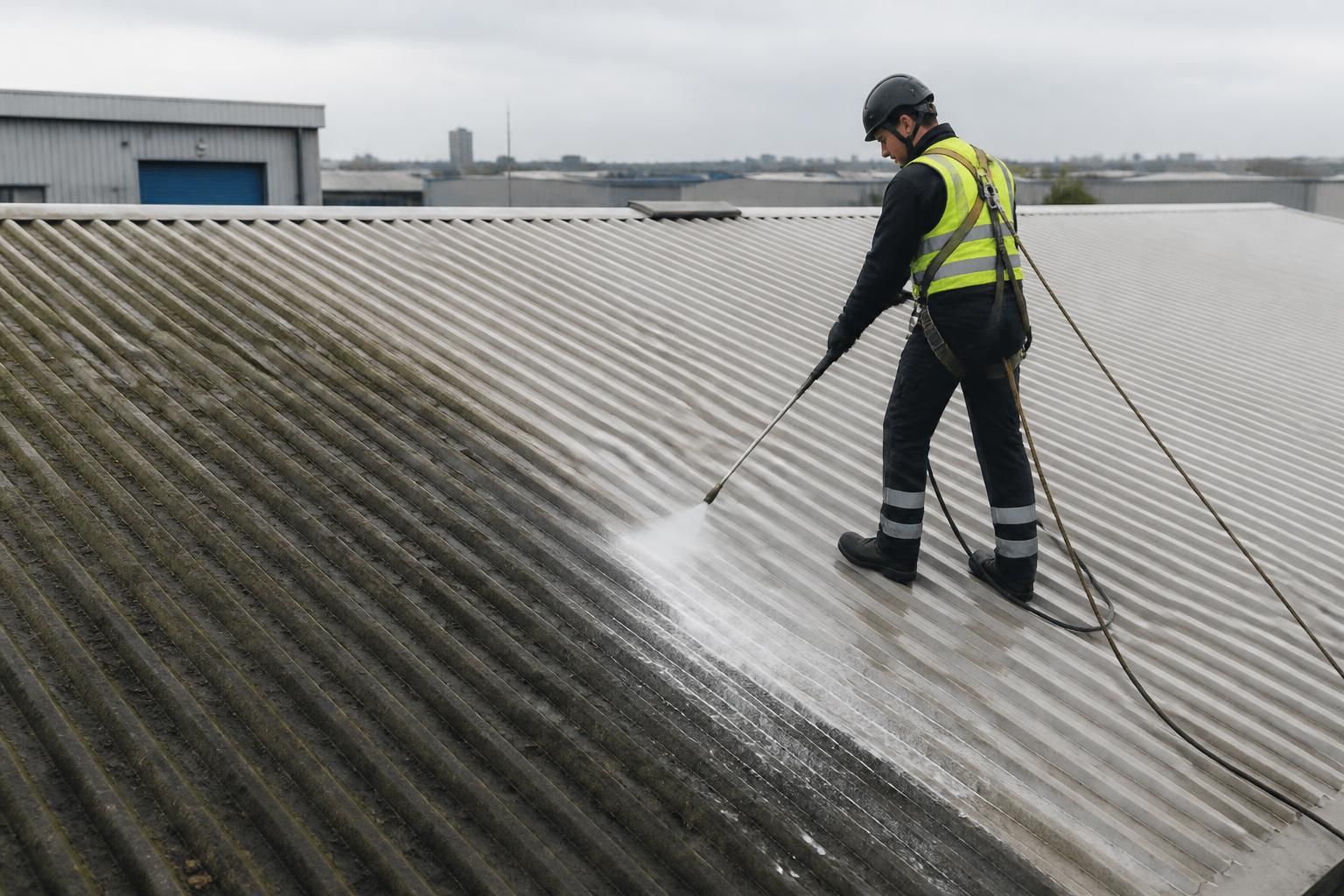
How does soft wash roof cleaning protect delicate roofing materials?
Soft wash roof cleaning protects delicate roofing materials by using specialist cleaning solutions and controlled, low-pressure rinsing to remove moss, algae, lichen and dirt without the abrasive force of high-pressure washing. This reduces the risk of surface erosion, cracked tiles, damaged coatings and water being driven beneath laps, provided the roof is assessed and the method is adjusted to its material and condition.
Soft wash roof cleaning protects delicate roofing materials by combining a material-appropriate cleaning solution with controlled, low-pressure rinsing. Instead of relying on force to strip away moss, algae, lichen and ingrained dirt, the solution loosens and treats the contamination so it can be removed with minimal mechanical action. This helps reduce the risk of cracked tiles, surface erosion, damaged coatings and water being forced beneath overlapping roof materials.
High-pressure washing can be unsuitable for older, weathered or fragile roofs because the impact may remove protective surface finishes, dislodge pointing, expose the underlying material or drive water into laps, joints and roof penetrations. Soft washing uses pressure only for controlled application and rinsing. The required pressure is determined by the roof covering, its condition and the type of contamination, rather than using one setting for every property.
Before cleaning, the roof is assessed for its construction, age, existing damage and areas that need particular care. This includes checking for loose or broken tiles, deteriorated mortar, vulnerable flashing, exposed membranes, fragile coatings, rooflights, gutters and drainage routes. A roof with pre-existing defects may require repairs or further advice before cleaning. Cleaning cannot safely compensate for failed materials, and applying water or solution to an unstable roof could worsen an existing problem.
The cleaning approach is then adapted to the roofing material. Concrete tiles, clay tiles, coated metal, slate, fibreglass elements and other coverings have different levels of porosity, surface strength and chemical tolerance. For example, an aged coating may need gentler rinsing than an intact, robust surface, while slate requires careful handling to avoid cracking or disturbing fixings. Fibreglass and painted or coated materials also need solutions and application methods that will not soften, discolour or undermine the finish. Where the material, coating or condition is uncertain, a discreet test area can help confirm the appropriate method before wider application.
Soft wash solutions work by breaking down organic growth and the bonds holding dirt to the surface. Moss, algae and lichen can retain moisture against a roof covering, trap debris around drainage points and contribute to surface deterioration over time. Treating this growth rather than aggressively scraping or blasting it away reduces abrasion. Some residual growth may be left to weather away naturally after treatment, depending on the roof and the cleaning specification, rather than being removed through excessive pressure.
Application is carefully controlled to protect both the roof and the surrounding property. Areas such as vents, rooflights, solar equipment, exposed electrical components and vulnerable surfaces are identified in advance. Gutters, downpipes, walls, windows, landscaping and access routes are protected or monitored as necessary. The team also controls overspray and manages runoff so that cleaning solution and loosened debris do not spread unnecessarily across the building or enter unsuitable drainage systems.
Rinsing is carried out with enough water to remove loosened contamination, but without treating the roof like a hard-standing surface. This is particularly important around tile laps, ridge and verge details, flashings, valleys and penetrations. Water is directed in a way that follows the roof’s natural drainage pattern, helping to avoid lifting materials or forcing water beneath them. Where the roof is too fragile for conventional rinsing, the method can be modified to use a more restrained application and natural breakdown of treated growth.
Protecting delicate materials also depends on controlling access. Unnecessary foot traffic can cause more damage than the cleaning itself, especially on brittle tiles, old slate or weathered coverings. Access equipment, edge protection and work positioning are selected to limit loading on the roof. Operatives avoid walking on vulnerable areas wherever practicable and use safe access arrangements to reach the work without placing avoidable strain on the covering.
After cleaning, the roof is checked for missed contamination, displaced debris and any defects that have become visible. Gutters and drainage points are inspected because loosened moss and dirt can collect there during the work. A clean roof should not be judged solely by immediate colour: some staining or treated organic growth may fade gradually, while the important consideration is whether damaging buildup has been removed or controlled without compromising the roof surface.
Soft washing is gentler than high-pressure cleaning, but it is not risk-free and should not be treated as a universal solution. Incorrect chemical selection, excessive application, poor runoff control, unsuitable pressure or careless access can still damage roofing and adjacent surfaces. Professional cleaning therefore involves matching the method to the specific roof, following product guidance, protecting people and property, and stopping or changing the process if the material responds unexpectedly.
For commercial and industrial properties, this assessment-led approach is especially useful where roofs include several materials or have been repaired and coated at different times. A suitable method can be recorded as part of the maintenance plan, allowing future cleaning to follow the roof’s known requirements rather than repeating an unsuitable process. Regular, appropriately timed maintenance can also prevent heavy organic buildup from becoming a reason to use more aggressive removal methods later.
In practical terms, soft wash roof cleaning protects delicate roofing materials through four controls: chemical treatment does most of the cleaning work, low pressure limits physical impact, material-specific planning prevents unsuitable applications, and careful access and runoff management protect the wider building. The result is a cleaning process designed to improve roof condition and appearance while preserving the covering, coatings, joints and drainage details that support its service life.
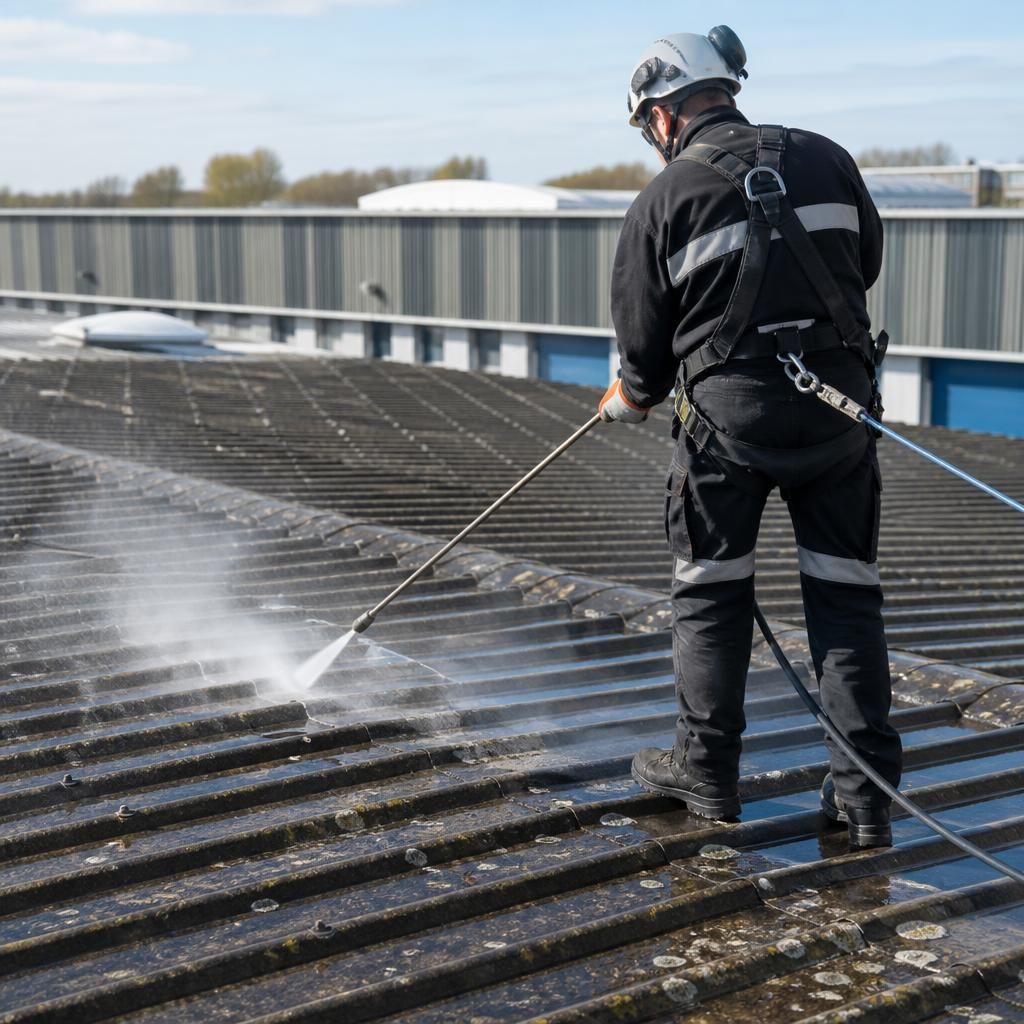
Soft wash roof cleaning protects delicate materials by allowing specialist cleaning solutions to loosen moss, algae, lichen and dirt before controlled, low-pressure rinsing. This reduces the need for abrasive scraping or high-pressure blasting, helping to preserve tile surfaces, coatings, joints and fragile roof details.
The method is adjusted to the roof covering and its condition. Before work begins, vulnerable areas such as aged concrete tiles, slate, fibreglass, painted finishes, flashing and rooflights are assessed. A discreet test area may be used where the material or coating requires confirmation. Water flow, solution strength, access arrangements and rinsing technique are then controlled to reduce the risk of cracking, surface erosion, discolouration or water being forced beneath laps and joints.