
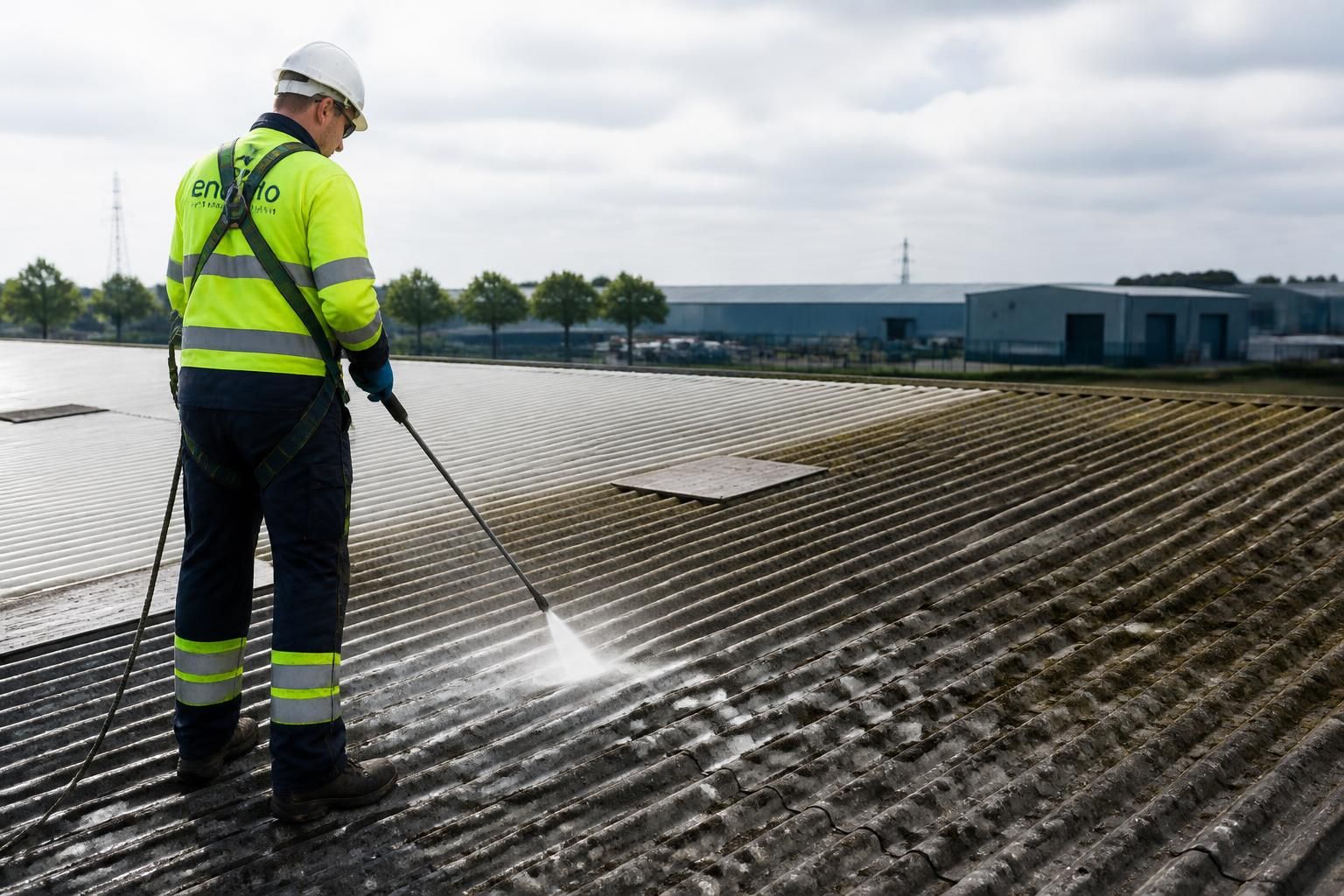
How do you ensure that the soft wash roof cleaning method won't damage fragile roofing materials like fibreglass or concrete tiles?
We protect fragile fibreglass and concrete tiles by assessing their condition first, using low-pressure application rather than abrasive jet washing, and selecting a compatible cleaning solution. We also test a discreet area, control dwell time and rinse carefully, stopping if the material shows any sign of weakness or damage.
Soft wash roof cleaning is designed to protect fragile fibreglass and concrete tiles by using a compatible cleaning solution and controlled, low-pressure application rather than abrasive jet washing. Before work begins, we assess the roof’s material, age, condition, previous coatings, fixings, access points and areas of existing weakness. This determines whether soft washing is appropriate and how the treatment should be carried out.
We inspect before applying any solution. Fibreglass roofing can have exposed fibres, deteriorated resin, failing coatings or damage around overlaps and fixings. Concrete tiles may be cracked, porous, weathered or loose, particularly where frost, water ingress or previous high-pressure cleaning has affected the surface. We identify these conditions in advance and record areas that require repair, protection or exclusion from the cleaning process. If the roof is too fragile to treat safely, we explain this before proceeding.
Pressure is kept low and controlled. The purpose of a soft wash is to apply and rinse the treatment without scouring the surface. We do not use aggressive pressure to strip moss, lichen or ingrained dirt from fibreglass or concrete tiles. This reduces the risk of removing surface coatings, forcing water beneath tile laps, opening existing cracks or damaging weathered areas. Where access equipment is required, it is selected and positioned to avoid placing unnecessary loads on the roof.
The cleaning solution is selected for the roofing material. We use a solution appropriate to the roof’s surface and condition, taking account of existing coatings, nearby metals, glazing, membrane details, rainwater goods and surrounding landscaping. The solution is applied evenly so that contamination can be treated without excessive chemical concentration in one area. Adjacent surfaces are protected where necessary, and runoff is managed in accordance with the site requirements.
A discreet test area is completed first. This confirms that the chosen treatment is compatible with the fibreglass or concrete surface and shows how quickly the contamination responds. We check for changes such as softening, discolouration, coating failure, exposed fibres, loosened material or unexpected runoff. The full clean only proceeds when the test area behaves as expected. If it does not, the method is adjusted or the work is stopped.
Dwell time is carefully controlled. The solution needs sufficient contact time to loosen biological growth and surface grime, but it is not left unattended or allowed to dry where that could affect the roof or surrounding materials. Weather conditions, roof orientation, surface temperature and the level of contamination all influence the treatment time. The operative monitors the surface throughout the process rather than relying on a fixed treatment period.
Rinsing is gentle and methodical. We remove loosened contamination and remaining solution using controlled flow, working in a direction that limits water being driven beneath tile overlaps or into roof details. Particular care is taken around ridges, verges, flashings, rooflights, sealants, gutters and penetrations. We avoid directing water at damaged areas or using pressure that could dislodge tiles, disturb coatings or worsen an existing defect.
Protection also extends beyond the roof itself. We shield or wet down vulnerable adjoining surfaces where appropriate, control overspray, and take care around windows, painted walls, vehicles, planted areas, drainage systems and metalwork. Any site-specific requirements, including runoff controls or access restrictions, are agreed before cleaning begins.
During and after the work, the roof is checked for movement, newly visible defects, remaining contamination and any reaction to the treatment. We do not attempt to conceal pre-existing damage or force a clean result where doing so could compromise the material. If tiles are loose or cracked, fibreglass is delaminating, or a coating is failing, we report the issue and recommend repair or specialist assessment instead of continuing with an unsuitable method.
These controls make soft washing substantially less abrasive than conventional high-pressure roof cleaning, but no cleaning method can repair defective roofing or guarantee that a severely deteriorated surface will tolerate treatment. A condition assessment, material-specific solution, test application, controlled dwell time and careful low-pressure rinse are therefore essential to cleaning fragile fibreglass and concrete tiles without creating avoidable damage.
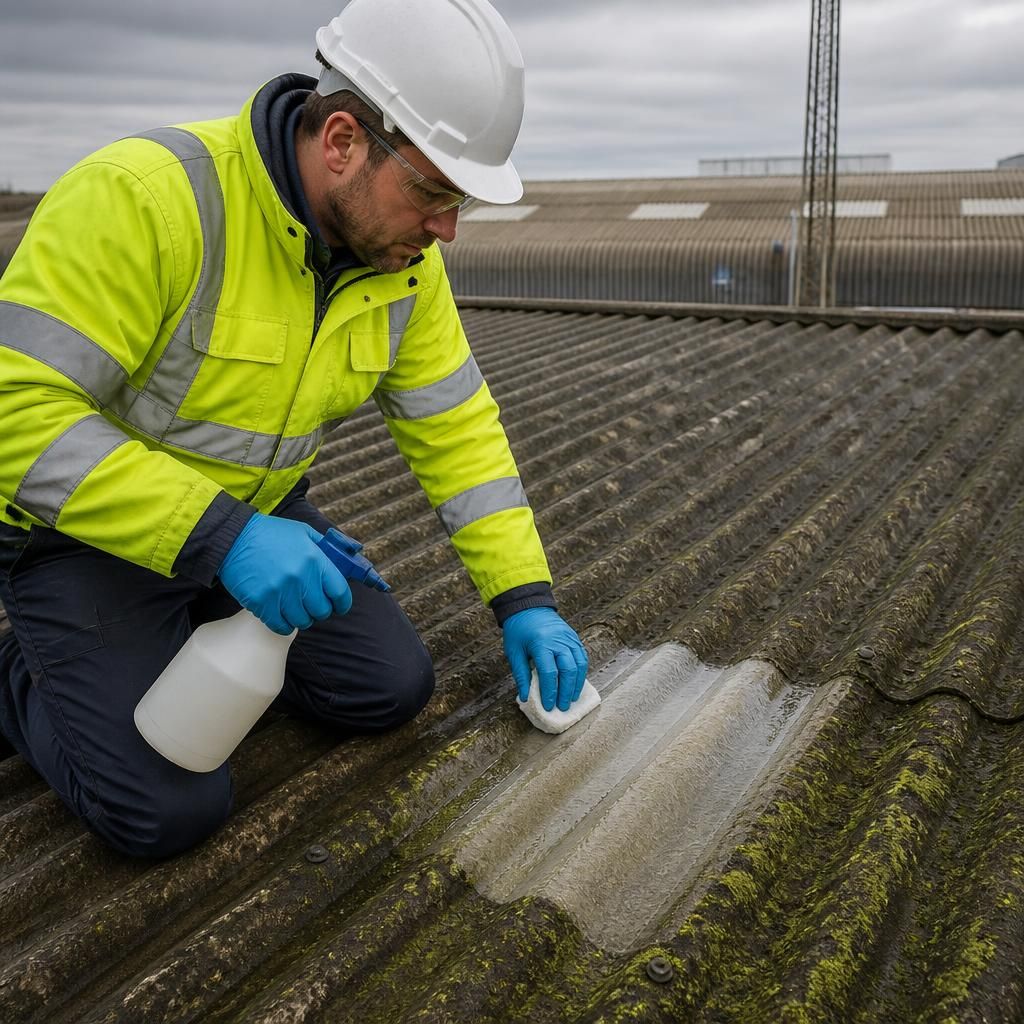
Protecting fragile roofing during soft wash cleaning starts with a material and condition assessment, followed by a discreet test application. This confirms that the selected solution is compatible with the fibreglass or concrete tiles before the full roof is treated.
We check for exposed fibres, deteriorated resin, failing coatings, cracks, porosity, loose tiles and damage around fixings or overlaps. The test area is then monitored for discolouration, softening, coating failure or unexpected runoff. If the surface reacts adversely, we adjust the method or stop and recommend repair or specialist assessment. Only when the test behaves as expected do we proceed with controlled application, limited dwell time and a gentle rinse. This approach helps prevent avoidable damage while recognising that cleaning cannot make an already defective roof structurally sound.