
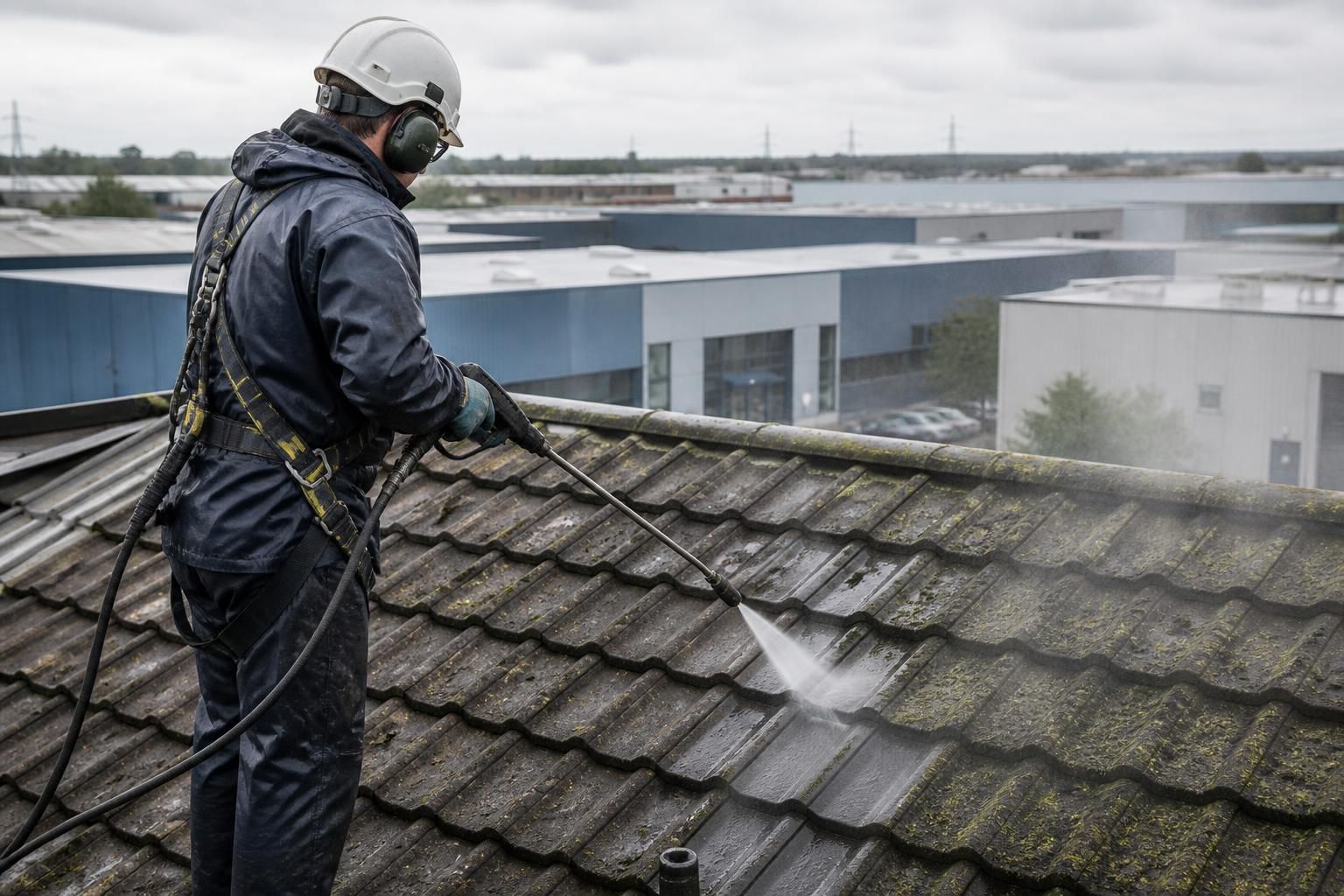
What specific roof tile cleaning methods are best suited for the type of roofing material and condition of my commercial property?
The best commercial roof tile cleaning method depends on the tile material, surface condition, access requirements and type of contamination. Clay, concrete and slate tiles may require different combinations of low-pressure washing, soft washing, steam cleaning or careful manual treatment, with the method selected to remove moss, algae, dirt or staining without damaging the roof.
The most suitable commercial roof tile cleaning method is determined by the roofing material, the strength and condition of the tiles, the type of contamination, and the safe access available. Clay and concrete tiles can often be treated with controlled low-pressure cleaning or a soft wash, while slate, aged tiles and fragile or damaged coverings usually require gentler manual treatment, low-pressure rinsing or specialist steam cleaning. The objective is to remove moss, algae, lichen, dirt and staining without eroding the tile surface, dislodging coverings or allowing water to enter vulnerable areas.
Clay roof tiles are durable but can become brittle with age, particularly where frost damage, surface wear or historic repairs are present. Sound clay tiles may be cleaned using carefully controlled low-pressure washing, often supported by manual removal of heavier moss growth. A biocidal treatment can help deal with remaining algae, lichen and organic spores, but it must be selected and applied in accordance with the product instructions and site environmental requirements. Aggressive pressure can strip the tile surface, damage the edges and force water beneath overlapping tiles, so the pressure, nozzle and working distance should be tested on an inconspicuous area first.
Concrete roof tiles commonly retain moss, algae and atmospheric dirt because of their textured or weathered surface. Where the tiles are structurally sound, low-pressure washing followed by an appropriate treatment is often effective. Older concrete tiles may have lost their original surface coating or may contain cracks and friable areas, making them unsuitable for intensive washing. In these circumstances, manual scraping, soft washing and controlled rinsing are generally safer than trying to achieve a perfectly clean finish with high pressure. Any exposed aggregate, damaged coating or powdering should be recorded during the survey and considered when agreeing the expected result.
Slate roofing needs particular care because slate can delaminate, fracture or become loose around fixings. Heavy pressure washing is generally inappropriate. Light manual removal, a low-pressure rinse or a carefully controlled soft wash may be considered where the slates and fixings are in sound condition. Operatives should avoid walking directly on vulnerable slate and should identify slipped, cracked or delaminated pieces before cleaning. Cleaning cannot correct failed fixings, defective flashing or a roof that is already reaching the end of its serviceable life; those issues should be referred for suitable roofing repairs.
Interlocking, coated or specialist tiles must be assessed according to their finish and manufacturer requirements. A strong jet or abrasive process can remove protective coatings, alter the appearance of the roof or expose the underlying material. Soft washing, gentle steam cleaning or manual techniques may be more appropriate, subject to a test area and confirmation that the treatment is compatible with the covering. Where the roof incorporates solar panels, rooflights, membranes, insulation systems or other specialist components, the cleaning plan must also protect those elements and prevent contaminated run-off from entering them.
The condition of the roof is as important as the material. A relatively clean, sound roof may only need a gentle rinse and treatment, whereas thick moss, established lichen, bird fouling, industrial deposits or neglected staining may require staged work. A competent assessment should identify:
- Cracked, slipped, broken or loose tiles and evidence of water ingress.
- Delamination, surface erosion, powdering or failed coatings.
- The depth and attachment of moss, lichen, algae and other organic growth.
- Contamination from nearby roads, construction activity, trees, manufacturing or bird activity.
- Drainage routes, gutters, valleys, outlets and areas where debris could accumulate.
- Rooflights, fragile surfaces, plant, cables and other restrictions affecting access.
For light organic growth and general soiling, a soft wash can provide a lower-impact alternative to pressure cleaning. The process normally involves removing loose debris, applying a suitable treatment at a controlled concentration, allowing it to work for the required time and rinsing without excessive force. This can be useful on sound clay and concrete tiles and on some more delicate coverings, but the chemical choice, dwell time and run-off controls must be appropriate for the roof, surrounding surfaces and local drainage arrangements.
Steam cleaning may be suitable where the roof requires a lower-pressure process or where deposits need to be removed with limited water volume. It can be effective for certain algae, moss residue, dirt and staining, but it is not automatically suitable for every tile. Heat, moisture and access constraints still need to be considered, particularly around brittle tiles, sealants, membranes and roof details. Steam cleaning should be specified after inspection rather than selected simply because it is described as a gentle method.
Manual cleaning is often the safest starting point for heavy moss or fragile areas. Moss can be carefully scraped or brushed away using tools that minimise contact damage, followed by a suitable treatment and controlled rinse where required. Manual work is slower and may not remove every ingrained stain, but it allows operatives to work selectively around defective or vulnerable tiles. It is also useful for edges, valleys, roof penetrations and sections where mechanical cleaning would create unnecessary risk.
The cleaning method should be confirmed through a site survey and a small test area. This allows the contractor to check how the tile responds, establish the appropriate pressure or treatment strength, assess the likely final appearance and identify whether staining is embedded rather than removable. A test area is especially important where the roof has mixed tile types, previous coatings, repairs or visible weathering. The agreed method should distinguish between removable contamination and permanent discolouration caused by age, oxidation, coating failure or material deterioration.
Commercial roof cleaning also requires controls beyond the cleaning technique itself. Access equipment, edge protection and safe working procedures should be selected for the roof geometry and condition rather than relying on the tiles as a walking surface. Gutters and outlets should be protected from blockage, loose debris should be collected, and run-off should be controlled so that cleaning residues do not affect façades, landscaping, vehicles, drainage systems or neighbouring premises. Work may need to be phased around tenants, deliveries, production areas and other site operations.
After cleaning, the roof should be checked for displaced or newly visible defects, and the condition of gutters, flashings and roof details should be reported. A protective or biocidal treatment may help slow the return of organic growth, but it does not replace repairs or correct underlying damp, shading and drainage problems. For a commercial property, the most reliable specification is therefore a material-safe method matched to the surveyed condition, supported by controlled access, environmental protection, clear reporting and an agreed standard for the finished roof.
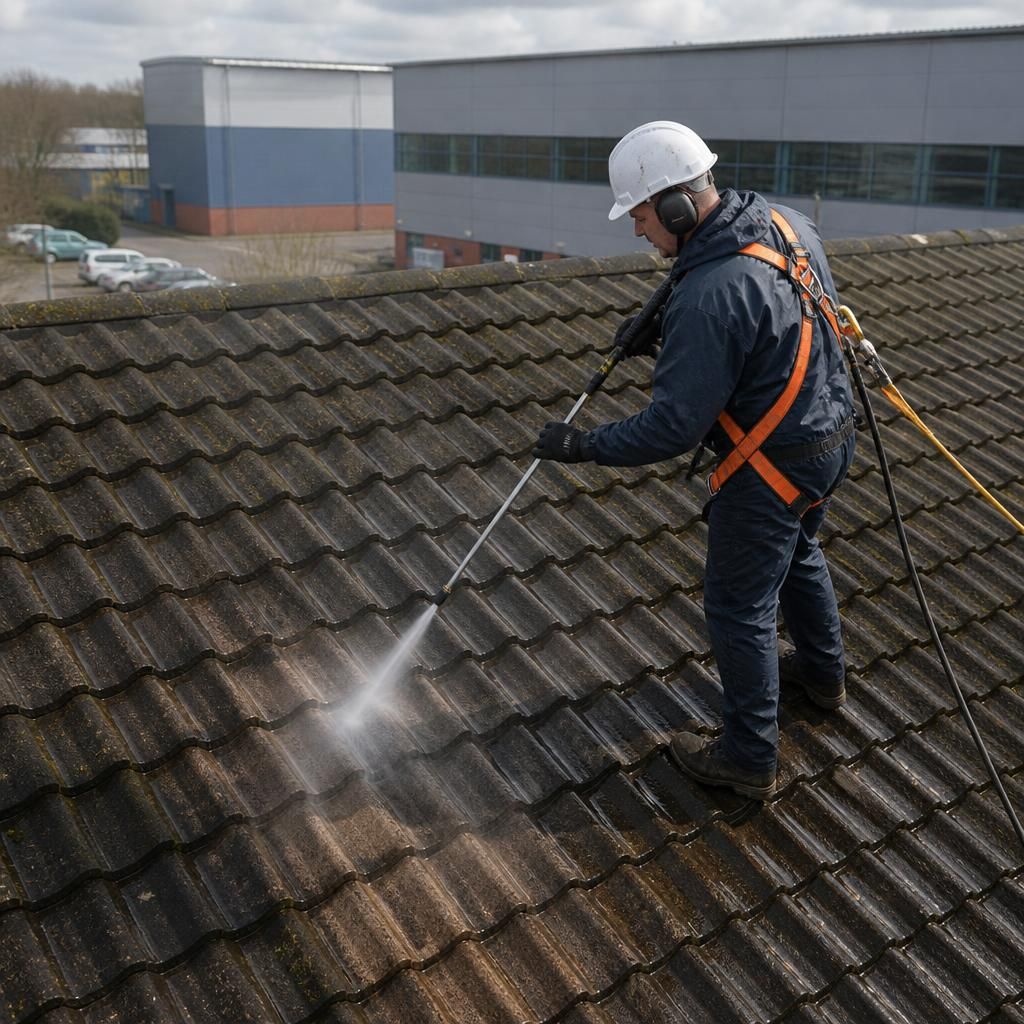
The most suitable roof tile cleaning method is the least aggressive process that removes the identified contamination without damaging the roofing material. A controlled low-pressure wash or soft wash may suit sound clay and concrete tiles, while slate, aged tiles and fragile areas often require manual removal, gentle rinsing or carefully assessed steam cleaning.
A small test area should be completed before full-scale cleaning. This confirms how the tiles, coatings and existing stains respond, helps establish suitable pressure and treatment strength, and shows whether discolouration is removable or caused by permanent weathering. The agreed method can then be adjusted around cracked tiles, rooflights, flashings, gutters and other vulnerable details.
Arrange a Commercial Roof Tile Cleaning Survey
Arrange a commercial roof tile cleaning survey so we can assess the roofing material, surface condition, contamination and access requirements. We will then recommend a suitable, material-safe cleaning method and provide a clear specification for the work.