
What safety measures are in place to ensure workers can access all necessary areas safely during roof tile cleaning?
Encanto Exterior Cleaning uses a site-specific risk assessment, suitable access equipment, edge protection and fall-arrest systems where required to give workers safe access to roof tiles. Work areas are controlled with exclusion zones, equipment is inspected before use, and cleaning is adjusted or postponed if weather or roof conditions make access unsafe.
Safe access during roof tile cleaning is managed through a site-specific risk assessment, a written method statement and the correct combination of access equipment, edge protection and fall-prevention measures. Before work starts, Encanto Exterior Cleaning assesses the roof design, tile condition, access points, height, pitch, fragile areas, nearby services, weather exposure and the position of people and vehicles below. The cleaning method is then selected to avoid unnecessary movement across the roof.
The access plan follows the UK work-at-height hierarchy: avoid work at height where possible, prevent falls where it cannot be avoided, and reduce the consequences of a fall if prevention is not practicable. Equipment and controls are chosen for the individual building rather than relying on a standard approach.
- Ground and roof-level assessment: The team checks the condition of roof tiles, ridges, valleys, rooflights, gutters, access hatches and other areas that may be fragile or unsuitable for loading. Unstable or damaged sections are identified before cleaning begins.
- Suitable access equipment: Depending on the building, this may include scaffold, mobile access towers, MEWPs, roof ladders, crawling boards or other purpose-designed systems. Ladders are not treated as a general working platform and are used only where the task, duration and conditions make them appropriate.
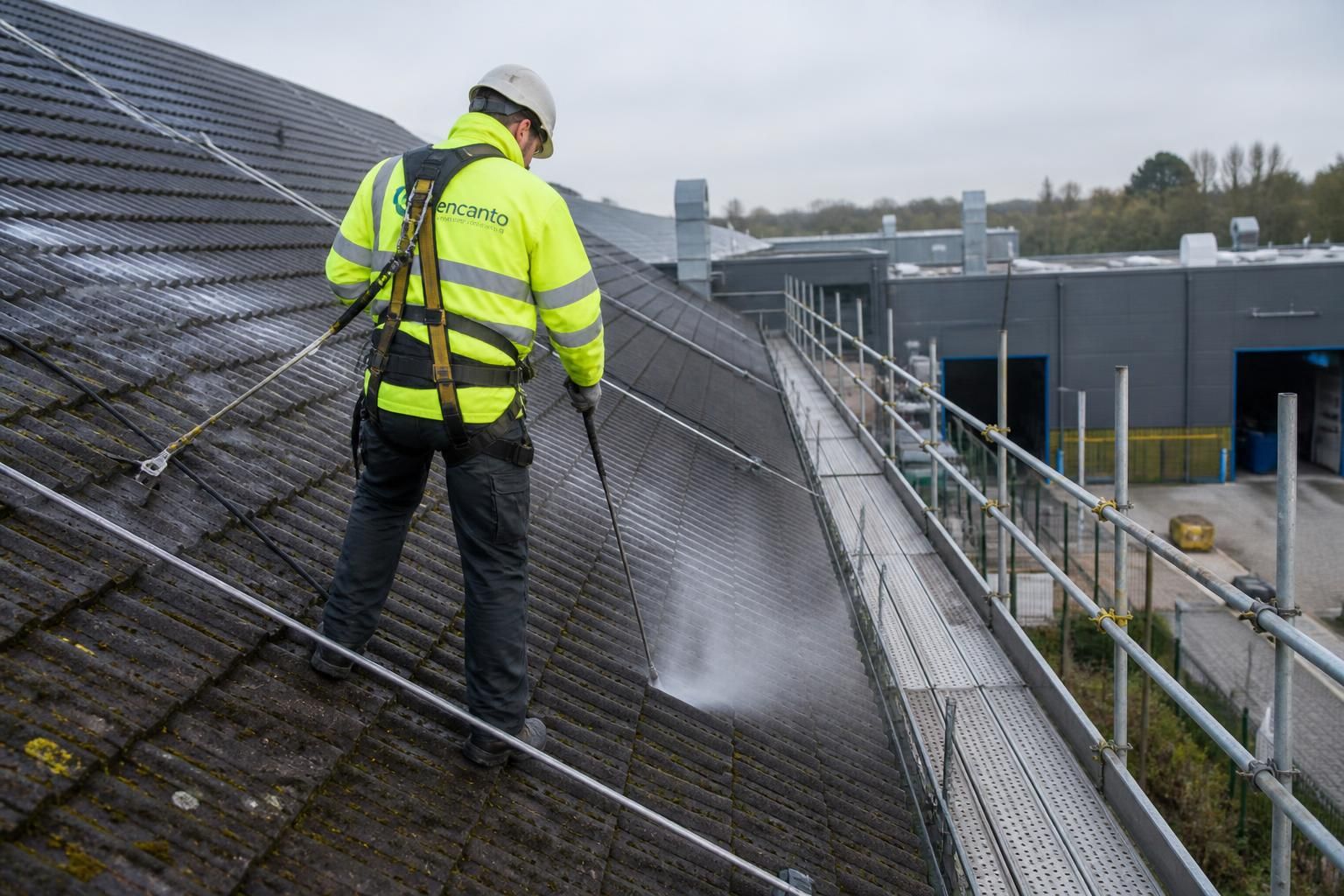
- Edge protection: Guardrails, toe boards and other collective protection can be used where there is a risk of falling from an unprotected roof edge, opening or raised section. Collective protection is generally preferred because it does not rely solely on individual behaviour.
- Fall-restraint or fall-arrest systems: Where required, workers use suitable harness systems connected to verified anchor points or lifelines. These systems must be compatible with the equipment, correctly fitted and supported by a practical rescue plan. A harness is not a substitute for properly planned access and edge protection.
- Controlled movement across the roof: Workers use designated routes and load-spreading equipment where necessary. They avoid stepping directly on fragile rooflights, unsupported tile edges, valley channels and visibly damaged areas.
- Secure equipment and materials: Hoses, cables, tools and cleaning equipment are routed and secured to reduce trip, snagging and falling-object risks. Equipment is not placed where it could obstruct access routes or overload vulnerable roof sections.
All access equipment is checked before use and remains subject to appropriate inspection and maintenance requirements. Harnesses, lanyards, ladders, towers, MEWPs, scaffold arrangements and anchor systems must be in suitable condition for the planned work. Where equipment requires specialist operation, it is used by people with the appropriate training and competence.
The work area at ground level is also controlled. Exclusion zones, barriers and warning signs help keep building occupants, members of the public and other contractors away from falling objects, spray, equipment and vehicle movements. The size and arrangement of the exclusion zone depend on the building, access equipment, cleaning method and surrounding activity. A banksman or other control may be needed where vehicles, deliveries or pedestrian routes are close to the work area.
Weather is an important part of roof access safety. High winds, rain, ice, poor visibility, lightning and other adverse conditions can make tiles, access equipment and walking surfaces unsafe. Cleaning is paused, altered or postponed when conditions exceed the safe limits for the equipment or method being used. Wet or contaminated tiles are treated as a specific slip risk rather than as a reason to proceed without additional controls.
Before starting, the supervisor briefs the team on the method statement, identified hazards, access routes, emergency arrangements and individual responsibilities. The plan includes what to do if a worker falls, becomes suspended in a harness, encounters damaged tiles or finds that the agreed access route cannot be used. Rescue arrangements are established in advance; relying solely on the emergency services is not an adequate substitute for a site-specific plan.
Access arrangements are reviewed if the roof condition changes, unexpected damage is found, equipment must be repositioned or the cleaning method needs to be altered. If a safe route to a required area cannot be maintained, that area is not accessed simply to complete the specification. The work is revised, specialist access is arranged or the area is left until a safe solution is available.
These controls protect workers while also reducing the risk of cracked tiles, damaged roof coverings, falling materials and disruption to the property. For a planned roof tile cleaning project, the site assessment should confirm the proposed access method, any fragile or excluded areas, the equipment required, weather limitations and how occupants and surrounding areas will be protected.
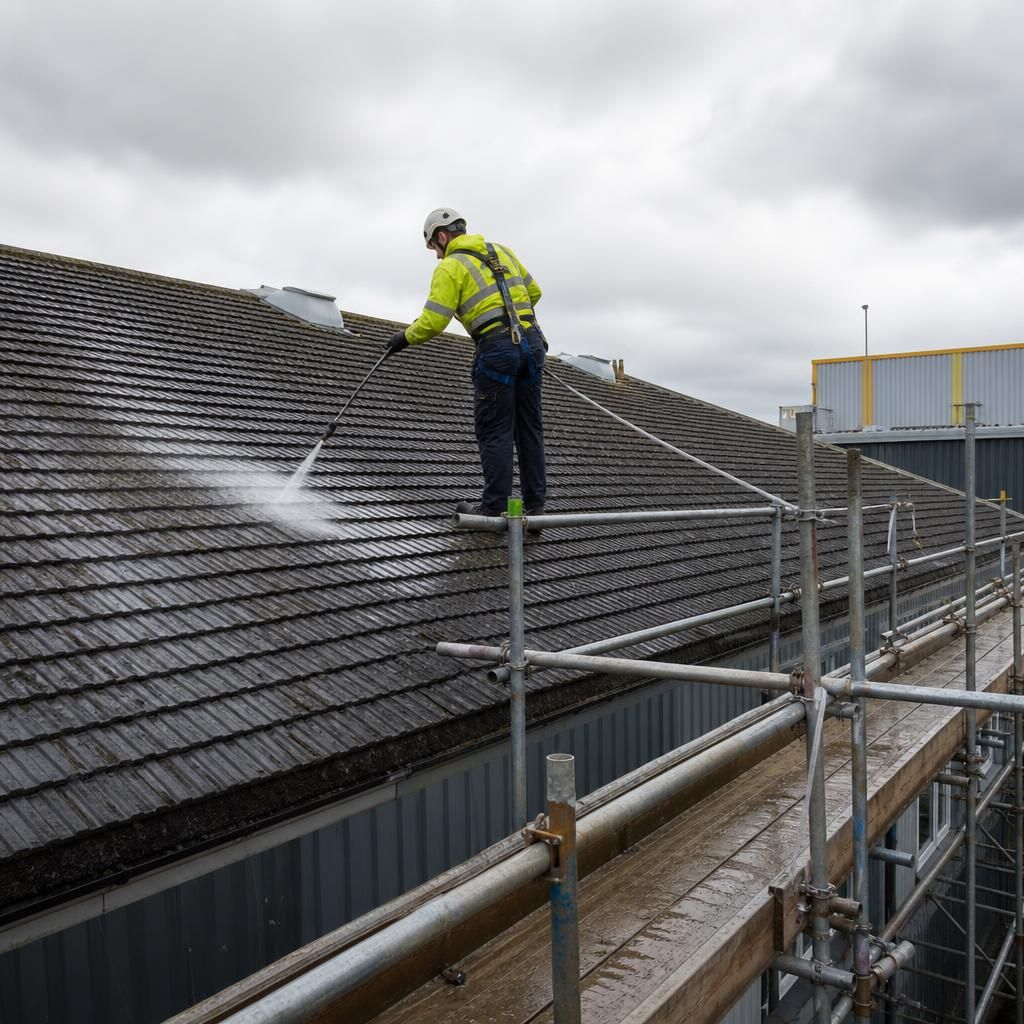
Safe access for roof tile cleaning depends on selecting the right access system for the building, rather than relying on ladders or direct movement across the roof. Encanto Exterior Cleaning assesses the roof pitch, tile condition, fragile areas, edges and the position of people and vehicles before deciding how each area will be reached.
Depending on the site, suitable controls may include scaffold, mobile access towers, MEWPs, roof ladders or crawling boards. Guardrails and toe boards provide collective edge protection where possible. If a harness, restraint system or fall-arrest equipment is required, it is used with compatible, inspected equipment, verified anchor points and a practical rescue plan. Workers follow designated routes and avoid rooflights, damaged tiles, unsupported edges and other areas unable to bear their weight.
Access equipment, hoses and tools are checked before use and secured to reduce trip and falling-object risks. If weather, roof damage or changing site conditions make a planned route unsafe, the area is not accessed until a safer method is established.