
What qualifications and experience should a professional roof tile cleaning service have to ensure reliable and effective results?
A professional roof tile cleaning service should have demonstrable experience with the relevant tile type and cleaning methods, supported by competent training in work at height, access equipment, COSHH and safe pressure-washing or soft-wash procedures. They should also provide suitable risk assessments and method statements, hold appropriate public liability insurance, and be able to explain how their team will protect tiles, roof structures, gutters and surrounding property during the work.
A reliable professional roof tile cleaning service should combine relevant roof-cleaning experience with documented competence in work at height, access equipment, chemical handling and the selected cleaning method. Before work begins, the contractor should inspect the roof, identify the tile and roof construction, assess its condition, provide suitable risk assessments and method statements, and explain how tiles, roof coverings, gutters and surrounding property will be protected.
Relevant roof-cleaning experience
Experience should relate specifically to roof tile cleaning rather than general pressure washing. Different materials and conditions require different controls. Concrete tiles, clay tiles, slate, coated tiles and fibre-cement products can respond differently to pressure, heat, moisture and cleaning chemicals. A competent contractor should be able to explain which surfaces they have worked on and provide examples of comparable commercial or industrial projects where appropriate.
Experience should also include recognising common defects before cleaning. Cracked or loose tiles, failed pointing, deteriorated bedding mortar, exposed underlay, blocked valleys and defective flashings can be made worse by unsuitable access or water pressure. Cleaning is not a substitute for roof repairs, so the contractor should record visible defects and advise when a roofer or specialist survey is required.
Training and technical competence
There is not one universal qualification that makes a person competent to clean every type of roof. However, the team should have suitable, current training for the work they will undertake, including:
- Safe working at height, including the selection and correct use of ladders, roof ladders, scaffold, mobile access towers, MEWPs or other access systems.
- Safe use of pressure-washing, steam-cleaning and soft-wash equipment, with an understanding of pressure, temperature, flow rate and nozzle selection.
- COSHH awareness and training for any biocides, detergents or other treatment products used on the roof.
- Manual handling, use of personal protective equipment and emergency procedures.
- Safe operation of powered equipment and controls to prevent damage from water ingress, overspray or uncontrolled discharge.
Where powered access or specialist access equipment is used, the operator should hold the appropriate recognised training for that equipment and the business should be able to demonstrate that it is inspected and maintained. The exact training required depends on the equipment, roof profile and site conditions.
Understanding of cleaning methods
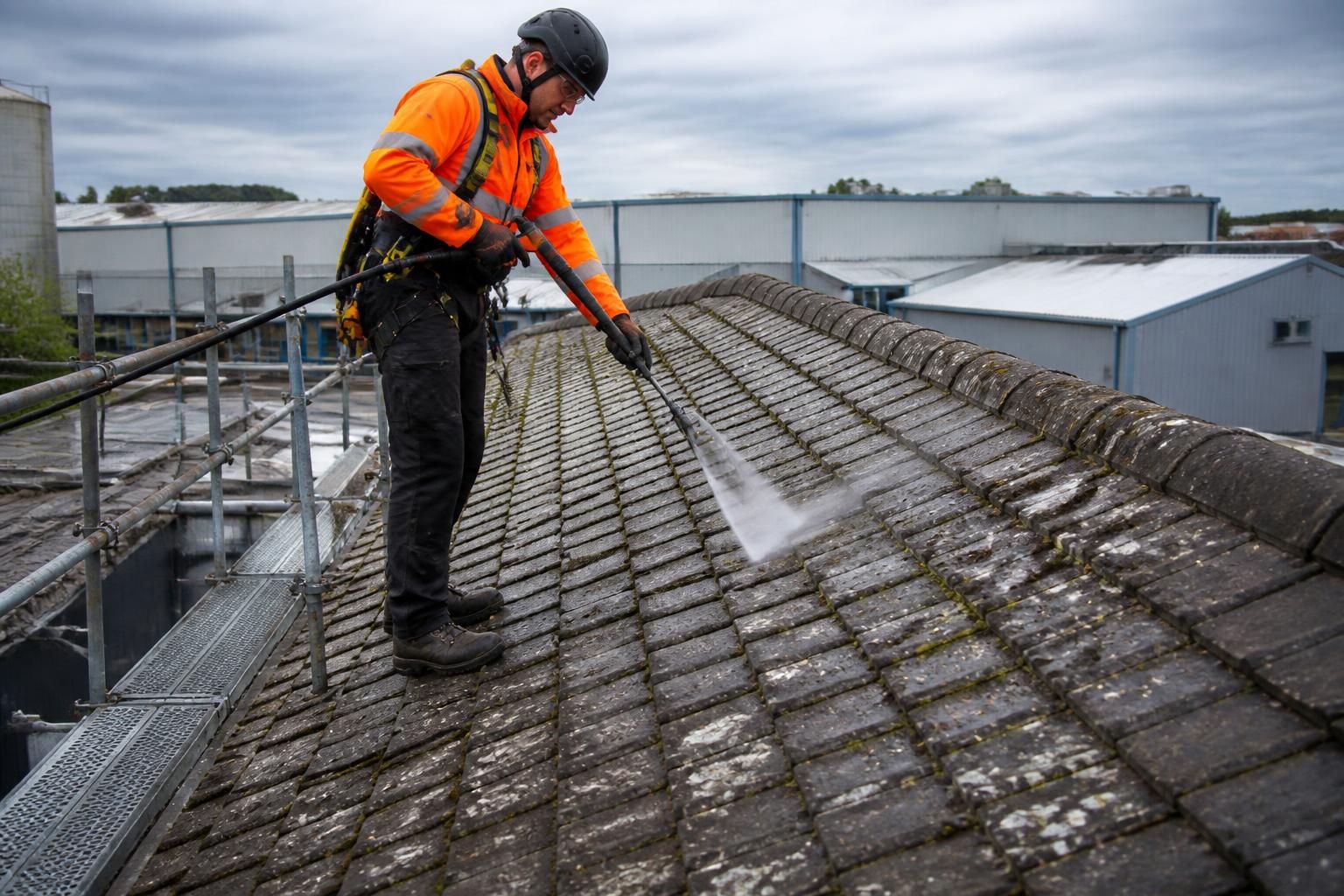
A professional contractor should be able to justify the cleaning method rather than apply the same process to every roof. Low-pressure soft washing may be appropriate for removing organic growth and treating staining where the roof covering is sound. Steam cleaning can be useful in carefully controlled situations, while higher-pressure washing may be unsuitable for fragile, weathered or poorly maintained tiles.
The contractor should explain the proposed pressure, temperature, cleaning solution, dwell time and rinsing process. They should also describe how they will prevent damage to tile surfaces, protective coatings, pointing, membranes, flashings, rooflights and solar equipment. A small test area can help confirm that the method removes the required contamination without causing unacceptable change to the surface.
Competent teams understand that moss and lichen are not removed safely by forcing water beneath tiles or against vulnerable joints. They should work in a direction and manner that limits water penetration, avoid standing on unsupported or fragile areas, and use suitable access arrangements instead of relying on the roof covering as a walkway.
Inspection, risk assessment and method statements
Before providing a final method, the service should inspect the building and its surroundings. The assessment should consider roof height and pitch, access points, fragile surfaces, rooflights, overhead services, nearby roads and walkways, weather exposure, drainage arrangements and the presence of occupants or members of the public.
The risk assessment and method statement should set out the sequence of work, access system, exclusion zones, personal protective equipment, control measures, emergency arrangements and waste or wastewater handling. For a commercial site, these documents may need to be coordinated with the client’s own site rules, permit systems and contractor-management procedures.
Good documentation is not simply administrative. It shows that the contractor has considered how the work will be carried out safely and consistently, and gives the site team a clear basis for checking that the agreed method is being followed.
Knowledge of water, chemicals and environmental controls
Roof cleaning can produce contaminated water containing organic matter, detergents, biocides, coatings or loose debris. The contractor should explain where wash water will go and how drains, soil, planted areas, watercourses and neighbouring property will be protected. They should not allow chemicals or dirty runoff to enter surface-water drainage without appropriate controls.
For any chemical treatment, the contractor should provide product information and follow the relevant COSHH assessment, dilution instructions, application controls and storage requirements. They should also account for wind direction and weather conditions so that spray does not drift onto vehicles, windows, ventilation intakes, signage or sensitive landscaping.
Insurance and business procedures
The service should hold suitable public liability insurance for the scale and type of work, with employers’ liability insurance where it employs staff. If the project involves specialist access, subcontractors or unusual risks, the contractor should confirm that its insurance covers those activities. It is reasonable to request current certificates before work starts.
The business should have clear procedures for reporting accidental damage, dealing with complaints, recording inspections and managing subcontractors. If a warranty is offered, check what it covers, how long it applies and whether it relates to cleaning performance, a biocidal treatment or repair of accidental damage. A cleaning warranty should not be presented as a guarantee against normal future weathering or organic regrowth.
Evidence to request before appointing a contractor
- A description of relevant roof-cleaning projects and experience with the material on your building.
- Details of the proposed cleaning method and why it is suitable for the roof’s condition.
- Evidence of work-at-height, access-equipment and COSHH competence relevant to the project.
- A site-specific risk assessment and method statement.
- Current insurance certificates and details of any subcontractors.
- Information about wastewater, chemical use, access protection and waste removal.
- A written quotation that identifies preparation, cleaning, treatment, rinsing, access equipment and any exclusions.
Professional competence is demonstrated by the combination of training, practical experience, sound site procedures and transparent communication. Accreditations can provide useful supporting evidence, but they do not replace a project-specific inspection or prove that a contractor understands every roof type. The strongest service will explain its limitations, recommend repairs or further surveys where necessary, and agree a controlled method that delivers a clean roof without creating avoidable structural, safety or environmental risks.
A professional roof tile cleaning service should demonstrate practical competence, not rely on a generic pressure-washing qualification. The team should have relevant experience with the tile material and documented training in work at height, access equipment, COSHH and the cleaning system proposed for the roof.
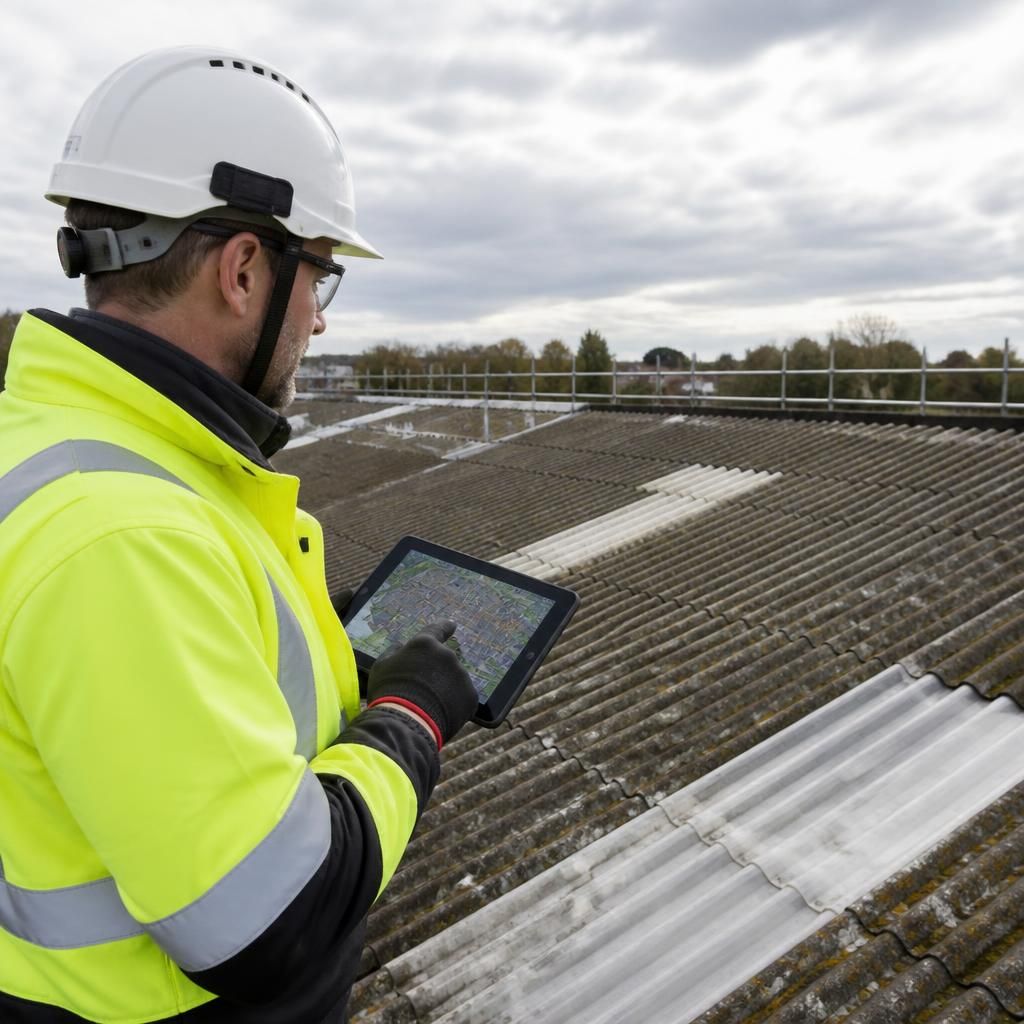
Before starting, the contractor should inspect the roof, identify fragile or defective areas and provide a site-specific risk assessment and method statement. They should also explain how they will control pressure, chemical use, runoff and access to protect tiles, flashings, rooflights, gutters and surrounding property.
Ask for evidence of comparable projects, current insurance and the qualifications relevant to any powered access equipment being used. This combination of experience, training and clear site procedures is a stronger indication of reliable results than an accreditation listed without supporting detail.